The Harness a Whippet Backs Out Of
Oh, the sheer panic of seeing your beloved Whippet perform a graceful, terrifying Houdini act right out of their harness! It's a scenario that strikes fear into the heart of every sighthound owner. That moment when they duck their head, flatten their body, and pop—they're free, usually with a mischievous glance back before they're a blur disappearing into the horizon. This guide is all about understanding why conventional harnesses fail our sleek companions and, more importantly, how to find the perfect escape-proof harness to keep your Whippet safe and sound.
Why Standard Harnesses Are a Whippet's Escape Artist Tool
It’s not just your Whippet being a mischievous escape artist; it’s a design flaw when it comes to standard harnesses and the unique anatomy of a sighthound. Most harnesses are simply not built with the Whippet’s distinctive physique in mind, leading to situations that can turn a pleasant walk into a terrifying chase.
The Unique Whippet Physique
Let’s be honest, Whippets are built like finely tuned racing machines, not chunky bulldogs or stocky retrievers. They possess a deep chest, a dramatically tucked-up abdomen, and a surprisingly narrow waist. This combination, along with their incredible flexibility and ability to flatten themselves out, is what makes them such adept escapologists. A standard harness, designed for a dog with a more cylindrical or barrel-chested shape, simply cannot contour correctly to a Whippet's elegant lines. Imagine trying to wear a belt that’s designed for someone much broader in the waist; it would slip right off with the slightest movement, wouldn’t it? That’s exactly what happens to a Whippet. The main strap behind the front legs often sits too far forward on their deep chest, and when they pull back or duck their head, their narrow rib cage allows the harness to slide right over their shoulders and off.
It’s a design challenge that many manufacturers overlook, simply because the Whippet's body type isn't the "average" dog. Other breeds, with their less pronounced tuck-up and more uniform body width, don't face this same issue with such frequency. A Whippet's whole body is essentially a wedge, tapering from their broad chest to their slender loins, a shape that conventional harness designs are ill-equipped to secure.
How Conventional Harnesses Are Designed
Most of what you’ll find on the shelves at your local pet store, or even browsing online, are conventional "Y" or "H" style harnesses. These typically feature one strap that goes around the neck/chest area and another that goes around the girth, usually just behind the front legs. They might look perfectly fine on a Labrador or a Golden Retriever, providing a secure fit that prevents pulling without putting pressure on the neck.
However, for a Whippet, these designs are inherently flawed. The single strap around the girth, which is meant to be the primary anchor, often aligns perfectly with the widest part of their deep chest. But here’s the rub: if the dog backs up, ducks their head, or performs that classic Whippet "pancake" maneuver to wiggle out, that strap can easily slide forward and off their narrow waist and shoulders. The material, often nylon or polyester, while durable, can sometimes be smooth, offering little friction to prevent slippage. When a Whippet feels any kind of pressure against their chest—whether it’s from pulling on the leash or feeling startled—their instinct is often to pull back. And when they pull back against a harness that only has one strap behind the forelegs, that harness has nowhere to go but off. This is why many Whippet owners also find that Why a Flat Collar Slides Off a Whippet's Neck is a common problem too, reinforcing the need for specialized gear.
The Heart-Stopping Risks of a Whippet Houdini Act
The moment a Whippet slips its harness is more than just an inconvenience; it can be genuinely life-threatening. The sheer speed and predatory instinct of these dogs mean that a split-second escape can have devastating consequences for them, and for your peace of mind.
Immediate Dangers on Walks
Imagine walking down a busy street, your Whippet trotting happily beside you, and suddenly, they see a squirrel. Before you can react, they’ve flattened their body, slipped the harness, and are off like a shot. The terror of watching your lean, fast dog dart into traffic is indescribable. Whippets are incredibly fast runners—How Fast a Whippet Actually Runs is something to behold—and once they engage their chase instinct, it overrides almost everything else, including your desperate calls. Thirty Five Miles an Hour and No Brakes on a Whippet's Recall is not an exaggeration.
Beyond traffic, there's the very real risk of your Whippet getting lost. They can cover vast distances in a short amount of time, making it incredibly difficult to catch them, especially if they’re in an unfamiliar area. There’s also the danger of encountering other dogs, some of whom may not be as friendly. A Whippet, while typically gentle, can be vulnerable if approached by an aggressive dog, or they might inadvertently trigger a chase with a smaller animal, leading to a potentially dangerous situation. The fleeting freedom they experience can quickly turn into a terrifying ordeal for everyone involved. Why a Whippet Cannot Be Let Off Leash in an Open Field without proper security is a lesson many learn the hard way.
Physical Injury and Behavioral Impact
Beyond the immediate dangers, a poorly fitting harness can also cause physical harm and behavioral issues. A harness that chafes or rubs in the wrong places can lead to skin irritation, bald spots, or even painful sores, especially on a Whippet's delicate, thin skin. The elbow area, where the single girth strap often sits, is particularly vulnerable. If the harness isn't secure and shifts constantly, it can create friction, leading to The Thin Skin That Sends a Whippet to the Vet for Stitches in worst-case scenarios.
Furthermore, the repeated experience of slipping a harness, or the discomfort caused by one that doesn’t fit, can create negative associations with walks and wearing gear. Your Whippet might start to dread the harness, making it difficult to even get them ready for a stroll. This can manifest as anxiety, reluctance to move forward on walks, or even a general fear of being restrained. Owners often find themselves wondering How a Whippet Learns When It Bruises From Pressure, and an ill-fitting harness can be a source of that discomfort without visible bruising, leading to behavioral issues. It erodes trust and makes bonding over shared adventures much harder.
Finding the Right Escape-Proof Harness for Your Whippet
The good news is that specialized harnesses exist that are designed specifically to counteract the Whippet's unique body shape and their uncanny ability to back out of conventional gear. Investing in the right kind of harness is one of the best decisions you can make for your Whippet's safety and your peace of mind.
The "Three-Strap" or "Safety" Harness Design
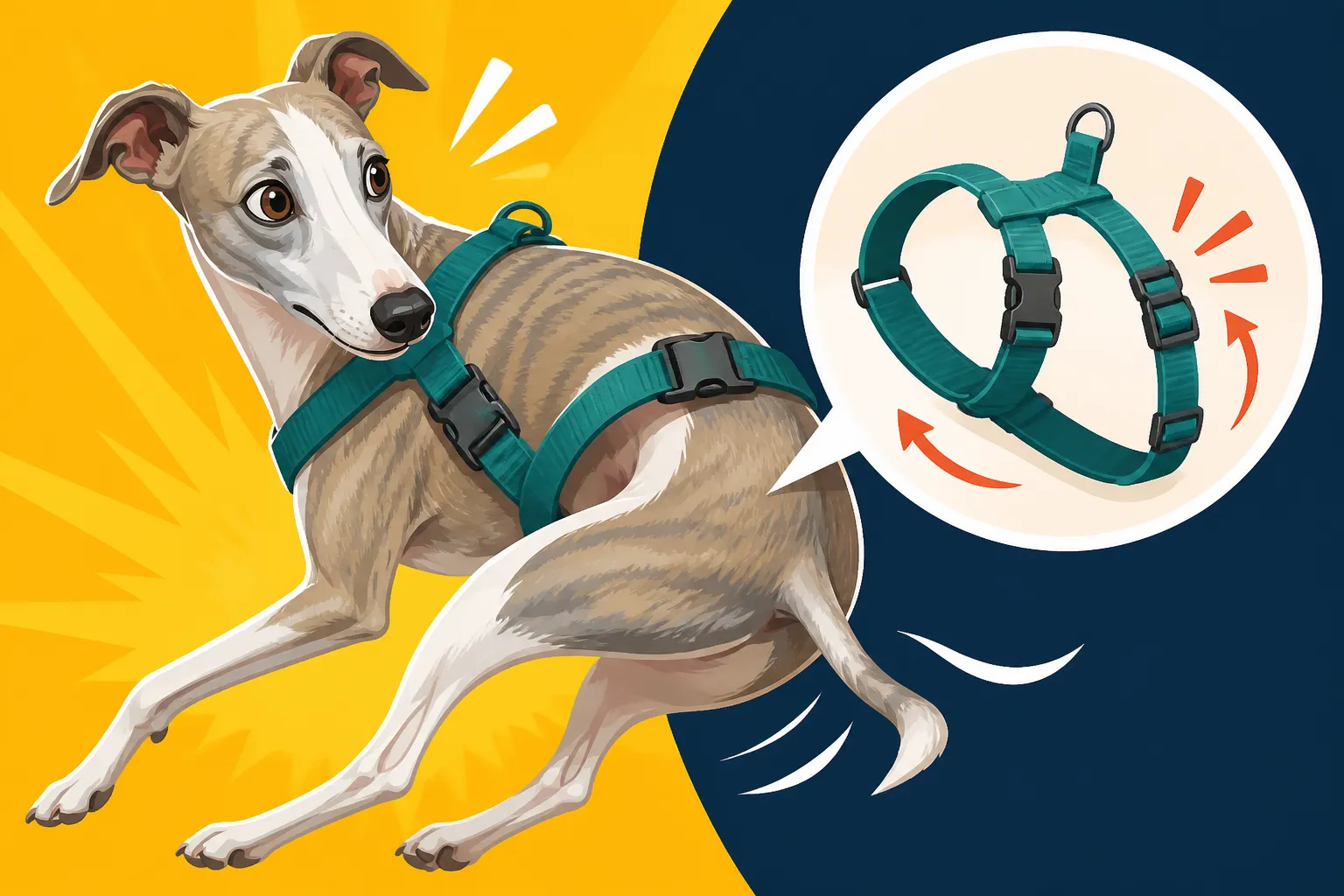
The key to an escape-proof harness for a Whippet lies in its design: specifically, the addition of a third strap. These are often referred to as "three-strap harnesses," "safety harnesses," or "sighthound harnesses." Unlike standard harnesses that have just one strap around the girth, these crucial designs feature an additional strap that sits further back on the dog's body, usually around the narrowest part of their waist, behind the ribs.
Here's how it works: the first strap secures around the deep chest, similar to a regular harness. The second, critical strap then sits much further back, preventing the harness from sliding forward over the wider part of the rib cage and shoulders. If your Whippet tries to back out, the pressure shifts to this second, more snugly fitting strap, making escape virtually impossible. This second girth strap essentially acts as a "belt" that holds the entire harness securely in place, even if they manage to wiggle the first strap. This is a game-changer for sighthound owners, finally offering a secure way to walk their dogs without constant anxiety. Many smaller sighthounds benefit from these designs, ensuring they stay safely leashed.
Key Features Beyond the Straps
While the three-strap design is paramount, there are other features to look for that will enhance your Whippet's comfort and safety:
- Material: Opt for harnesses made from soft, durable, and non-chafing materials. Fleece lining or padded webbing can be incredibly beneficial for a Whippet’s delicate skin, especially in areas where straps might rub, like under the armpits. Remember, their skin is thin, so comfort is key to preventing irritation and potential Treating a Whippet's Skin Tear from chafing.
- Adjustability: This is absolutely crucial for a Whippet. Look for harnesses with multiple points of adjustment—at the neck, chest, and both girth straps. This allows you to achieve a truly custom fit that accommodates their deep chest and narrow waist. The ability to fine-tune the fit means less chance of slippage and greater comfort for your dog.
- Hardware Quality: Check for sturdy buckles and D-rings. You want secure fastenings that won't unexpectedly open or bend under pressure. Metal hardware is often preferred for its durability.
- Reflective Elements: For early morning or evening walks, reflective stitching or strips can significantly increase visibility and safety, especially if your Whippet were to ever escape.
- Front Clip Option: Some harnesses offer both a back clip (for general walking) and a front clip (on the chest). A front clip can be a useful tool for training a Whippet who pulls on the leash, gently redirecting them without putting pressure on their throat. However, the primary purpose of an escape-proof harness for a Whippet is preventing backing out, not just pulling.
Sighthound-Specific Harness Brands
When searching for the right harness, don't just grab the first one you see. Look for brands that specifically cater to sighthounds or advertise "escape-proof" or "three-strap" designs. You can find a good selection by searching online marketplaces like Amazon for terms like "sighthound harness," "Whippet harness," or "escape-proof dog harness." Many smaller, specialized companies also offer fantastic options specifically tailored to these unique body types, often made with extra padding or unique adjustment points. While I can't name specific models or prices, a quick search for "no-slip sighthound harness" will point you in the right direction. It's an investment, but one that absolutely pays off in peace of mind.
To give you an idea of the difference, here's a comparison:
| Feature | Standard Harness (Typical) | Sighthound/Escape-Proof Harness (Recommended) |
|---|---|---|
| Girth Straps | One strap behind forelegs | Two straps: one behind forelegs, one further back |
| Fit Around Waist | Often loose or easily slipped | Snug second strap prevents backing out |
| Adjustability | Limited | Multiple points for custom fit (neck, chest, both girths) |
| Material Comfort | Standard nylon, can chafe | Often padded or fleece-lined for thin skin |
| Slippage Risk | High, especially when backing up or wiggling | Very low |
| Target Dog Build | General breeds, barrel-chested | Deep-chested, narrow-waisted breeds (e.g., Whippets) |
Training and Acclimation to a Secure Harness
Even with the perfect escape-proof harness, a little positive training and acclimation can go a long way in ensuring your Whippet is comfortable and happy wearing their new gear. Remember, their sensitive nature means patience and positive reinforcement are your best friends.
Positive Introduction is Key
Introducing any new piece of equipment, especially something that goes around their body, should always be a positive experience for a Whippet. Never force the harness on them. Start by simply letting them sniff and investigate the harness. Reward them with high-value treats and praise just for being near it. Then, gently drape it over their back without fastening it, again, rewarding them generously.
The next step is to put the harness on for very short periods, indoors. Fasten it loosely at first, just for a minute or two, distracting them with treats or a favorite toy. As they get more comfortable, gradually increase the time they wear it. Always pair the harness with something positive, like mealtime or a fun play session. This helps them associate the harness with good things, rather than confinement or discomfort. If your Whippet shows any signs of stress, take a step back and go slower. They How Quickly a Whippet Learns when positive reinforcement is used consistently. For a comprehensive approach to puppy training, including acclimating to gear, online programs like BAXTER & Bella can provide structured guidance and support.
Leash Training with the New Harness
Once your Whippet is completely comfortable wearing their new, secure harness around the house, it's time to introduce the leash. Start in a safe, enclosed area, like your backyard, where there are minimal distractions. Attach the leash and let them drag it around for a few minutes, supervised. Then, pick up the leash and practice walking with them, offering plenty of praise and treats for walking calmly.
Consistency is vital. Always use the new harness for all walks. This builds a strong association that "harness on" means "walkies!" Focus on reward-based methods to encourage loose-leash walking, rather than relying on corrections. A secure harness gives you peace of mind that even if they get spooked or lunges at a sudden rabbit, they won’t slip out. While a secure harness is a crucial tool, remember that it complements, rather than replaces, good recall training. Whippets have a strong prey drive, and even with the best gear, continued work on an emergency recall (Teaching a Whippet an Emergency Recall) is always beneficial, especially since Why a Whippet's Chase Instinct Overrides Its Recall. Consider using a long line in a safe, open area to practice recall commands with the new harness, giving them a sense of freedom while still maintaining control. Whether a Long Line Suits a Whippet is often a good interim step for building confidence and recall reliability.
Disclaimer
This article is for general informational purposes only and does not constitute professional advice. Laws, prices and regulations vary by location and change over time. Consult a qualified professional for guidance on your specific situation.