Whether a Whippet Should Run on Wet Grass
Many Whippet owners cherish those moments when their sleek, athletic companions can truly open up and run, enjoying their incredible speed and agility. But a common worry crops up when the weather turns damp: is it really safe to let your Whippet run full tilt on wet grass? The truth is, while a bit of dew might seem harmless, wet grass can pose some surprisingly significant risks for our thinly-skinned, finely-tuned sighthounds, making it crucial to understand the dangers and how to protect them. This guide will walk you through why wet grass can be problematic for Whippets, what specific injuries to look out for, and how you can ensure your beloved dog stays safe while still getting their essential exercise.
The Hidden Dangers of Wet Grass for Your Whippet
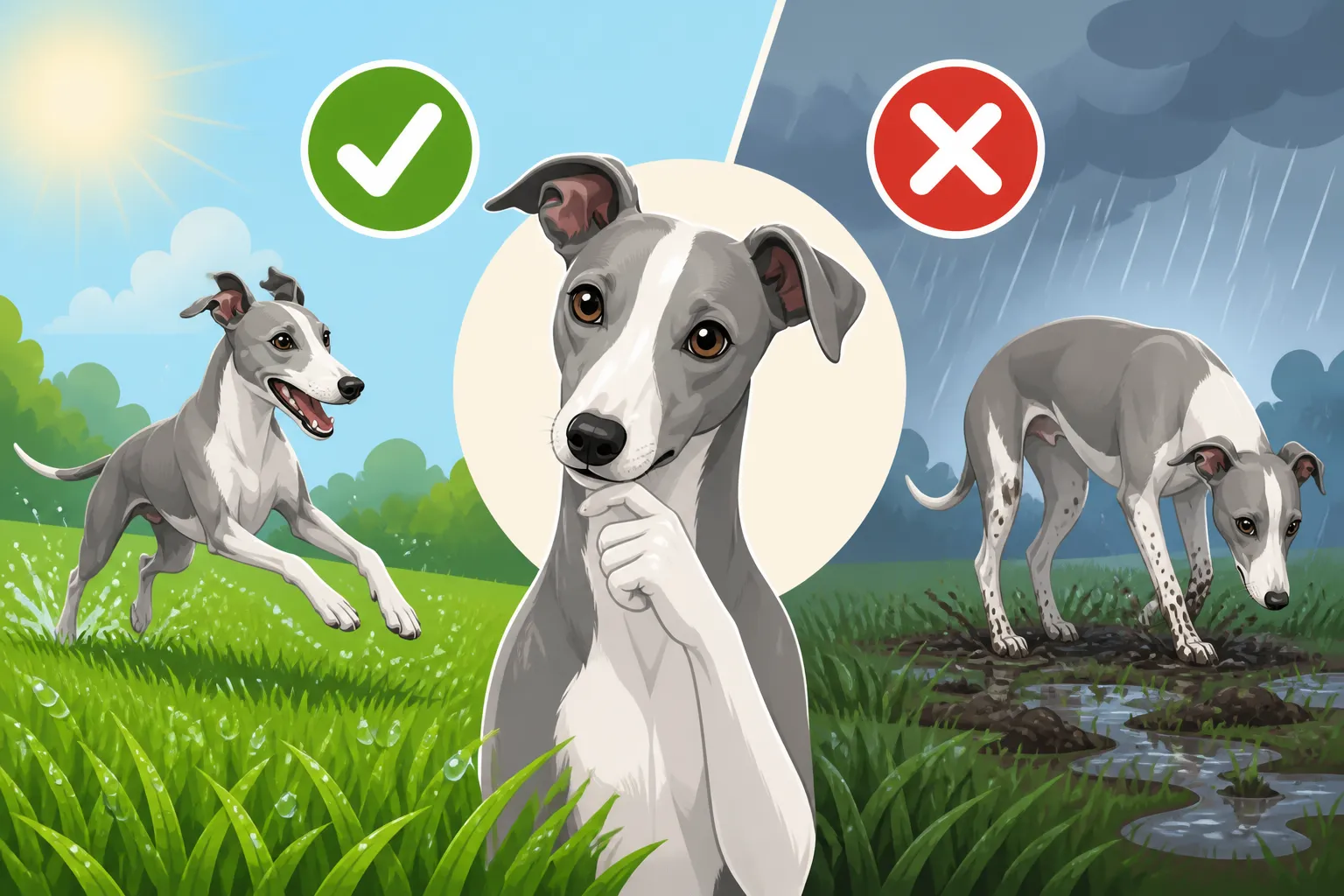
It might seem counter-intuitive, but wet grass, particularly when it's just damp rather than soaking, creates a very slick surface, and this can be a real hazard for a dog that relies on quick turns and explosive acceleration. Whippets are built for speed and sudden changes in direction, and these very attributes can work against them when traction is compromised. It’s not just about them slipping and falling; it’s about the unnatural stresses that slipping places on their delicate bodies.
The Slippery Surface Challenge
Imagine trying to sprint on a wet floor in socks – that's a bit like what a Whippet experiences on wet grass, but at much higher speeds and with their entire body weight behind them. Their paw pads, while designed for grip, can struggle to maintain purchase when the ground is soft and slick. This is especially true if the grass is a bit longer or patchy, creating uneven resistance. A Whippet’s natural inclination is to push off hard, dig in, and accelerate, but on wet grass, that powerful push can easily result in a slide rather than a surge forward.
These uncontrolled slides can be terrifying to witness. Your Whippet, in its moment of pure joy and speed, might lose its footing mid-stride or during a sharp turn. This isn't just a clumsy tumble; it can be a violent twisting motion. Because Whippets are so light and agile, they can get themselves into awkward positions very quickly, and a loss of traction means their muscles and joints take the brunt of the impact, often in ways they aren't designed to handle.
Why Whippets Are Prone to Injury on Wet Ground
Whippets are magnificent athletes, but their physiology, which makes them so fast, also makes them somewhat vulnerable to certain types of injuries. They have incredibly powerful hindquarters for propulsion and a flexible spine, but their bone structure is light, and their muscle groups are long and lean, not bulky for brute force. When they slide or twist on wet ground, the force isn't always distributed evenly, leading to sudden, sharp strains.
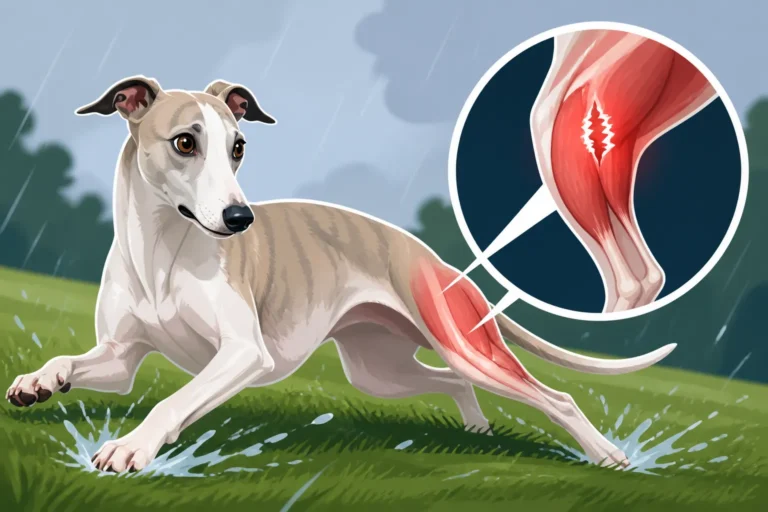
Their natural running style involves long, sweeping strides and a double suspension gallop, where all four feet are off the ground twice in each cycle. This allows for immense speed but means they hit the ground with considerable force. On a slippery surface, the impact of landing can become jarring, and the subsequent push-off can cause their feet to go out from under them. This can put undue stress on muscles, tendons, and ligaments that are stretched to their limits, particularly in the legs, hips, and back. Many owners find themselves asking The Muscle a Whippet Tears Sliding on Wet Grass after an incident.
The Thin Skin Factor
One of the most defining characteristics of a Whippet, beyond their speed, is their incredibly thin, delicate skin. This isn't just a cosmetic trait; it's a practical reality that every Whippet owner must contend with. Their skin offers very little padding or protection against trauma. What might be a minor scrape for another breed can result in a significant skin tear or laceration for a Whippet.
When a Whippet slides or falls on wet grass, they often do so with their bony parts or thinner-skinned areas, like their legs, elbows, or flanks, making contact with the ground. Even relatively soft blades of grass, especially if they are stiff or have any underlying debris, can act like tiny knives when a dog slides across them at speed. The combination of friction and impact can easily cause the skin to rip open, leading to what many owners grimly refer to as "Whippet wounds." These are not always deep, but they can be wide and require veterinary attention. The Thin Skin That Sends a Whippet to the Vet for Stitches is a phrase far too many Whippet owners become familiar with.
Common Injuries from Running on Wet Grass
Understanding the specific types of injuries that can occur when a Whippet runs on wet grass is the first step toward preventing them and knowing when to seek help. These injuries can range from mild to severe, but even a seemingly minor issue can become more complicated given a Whippet's unique physical makeup.
Muscle Strains and Pulled Ligaments
These are perhaps the most common injuries associated with vigorous activity on slippery surfaces. A Whippet's powerful muscles, especially those in the hindquarters and along the spine, are designed for explosive force. When they lose traction or slide unexpectedly, these muscles can be stretched beyond their normal range of motion or contract violently against resistance, leading to strains. Similarly, the ligaments that connect bones and stabilize joints can be twisted or torn.
A classic scenario is a Whippet making a sharp turn or trying to stop quickly on wet grass, only for their feet to slide out from under them. This awkward motion can result in a pulled hamstring, groin muscle, or even an injury to the muscles supporting the back. You might notice your Whippet suddenly yelp, limp, or become reluctant to put weight on a particular leg. Sometimes the signs are more subtle, appearing as stiffness or a change in gait the next day. Muscle Pulls in a Whippet can be incredibly painful and require rest, anti-inflammatory medication, and sometimes even physical therapy to fully heal.
Abrasions and Skin Tears
As we discussed, a Whippet's thin skin is highly susceptible to tears and abrasions. When they slide or fall on wet grass, their skin can easily catch on even small irregularities in the ground, leading to nasty lacerations. These aren't always punctures from sharp objects, but often wide, superficial tears caused by shearing forces. The elbows, hocks, and flanks are particularly vulnerable due to their prominence and the thinness of the skin covering them.
These wounds, while not always deep, can bleed quite a bit and are prone to infection if not cleaned and managed properly. The edges of the torn skin might retract, making them difficult to close without veterinary intervention. Sometimes, what looks like a simple scrape can turn into a gaping wound that absolutely requires stitches. Treating a Whippet's Skin Tear often involves careful cleaning, sometimes a local anesthetic, and sutures or surgical glue to close the wound. It's a frustratingly common occurrence that can lead to an unexpected trip to the vet and, potentially, Emergency Stitches: the Whippet Bill Nobody Budgets For.
Paw Pad Issues
While not as dramatic as a skin tear or muscle strain, paw pad injuries can be very uncomfortable for your Whippet and affect their willingness to run. Wet grass can soften paw pads, making them more susceptible to cuts, abrasions, or punctures from hidden debris. If the grass is coarse or mixed with gravel, sliding across it can quickly chafe and abrade the delicate pad surfaces.
Moreover, prolonged exposure to damp conditions can also contribute to issues like interdigital dermatitis (inflammation between the toes) or fungal infections. While these are less about acute injury from a single run, they can develop over time if your Whippet frequently runs and plays on wet ground without proper paw care. After any wet adventure, always check your Whippet's paw pads and between their toes for redness, cuts, or foreign objects.
Mitigating the Risks: Safe Play on Damp Days
The goal isn't to never let your Whippet run again, but to be smart and proactive about managing the risks. There are plenty of ways to ensure your Whippet gets their exercise and joy even when the ground isn't perfectly dry. It’s all about making informed choices and having a routine.
Choosing the Right Environment
When the grass is wet, it's essential to rethink where and how your Whippet gets to stretch their legs. Open, flat fields of uniformly short, well-maintained grass are generally safer than uneven ground, long grass, or areas with hidden dips and bumps. Avoid any areas where the grass might be mixed with gravel, rocks, or thorny bushes, as these dramatically increase the risk of skin tears or paw pad injuries if your dog slides.
Consider alternative surfaces for high-speed runs on damp days. A dry, compact dirt track or an all-weather sports field (like artificial turf, if your dog tolerates it and it's free of sharp bits) might offer better traction. If possible, a securely fenced area with a rubberized surface, like some dog parks or training facilities, would be ideal for off-leash play when the ground is slick. If these aren't available, short, leashed walks on pavement or dry trails might be the safest bet, reserving the full-speed sprints for truly dry days.
Warming Up and Cooling Down
Regardless of the surface, a proper warm-up and cool-down routine is crucial for any athletic dog, and especially so for a Whippet about to engage in high-speed activity. Cold muscles are more prone to injury. A gentle warm-up can involve 5-10 minutes of brisk walking or a slow jog on a leash before you let them off to play. This gets the blood flowing, increases muscle elasticity, and prepares their body for more intense movement.
After their run, don't just put them straight into the crate or car. A cool-down period of 5-10 minutes of slow walking helps their heart rate and breathing return to normal, and allows their muscles to gradually relax, preventing stiffness and reducing the risk of post-exercise soreness. Warming Up a Whippet Before It Runs and Cooling a Whippet Down After a Sprint are not optional extras; they are vital parts of responsible Whippet ownership, especially when considering risky conditions.
Essential Gear and Paw Protection
A practical approach to dealing with wet grass involves using appropriate gear. For many Whippets, a waterproof, lightweight coat is invaluable, especially if the weather is also chilly. Whether a Whippet Needs a Coat Below Fifty Degrees is a common question, and on wet days, warmth and protection from dampness can prevent them from getting too cold and stiff. You can find a good selection of specialized Whippet coats on sites like Amazon that fit their unique physique.
Paw protection can also be a game-changer. Dog boots designed for active wear can provide extra grip on wet surfaces and protect their delicate paw pads from cuts and abrasions. While some dogs take time to adjust to wearing boots, introducing them gradually with positive reinforcement can make a big difference. Look for boots that are durable, flexible, and provide good traction. After any wet outing, always thoroughly towel dry your Whippet, paying special attention to their feet, belly, and armpits to prevent skin irritation or chills.
For those training their Whippets, or even just encouraging good behavior around risky conditions, remember that positive reinforcement is key. Programs like BAXTER & Bella offer excellent resources for building a strong foundation of obedience and impulse control, which can be invaluable when you need your Whippet to slow down or choose a safer play area. A well-trained Whippet is often a safer Whippet.
When to Seek Veterinary Care
Despite our best efforts, accidents can happen. It's important to know when a bump or scrape is something you can handle at home and when it's time to call the vet. Early intervention can make a big difference in your Whippet's recovery.
Recognizing the Signs of Injury
Your Whippet can’t tell you in words that they’re hurt, so you need to be a keen observer of their behavior and physical condition. After any vigorous play, especially on wet grass, give them a once-over. Look for obvious limping, favoring a limb, or reluctance to put weight on a paw. Swelling, heat, or tenderness to the touch on any part of their body, especially around joints or large muscle groups, are red flags.
For skin injuries, look for any breaks in the skin. Even a small tear can be wider than it initially appears. Check for excessive licking of a particular area, which can indicate pain or irritation. A change in appetite, lethargy, or unusual vocalization (whining, yelping) are also strong indicators that something is amiss. If your Whippet is showing any of these signs, it’s always better to err on the side of caution.
First Aid at Home vs. Professional Help
For minor scrapes or very small cuts that aren't bleeding heavily, you can often provide initial first aid at home. Gently clean the wound with mild antiseptic solution and water, then apply a pet-safe antibiotic ointment and cover it with a non-stick pad and self-adhering vet wrap. Keep an eye on it for signs of infection (redness, pus, increased swelling). Remember, How Slowly a Whippet's Skin Heals can be a factor, so consistent care is important.
However, if you encounter deep cuts, wide skin tears that gape open, persistent bleeding, or any injury that causes severe lameness or intense pain, it's time for a professional. Don't hesitate to call your veterinarian or an emergency clinic immediately. They can properly assess the injury, clean and close wounds, prescribe pain relief or antibiotics, and advise on rest and recovery protocols, including whether physical therapy might be beneficial.
| Injury Type | Common Cause on Wet Grass | Signs to Look For | When to See a Vet |
|---|---|---|---|
| Muscle Strain/Pull | Slipping, twisting during acceleration/deceleration | Limping, stiffness, reluctance to move, yelping when touched | Persistent lameness, swelling, severe pain, inability to bear weight |
| Skin Tear/Laceration | Sliding, impact with ground/debris | Bleeding, visible skin separation, excessive licking, redness | Deep or wide open wounds, continuous bleeding, signs of infection |
| Paw Pad Abrasion | Sliding, friction with coarse wet grass | Licking paws, limping, visible raw spots or cuts on pads | Deep cuts, embedded foreign objects, signs of infection, severe pain |
| Joint Sprain | Twisting motion, awkward landing | Swelling, heat, lameness, reluctance to flex joint | Any significant swelling, inability to use limb, severe pain |
Disclaimer
This article is for general informational purposes only and does not constitute professional advice. Laws, prices and regulations vary by location and change over time. Consult a qualified professional for guidance on your specific situation.