How the Silken Windhound Came From Whippets
A Silken Windhound can look like a Whippet dressed for colder weather, which naturally raises questions about where the breed came from and how closely the two are related. The short answer is that Whippets contributed to the Silken Windhound’s development, but they were not the breed’s only foundation. This guide explains the history, the role of the Whippet, and what distinguishes the two today.
How the Silken Windhound breed began
A planned American breeding project
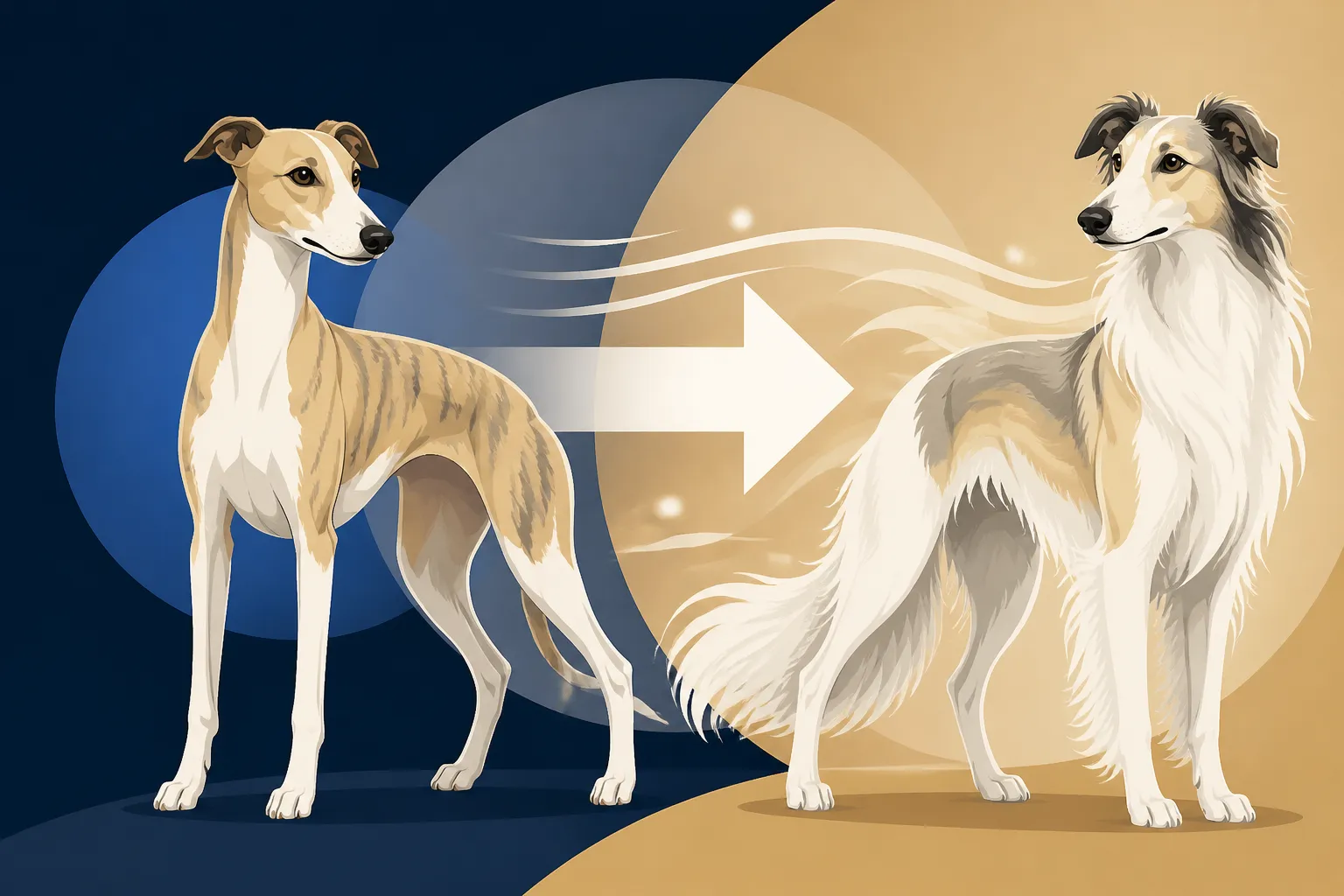
The Silken Windhound was developed in the United States through a deliberate breeding program led by Francie Stull. The project began in the 1980s, with the aim of creating a medium-sized sighthound with a long, silky coat. Whippets were part of the foundation, alongside Borzoi. The breed was shaped over generations, rather than emerging from a single accidental litter or a one-time cross.
The goal was not simply to make a long-haired version of a Whippet. The breeders were working toward a particular combination of size, coat, appearance, and sighthound qualities. That distinction matters because a new breed is established through planned selection and consistent breeding over time—not just by looking at a dog and guessing its ancestry.
A useful comparison is how the Whippet itself has a history of development and selection, rather than being merely a smaller Greyhound. The article Whether the Whippet Is Just a Small Greyhound explores that distinction. In the same way, a Silken Windhound’s resemblance to a Whippet does not make the two breeds interchangeable.
What Whippets contributed
Whippets brought useful qualities to the Silken Windhound’s development, including a smaller sighthound type than the Borzoi and a graceful, athletic outline. Their presence in the breed’s history helps explain why some Silken Windhounds may remind people of Whippets in build or movement, even though the breeds have different proportions and coats.
It is important, though, not to oversimplify the ancestry as “a Whippet with long hair.” The Silken Windhound was developed from more than one source, and breeders selected for a distinct breed over multiple generations. A dog’s coat or silhouette alone cannot tell you exactly which ancestors contributed to it.
The broader history of sighthounds is full of related shapes and shared traits. For context on the Whippet’s place among other sighthounds, see The Whippet Against the Greyhound and the Italian Greyhound and How Closely the Whippet Descends From the Greyhound. Those comparisons can make it easier to understand why different breeds may look related without being the same breed.
Why a Silken Windhound is not simply a long-haired Whippet
Coat is only one piece of a breed
The long, soft coat is the feature many people notice first. A Whippet typically has a short, close coat, while a Silken Windhound has longer feathering on areas such as the tail, legs, and ears. That visual difference can make the Silken seem like a Whippet with a simple coat variation, especially in photographs where the dogs are standing in similar poses.
But breed identity involves more than coat length. Size, proportions, head shape, movement, temperament, and documented breeding history also matter. A long coat by itself does not establish that a dog is a Silken Windhound, and a short-coated dog from Silken Windhound ancestry does not automatically become a Whippet.
The term “longhaired Whippet” has also been used in discussions of dogs and breeding lines, which can make the history confusing. For a closer look at why the labels are not straightforward, see The Longhaired Whippet Question and Whether a Long Haired Whippet Exists. Those topics help separate appearance-based descriptions from established breed history.
A Silken Windhound has its own breed identity
A Silken Windhound is a distinct breed with its own developing history, breeding community, and expectations for type. It may share ancestry and general sighthound features with the Whippet, but that does not make it a Whippet variety. The same principle applies across breeds: ancestry can overlap while each breed remains distinct.
This also means that buyers should avoid relying on a seller’s visual description alone. If someone offers a “long-haired Whippet,” ask what the dog’s registration and pedigree records say, what the parents are, and which organization recognizes or registers the litter. A responsible breeder should be able to explain the breeding program plainly and provide documentation rather than treating a striking coat as proof of rarity or pedigree.
The Whippet’s own history includes variation between breeding communities and countries, too. How American and British Whippets Differ offers useful context on how breeding preferences can shape a breed’s appearance. Those differences do not erase breed identity; they show why appearance and ancestry need to be understood together.
Silken Windhound and Whippet compared
Similarities and differences at a glance
Both breeds are sighthounds: dogs shaped for speed, with a strong instinct to notice and pursue movement. Both can be athletic outdoors and affectionate, restful companions at home. That shared pattern can make them seem very similar to someone who has only met one or two individuals of each breed.
There are also meaningful differences in coat care, overall appearance, and the range of sizes and proportions seen in each breed. Individual dogs vary, so a comparison is a starting point rather than a promise about a particular puppy. Meeting adult dogs and asking breeders about their temperaments is more informative than choosing by photographs alone.
| Feature | Whippet | Silken Windhound |
|---|---|---|
| Breed history | Established sighthound breed with a long history | Developed in the United States through a planned breeding program |
| Foundation | A distinct breed with its own ancestry | Whippets and Borzoi were part of its foundation |
| Coat | Short and close | Longer, silky coat with feathering |
| Shared qualities | Athletic, alert to movement, often relaxed indoors | Athletic, alert to movement, often relaxed indoors |
| Grooming | Usually light coat maintenance | Regular brushing helps manage longer feathering and tangles |
| What to verify when choosing | Health, temperament, and pedigree | Health, temperament, pedigree, and the breeder’s account of the line |
Similar instincts do not mean identical needs
A Silken Windhound or Whippet may be happy spending much of the day curled up on a comfortable bed, then suddenly become intensely interested in a squirrel or a fast-moving toy. That combination can surprise people who expect a sighthound to be constantly active—or assume that a calm dog indoors will reliably ignore wildlife outdoors.
For either breed, secure management matters. A recall can be useful, but a dog’s chase instinct may overwhelm it when prey bolts. Owners should choose enclosed spaces carefully and avoid assuming that a familiar dog park or open field is safe just because the dog usually stays close. The article Why the Whippet Cannot Be Let Off Leash in an Open Field explains why open areas can pose a risk for a Whippet; the same practical caution is sensible for other sighthounds.
Exercise should also be appropriate to the individual dog’s age, health, and conditioning. A safe, enclosed opportunity to stretch out and run is different from expecting a dog to jog for miles or sprint hard without preparation. If you’re comparing possible activities, Whether a Whippet Needs a Daily Sprint offers a useful starting point for thinking about a sighthound’s exercise needs.
Choosing and caring for a Silken Windhound
Ask about the breeding program, not just the look
If you are considering a Silken Windhound, ask the breeder to explain the breed’s history and how their dogs fit into their breeding program. A thoughtful conversation should cover the parents’ temperaments, health information, how puppies are raised, and what kind of home the breeder thinks will suit each puppy. You should also be able to see the relevant pedigree or registration records.
Be wary of claims built around novelty alone: “rare,” “one of a kind,” or “just like a Whippet but prettier” are not substitutes for clear answers. Ask what the dog is registered as and whether the paperwork matches the description in the advertisement. If a breeder describes a dog as a Whippet, Silken Windhound, or a cross, those labels should be supported by transparent records—not just by coat length.
It can help to meet adult dogs from the same breeding community before committing. Puppies change as they grow, and a baby’s coat or body shape may not tell you what the mature dog will look like. Seeing related adults also gives you a better sense of how the dogs behave in ordinary situations: around visitors, during handling, and when they notice movement outside.
Plan for coat care, warmth, and daily comfort
A Silken Windhound’s coat needs more attention than a Whippet’s short coat. Regular, gentle brushing can help prevent tangles, especially where feathering rubs against itself or catches debris. Pay attention to the ears, tail, legs, and areas where a collar or harness might create friction. If you are gathering brushes, coat-care products, or a suitable walking setup, Chewy can be one place to compare everyday pet supplies alongside local shops and breed-club recommendations.
Whippets are well known for feeling the cold, and individual Silken Windhounds may also appreciate a warm, comfortable place to rest, particularly in chilly weather. Coat needs depend on the dog, the climate, and how long the dog will be outside. A short walk on a cold, windy day is not the same as a longer outing in mild weather, so watch your dog’s comfort rather than relying on a single temperature rule. For background on the Whippet’s sensitivity to cold, see The Household a Whippet Was Built For.
A comfortable bed and well-fitting walking equipment are practical basics for either breed. Owners often compare beds and coats before bringing a dog home; Chewy may be useful for looking at available options, but fit and comfort matter more than the label on the packaging. For a slender sighthound, check that a coat does not restrict movement or rub the skin, and that a collar or harness is secure without being uncomfortably tight.
Match the dog to your household
The right choice depends less on which breed looks more appealing and more on the life you can offer. Think about whether you have a safe place for exercise, how you will manage the dog around small animals, and whether you have time for coat care. Consider how the dog will handle being left alone, household noise, children, and visitors. A calm appearance in a breeder’s home does not guarantee the same response in every new environment.
A Silken Windhound may appeal to someone who likes sighthound qualities but prefers a longer coat and a distinct breed history. A Whippet may be a better fit for someone who wants a short-coated sighthound and understands its particular exercise and safety needs. Neither breed should be chosen on the assumption that it will be low-effort simply because it enjoys lounging indoors.
Before bringing any dog home, make a practical list of needs: a secure leash setup, safe exercise arrangements, comfortable bedding, grooming tools, and a plan for routine veterinary care. Chewy is one possible place to compare supplies such as brushes, beds, and coats, but a breeder or veterinarian can help you decide which items suit the individual dog. The goal is not to buy everything at once; it is to prepare for the dog you are actually bringing home.
Disclaimer
This article is for general informational purposes only and does not constitute professional advice. Laws, prices and regulations vary by location and change over time. Consult a qualified professional for guidance on your specific situation.