What a Whippet Mix Inherits
A Whippet mix may inherit the Whippet’s long legs, deep chest, quick acceleration, and love of a warm place to nap—but no mixed-breed puppy comes with a guaranteed recipe. The other parent’s genes matter, and siblings can look and behave quite differently. This guide explains which Whippet traits may show up, what you can assess as a puppy grows, and how to prepare for the possibilities.
How Whippet Mixes Inherit Appearance
Size and body shape are a combination, not an average
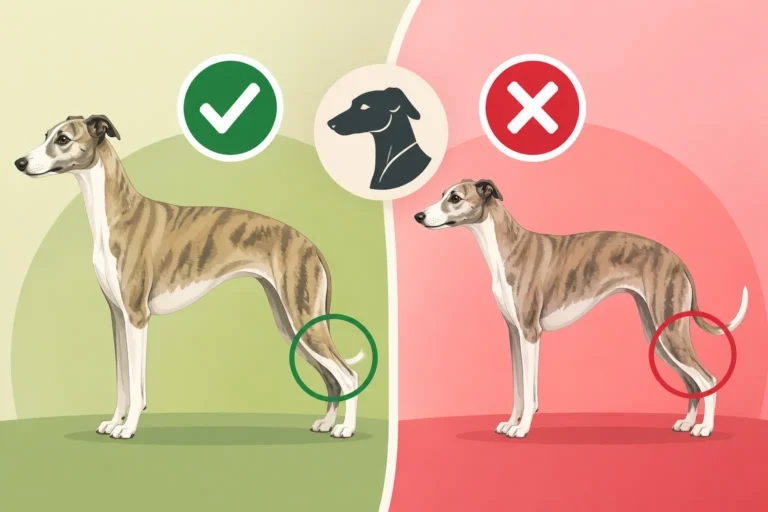
A Whippet mix might have a narrow waist, long legs, a deep chest, and a tucked-up abdomen, but those features do not arrive as one inseparable package. A puppy can inherit a Whippet-like outline and still grow to a different overall size, especially if the other parent is substantially larger or more heavily built. The puppy’s adult weight and shape depend on the specific genes inherited from both parents, as well as factors such as sex, nutrition, and growth.
Even littermates may differ noticeably. One pup might look slender and leggy while another has a broader chest or a shorter muzzle. Those differences are normal, not evidence that one puppy is a “better” or more typical mix. If you are trying to estimate adult size, the parents’ actual builds and the puppy’s growth over time are more useful than a label such as “Whippet cross.” For a sense of how variable the breed’s own build can be, see What a Whippet Actually Weighs.
A puppy’s proportions also change as it matures. Young dogs can go through lanky stages when their legs seem to grow ahead of the rest of them, then gradually fill out. A lean outline is common in Whippets, but it is not a reason to guess that a mixed dog is underweight or to add food without checking. Ask your veterinarian to assess body condition and growth rather than comparing your dog with a photograph or a stranger’s opinion.
Coat, color, and ears can be hard to predict
Coat length and texture depend on what the puppy inherits from each parent. A Whippet has a short, close coat, but a mix could have a smoother coat, a slightly thicker coat, feathering, or a texture that more clearly resembles the other breed. A puppy’s coat as a youngster may also change somewhat as it matures, so the first impression is not always the final one.
Color and markings are similarly unpredictable. Whippets come in a wide range of colors and patterns, and the other parent may contribute additional possibilities. Two pups from the same litter can have different markings, and the color you see in a young puppy does not always tell you exactly what the adult coat will look like. A helpful starting point for understanding the Whippet side is The Colors a Whippet Comes In, though a mix may inherit combinations that are not typical of either parent’s appearance.
Ears can be another surprise. Whippets commonly have rose-shaped ears, but a mix may inherit upright, folded, or partly raised ears depending on its ancestry. Rather than trying to identify a puppy’s entire genetic background from one feature, look at the whole dog as it grows. For practical decisions such as buying a coat, measure the dog rather than relying on breed labels. A local pet shop or Chewy may offer different sizing options, but a flexible return policy and a careful measurement matter more than the name on the product.
| Trait | What the Whippet may contribute | Why the result can vary |
|---|---|---|
| Build | Long legs, a deep chest, a lean outline | The other parent’s size and structure can change proportions |
| Coat | Short, close hair | Coat length and texture depend on inherited genes from both parents |
| Color and markings | Many possible colors and patterns | The other parent may add or alter inherited color combinations |
| Ears | Rose-shaped or folded appearance | Ear shape can differ within a litter |
| Adult size | A medium, athletic frame may be possible | Parent size and the puppy’s individual growth both matter |
What a Whippet Mix May Inherit in Temperament
Speed and chase instinct may be part of the picture
Whippets are sighthounds. They were developed to notice movement and run after what catches their attention, so a Whippet mix may be quick off the mark and strongly interested in small, fast-moving animals. That interest can show up as staring, stalking, sudden acceleration, or difficulty responding to a cue once a chase begins. The other parent’s breed and the individual dog’s temperament affect how pronounced these behaviors are.
A Whippet mix is not automatically as fast as a purebred Whippet, nor is every mix eager to chase. Body shape, fitness, confidence, age, and motivation all play a part. Still, it is wise to treat a newly adopted mix as a dog whose recall has not yet been proven around wildlife, cats, or other fast-moving distractions. A secure fenced area and a well-fitted harness or collar are safer starting points than testing recall in an open field. For more on the breed’s underlying instincts, read Why a Whippet Is a True Sighthound and Whether a Whippet Mix Keeps the Speed.
The chase instinct can also affect everyday walks. A dog that walks calmly on a quiet street may react very differently when a squirrel darts across the path. Practise attention and recall in low-distraction settings, then increase difficulty gradually while maintaining physical control. A long line can provide room to explore without giving a dog the freedom to bolt into a road. No single training method can guarantee a reliable recall during a high-speed chase.
A couch-loving homebody and an energetic sprinter can be the same dog
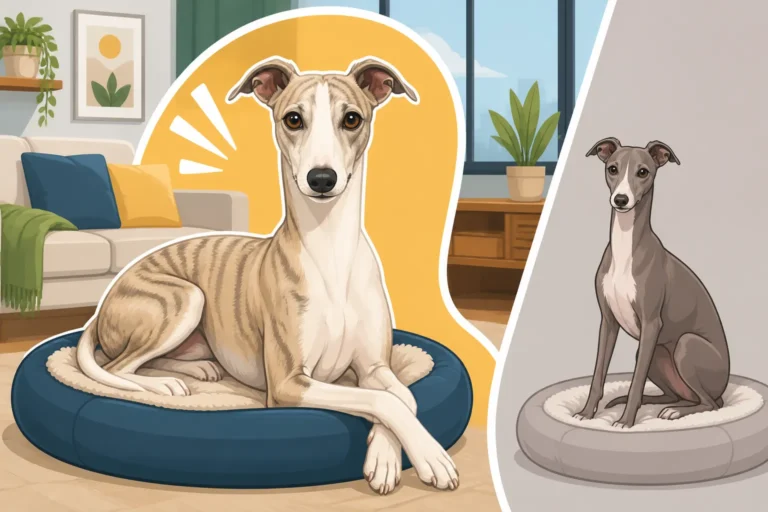
Whippets are often known for alternating between bursts of intense activity and long stretches of rest. A mix may inherit some of that pattern, or the other parent’s traits may make the dog more consistently busy. Even a dog that spends much of the day curled on a sofa still needs suitable activity, opportunities to sniff and explore, and safe outlets for play.
It is easy to misread this contrast. A Whippet mix might sprint around a fenced yard, then settle under a blanket for hours. That does not necessarily mean the dog needs a daily high-intensity run, nor does a calm afternoon prove that the dog will be easy to manage off leash. Plan exercise around the individual dog’s age, health, fitness, and behavior. If you are comparing expectations, Whether a Whippet Needs More Exercise Than a Greyhound offers useful background on the Whippet side, but the mix’s needs should be assessed on their own.
Personality is not inherited from breed alone. Early experience, socialization, training, and the dog’s history all influence how it handles new people, noises, and routines. A confident puppy from a nervous breed combination is possible, just as a shy puppy from friendly parents is possible. Meet the dog where it is: reward calm curiosity, give it space when it feels unsure, and avoid pushing it into greetings or busy environments before it is ready.
Living With a Whippet Mix
Cats and small pets need thoughtful introductions
A Whippet mix may live peacefully with a cat, but breed mix alone cannot establish whether a particular dog is safe with a particular animal. Some dogs grow up alongside a household cat and learn familiar routines; others remain highly interested in chasing cats, rabbits, or other small animals. Even a dog that is gentle indoors may react quickly when an animal runs.
If you are introducing a dog to a resident cat, start with barriers and distance. Let each animal become comfortable with the other’s smell and presence without forcing close contact. Use a leash for controlled introductions, make sure the cat has escape routes and elevated resting places, and reward the dog for disengaging or settling. Supervise interactions, especially during the early weeks and whenever the animals are excited. Never assume that a puppy’s small size or an apparently friendly greeting removes the risk of a chase.
The same care applies to small dogs and other pets. A Whippet mix may be playful and sociable with dogs, but a large size difference, fast play, or a strong chase response can create problems. Observe body language and step in before play becomes overwhelming. Living With a Whippet and a Cat and Whether a Whippet Is Safe With Small Dogs can help you think through the Whippet-related considerations, while remembering that the individual dog in front of you is the best guide.
Training and equipment should suit the dog you have
Many Whippets are sensitive to harsh handling, and a mix may inherit that sensitivity. Calm, consistent training with rewards for the behavior you want is a practical place to start. Short sessions can help keep learning engaging, especially for a young dog that becomes distracted or frustrated when asked to repeat the same exercise for too long. If the dog seems worried, reduce the difficulty instead of increasing pressure.
Preventing escapes matters because some Whippet mixes can be fast and focused when they spot something to chase. Check that fencing is secure, supervise the dog in the yard, and use a properly fitted walking setup. Whippet-shaped dogs can have narrow heads and necks, so a collar that fits another dog may not fit securely on yours. When shopping at a local store or Chewy, check the product’s sizing guidance and measure your dog rather than choosing by weight alone. Recheck the fit as a puppy grows.
Choose supplies for the dog’s actual shape, coat, and habits. A lean, short-coated mix may appreciate warm bedding or a coat in cold weather, while a mix with a denser coat may need different layers. If you order from Chewy or another retailer, compare measurements and return terms before buying several sizes. Chewy can also be one place to look for enrichment toys or walking equipment, but the important part is selecting products that fit safely and suit the individual dog—not buying items because the listing calls them suitable for a particular mix.
Health, Growth, and What to Ask Before Bringing One Home
A mix does not come with a guaranteed health advantage
A Whippet mix may inherit health risks associated with either parent, and mixed ancestry does not guarantee that a dog will avoid inherited conditions. The relevant concerns depend on the other breed, the parents’ family histories, and which traits the puppy inherits. Ask about health screening and veterinary history for both parents where possible, rather than relying on broad claims that a crossbreed is automatically healthier.
For a puppy from a breeder, ask what health tests were performed, what results are available, and whether the breeder can explain the purpose of each test. For a rescue dog, ask what is known about its medical background and whether it has had a veterinary examination. If information is limited, that does not make the dog a poor choice; it simply means you should discuss an appropriate baseline health plan with your veterinarian.
As the dog grows, pay attention to changes rather than assuming every concern is part of the mix. Persistent limping, sudden exercise intolerance, unexplained weight change, or a new lump deserves a veterinary conversation. Keep routine checkups and preventive care in place, and bring any known information about the dog’s parentage or history. A mix’s breed label can suggest useful questions, but it cannot diagnose or predict an individual dog’s health.
A realistic plan is better than a perfect breed prediction
Before adopting, think through the practical parts of daily life. Can you safely contain a dog that may be quick? Do you have a plan for introductions if you have cats or small pets? Are you prepared to adjust exercise as the dog matures and its abilities become clearer? These questions are more useful than trying to decide whether the dog will be exactly like a Whippet or exactly like the other parent.
During the first weeks, keep routines predictable and give the dog time to settle. Notice what motivates it, what makes it uneasy, and how it responds to movement, visitors, and other animals. A simple record of behavior can help you spot patterns—for example, whether the dog is calm around a familiar cat but becomes alert when outdoor cats run past the window. Share those observations with a trainer or veterinarian if you need guidance.
Most of all, make room for the dog to be an individual. One Whippet mix may be a tireless playmate; another may prefer quiet walks and a soft bed. One may have a strong chase response, while a littermate shows little interest in moving animals. You can prepare for likely Whippet traits without treating them as a guarantee. Thoughtful management, patient training, and attention to the dog’s actual needs will matter far more than guessing its personality from its mix.
Disclaimer
This article is for general informational purposes only and does not constitute professional advice. Laws, prices and regulations vary by location and change over time. Consult a qualified professional for guidance on your specific situation.