Whether a Blue Whippet Is Purebred
It’s a common scenario: you’re scrolling through pictures of adorable Whippet puppies, and a striking slate-grey or silvery-blue one catches your eye. You instantly fall in love with its unique hue, but then a question pops into your head – is a blue Whippet actually purebred? There's a lot of old wives' tales and even some misinformed opinions floating around about certain coat colors and their impact on a dog's lineage or health. It can be truly confusing when you're trying to make an informed decision about bringing a Whippet into your life. This comprehensive guide will clear up all the mystery surrounding blue Whippets, explaining their genetics, clarifying their place within the breed standard, and reassuring you about their health and purity.
Unpacking the "Blue" in a Whippet's Coat
When we talk about a "blue" Whippet, we're not talking about a vibrant, unrealistic crayon blue. Instead, it refers to a specific genetic phenomenon that results in a beautiful range of grey tones. This color is completely natural and has a clear scientific explanation, making these dogs just as much Whippets as their fawn, brindle, or black counterparts.
The Science of Color Genetics: Dilution
The fascinating thing about dog coat colors is that they are all determined by a relatively small number of genes, and "blue" is a perfect example of how these genes interact. In Whippets, and indeed in many other dog breeds, the color blue arises from a genetic trait called dilution. This isn't some rare or artificial mutation; it's a naturally occurring variant that affects the intensity of a dog's base coat color.
Specifically, "blue" in dogs is a diluted form of black pigment. Think of it like this: a dog that would genetically be black instead expresses a diluted version of that black, turning it into a shade of grey. This happens because of a specific gene, often referred to as the "D locus." Every dog inherits two copies of this gene, one from each parent. If a dog inherits two copies of the recessive "dilute" allele (often denoted as 'd'), its black pigment will be diluted to blue, and its red/yellow pigment will be diluted to cream or "isabelline." So, a blue Whippet simply has the genetic makeup 'dd' for dilution, which acts on any black pigment present. It's truly no different than a dog having a gene for short hair versus long hair; it's just a different expression of a natural genetic possibility. This is why Why a Blue Whippet Is a Dilute is a natural phenomenon, not a sign of mixed breeding.
What "Blue" Really Looks Like on a Whippet
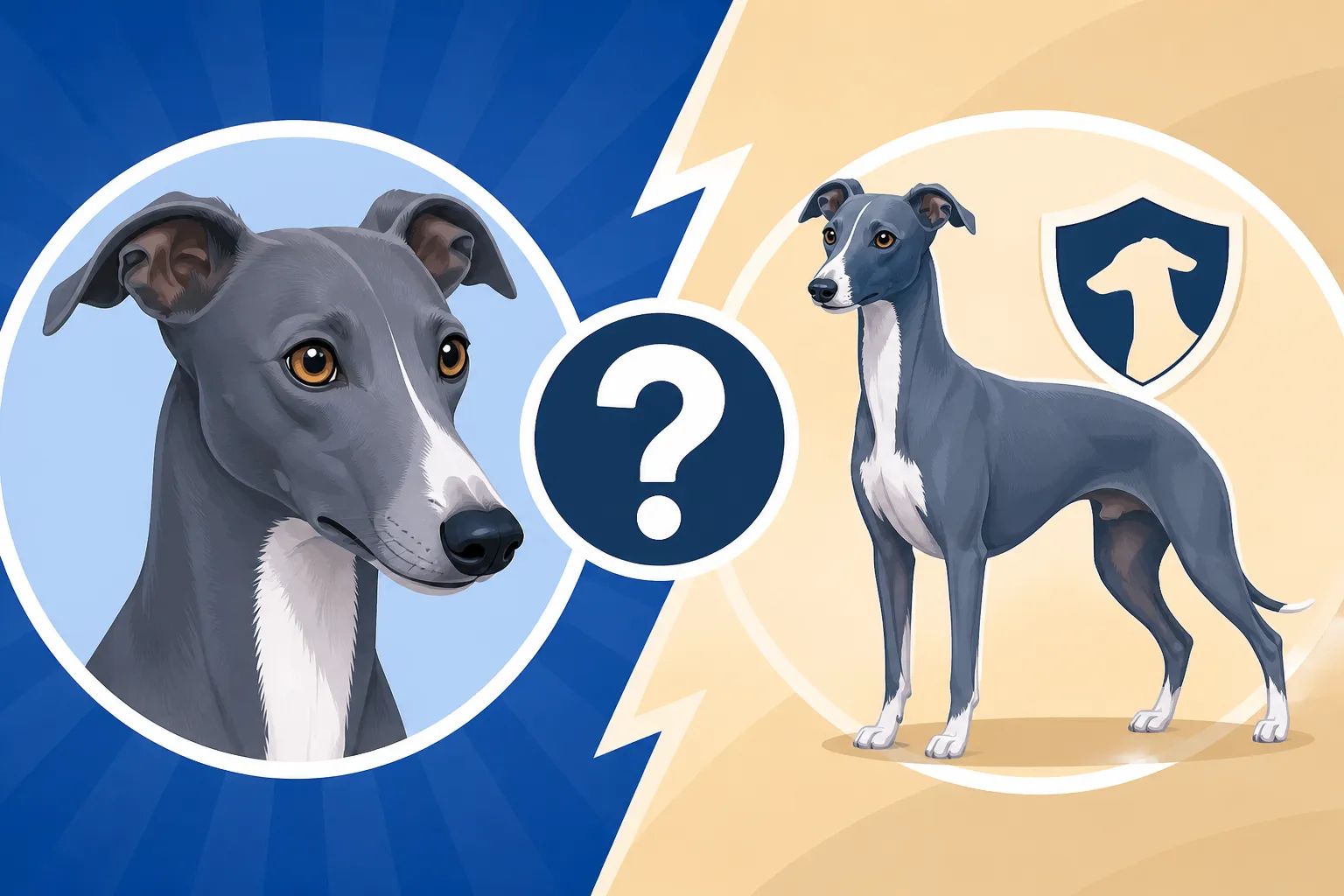
The term "blue" can be a bit misleading for someone unfamiliar with canine genetics. It conjures images of something otherworldly, but in reality, a blue Whippet’s coat typically ranges from a deep, rich slate grey to a much lighter, silvery-grey, almost platinum hue. You might see a blue Whippet that looks almost black in certain light, only for the sun to reveal its undeniable grey undertones.
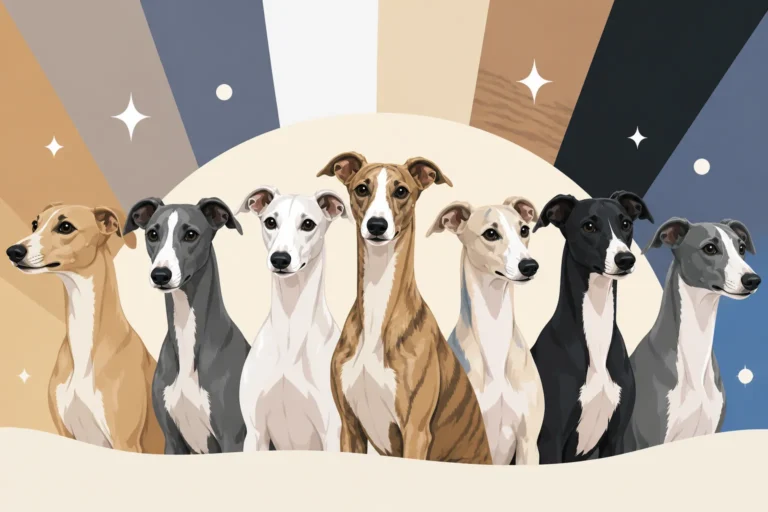
Beyond the body coat, the dilution gene also affects other pigmented areas. A blue Whippet will almost always have a blue nose, often matching the shade of its coat or being a darker charcoal. Their eye rims and paw pads will also be blue, rather than black. Sometimes, their eyes can appear lighter, perhaps a hazel or even a striking gold, particularly in pups, though they usually darken with age. It's a beautiful, elegant color that gives the Whippet a distinctive, refined appearance. It’s certainly not a common sight in every park, which might contribute to the misconception about its rarity or purity, but it's a perfectly natural part of the spectrum of Whippet colors. If you were to line up all the Whippet colors, from solid black to solid white, The Colors a Whippet Comes In you'd see how beautifully blue fits into that natural variation.
Blue Whippets and the Official Breed Standard
One of the most common concerns about "unusual" colors in any breed is whether they are accepted by the official kennel clubs. When it comes to Whippets, you can breathe a sigh of relief! Blue Whippets are unequivocally recognized and accepted by all major kennel clubs worldwide.
Kennel Club Recognition of All Colors
Yes, a blue Whippet is absolutely considered purebred and is fully accepted by prominent organizations like the American Kennel Club (AKC), the United Kennel Club (UKC), and the Fédération Cynologique Internationale (FCI), which governs many international kennel clubs. The Whippet breed standard, which describes the ideal characteristics of the breed, is quite liberal when it comes to color. Generally, it states that "any color or mixture of colors is permissible." This means that whether your Whippet is solid blue, blue brindle, blue fawn, or blue and white, its color does not in any way affect its status as a purebred Whippet or its ability to compete in conformation events.
This broad acceptance is a hallmark of the Whippet breed and reflects its history. Unlike some breeds where specific colors were deliberately bred for or against, the Whippet's purpose as a speedy coursing and racing dog meant that function always trumped form, including color. As such, breeders historically focused on speed, conformation, and temperament, allowing a vast array of colors to flourish. So, if anyone tells you a blue Whippet isn't purebred because of its color, they are simply misinformed. The breed standard is very clear on this point, and you can easily verify it on the official websites of these kennel clubs.
Why Some Misconceptions Persist
Given that blue is a perfectly acceptable and recognized color for a purebred Whippet, why do these misconceptions and doubts persist? Often, it comes down to a few factors:
Firstly, blue Whippets might be less common than, say, fawn or brindle Whippets, depending on the breeding lines in a particular region. This relative scarcity can lead some people to mistakenly believe that anything less common must be "not standard" or "mixed." It's a classic case of rarity breeding suspicion, even when unfounded.
Secondly, there can be some personal preferences among individual breeders or long-time fanciers. While the breed standard officially accepts all colors, some individuals might prefer or specialize in breeding certain colors, and inadvertently, this can create an impression that other colors are less desirable or "correct." This is purely anecdotal and subjective, not based on the official standard. How the Show Ring Refined the Whippet often focused on overall conformation, gait, and temperament, with color being secondary, though presentation certainly matters.
Lastly, the internet, while a treasure trove of information, can also be a breeding ground for misinformation. Terms like "rare blue Whippet" or "designer Whippet colors" can be used by less reputable breeders to inflate prices or create an aura of exclusivity. This further perpetuates the myth that blue is somehow an anomaly rather than a natural part of the breed's genetic tapestry. It's crucial for prospective owners to look past such marketing tactics and understand the factual basis of Whippet genetics and breed standards.
Health and Temperament: Are Blue Whippets Different?
Beyond concerns about purity, a common question often arises about the health and temperament of blue Whippets. Is there any truth to the idea that certain colors are inherently linked to specific health problems or behavioral quirks? For blue Whippets, the answer is a resounding no, but it's important to understand the nuances.
General Health and the Dilute Gene
Let's get this straight: the dilute gene (dd) that produces the blue color in Whippets does not inherently cause any health problems. A blue Whippet is just as likely to be healthy as a fawn, black, or brindle Whippet, provided it comes from responsible breeding. The color itself is merely an aesthetic expression of a normal gene.
There are, however, some breeds where the dilute gene can be linked to a condition called Color Dilution Alopecia (CDA). This is a genetic skin condition that can cause hair thinning or loss, and sometimes skin infections, primarily in dilute-colored dogs. Breeds like Doberman Pinschers, Great Danes, and Chihuahuas are more commonly affected. However, CDA is extremely rare, almost unheard of, in Whippets. While it’s good to be aware of the possibility, it is not a characteristic health concern for blue Whippets. If you see a Whippet with hair loss, it’s far more likely to be due to other common canine skin issues than CDA directly related to its blue color. Whether a Blue Whippet Has Skin Problems is a question that often comes up, but in Whippets, the answer is generally reassuring.
What does impact a Whippet's health is the overall genetic health of its parents and the breeder's commitment to screening for known breed-specific issues. The Health Tests Both Whippet Parents Should Have are far more critical than coat color when assessing a puppy's potential health. These tests screen for things like cardiac health and eye conditions, which are true concerns in the breed, regardless of coat color.
Temperament and the Blue Coat
Absolutely zero. There is no scientific or anecdotal evidence to suggest any link between a Whippet's coat color and its temperament. A blue Whippet is not inherently calmer, more nervous, more aggressive, or more playful than a Whippet of any other color. Their personality and behavior are shaped by their genetic lineage (the temperament of their parents and grandparents), early socialization, training, and environment, not by the shade of their coat.
A blue Whippet will exhibit all the wonderful, typical Whippet traits: they are often affectionate, gentle, quiet indoors, and possess that famous burst of speed outdoors. They are just as likely to be "forty-mile-an-hour couch potatoes" as any other Whippet. The Whippet Is a Forty Mile an Hour Couch Potato is a description that applies universally across all colors. So, if you're looking for a dog with a specific temperament, focus on meeting the puppy's parents, asking the breeder about their dispositions, and ensuring the puppy receives proper socialization from a young age. Don't let a dog's color influence your perception of its potential personality.
The Historical Context of Whippet Colors
Understanding the history of the Whippet breed sheds even more light on why such a wide array of colors, including blue, has always been an integral part of their genetic makeup. The Whippet's origins are rooted in function, not fashion, and this has greatly influenced the acceptance of all coat variations.
Early Whippets and Color Diversity
The Whippet emerged in England during the late 18th and early 19th centuries, primarily in the northern coalfields. These dogs were bred by working-class miners as small, fast sighthounds, often referred to as "the poor man's racehorse." Their purpose was clear: to chase and catch game (like rabbits) for the pot and to compete in "rag racing," where they would sprint after a rag or lure across a field. Rag Racing and the Week's Wages Riding on a Whippet was a popular pastime, and the ability to win often meant extra income or food for a family.
In this context, speed, agility, endurance, and a keen prey drive were paramount. Appearance, beyond a basic sighthound structure conducive to running, was largely secondary. Breeders focused on pairing the fastest dogs with one another, regardless of their coat color. Because the dilute gene is a natural part of the canine gene pool, it was certainly present in the ancestral dogs that contributed to the Whippet breed (Greyhounds, terriers, and potentially Italian Greyhounds). Therefore, blue dogs would have naturally appeared in litters from the very beginning. There was no selective pressure against blue coats; if a blue dog was fast, it was bred. This historical emphasis on performance over strict aesthetic uniformity is why the Whippet breed today is so accepting of all colors and patterns.
Marketing "Rare" Colors
It's unfortunate, but sometimes certain colors get labeled as "rare" or "exotic" purely for marketing purposes, often leading to inflated prices. While a blue Whippet might be less common than, say, a fawn or brindle in some regions, it is not genuinely "rare" in the sense of being a genetic anomaly or incredibly difficult to produce. It's simply the result of specific genetic combinations, just like any other color.
Responsible, ethical Whippet breeders do not charge more for a puppy based solely on its color, be it blue, black, or white. Their focus is on breeding healthy, well-tempered dogs that conform to the breed's overall standard, regardless of what shade their coat happens to be. When you see a breeder advertising "rare blue Whippets" at a significantly higher price, it should raise a red flag. This often indicates a breeder who is prioritizing trends and profit over the true welfare and integrity of the breed. It's similar to the phenomenon seen with other "rare" dog types, like The Marketing of Bully Whippets as Rare, where a specific trait is exploited for financial gain rather than upholding breed standards and health. A truly ethical breeder will educate you about the genetics, explain why all colors are accepted, and price their puppies based on their quality, health, and pedigree, not just their coat.
Ensuring Your Blue Whippet Is Purebred
If you're interested in adding a blue Whippet to your family, the most important thing is to focus on finding a responsible breeder who prioritizes health, temperament, and adherence to the breed standard, not just color. Verifying the purebred status of any Whippet, regardless of its coat color, involves a few key steps.
Verifying Pedigree and Health Testing
The ultimate proof of a Whippet's purebred status lies in its pedigree and registration papers from a recognized kennel club, such as the AKC in the United States or the Kennel Club in the UK. A reputable breeder will always provide you with these documents for your puppy. These papers trace the dog's lineage back several generations, confirming that all ancestors are indeed registered Whippets. The color of the dog, including blue, will be accurately recorded on these documents.
Beyond pedigree, responsible breeders are transparent about the health of their breeding dogs. They conduct specific health tests recommended for the Whippet breed, which often include cardiac evaluations (to check for heart conditions like Mitral Valve Disease, which can affect older Whippets), and sometimes eye certifications. These health clearances are crucial indicators of a breeder's commitment to producing healthy puppies. Ask to see the results of these tests for both parents. The color of a dog's coat has no bearing on these essential health screenings. What an OFA Cardiac Exam Costs a Whippet Breeder and What an Eye Certification Costs a Whippet Breeder are investments good breeders make to ensure the health of their lines.
When you're evaluating a litter, you'll want to observe the physical characteristics of the puppies and their parents. A purebred blue Whippet should still look like a Whippet in every other regard – graceful, lean, with a distinctive topline and rose ears. What the Whippet Standard Says About the Arch is a good reference point for general conformation. If a "blue Whippet" looks unusually bulky, has strange proportions, or an atypical coat texture (like a long coat, which is not standard for Whippets), these could be signs of mixed breeding, not just a different color. A great place to research breed specifics and connect with responsible breeders is through the American Whippet Club or other national breed clubs. You can often find a wide array of products suitable for any Whippet, like comfy beds and durable toys, on sites like Chewy.
What to Look for in a Responsible Breeder
Finding a responsible breeder is paramount, especially when you have specific preferences like coat color. Here's what to look for:
- Transparency and Education: An ethical breeder will be open and honest about everything, from genetics and health to their breeding philosophy. They should be able to explain why their Whippets are blue and how that fits within the breed standard. They won't make exaggerated claims about rarity or charge extra for a blue coat.
- Health Testing: As mentioned, they will readily provide documentation of health clearances for both parents, including cardiac exams and eye certifications.
- No Pressure Sales: They won't pressure you into buying a puppy and will likely have a thorough vetting process for potential buyers. They care where their puppies go.
- Lifetime Support: A good breeder will offer ongoing support and guidance for the life of your Whippet. They want to ensure their dogs thrive in their new homes.
- Clean and Caring Environment: They should invite you to visit their home or kennel to see the puppies and their parents in a clean, safe, and stimulating environment.
- Contracts and Guarantees: Expect a written contract that outlines terms, health guarantees, and often a spay/neuter clause or a return policy if you cannot keep the dog. Whether a Whippet Contract Requires Neutering is a common clause.
- Focus on the Whole Dog: Their primary focus will be on breeding healthy, well-tempered dogs that are good representatives of the breed, not just on producing a specific color. While shopping for toys or food, you'll see every color of Whippet imaginable gracing the pages of sites like Chewy, a testament to their variety and popularity.
A blue Whippet is a truly stunning dog, and their striking color is a perfectly natural and accepted part of the breed. Don't let misconceptions or misleading marketing deter you from welcoming one into your home. By focusing on responsible breeding practices and understanding the genetics behind their beautiful coats, you can confidently choose a purebred blue Whippet that will bring joy and grace to your life. No matter the color, every Whippet needs high-quality nutrition, and many owners find great options on Chewy for their sensitive sighthound stomachs. And for those cold weather walks, a good coat is essential for any Whippet, blue or otherwise, and you can find many styles on Chewy.
| Whippet Coat Color Description | Genetic Basis (Simplified) | Breed Standard Acceptance | Common Misconceptions Addressed |
|---|---|---|---|
| Black (Solid or with white) | Dominant 'E' and 'B' alleles | Fully Accepted | Often seen as "classic" |
| Fawn (Tan, Red, Cream) | Recessive 'b' allele, or 'E' allowing red | Fully Accepted | Very common and recognizable |
| Brindle (Striped pattern) | 'Kbr' allele | Fully Accepted | Pattern varies widely |
| Blue (Diluted Black) | Two recessive 'd' alleles | Fully Accepted | "Rare," "Not purebred," "Unhealthy" |
| Isabelline (Diluted Fawn) | Two recessive 'b' and 'd' alleles | Fully Accepted | Less common, often mistaken for light fawn |
| White (Solid or with markings) | 'S' locus variations | Fully Accepted | Sometimes mistaken for albino, deafness (rare in Whippets) |
Disclaimer
This article is for general informational purposes only and does not constitute professional advice. Laws, prices and regulations vary by location and change over time. Consult a qualified professional for guidance on your specific situation.