How Much a Whippet Puppy Eats at Four Months
It's such an exciting time when you have a four-month-old Whippet puppy bouncing around your home! They're growing at an incredible rate, and it's easy to feel overwhelmed by all the conflicting advice out there about feeding. One of the biggest worries I hear from new Whippet owners is, "Am I feeding them enough? Too much? Are they getting the right nutrients?" This guide is here to cut through the confusion and give you a realistic, empathetic look at how much a four-month-old Whippet puppy truly needs to eat to thrive.
Understanding Your Whippet Puppy's Growth at Four Months
Four months old is a pivotal stage in a Whippet puppy's development. They're still very much in their "baby" phase, but their bodies are working overtime to lay the groundwork for their athletic, lean adult physique. It’s a time of rapid change, and their dietary needs reflect that intense growth.
The Rapid Growth Phase
At four months, your Whippet puppy is in a high-octane growth period. Think of their tiny bodies as construction sites, constantly building and expanding. They're not just getting taller; their bones are lengthening, their muscles are starting to define, and their internal organs are maturing. This isn't just about packing on pounds; it's about developing strong, healthy structures that will support their active lifestyle for years to come. Because Whippets are genetically predisposed to a lean, muscular build, this growth needs to be fueled by high-quality nutrition that supports this specific kind of development without promoting excessive fat. It's a delicate balance, and getting it right now can impact their long-term health and soundness.
Unlike some other breeds that might have a more gradual growth curve, Whippets often experience noticeable growth spurts during this age. You might wake up one morning and swear your puppy grew an inch overnight! These spurts demand a consistent supply of energy and building blocks. Their metabolism is incredibly efficient, turning food into lean muscle and bone with remarkable speed. This rapid turnover means they need easily digestible, nutrient-dense food to keep up with the demands of their growing bodies and endless puppy energy. It's not about quantity over quality here; it's about providing the right fuel for their unique genetic blueprint.
Why Whippets Aren't Like Other Breeds
If you've ever owned other dog breeds, you'll quickly realize that Whippets march to the beat of their own drum when it comes to body type and metabolism. They are sighthounds, bred for speed and agility, and their physiology reflects that. At four months, they already exhibit that lean, almost delicate appearance that can sometimes make well-meaning strangers think they're underweight. But this leanness is normal and healthy for a Whippet. They simply don't carry the same amount of body fat or bulk as many other breeds. Trying to "fatten them up" to look like a Labrador puppy, for instance, would be detrimental to their joint health and overall structure.
Their fast metabolism means they burn through calories more quickly than many other breeds. While they are famous for being "40 mph couch potatoes," those bursts of puppy energy and zoomies are incredibly taxing on their system. A generic feeding guide based on a "medium-sized breed" might lead you to underfeed or overfeed, neither of which is ideal. Underfeeding could hinder crucial development, while overfeeding could put unnecessary strain on their developing joints and compromise their naturally athletic frame. This is why paying close attention to your individual Whippet's condition, rather than just the number on the bag, is paramount. You really need to understand the nuances of a sighthound's body.
What an Ideal Four-Month-Old Whippet Looks Like
So, what should your four-month-old Whippet puppy look like if they're being fed appropriately? The key is to see them as lean and athletic, not bony or starved. You should be able to easily feel their ribs, but they shouldn't be sharply protruding. Think of it like feeling the knuckles on your hand – distinct, but not painfully sharp. Their waist should be clearly defined, tucking up from their ribcage to their hips, creating that classic sighthound curve. There should be no visible fat rolls or a saggy belly, even after a meal. This visible waistline is a hallmark of a healthy Whippet.
You might also be able to faintly see the last two or three ribs when they move or stretch, which is perfectly normal for a Whippet puppy at this stage. Their hip bones should be palpable with light pressure, but not jutting out prominently. A healthy four-month-old Whippet should also be bursting with energy – periods of intense play followed by deep, contented naps. Their coat should be shiny and soft, and their eyes bright and clear. If your puppy seems lethargic, has a dull coat, or their ribs are much too prominent, it might be a sign they need more food or a different quality of food. Conversely, if they're starting to look round or you can't easily feel their ribs, it's time to cut back slightly. It’s important to familiarize yourself with Whether a Whippet's Spine Should Be Visible and Feeling a Whippet's Ribs and Hip Bones to properly assess their condition.
How Much to Feed and What to Look For
Determining the exact amount of food for your four-month-old Whippet puppy isn't an exact science, but it’s certainly an art you can master with a bit of observation and adjustment. The goal is to provide enough fuel for growth and energy without overdoing it.
Reading the Food Bag (with a Sighthound Twist)
Every bag of puppy food comes with feeding guidelines, usually based on the puppy's current weight and anticipated adult weight. Think of these as a starting point, not a rigid bible. For a rapidly growing Whippet, these general recommendations often need a bit of adjustment. Many manufacturers base their charts on more typical "medium" breeds, which can lead to overfeeding for a lean sighthound or, sometimes, underfeeding given their metabolic rate during growth spurts.
When you look at the bag, find the recommendation for your puppy's current weight and then consider their activity level. A Whippet puppy who has daily zoomies in a secure yard will naturally burn more calories than one whose exercise is limited to short leash walks. Start with the lower end of the recommended range and observe your puppy's body condition over a week or two. Are they maintaining that lean, athletic look? Are their energy levels consistent? Are their stools firm and healthy? If you're struggling to find the right food or just want to browse options, online retailers like Chewy offer a vast selection, allowing you to compare ingredients and brand-specific feeding charts to help you make an informed decision. Remember that their adult weight is typically The Age a Whippet Reaches Full Full Weight and ranges around What an Adult Male Whippet Weighs or What an Adult Female Whippet Weighs, so aim for the "adult weight" category that fits your pup.
The Importance of High-Quality Puppy Food
Feeding a high-quality puppy food is non-negotiable for a growing Whippet. Their rapid development demands nutrient-dense ingredients that support strong bone, joint, and muscle formation. Look for foods where a named meat source (like "chicken meal" or "lamb") is listed as the first ingredient, indicating a good protein content. Protein is crucial for muscle development, which is particularly important for Whippets. Avoid foods with excessive fillers, artificial colors, or by-products as primary ingredients.
Beyond protein, the right balance of fats for energy and healthy skin/coat, and carefully calibrated calcium and phosphorus levels for bone growth are essential. While puppies need calcium, too much calcium can actually be detrimental for rapidly growing large or medium breeds, potentially contributing to orthopedic issues. A reputable puppy food will have these ratios optimized. Some owners even explore fresh food options, like those offered by Ollie, which can provide highly digestible, minimally processed nutrition tailored to your dog's needs. While a Whippet puppy typically doesn't need "large breed" puppy food, it's important to choose one formulated for growth that supports their unique needs rather than hindering them with incorrect nutrient ratios. You can learn more about specific dietary considerations in Whether a Whippet Puppy Needs Large Breed Food.
Monitoring Your Puppy's Body Condition
This is where your hands-on involvement becomes critical. More than any feeding chart, your puppy's actual body condition is the best indicator of whether you're feeding them correctly. At four months, your Whippet should have that sleek, refined appearance. You should easily be able to feel their ribs without pressing hard, like running your hand over a washboard covered by a thin towel, not a pillow. You should also be able to see a distinct waist tuck when looking down at them from above, and from the side, their abdomen should rise up towards their loins.
Make it a habit to perform a quick body condition check a few times a week. Run your hands over their ribs, hips, and spine. Are their hip bones a little too prominent? Are their ribs feeling too sharp? This might mean a slight increase in food. Are you struggling to feel their ribs at all, or is that waistline starting to disappear? Time to reduce the amount slightly. Consistency is key here. What constitutes an ideal What Body Condition Score a Whippet Should Be is something every Whippet owner should understand and monitor regularly. These checks are far more valuable than simply adhering to a measurement on a bag.
Feeding Schedules and Common Pitfalls
Establishing a consistent feeding routine is just as important as the quantity and quality of food, especially for a young, growing Whippet puppy. Their digestive systems are still developing, and regularity helps prevent upset tummies and ensures they're absorbing nutrients efficiently.
The Three-Meal-A-Day Routine
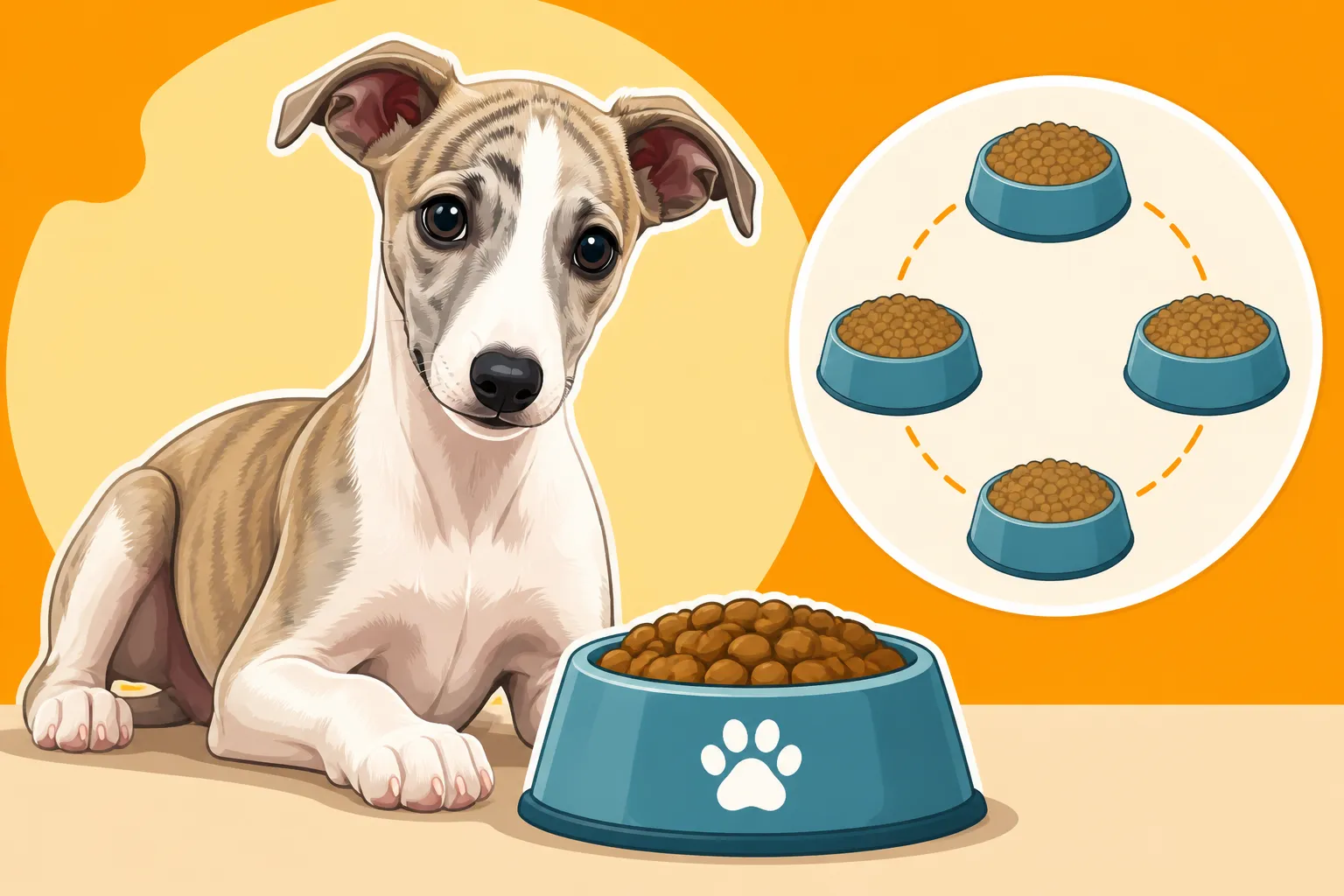
At four months old, your Whippet puppy is best served by three meals spread throughout the day. Their small stomachs aren't designed to handle a single large meal, and multiple smaller meals help keep their blood sugar stable, provide a steady stream of energy for growth and play, and reduce the risk of digestive upset. Aim for breakfast, lunch, and dinner, spaced out roughly 6-8 hours apart. For instance, if you feed at 7 AM, 1 PM, and 7 PM, that works out beautifully.
This routine also helps with house training, as what goes in must eventually come out! You'll be able to predict their potty schedule better, making training a smoother process. As they grow older, typically around 6-8 months, you might transition them to two meals a day, but for now, three is the magic number. This consistent schedule also fosters a sense of security and routine for your puppy, reducing anxiety and allowing them to focus on growing and learning. Understanding The Meal Schedule a Whippet Puppy Needs is crucial for healthy puppy development.
Avoiding Common Puppy Feeding Mistakes
It's easy to fall into common feeding traps, especially with an adorable, constantly hungry-looking Whippet puppy. One of the biggest mistakes is free-feeding, leaving food out all day. While convenient for owners, it makes it impossible to monitor how much your puppy is actually eating, can lead to picky eating habits, and doesn't establish a routine. More importantly, Whippets are sighthounds, and like many deep-chested breeds, they can be at a slightly increased risk for bloat (Gastric Dilatation-Volvulus or GDV). While the risk is lower in puppies, consistent meal times with rest before and after eating are good habits to establish early.
Another common pitfall is giving excessive treats. While treats are wonderful for training, their calories add up quickly. If you're giving a lot of training treats, remember to account for those calories and slightly reduce their meal portions. Treats should never make up a significant portion of their daily intake. Lastly, resist the urge to switch foods frequently. A puppy's digestive system is sensitive. If you need to change foods, do so gradually over 7-10 days, mixing increasing amounts of the new food with decreasing amounts of the old food. Sudden changes can lead to diarrhea and stomach upset.
Water, Treats, and Supplementation
Fresh, clean water should always be available to your four-month-old Whippet puppy. Hydration is vital for all bodily functions, especially for a growing, active pup. Ensure their water bowl is always full and clean, and consider having multiple water stations around the house if you have a large home or multiple floors.
When it comes to treats, choose high-quality, small, and easily digestible options. For training, soft, pea-sized treats work best. As mentioned, be mindful of the calorie content. If your puppy is doing a lot of training with treats, adjust their main meal portion slightly to prevent unwanted weight gain. You can find a wide variety of suitable treats on platforms like Amazon or Chewy. As for supplementation, generally, a high-quality puppy food is already nutritionally complete and balanced, so additional supplements are usually unnecessary. Unless specifically recommended by your veterinarian for a diagnosed deficiency or condition, avoid adding vitamins, minerals, or other supplements. Excessive amounts of certain nutrients can be harmful. For example, while some people might consider supplements for skin and coat, a healthy puppy diet already provides what's needed. Whether a Whippet Needs Fish Oil is a topic best discussed with your vet if you have concerns about skin and coat health.
| Aspect | 4-Month-Old Whippet Puppy | Adult Whippet |
|---|---|---|
| Meal Frequency | 3 meals per day | 2 meals per day (sometimes 1 for less active) |
| Primary Goal | Growth & Development | Maintenance & Energy |
| Calorie Needs | Higher per pound of bodyweight due to rapid growth | Lower per pound, based on activity and metabolism |
| Body Condition | Lean, ribs easily felt, visible waist tuck | Lean, ribs easily felt, distinct waist tuck |
| Food Type | High-quality puppy formula | High-quality adult formula |
| Treat Consideration | Use sparingly, factor into daily intake | Use sparingly, factor into daily intake |
When to Adjust and When to Seek Vet Advice
Feeding a growing puppy is an ongoing process of observation and adjustment. Your four-month-old Whippet won't have the exact same caloric needs every single day, and their body condition can change as they hit growth spurts. Knowing when to tweak their diet and when to call the vet is a key part of responsible puppy ownership.
Signs Your Puppy Needs More or Less Food
The visual and tactile checks you perform regularly are your best indicators. If you notice your puppy's ribs becoming much more prominent, or their hip bones starting to really stick out, despite their usual intake, it could be a sign they're having a growth spurt and need a slight increase in food. They might also seem unusually hungry, constantly searching for crumbs, or have less energy than usual if they're not getting enough fuel. On the flip side, if you're struggling to feel their ribs, or they're starting to develop a "barrel" shape, it's time to slightly reduce their portions. Lethargy combined with weight gain could also be a sign of overfeeding or an underlying issue.
Always combine these physical checks with their overall demeanor. A healthy, well-fed four-month-old Whippet should be bright, alert, playful, and have a healthy appetite. If you've been consistent with feeding a good quality food and you're seeing concerning changes in their weight or energy levels, don't hesitate to investigate further. It’s also helpful to track their weight weekly on a scale if you can, as this gives you an objective measure alongside your visual checks. Sudden, unexplained weight loss is always a red flag. If your Whippet puppy is reluctant to eat or seems to be struggling to keep weight on, you might want to read Getting Weight On a Whippet That Will Not Eat.
Growth Spurts and Calorie Needs
Puppies don't grow at a perfectly steady rate. They often experience periods of rapid growth, followed by plateaus. During these growth spurts, their appetite might dramatically increase, and they might appear to lose weight overnight even if you're feeding them the same amount. This is when you'll need to be flexible and slightly increase their food. Pay attention to their hunger cues – if they're finishing their meals quickly and still seem to be looking for more, and their body condition reflects a need for more calories, a small increase is appropriate.
Conversely, during a plateau, their appetite might dip slightly. Don't force them to eat if they're leaving a little behind, as long as their body condition remains ideal and they're otherwise healthy. The goal is to feed the individual puppy in front of you, adjusting based on their current needs rather than sticking rigidly to a set amount. This is why daily observation is so important. These fluctuations are normal and just require you to be a responsive and attentive owner.
The Vet's Role in Puppy Nutrition
Your veterinarian is your most valuable partner in ensuring your Whippet puppy's healthy development. Regular puppy check-ups are not just for vaccinations; they're an opportunity to discuss your puppy's diet, growth, and overall health with a professional. Your vet can assess your puppy's body condition objectively, answer specific questions about their food, and address any concerns you might have about their appetite or stool quality.
If you're unsure about the right type of food, or if your puppy has any digestive sensitivities, your vet can provide tailored recommendations. They can also rule out any underlying health issues that might be affecting your puppy's appetite or weight gain. It's especially important to consult your vet if your puppy is consistently refusing to eat, experiencing chronic diarrhea or vomiting, or if you're concerned about any specific health conditions that might require a specialized diet. They have a wealth of knowledge on things like The Health Tests Both Whippet Parents Should Have for the parents, which can sometimes provide insight into potential puppy health concerns. Remember, while a Whippet is generally Why a Whippet Is Cheap to Feed and Expensive to Insure, proper vet care and nutrition are crucial investments in their long-term well-being.
Disclaimer
This article is for general informational purposes only and does not constitute professional advice. Laws, prices and regulations vary by location and change over time. Consult a qualified professional for guidance on your specific situation.