Whether a Whippet Should Be Allowed on Furniture
It's a question nearly every Whippet owner quietly asks themselves: should your sleek, sensitive sighthound be allowed to curl up on the sofa or even in your bed? Many of us wrestle with the desire to cuddle our lean, cold companions versus concerns about hygiene, hair, or setting boundaries. This guide is here to explore the inherent draw of soft furnishings for Whippets, weigh the practicalities, and offer realistic ways to manage furniture access while keeping everyone happy and comfortable.
The Instinctive Desire for Softness: Why Whippets Seek Out Your Sofa
Let's be honest, few dogs embody the term "creature comfort" quite like a Whippet. With their fine, sparse coats and minimal body fat, they are notoriously sensitive to cold and hard surfaces. This isn't just a preference; it's a physiological need.
Whippets and Their Need for Warmth and Padding
Imagine trying to get comfortable on a hard floor when you essentially have no natural insulation and very little padding. That's a Whippet's reality. They shiver easily, even indoors, and their bony prominences can become sore surprisingly quickly on unyielding surfaces. This is why you'll often find them burrowed under blankets or seeking out the warmest, softest spot in the house. Your sofa, with its plush cushions and the lingering warmth of human bodies, is a natural magnet. They're not being defiant; they're seeking self-preservation and comfort. You might notice them gravitate towards sunny spots on the floor too, or try to squeeze themselves into any ray of sun streaming through a window – it’s all about warmth. This instinct is a core part of their breed, making a good quality, warm bed an absolute essential. A Whippet Has No Insulation and No Padding really goes into the details of why this is such a fundamental aspect of their care.
Avoiding Pressure Sores and Discomfort
Beyond just comfort, soft surfaces are crucial for a Whippet's health. Their delicate skin and lean bodies make them prone to developing pressure sores or calluses, especially on their elbows, hocks, and hips, if they consistently lie on hard floors. These can be painful and, in some cases, lead to skin infections. Allowing them on a soft couch or providing ample, well-cushioned beds throughout your home can help prevent these issues. Think of your furniture not just as a luxury, but as a therapeutic surface for their unique anatomy. Many owners have found themselves constantly buying new beds for their dogs, realizing that The Beds a Whippet Owner Keeps Buying is a recurring theme when you have a sighthound.
The Social Aspect: Being Part of the "Pack"
For many Whippets, being on the sofa isn't just about physical comfort; it's about social connection. Sighthounds are often incredibly bonded to their families and thrive on close proximity. When you're relaxing on the couch, your Whippet wants to be there with you, feeling like an integral part of the "pack." Denying them this can sometimes lead to feelings of isolation or anxiety, particularly in a breed that generally thrives on companionship. They see you up there, looking cozy, and they naturally want to join. This isn't necessarily a challenge to your authority, but a desire for closeness. This social aspect is why many find that Why a Whippet Cannot Sleep on a Hard Floor extends to a preference for sleeping near, or even with, their beloved humans.
The Pros and Cons of Sofa Privileges for Your Whippet
Deciding whether to allow your Whippet on the furniture involves weighing the benefits for their well-being and your bond against potential drawbacks for your home and lifestyle. There are valid points on both sides of this cozy debate.
Benefits for Your Whippet's Well-being and Your Bond
Allowing your Whippet on the couch can significantly contribute to their overall happiness and physical comfort. They get to enjoy the warmth and softness that their body craves, reducing the risk of pressure sores and keeping them toasty. This is especially true for senior Whippets, who might feel the cold more acutely or have developing joint stiffness. Caring for an Old Whippet That Feels the Cold becomes even more paramount. The shared space on the sofa also strengthens your bond, fostering a sense of security and belonging for your dog. For a breed that loves to be near its people, this close contact is deeply enriching. It transforms the sofa from just furniture into a communal comfort zone.
Potential Drawbacks: Hair, Hygiene, and Boundaries
Of course, there are downsides. Even short-haired Whippets shed, and their fine hairs can weave themselves into upholstery. If your Whippet enjoys rolling in mud or has seasonal allergies, sofa privileges can mean more cleaning. There's also the question of boundaries. While most Whippets aren't dominant, a dog that believes it has full reign over all furniture might occasionally exhibit less respect for other rules. Furthermore, if you have a puppy, allowing unfettered access to furniture, especially high pieces, could lead to accidental jumps and potential injuries before their growth plates are fully closed. This is a real concern, as even a seemingly minor jump could impact growing joints. You might find some helpful information in Raising a Whippet Puppy Without Wrecking Its Joints when considering early furniture access.
Here's a quick look at the common pros and cons:
| Aspect | Pros of Sofa Access for Whippets | Cons of Sofa Access for Whippets |
|---|---|---|
| Comfort | Provides warmth, softness, and support for bony bodies. | Can encourage a reliance on furniture over dedicated dog beds. |
| Health | Reduces risk of pressure sores and cold-related discomfort. | Potential for accidental falls/jumps, especially for puppies or seniors. |
| Bonding | Strengthens human-animal bond through shared proximity and affection. | May lead to perceived "entitlement" or minor boundary pushing. |
| Hygiene | Less direct contact with dirty floors; easier to keep dog clean if needed. | Shedding, dirt, and pet odors on upholstery; more frequent cleaning. |
| Training | Easy way to offer comfort without extensive 'place' training. | Can be harder to enforce 'off limits' areas if the dog is always allowed. |
| Cost | Reduces need for multiple expensive dog beds. | Potential wear and tear on furniture, requiring covers or cleaning. |
Setting Boundaries: How to Manage Furniture Access
If you decide that an open-door policy for furniture isn't for you, or you want to manage where your Whippet can and cannot go, there are plenty of effective and kind ways to set those boundaries. Remember, positive reinforcement is always the best route for sensitive sighthounds. How a Whippet Learns When It Bruises From Pressure is a key resource for understanding their unique temperament in training.
Establishing "On-Permit" or "Off-Limits" Areas
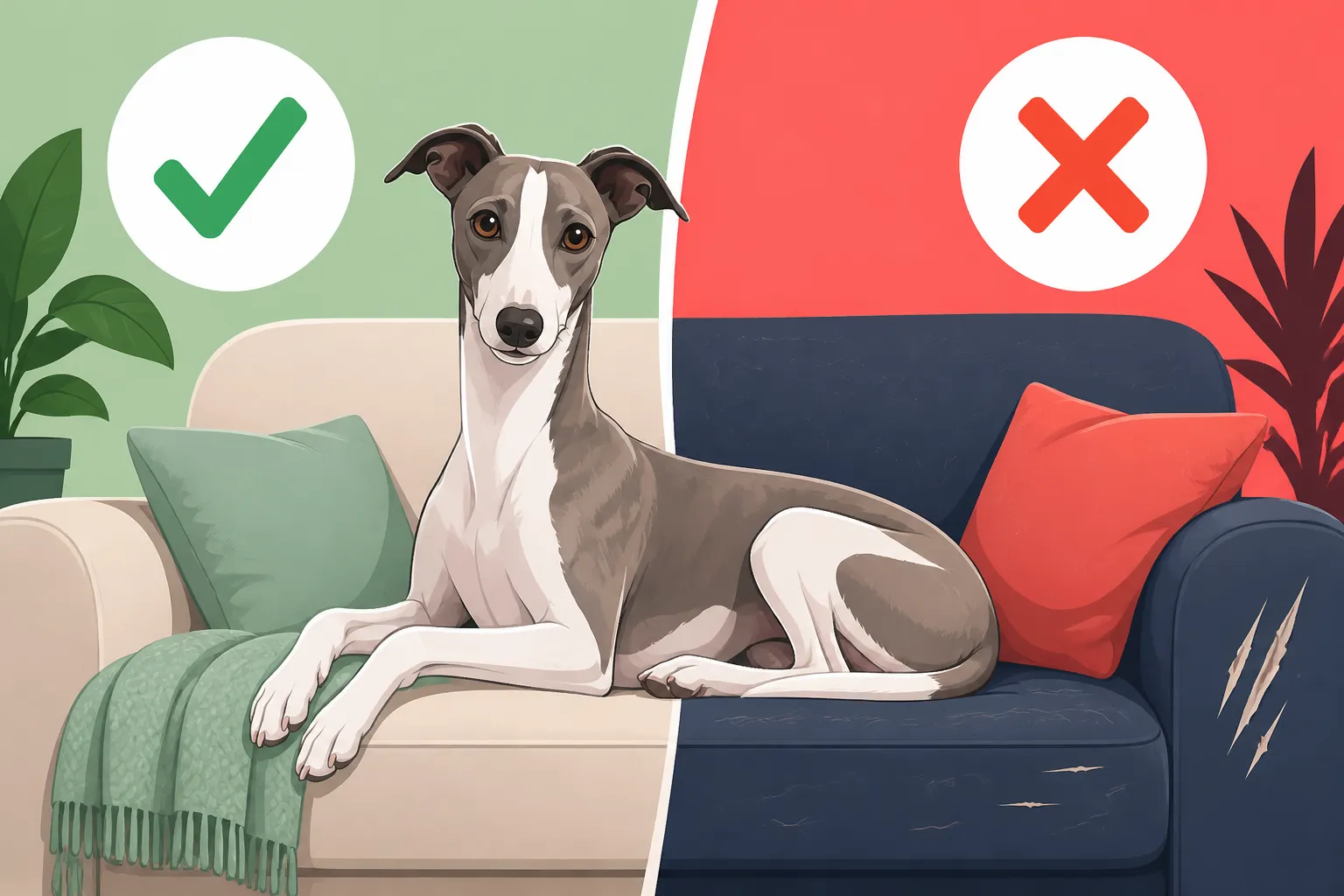
One common approach is to designate certain pieces of furniture as "on-permit" and others as "off-limits." Perhaps the living room sofa is fair game with a blanket, but the formal dining room chairs are not. Consistency is key here. Every family member needs to be on the same page. If your Whippet jumps on an off-limits piece, calmly redirect them to an appropriate soft bed on the floor or a designated "on-permit" spot. Reward them heavily for choosing the correct spot. Brands like Chewy and Amazon offer a wide array of washable throws and blankets that can be placed on your "on-permit" furniture to protect it while still inviting your Whippet to join you.
Training "Up" and "Off" Cues
Teaching "up" and "off" cues is incredibly useful. Start by luring your Whippet onto the sofa with a treat and saying "up." Reward them when they get on. Then, toss a treat to the floor and say "off." Reward them as soon as their paws hit the ground. Practice this frequently in short, positive sessions. Soon, these commands will give you control over where and when your Whippet can be on furniture without resorting to scolding or physical corrections, which can be detrimental to a sensitive Whippet. This positive training approach is far more effective than harsh methods.
Providing Irresistible Alternatives
The best way to keep a Whippet off furniture is to provide alternatives that are even more appealing. This means investing in truly luxurious dog beds that offer the same level of comfort, warmth, and support as your sofa. Look for orthopedic memory foam beds, often available on Amazon or Chewy, that conform to their bony bodies and provide excellent insulation. Many Whippets also adore covered beds or "snuggle sacks" where they can burrow and feel secure, mimicking the feeling of being under a blanket with you. Placing these beds right next to the sofa allows them to still be close to you, fostering that bond without requiring them to be on the furniture. If you want to know more about keeping them cozy, check out Whether a Whippet Needs a Heated Bed in Winter.
Protecting Your Furniture and Your Whippet
Even if you embrace your Whippet's love for the sofa, you'll want to take steps to protect your furniture and ensure your dog's safety and comfort.
Using Throws and Washable Covers
This is perhaps the simplest and most effective strategy. Drape washable throws, blankets, or dedicated pet furniture covers over your sofa and chairs. Not only do these protect your upholstery from hair, dirt, and accidental spills, but they also provide an extra layer of soft comfort for your Whippet. Many owners have a rotation of these, making laundry day a breeze. Look for durable, pet-friendly fabrics that can withstand frequent washing. This way, your Whippet can enjoy the furniture without you constantly worrying about wear and tear.
Ensuring Safe Access and Descent
For younger Whippets, or those that are particularly energetic, jumping on and off furniture isn't usually an issue. However, for puppies whose growth plates are still open or older Whippets with developing arthritis, repeated jumping can be hard on their joints. Consider providing dog ramps or steps for easy, gentle access to higher furniture. These are readily available from retailers like Chewy or Amazon and can prevent strain and potential injury, allowing your Whippet to enjoy their favorite spots without unnecessary impact. Whether a Whippet Puppy Should Jump Off Furniture is a topic many new owners ponder, and preventing those hard landings is key.
Maintaining Grooming and Hygiene
Regular grooming can significantly reduce the amount of hair and dander transferred to your furniture. While Whippets have short coats, they do shed. A quick brush a few times a week with a rubber curry brush or grooming mitt can work wonders. Additionally, wiping their paws after outdoor excursions can prevent tracking dirt onto your beloved sofa. Some owners even use a damp cloth to wipe down their Whippet's coat regularly, keeping it clean and minimizing debris. You'd be surprised how much difference a tiny bit of grooming makes! Why a Whippet's Coat Takes Five Minutes a Week illustrates how easy it is to manage.
Providing Dedicated Luxury Beds
Ultimately, even if your Whippet is allowed on the sofa, they should still have their own truly comfortable, supportive beds. These give them options for napping in different rooms, retreating to their own space, and ensure they have a perfectly tailored spot just for them. Look for beds that are generously sized, well-stuffed, and have bolsters for them to lean against. Brands like Ollie often emphasize quality and comfort, which is exactly what a Whippet needs. Remember, a Whippet spends a lot of time sleeping – usually between 18 to 20 hours a day – so investing in good bedding is investing in their overall health and happiness. How Much a Whippet Sleeps is something every owner comes to appreciate, and supporting that sleep is paramount.
By understanding your Whippet's unique needs for warmth and comfort, you can make informed decisions about furniture access that benefit both of you. Whether they're allowed full reign or have designated snuggle zones, ensuring their physical well-being and strengthening your bond is what truly matters.
Disclaimer
This article is for general informational purposes only and does not constitute professional advice. Laws, prices and regulations vary by location and change over time. Consult a qualified professional for guidance on your specific situation.