Why a Whippet Bruises So Easily
It's a familiar sight for any Whippet parent: you look at your beloved dog, and there it is – a bruise. A purple, blue, or sometimes even greenish mark, appearing as if by magic, often with no clear memory of an injury. It’s natural to feel a pang of worry, wondering if something serious happened or if your delicate Whippet is truly as fragile as they sometimes seem. This guide is here to shed light on why your elegant companion seems to collect these badges of honor so easily and what you can do about it.
The Unique Physiology That Makes Whippets Prone to Bruising
Whippets are magnificent athletes, built for speed and agility. However, this very build, which makes them so breathtaking to watch, also contributes to their predisposition for bruising. Their sleek, streamlined bodies lack much of the protective padding that other breeds possess, leaving them more vulnerable to the slightest impact.
Paper-Thin Skin and Sparse Fur
One of the most defining characteristics of a Whippet is their incredibly fine, delicate skin. Unlike breeds with thick hides or dense double coats, a Whippet's skin is remarkably thin, almost translucent in some areas. This lack of natural thickness means there’s less tissue to absorb impact, making the underlying capillaries more susceptible to rupture.
Think of it like tissue paper versus cardboard. A light tap on tissue paper is more likely to leave a mark than the same tap on cardboard. Similarly, your Whippet's skin simply doesn't offer the same buffer. Compounding this, their short, sparse fur provides very little additional cushioning. While it makes for easy grooming, it also means there's no furry shield to deflect bumps or scrapes, leaving their vulnerable skin exposed to everyday hazards. Even a minor brush against a rough surface can be enough to cause a visible mark. This is part of the reason why The Thin Skin That Sends a Whippet to the Vet for Stitches is such a common concern for owners.
Minimal Subcutaneous Fat
If you’ve ever gently felt along your Whippet’s ribs or hips, you’ll notice they feel incredibly bony, almost as if you’re touching skeleton directly under the skin. This isn’t a sign of being underweight in a healthy Whippet, but rather a hallmark of their sighthound build. Whippets are bred for speed, and extra body fat would only slow them down. Consequently, they possess very little subcutaneous fat – the fatty layer found just beneath the skin – which normally acts as a natural cushion against impacts.
Most dogs have a decent layer of fat that helps absorb minor bumps and prevent damage to blood vessels below. For a Whippet, this protective layer is virtually absent. When they bump into a coffee table or collide during play, there's no soft padding to dissipate the force. The impact goes directly to the delicate capillaries and underlying tissues, making bruising a far more frequent occurrence. This lack of insulation also contributes to why A Whippet Has No Insulation and No Padding is a constant theme for owners, impacting everything from their comfort to their susceptibility to injury.
Active Lifestyle and Bony Protrusions
Whippets are renowned for their bursts of incredible speed, capable of reaching impressive velocities in mere seconds. Even as adults, they retain a playful, sometimes clumsy, exuberance. They might zoom around the house, leap onto furniture, or engage in enthusiastic games with other dogs. This active, energetic lifestyle, combined with their naturally bony structure, means they are constantly at risk of minor collisions.
Their prominent hip bones, elbow joints, and even their long, slender legs are like nature's bumper cars, frequently coming into contact with hard surfaces. A seemingly insignificant knock against a door frame, a tumble off the sofa, or a playful wrestling match with another dog can easily result in a bruise. What might barely register on a stockier, more padded breed becomes a noticeable purplish mark on a Whippet, simply because their bones are closer to the surface with less soft tissue protection.
Understanding the Mechanics of Whippet Bruises
When you spot a bruise on your Whippet, it's not just a surface mark. It's an indication of what's happening just beneath their delicate skin. Knowing this can help you better understand when to simply observe and when to be concerned.
Capillary Fragility and Rupture
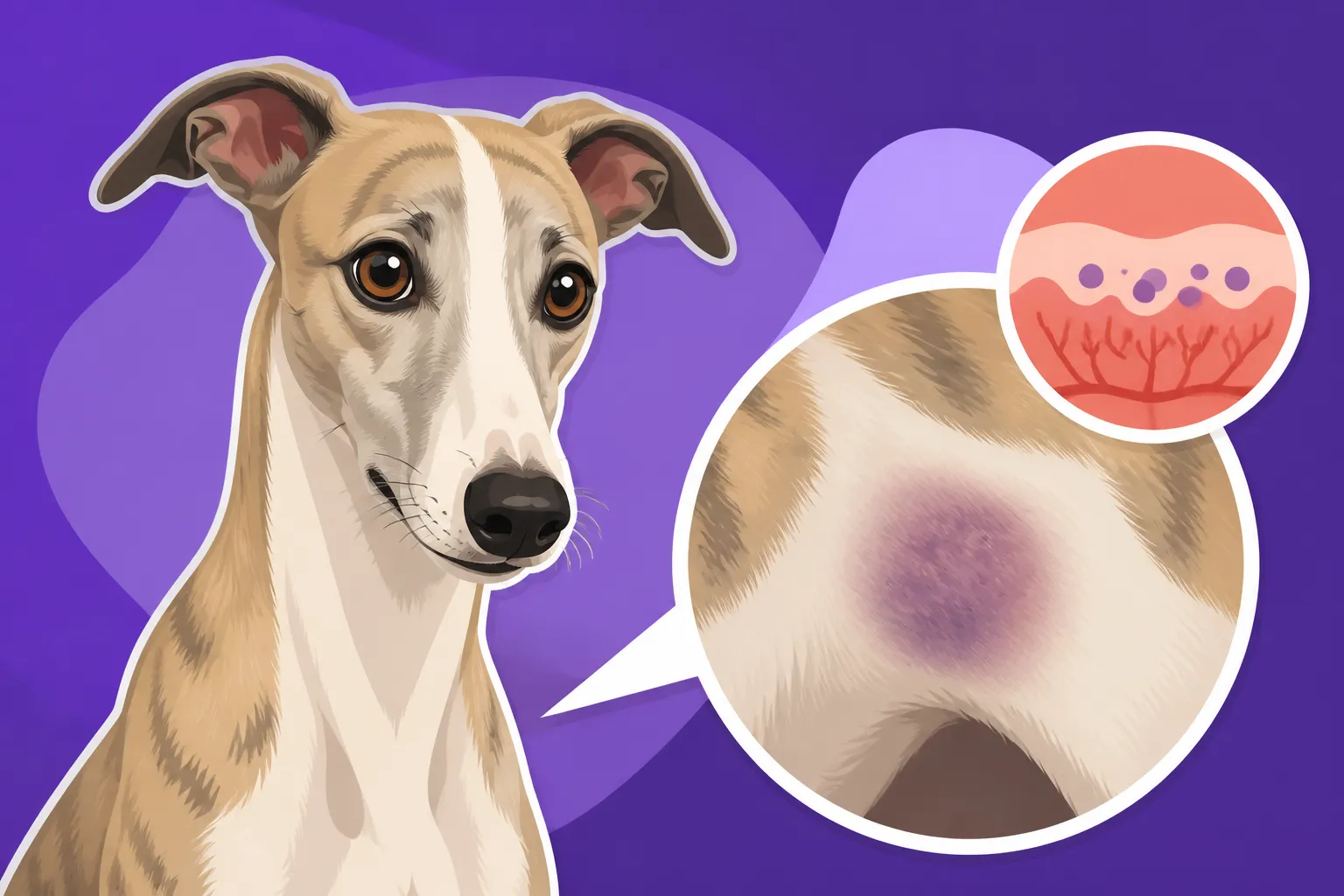
A bruise, medically known as a contusion, occurs when tiny blood vessels called capillaries, located just under the skin, break or rupture. When these capillaries are damaged, blood leaks out into the surrounding tissues, pooling and becoming visible through the skin. In Whippets, because their skin is so thin and they lack that cushioning layer of fat, these capillaries are more exposed and more prone to rupture even from minor trauma.
The force that might compress and rebound a capillary in a thicker-skinned dog might be enough to tear it in a Whippet. This is why you might see a bruise appear after an incident you barely noticed, like a quick brush against a sharp corner. The fragility of these vessels means less force is required to cause internal bleeding, which then manifests as the familiar discolored patch we call a bruise. Their naturally lean physique and prominent bones only exacerbate this, as any impact directly targets these easily damaged vessels.
The Visibility and Color Progression of Bruises
Due to their short, fine coat and often light-colored skin, bruises on a Whippet are incredibly noticeable. On other breeds, a bruise might be hidden by dense fur or camouflaged by darker pigmentation, only to be discovered days later during a thorough grooming session. On a Whippet, however, a fresh bruise stands out starkly, often appearing as a reddish or purplish mark almost immediately after the injury.
Bruises change color over time as the body works to heal itself and reabsorb the leaked blood. You’ll likely observe your Whippet’s bruises following this typical progression:
- Reddish-purple/Blue: Immediately after the injury, fresh blood rich in oxygen pools under the skin.
- Dark Blue/Black: As oxygen is lost and hemoglobin breaks down, the bruise deepens in color.
- Greenish: Biliverdin, a breakdown product of hemoglobin, gives the bruise a greenish tint.
- Yellowish-brown: As the bruise continues to heal, it lightens to yellow or brown before fading completely.
This progression typically takes about 1-2 weeks, depending on the severity of the bruise. Being able to see these changes so clearly on your Whippet can be reassuring, as it allows you to monitor the healing process effectively.
Normal Bruising vs. Concerning Bruises
While frequent minor bruising is often just a normal part of living with a Whippet, there are times when a bruise might signal something more serious. It's essential to distinguish between the two, so you know when to simply keep an eye on things and when to seek veterinary advice.
Most Whippet bruises are isolated, appear after a known or suspected bump, and follow the typical color progression. They might be a bit tender to the touch but generally don't cause extreme pain or lameness.
However, certain characteristics should prompt a vet visit:
| Bruise Characteristic | Description | Potential Concern |
|---|---|---|
| Excessive Size/Spread | A bruise that is unusually large, growing rapidly, or appears to spread extensively beyond the impact site. | Could indicate significant internal bleeding, a more severe injury, or an underlying clotting disorder. |
| Unexplained Appearance | Bruises that appear frequently without any known trauma, or in unusual locations (e.g., gums, belly). | May point to an underlying medical condition, such as a blood clotting disorder, platelet deficiency, or certain toxins. |
| Petechiae/Ecchymoses | Tiny, pinprick red dots (petechiae) or larger flat purple/red patches (ecchymoses) that don't blanch. | Highly suggestive of a platelet problem or clotting factor deficiency, requiring urgent veterinary attention. |
| Pain/Swelling/Limping | If the bruised area is severely painful, hot, significantly swollen, or if your Whippet is limping. | Could indicate a deeper injury, such as a sprain, strain, fracture, or muscle tear underneath the bruise. |
| Accompanied Symptoms | Bruising alongside lethargy, loss of appetite, pale gums, nosebleeds, blood in urine/stool, or weakness. | Strong indicators of systemic illness or a severe bleeding disorder. |
If you notice any of these concerning signs, don't hesitate to contact your veterinarian. It’s always best to be cautious, especially with a breed like the Whippet where their delicate nature can sometimes mask more serious issues. Having pet insurance, like a plan from Healthy Paws, can certainly alleviate some of the stress associated with unexpected vet visits for diagnostics and treatment when these concerns arise.
Common Scenarios Where Whippets Bruise
It might seem like your Whippet gets a bruise from simply looking at something too hard! But in reality, their everyday activities, combined with their unique physical attributes, create numerous opportunities for these colorful marks to appear.
The Rough and Tumble of Playtime
Whippets, despite their elegant appearance, are often surprisingly robust and enthusiastic players. Whether it's zooming through the yard in a game of chase, wrestling with a canine companion, or joyfully body-slamming into their human family, their play can be quite physical. And that's where the bruising often happens.
During a spirited game, a quick turn can lead to a leg bumping against a piece of outdoor furniture, or a collision with another dog can result in a hip or shoulder taking a hit. While a Golden Retriever might just shake it off, the same level of contact can leave a visible bruise on a Whippet. Even tumbling playfully on soft grass can sometimes be enough to cause a small contusion, especially if they land awkwardly on a bony protrusion. It's simply the cost of doing business when you have a dog with such thin skin and minimal padding.
Accidental Bumps and Interior Obstacles
Our homes are filled with potential bruising hazards for a fast-moving, unpadded Whippet. Coffee tables with sharp corners, chair legs, door frames, and even the edge of a kitchen counter can become culprits. A Whippet, especially when excited or in a hurry, might misjudge a turn or simply move too quickly for their own good.
Imagine your Whippet doing their zoomies through the living room, taking a corner too wide and slamming their hip into the edge of a sturdy armchair. Or perhaps they leap off the bed a little clumsily and catch their elbow on the nightstand. These are not massive injuries, but on a Whippet, the impact is absorbed directly by the delicate tissues and capillaries under the skin, leading to a quick and visible bruise. These everyday mishaps are incredibly common, and it’s a rare Whippet owner who hasn’t seen a bruise appear from what seemed like a minor domestic incident. You might find yourself constantly assessing the layout of your home to minimize these hazards, much like preparing for a curious toddler.
Minor Scrapes and Environmental Contact
Beyond blunt force impacts, even minor scrapes and abrasions can turn into bruising on a Whippet. Their thin skin means that friction or a slight tear can damage capillaries without necessarily breaking the skin surface deeply enough to bleed outwardly.
Consider a Whippet running through tall grass or light brush. While a dog with a tougher coat and skin might emerge unscathed, a Whippet's delicate skin can easily be scraped, causing internal capillary damage and a bruise. The same applies to rough textured toys, a quick scratch from a sharp twig, or even vigorously rubbing against an abrasive surface. What might appear as a mere scuff mark on other breeds, often leaves a tell-tale purple patch on a Whippet. This vulnerability to minor contact highlights why a Whippet's skin often warrants extra attention and care.
Proactive Care and Managing Whippet Bruises
While it’s almost impossible to prevent every single bruise on an active Whippet, there are certainly steps you can take to minimize their frequency and severity. Knowing how to care for a minor bruise and when to seek professional help is also key to ensuring your Whippet's long-term health and well-being.
Environmental Adjustments and Supervision
One of the most effective ways to reduce bruising is to make your Whippet's environment as safe as possible. This involves both strategic modifications to your home and careful supervision, especially when they're most active.
- Pad Those Corners: Consider adding corner protectors to sharp furniture edges, particularly coffee tables, end tables, and hearths. These inexpensive foam or rubber guards can cushion impacts during zoomies or playful antics. It might seem excessive for a dog, but for a Whippet, it can make a real difference.
- Soft Landings: Ensure your Whippet has plenty of soft, comfortable places to rest and sleep. This isn’t just for preventing The Pressure Sores a Whippet Gets From Sleeping on the Floor; it also means that if they tumble off a couch or bed, they're less likely to land on a hard, unforgiving surface. Quality dog beds, soft blankets, and even allowing them on cushioned furniture can provide a safer, padded environment.
- Supervised Play: While it’s wonderful to let your Whippet run and play, supervise intense play sessions, especially with larger or more boisterous dogs. A careful eye can help prevent overly rough collisions. When they're enjoying their 35 miles an hour bursts of speed, always ensure they are in a safely enclosed area, as Why a Whippet Cannot Be Let Off Leash in an Open Field is a critical safety concern not just for bruising, but for their overall well-being.
- Outdoor Awareness: Be mindful of where your Whippet runs outdoors. Avoid areas with sharp rocks, thorny bushes, or uneven terrain that could easily cause scrapes or falls. If you walk them in an area with dense undergrowth, a lightweight coat can offer some protection, similar to how one might consider Whether a Whippet Should Wear a Coat in Cover for warmth.
First Aid for Minor Bruises
For the typical, minor bruise that doesn't show any concerning symptoms, home care is usually sufficient. The goal is to reduce swelling and discomfort, and help the body reabsorb the blood.
- Cold Compress: As soon as you notice a fresh bruise, apply a cold compress to the area for 10-15 minutes. This constricts blood vessels, helping to minimize bleeding and reduce swelling. You can use an ice pack wrapped in a thin towel or even a bag of frozen peas. Repeat this several times a day for the first 24-48 hours.
- Gentle Observation: Keep an eye on the bruise’s size, color progression, and your Whippet's comfort level. Most minor bruises will gradually fade over a week or two. Avoid excessive poking or prodding, which can increase discomfort.
- Rest: Encourage your Whippet to rest if the bruise is in a sensitive area or seems to cause any discomfort. Limiting strenuous activity for a day or two can aid in healing.
- Over-the-Counter Options (Vet Consultation First): Some topical remedies like arnica gel (specifically formulated for pets or diluted appropriately) are sometimes used to help with bruising. However, always consult your vet before applying any human products to your Whippet, as many can be toxic or irritate their sensitive skin. For internal pain relief, never administer human pain medications like ibuprofen or acetaminophen, as these are highly toxic to dogs. Your vet might recommend a canine-specific anti-inflammatory if needed.
Having a well-stocked What Belongs in a Whippet Owner's First Aid Kit is always a good idea for managing these minor incidents.
When to Consult Your Veterinarian
While many bruises on a Whippet are harmless, knowing when to escalate your concerns to a vet is crucial. If you observe any of the 'concerning bruise' characteristics discussed earlier—such as unusual size, rapid spreading, appearance without explanation, the presence of petechiae, severe pain, or accompanying systemic symptoms—it's time to call your vet.
Your veterinarian will be able to perform a thorough examination, and potentially run diagnostic tests like blood work (to check clotting factors and platelet counts) or imaging (like X-rays if a deeper injury is suspected). Early diagnosis and treatment can prevent minor issues from becoming major problems, especially if there's an underlying medical condition contributing to the bruising. This is one of those times when having a robust pet insurance plan can make a huge difference. Companies like Healthy Paws are there to support you by covering eligible vet bills for unexpected injuries or illnesses, giving you peace of mind to seek the best care without financial hesitation. Don't ever feel shy about calling your vet; they'd rather you call for a false alarm than miss something critical.
Disclaimer
This article is intended for informational purposes only and does not constitute medical advice. Always consult with a qualified veterinarian for any health concerns or before making any decisions about your pet's health or treatment.