Whippet or Italian Greyhound for a Small Home
Choosing between a Whippet and an Italian Greyhound for a small home is not just a question of which dog takes up less floor space. Both can be affectionate, indoor-loving companions, but their size, exercise needs, cold tolerance, and everyday sturdiness differ. This guide explains what apartment and small-home life can look like with each breed, so you can match the dog to your routines.
Whippet or Italian Greyhound for a Small Home
Space matters less than routine
An Italian Greyhound is the smaller dog, so it may seem like the automatic choice for a studio or compact apartment. But square footage alone doesn’t determine whether a dog will be comfortable. Both breeds can spend much of the day relaxing indoors, provided they have a soft place to rest, regular opportunities to go outside, and safe ways to move and play.
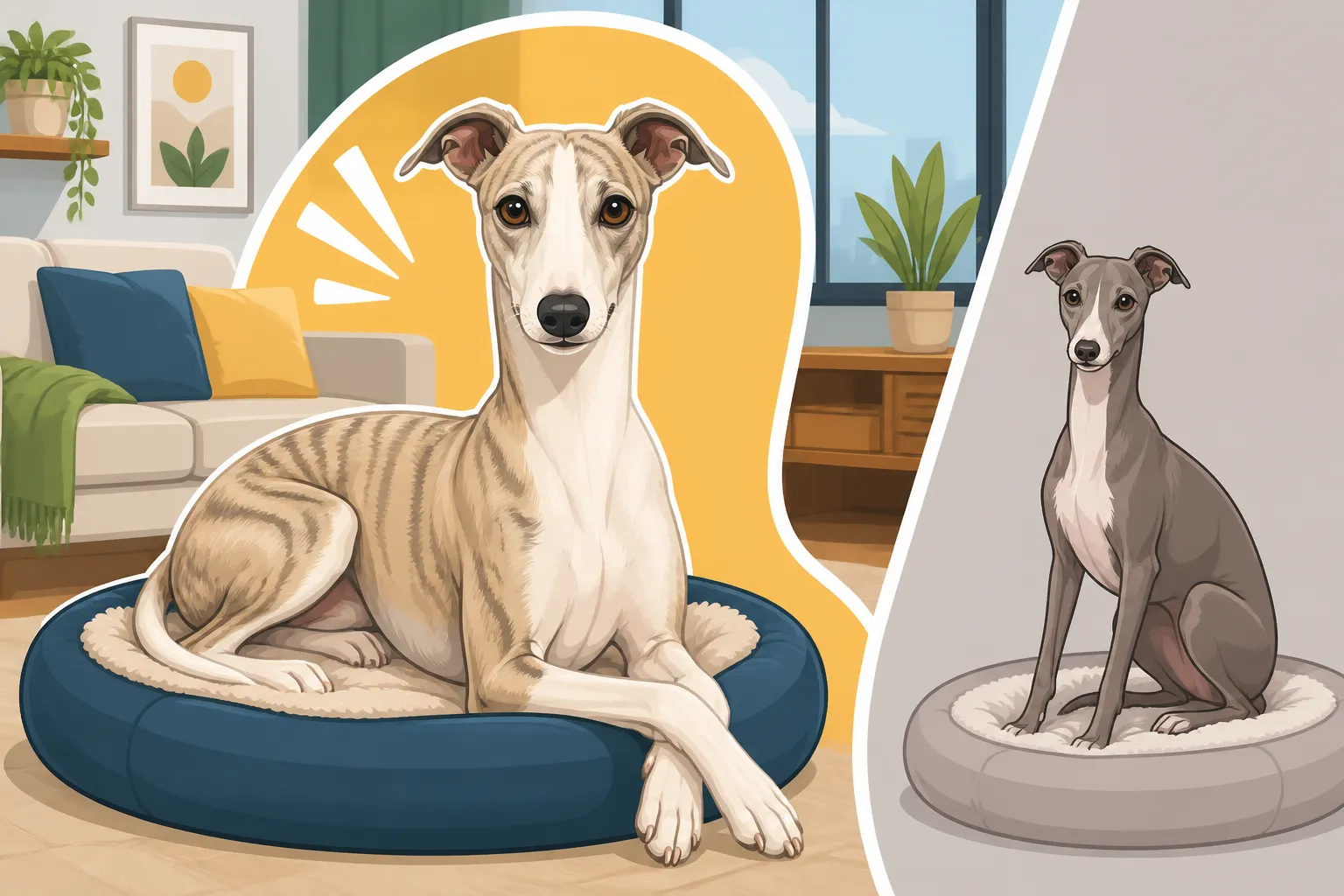
Whippets are larger and longer-legged, but many are content to curl up on a sofa or dog bed after exercise. They still need room to stretch out and should have clear paths through the home, especially if they get excited and dash from one room to another. An Italian Greyhound takes up less space, but its small size doesn’t make it a low-maintenance ornament. It still needs walks, companionship, training, and protection from rough play or accidental falls.
Think about the practical details of your home: Is there a comfortable spot for a bed? Can you take the dog outside without a long, difficult trip? Are the stairs safe for a young, exuberant dog and manageable for an older one? Do you have a secure area for play? These details often matter more than whether your home has one bedroom or two.
If you’re comparing the breeds partly because of their size, it may help to read How Much Smaller a Whippet Is Than a Greyhound and The Whippet Against an Italian Greyhound. The comparison can put the Whippet’s build in context without assuming that the smallest dog is always the best fit.
A compact home still needs good management
In a small home, everyday habits become noticeable quickly. A dog that gets restless, barks when left alone, or struggles to settle can feel like a bigger challenge when there’s little distance between the living room, bedroom, and front door. Neither breed should be expected to entertain itself all day simply because it has access to the whole apartment.
Set up a predictable rhythm for walks, meals, rest, and short training sessions. Give the dog a comfortable bed in a quiet place, but don’t expect a bed to substitute for interaction or exercise. Both breeds may also appreciate being allowed on furniture, if that’s a household rule you can keep consistent. For a Whippet especially, a soft, warm resting place can make a compact home feel like a welcome retreat. The guide How Many Beds a Whippet Needs in a House offers more ideas for planning comfortable resting spots.
If you shop online for beds, coats, or walking gear, retailers such as Chewy can be one place to compare product styles and sizing. Check measurements carefully rather than buying based on breed labels alone: dogs of the same breed can differ in body length, chest depth, and preferred sleeping position. A bed that fits neatly into a small room is useful, but it still needs to be large and supportive enough for the dog to lie comfortably.
| Small-home consideration | Whippet | Italian Greyhound |
|---|---|---|
| Indoor footprint | Larger body and longer limbs; needs space to stretch out | Smaller and easier to accommodate physically |
| Rest at home | Often relaxed indoors after appropriate activity | Often enjoys warmth and close companionship |
| Outdoor activity | Needs walks and safe chances to run or play | Needs regular walks and age-appropriate exercise |
| Cold weather | Short coat and lean build can make warmth important | Very short coat and lean build make warmth especially important |
| Handling | Larger, but still lean and sensitive to rough handling | Smaller and more delicate in everyday handling |
| Best space question | Can the home support safe movement and restful bedding? | Can the home protect a small dog from falls and rough play? |
Exercise, toileting, and settling indoors
Both need activity, but neither needs a huge house
A Whippet’s athletic appearance can make people assume it needs a large yard or constant exercise. A yard can be convenient, but it isn’t a substitute for walks, engagement, or safe opportunities to move. Nor is an unfenced park a safe place to test a Whippet’s recall: a sudden chase can outrun even a well-practiced response. See Whether a Whippet Needs a Fenced Area to Run and Why a Whippet's Chase Instinct Overrides Its Recall for more on planning safe activity.
Italian Greyhounds also benefit from daily walks and play, but their smaller size does not mean they should be carried everywhere or kept indoors. They need to explore, learn household routines, and build confidence. As with any small dog, keep exercise appropriate to the dog’s age, health, and comfort. Avoid letting either breed leap from high furniture or race across slippery floors without considering the risk of a fall or collision.
A good small-home routine may include a few walks, brief training or sniffing activities, and supervised play in a secure area. If you have access to a fenced garden, use it as a useful extra—not the only outlet. If you don’t, choose safe walking routes and look for a securely enclosed space where the dog can move freely. How Much Exercise a Whippet Really Needs explains why regular activity matters without treating every Whippet as an endurance athlete.
Toileting can be the bigger apartment challenge
For many apartment dwellers, getting outside on schedule is harder than finding room for a dog bed. A puppy may need frequent toilet breaks, and an adult dog may still need quick access outdoors during bad weather or an upset stomach. Consider how far the nearest appropriate outdoor spot is, whether elevators or stairs add time, and what you will do during heavy rain, snow, or late-night trips.
Whippets are famously capable of objecting to miserable weather, and Italian Greyhounds can be reluctant to go out when they are cold or wet. A coat can make a walk more comfortable, but it does not guarantee that a dog will happily toilet in a downpour. Plan for patient, consistent outings rather than relying on the dog to hold on until conditions improve. If the dog refuses to go, calmly try again soon instead of turning the outing into a battle.
A covered potty area may help some households, but it isn’t a universal fix. Any indoor toilet arrangement needs a clear, consistent location and regular cleaning. If you’re choosing a puppy, ask how the breeder begins toilet training and what kind of routine the puppy is used to. For more detail on the breed-specific weather hurdle, see Why a Whippet Refuses to Go Out in the Rain.
Warmth, safety, and handling
Both breeds need help staying warm
Whippets and Italian Greyhounds have short coats and lean bodies, so they can feel cold more readily than a thick-coated dog. In a small home, this may show up as burrowing under blankets, seeking the warmest sofa cushion, or hesitating at the door when it’s chilly. A warm bed, comfortable indoor temperature, and weather-appropriate coat can make daily life easier.
Italian Greyhounds are especially small and lightly covered, so owners often need to be deliberate about warmth on walks and during rest. Whippets may also need a coat in cold or wet conditions. Watch the individual dog rather than relying on one temperature rule: wind, rain, activity level, age, and the dog’s own comfort all make a difference. A shivering or reluctant dog may be cold, but shivering can have other causes too, so persistent or unusual symptoms deserve veterinary attention.
When buying a coat, measure the dog’s back and chest and check the garment’s fit while the dog walks, sits, and lies down. A coat that pulls across the chest or rubs behind the legs can make a dog dislike wearing it. Chewy is one possible place to browse coat options, but sizing charts and return policies are worth checking before you choose. The articles Whether a Whippet Needs a Coat Indoors and Whether a Whippet Needs a Coat to Go Outside cover different situations where an extra layer may or may not be useful.
Small size does not mean low risk
An Italian Greyhound’s smaller body can make accidental injury a bigger concern. A jump from a high sofa, a tumble down stairs, or rough play with a much larger dog may be more consequential for a little dog than an owner expects. Supervise interactions with children and larger pets, provide safe routes on and off furniture, and avoid encouraging risky leaps. A small dog may be quick and confident without being physically suited to every kind of play.
Whippets are larger, but their lean frame and skin still call for sensible handling. They are not built to be grabbed, shoved, or used as a child’s climbing companion. Teach children to let the dog approach, handle gently, and leave the dog alone while it eats or rests. In either breed, a calm retreat area can be especially valuable in a compact home where the dog cannot easily move to another room.
Think about floors and furniture, too. Slippery surfaces can make sharp turns harder, while a tall bed or couch can encourage repeated jumping. Rugs, low steps, or a dog ramp may help depending on the dog and home. The right solution is the one the dog will use safely and comfortably, not simply the one that looks tidy.
Choosing the breed that fits your household
Match the dog to your daily life
Choose an Italian Greyhound if you’re drawn to a very small companion and are prepared to manage cold, careful handling, and the realities of a delicate little dog. Choose a Whippet if you want a larger sighthound who may be perfectly happy relaxing indoors but still needs secure exercise and room to stretch out. Neither is automatically the easier apartment dog; the better match depends on your schedule, home layout, and comfort with each breed’s needs.
Consider how long the dog will be alone, how often you can go outside, and whether you have the time to build a reliable routine. A puppy of either breed needs more supervision and training than a settled adult. If you work away from home, arrange a realistic plan for toilet breaks, companionship, and gradual alone-time training rather than expecting the dog to adapt immediately.
The breeds also differ in their general feel as household companions. Whippets are bigger and may be more physically robust than Italian Greyhounds, but they’re still sensitive dogs that benefit from gentle training. Italian Greyhounds are small enough to be carried easily, yet they still need to learn confidence and good manners on their own four paws. For broader guidance on household fit, read Whether a Whippet Suits an Apartment and The Household a Whippet Was Built For.
Meet adult dogs and ask specific questions
If possible, meet adult dogs of both breeds before deciding. Puppies can be charming but don’t always show you what daily life with the mature dog will be like. Notice whether the adults settle indoors, how they respond to household sounds, and how much exercise their owners provide. Ask owners what surprised them about cold-weather walks, toilet training, stairs, and time alone.
Ask breeders or rescue organizations about the individual dog’s temperament, health, history, and established routines. For a Whippet, ask about its experience with secure running areas and how it behaves around small animals. For an Italian Greyhound, ask how the dog handles cold, being handled, and everyday movement around furniture or stairs. Keep the conversation practical: “What does a normal weekday look like?” often tells you more than a general claim that the dog is easy to live with.
Finally, assess your home as the dog will experience it. A small home can be a lovely fit when the dog has secure outings, comfortable resting places, patient training, and a household that respects its boundaries. A bigger home can still be a poor fit if the dog is left isolated or allowed to run loose in unsafe places. Choose based on the everyday care you can reliably provide, not just the dog’s size.
Disclaimer
This article is for general informational purposes only and does not constitute professional advice. Laws, prices and regulations vary by location and change over time. Consult a qualified professional for guidance on your specific situation.