Whether an Italian Greyhound Is More Fragile Than a Whippet
An Italian Greyhound’s smaller size can make falls and rough play especially risky, while a Whippet’s speed and thin skin create their own injury concerns. Neither breed is simply “the fragile one” in every situation. This guide compares their common vulnerabilities and explains how to make your home, walks, and play safer for either dog.
What people mean when they call a dog fragile
Small size is not the same as overall fragility
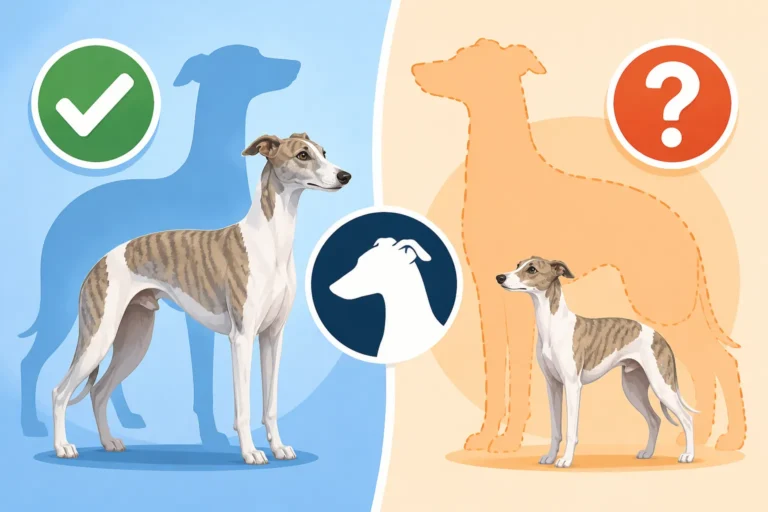
Italian Greyhounds are much smaller and lighter than Whippets. That size difference matters when a dog tumbles off a sofa, gets underfoot, or plays with a much larger companion: a fall or collision that a bigger dog might brush off can cause a serious injury in a small dog. Italian Greyhounds are particularly known for delicate limbs, and leg fractures are a concern, especially during puppyhood.
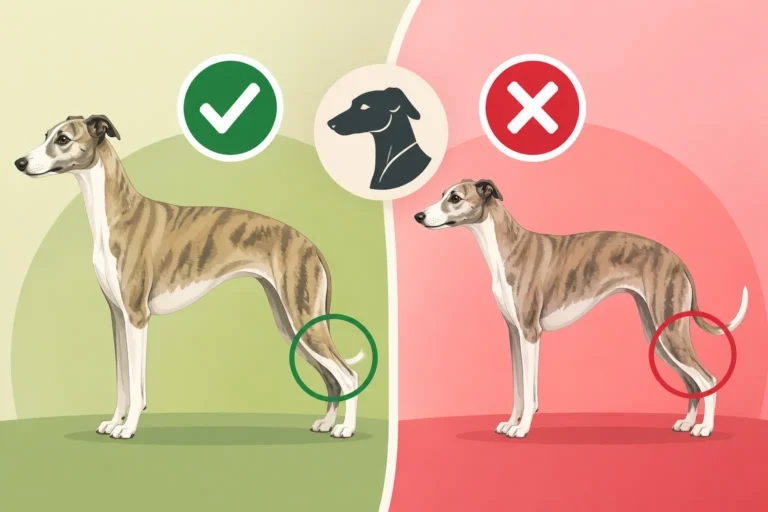
Whippets are sturdier in comparison, but “sturdier” does not mean injury-proof. Their lean bodies have little padding over prominent bones, and their thin skin can split in an accident that might leave another dog with only a scrape. Their speed also creates risks: a Whippet sprinting, turning sharply, or colliding with another dog can injure a leg or tear skin.
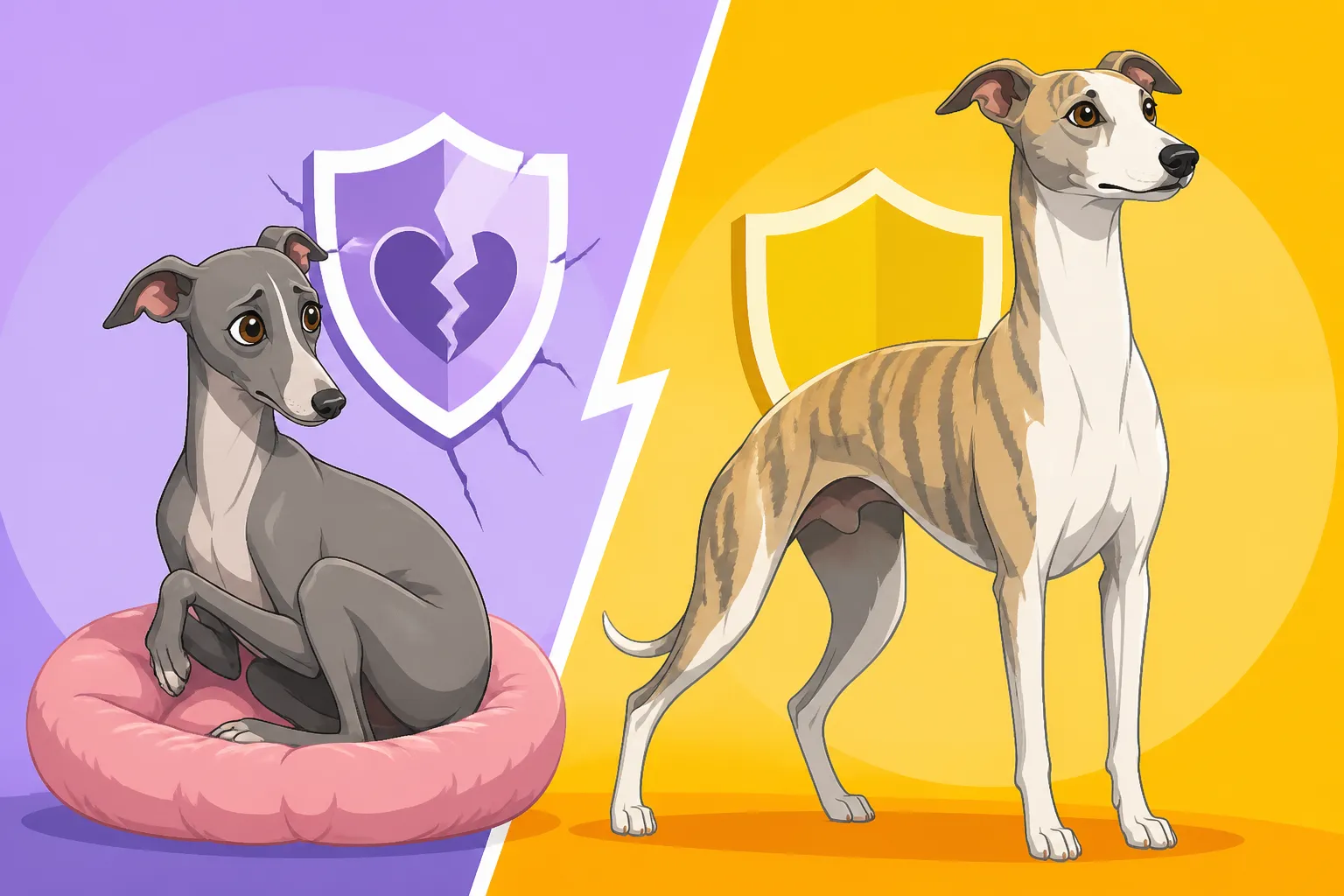
So the answer depends on what kind of vulnerability you mean. An Italian Greyhound may be more physically vulnerable to certain falls and rough handling because of its tiny frame and fine bones. A Whippet may be more exposed to cuts and high-speed injuries during exercise. For a broader look at the size and build differences, see The Whippet Against an Italian Greyhound.
Breed tendencies do not predict every individual dog
Age, health, confidence, and experience all affect risk. A bouncy young Italian Greyhound who launches off furniture may be more injury-prone than a calm adult who has learned to wait for help. A Whippet with good conditioning and sensible exercise habits may handle activity well, while one that bolts across slippery ground could strain a muscle or collide with an obstacle.
The environment matters just as much as breed. Smooth floors, steep stairs, high beds, and crowded play areas can turn an ordinary moment into a dangerous one. In a home with larger, exuberant dogs, size differences deserve attention even if everyone is friendly. A big dog does not have to be aggressive to knock a smaller dog over.
It helps to think of “fragility” as a set of risks rather than a fixed label. The useful question is not only “Which breed is more fragile?” but also “What is this dog likely to do, and what hazards are in its daily routine?” That shift makes it easier to prevent injuries without treating either breed as helpless.
How their most common injury risks differ
Italian Greyhounds and falls or rough handling
The Italian Greyhound’s fine limbs are a reason to be cautious about jumping from furniture, racing down stairs, or playing with dogs that outweigh them substantially. Puppies can be particularly impulsive: they may leap before they have learned to judge distance or coordinate their growing bodies. A fall from a sofa or bed is not automatically an emergency, but a small dog that suddenly limps, cries out, avoids using a leg, or seems painful should be assessed promptly by a veterinarian.
This does not mean an Italian Greyhound must be carried everywhere or kept from normal movement. It means setting up predictable routes and discouraging repeated high-impact leaps. Use a stable ramp or steps if your dog regularly gets on and off furniture, and teach a cue such as “wait” so your dog does not launch out of your arms or through a doorway. Supervise play with larger dogs, especially when excitement rises and bodies start crashing together.
For many households, the biggest improvement is simply changing the dog’s access to risky surfaces. Block stairs when a young dog is unsupervised, keep play away from slick floors, and avoid lifting a dog in a way that lets it twist or jump free. If you are preparing a Whippet puppy for safe activity, Raising a Whippet Puppy Without Wrecking Its Joints offers related guidance on protecting a young dog’s developing body.
Whippets and speed, skin, and sudden turns
A Whippet can be gentle and careful indoors, then become a very different athlete when it spots something to chase. Fast acceleration and sharp turns put stress on muscles and limbs, particularly if the dog is cold, out of condition, or running on slippery or uneven ground. A fenced, well-maintained area is safer than an open field where a dog might reach top speed near roads, holes, debris, or other dogs.
Whippets also have thin skin, so a scrape against a branch, fence, or sharp edge may become a laceration rather than a minor abrasion. Check your dog after vigorous exercise, especially around the legs, chest, and sides. If you find a deep cut, bleeding that does not stop with gentle pressure, or a wound near an eye or joint, contact a veterinarian rather than trying to manage it as a routine scrape. The breed-specific concerns are covered in The Thin Skin That Sends a Whippet to the Vet for Stitches.
Speed is not the only factor. A Whippet can also be hurt during rough play with a larger dog, even when the play begins happily. Give dogs space, interrupt play if one is repeatedly bowling the other over, and avoid letting a fast dog sprint on wet grass or slick indoor flooring. For more on that particular risk, read Whether a Whippet Gets Hurt Playing With Bigger Dogs and Whether a Whippet Breaks a Leg Running.
| Risk area | Italian Greyhound | Whippet | Practical precaution |
|---|---|---|---|
| Falls from furniture | Small size and fine limbs make falls a concern | Falls can still injure, though the dog is larger | Use stable steps or a ramp and discourage launching |
| Rough play | Easily overwhelmed by much larger playmates | Can be knocked, strained, or cut during collisions | Supervise size-mismatched play and pause escalating games |
| High-speed exercise | Needs safe, controlled activity suited to its size | Sprinting and sharp turns can lead to strains or collisions | Use secure, hazard-free areas and build activity gradually |
| Skin injuries | Skin can be injured, though risk varies by individual | Thin skin makes cuts and tears a notable concern | Check the dog after exercise and seek care for significant wounds |
| Cold and hard surfaces | May need warmth and comfortable resting places | Lean build offers little insulation or padding | Provide a warm coat outdoors when needed and soft bedding |
Making a home safer for both breeds
Reduce falls without wrapping your dog in cotton wool
Start with the spots your dog uses every day. If your dog jumps onto a bed or sofa, make the route down safer with a stable ramp or pet steps. Choose equipment that does not wobble or slide, and introduce it gradually with treats so the dog learns to use it rather than leap over it. A ramp is only helpful if it is securely positioned and has a surface your dog can grip.
Stairs can be challenging for a small, excitable dog or a young Whippet moving at speed. A gate can prevent unsupervised access, especially when you are away or cannot watch closely. On smooth floors, nonslip runners can help reduce skidding around corners. Keep toys and food bowls out of high-traffic pathways so a fast turn does not become a slip.
Look at the resting areas, too. Both breeds are lean, and a soft bed can make a real difference to comfort. A padded crate mat or well-cushioned bed can help protect bony points from repeated pressure. Chewy is one place owners may look for beds and crate mats, but measure the space and check that the item is firm and stable enough for your dog to step onto without sliding. Related reading includes The Pressure Sores a Whippet Gets From Sleeping on the Floor and Why a Whippet Needs Soft Bedding Everywhere.
Match play and exercise to the dog in front of you
For either breed, exercise should be appropriate to age, fitness, and health—not just enthusiasm. Puppies may seem tireless, but uncontrolled jumping and repeated high-impact activity are not a good way to build fitness. Keep play varied, allow rest, and ask your veterinarian about an appropriate exercise plan if your dog has had an injury or a health concern.
For Whippets, warm up with a calm walk before fast running. Choose a secure area with even footing, check for holes and sharp debris, and avoid letting a sprint turn into a frantic chase around obstacles. For Italian Greyhounds, prioritize controlled movement and safe social play. A small dog can still enjoy games, training, and walks without being pushed into collisions or dangerous leaps.
If you are buying a well-fitting harness, coat, or basic safety supplies, Chewy may be one retail option to compare with local shops. Fit matters more than the store: a harness should not rub behind the front legs or allow the dog to back out, and a coat should not restrict movement. For a Whippet’s running-specific risks, Whether a Whippet's Long Bones Break More Easily and Why a Whippet Is Tougher Than It Looks add useful context without implying that every run is dangerous.
When to seek veterinary help and how to prevent repeat injuries
Know the signs that should not be watched at home
After a fall or collision, contact a veterinarian if your dog cannot bear weight, has an obvious deformity, cries when touched, becomes unusually quiet, or develops swelling. A dog may hide pain, so a sudden change in gait or reluctance to jump can be meaningful even if there is no visible wound. Do not give human pain medicine unless a veterinarian specifically instructs you to; some common medications are unsafe for dogs.
For cuts, apply gentle pressure with clean gauze or cloth while arranging veterinary advice if bleeding is substantial, the wound is deep, or the edges gape. Avoid probing the injury or using household glue. Whippet skin wounds can look deceptively small while needing professional cleaning or closure. If you are unsure whether an injury is urgent, a call to your veterinary clinic can help you decide what to do next.
A dog that seems normal immediately after an accident may still become sore later. Keep activity quiet and observe for limping, stiffness, reduced appetite, or unusual behavior. If symptoms appear or worsen, arrange an examination rather than assuming the dog simply needs to sleep it off.
Build prevention into ordinary routines
The most effective safety plan is usually made of small habits. Use a leash near roads and wildlife, keep gates closed, and avoid opening the front door while your dog is poised to bolt. Supervise play with unfamiliar dogs and separate pets when energy levels are mismatched. A secure space to run is especially important for a Whippet, whose speed can make a brief lapse in control consequential.
For an Italian Greyhound, create clear rules around furniture, stairs, and being picked up. A dog that knows to wait for a lift or use a ramp is less likely to launch unexpectedly. For a Whippet, build up sprinting gradually and check the running surface before each session. Both breeds benefit from regular nail care, because overgrown nails can affect footing and increase the chance of slipping.
Keep a basic first-aid kit at home and take it along on outings. Chewy can be a convenient place to compare general pet first-aid supplies, but supplies do not replace veterinary care for a deep wound, suspected fracture, or persistent pain. The aim is not to prevent every bump—no dog owner can—but to reduce predictable hazards and respond early when something does go wrong.
An Italian Greyhound is often more vulnerable to certain injuries associated with its very small size and fine limbs. A Whippet is larger and generally more robust, but its thin skin and high-speed athleticism bring different risks. With appropriate supervision, safe footing, sensible exercise, and prompt care when injuries happen, either breed can enjoy an active life without being treated as too delicate to move.
Disclaimer
This article is for general informational purposes only and does not constitute professional advice. Laws, prices and regulations vary by location and change over time. Consult a qualified professional for guidance on your specific situation.