Whether a Whippet’s Bad Breath Means Dental Disease
When your beloved Whippet greets you with a wagging tail, but their breath could wilt a flower, it’s only natural to wonder if it's just "dog breath" or something more serious. That distinct, often unpleasant odor emanating from your Whippet's mouth is rarely normal and almost always points to an underlying issue, most commonly dental disease. This guide will walk you through why bad breath is a serious signal in Whippets, what other signs to look for, and how to tackle it head-on to keep your lean, lovely companion healthy and comfortable.
The Unmistakable Sign: When Bad Breath Isn't Just "Dog Breath"
We've all heard the phrase "dog breath," and for a long time, it was casually accepted as just part of having a canine companion. But here's the thing: truly offensive, consistent bad breath, or halitosis, is a red flag, not a benign quirk. It signals a buildup of bacteria in your Whippet's mouth, and that bacteria isn't just causing a smell; it's actively contributing to dental problems that can impact their overall health. Your Whippet deserves a fresh start, and recognizing bad breath as a symptom, rather than just an odor, is the first step.
Why Whippets Are Prone to Dental Issues
Whippets, with their elegant, refined heads, often possess a particular anatomical feature that predisposes them to dental woes: narrow jaws. While their sleek profiles are part of their charm, this can mean their teeth are set more closely together, or even slightly crowded. When teeth are crowded, there are more nooks and crannies where food particles can get trapped and plaque can accumulate, making it harder for natural chewing action or even diligent brushing to clean effectively.
Beyond their unique jaw structure, Whippets, like many sighthounds, can have a genetic predisposition to certain dental issues. Their metabolism and oral flora might simply be more inclined to develop plaque and tartar at a faster rate than some other breeds. It’s not fair, but it’s often the reality. This means that dental disease can sometimes creep up on a Whippet quickly, going from seemingly fine to a noticeable problem in what feels like a blink of an eye. Understanding this inherent vulnerability means being extra vigilant about their oral health from the start. This isn't just a cosmetic problem; unchecked dental disease can lead to pain, infection, and even systemic health issues. You might have heard that Teeth Are the Whippet Problem That Sneaks Up, and it's absolutely true.
Recognizing the Early Warning Signs Beyond Smell
While bad breath is usually the first thing that gets an owner's attention, it’s crucial to be aware of other accompanying symptoms. These signs often appear alongside or even slightly before truly foul breath, and spotting them early can make a world of difference in preventing the progression of dental disease. Get into the habit of regularly checking your Whippet's mouth, even if it's just a quick peek.
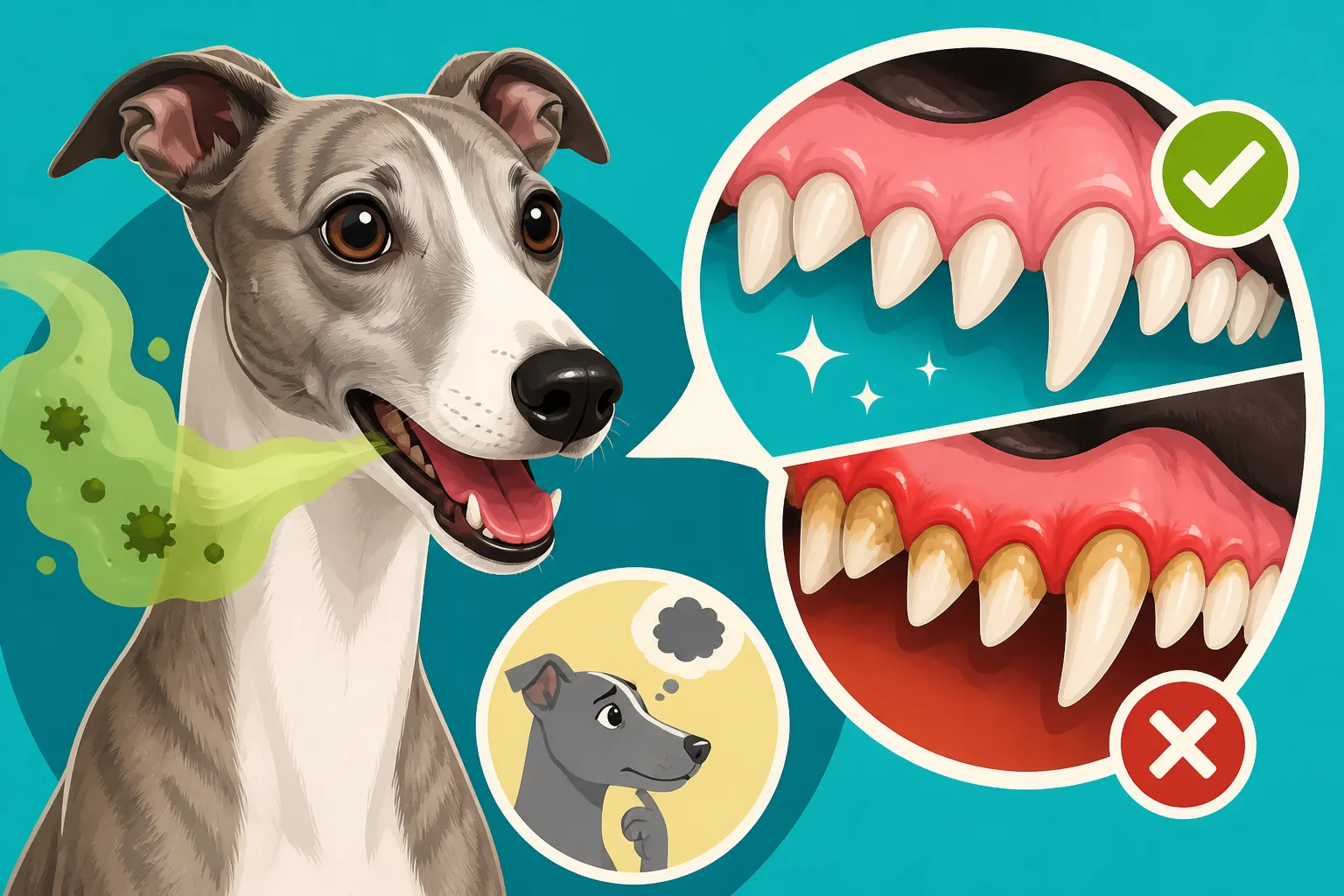
Look for changes in their gums: are they red, swollen, or bleeding easily when touched or when they chew? Healthy gums should be a pale pink color, firm, and hug the teeth tightly. Any redness or puffiness is a sign of inflammation. Also, examine their teeth for tartar buildup. This appears as a yellowish or brownish crust along the gum line, especially on the outer surfaces of the upper back molars. It starts as soft plaque but quickly hardens into a substance that can only be removed professionally. Your Whippet might also become reluctant to chew their favorite hard toys or even kibble if they're experiencing pain, or you might notice them pawing at their mouth more frequently. Sometimes, a subtle change in eating habits, like dropping food or chewing on one side of their mouth, can also be a quiet cry for help.
Understanding the Stages of Dental Disease in Whippets
Dental disease isn't an overnight phenomenon; it's a progressive condition that starts subtly and worsens over time if left unaddressed. Knowing the different stages can help you understand the severity of your Whippet's oral health issues and guide appropriate action. Catching it in the earlier stages is key to successful treatment and preventing more painful, costly, and potentially serious complications down the line.
Gingivitis: The First Stage of Trouble
Gingivitis is the initial, and thankfully, reversible stage of dental disease. It's essentially the inflammation of the gums caused by the accumulation of plaque—a sticky film of bacteria, food particles, and saliva—on the tooth surfaces. When this plaque isn't regularly removed, it irritates the gum tissue, leading to the characteristic signs of gingivitis.
At this stage, you might notice mild redness along the gum line where the gums meet the teeth. The gums might also appear slightly swollen or puffy, rather than the firm, tight texture of healthy gums. This is when that "dog breath" starts to become noticeably more unpleasant, graduating from a mild odor to something distinctly foul. The good news is that if gingivitis is identified and addressed promptly with improved home care and often a professional dental cleaning, the inflammation can subside, and the gums can return to health. This is why paying attention to those first whispers of bad breath is so critical; it's your window to reverse course before permanent damage sets in. Your Whippet can avoid needing What a Whippet's Dental Under Anesthesia Costs quite so frequently if you catch it early.
Periodontal Disease: When It Gets Serious
If gingivitis is left untreated, it progresses to periodontal disease, a far more serious condition that is irreversible. This is where the real damage begins, extending beyond the superficial gum tissue to affect the deeper structures supporting the teeth, including the bone and ligaments. Over time, the plaque hardens into tartar (calculus), which acts like a rough surface, attracting even more plaque and bacteria. This tartar then pushes the gums away from the teeth, creating small pockets that become perfect breeding grounds for anaerobic bacteria.
These bacterial pockets are insidious. They deepen, allowing infection to spread beneath the gum line, slowly destroying the periodontal ligament and the bone that holds the tooth in place. This destruction leads to significant pain for your Whippet, chronic infection, and eventually, tooth mobility and loss. Imagine the constant ache and potential for infection throughout their body! Beyond losing teeth, the bacteria from these oral infections can enter the bloodstream and travel to other organs, such as the heart, kidneys, and liver, potentially causing or exacerbating serious systemic health problems. This is why bad breath, especially accompanied by visible tartar and inflamed gums, isn't just a nuisance; it's a serious medical issue that demands immediate veterinary attention. Ignoring it means condemning your Whippet to chronic pain and putting their overall health at risk. It's a sad reality that The Age a Whippet Starts Losing Teeth can be much younger if periodontal disease is rampant.
What to Do When Your Whippet's Breath Turns Foul
Discovering your Whippet has bad breath can feel overwhelming, but it's a situation you absolutely can tackle. The approach typically involves a combination of diligent home care and, crucially, professional veterinary intervention. Think of it as a two-pronged attack to restore your Whippet's oral health and prevent future issues. Remember, a clean mouth isn't just about fresh breath; it's about comfort, proper nutrition, and preventing systemic diseases that can shorten your dog's lifespan.
Home Care: Your First Line of Defense
Home dental care is perhaps the most impactful thing you can do on a daily basis to maintain your Whippet's oral hygiene and slow the progression of dental disease. The gold standard, just like for humans, is daily tooth brushing. Yes, it can be a challenge, especially if your Whippet isn't used to it, but consistency is key. Use a soft-bristled toothbrush designed for dogs, or even a finger brush, along with an enzymatic toothpaste that is safe for them to swallow (never use human toothpaste!). Start slowly, perhaps just letting them lick the toothpaste off your finger, then gradually introduce the brush. Focus on the outside surfaces of their teeth, especially the upper molars, where tartar tends to build fastest. Even a few seconds of brushing each day can make a remarkable difference in preventing plaque from hardening into tartar. You can find a good selection of toothbrushes and canine toothpaste on platforms like Chewy or Amazon.
Beyond brushing, there are other tools that can supplement your efforts. Dental chews designed to reduce plaque and tartar can be beneficial, but choose them wisely. Look for Veterinary Oral Health Council (VOHC) approved products, which have been scientifically proven to be effective. However, remember that dental chews are not a substitute for brushing. Some owners also use water additives that help reduce bacteria in the mouth, but again, these are supplementary, not primary, care. Always consult your vet before introducing new dental products, especially if your Whippet already has existing dental issues. You'll find a detailed guide on how to start this routine in How Often a Whippet's Teeth Need Brushing.
The Importance of Professional Veterinary Care
While home care is essential, once bad breath becomes noticeable, it almost always means that professional veterinary attention is warranted. Your vet can perform a thorough oral examination, which often requires a light sedation for a comprehensive look at all tooth surfaces and beneath the gum line. During this exam, they can assess the full extent of the dental disease, including identifying any loose teeth, deep pockets, or abscesses.
The cornerstone of treating dental disease is a professional dental cleaning, which must be performed under general anesthesia. I know, anesthesia can be a worry for any dog owner, and Whippet owners often have specific concerns about Why Anesthesia Is Riskier in a Whippet. However, for a proper, pain-free cleaning, anesthesia is absolutely necessary. It allows the vet to scale off tartar both above and below the gum line, probe for periodontal pockets, and polish the teeth to smooth out any microscopic scratches where plaque could adhere. They can also take dental X-rays to check for problems hidden beneath the gums, such as bone loss or root infections. If extractions are needed due to severe damage or infection, these are also performed during the anesthetized procedure. Your vet will follow a sighthound anesthesia protocol (Why a Whippet Needs a Sighthound Anesthesia Protocol) to ensure the safest possible outcome. After the procedure, your vet will discuss post-operative care and how to maintain oral health to prevent recurrence, likely emphasizing a rigorous home care routine.
Prevention is Always Best
The old adage holds true: an ounce of prevention is worth a pound of cure, especially when it comes to your Whippet's teeth. Establishing good dental habits from puppyhood can set your Whippet up for a lifetime of better oral health and save you a lot of heartache (and vet bills) down the road. It all starts with making oral hygiene a positive experience, not a battle.
Begin familiarizing your Whippet puppy with having their mouth handled early on. Gently lift their lips, touch their gums and teeth, and reward them with praise and treats. This desensitization will make future brushing attempts much easier. Incorporate a consistent daily brushing routine, even if it's just for a minute or two. Regular veterinary check-ups are also crucial, as your vet can spot early signs of dental trouble long before they become severe. Discuss a proactive dental care plan with them, including how often they recommend professional cleanings for your individual Whippet, which might be more frequent if your Whippet is particularly prone to tartar buildup. A balanced diet also plays a role in overall health, and while no food can replace brushing, some premium dog foods, like those offered by Ollie, contribute to general well-being. Additionally, provide your Whippet with appropriate chew toys that are safe for their teeth—not too hard to risk fractures, but firm enough to provide some cleaning action. By being proactive and consistent, you can significantly reduce the likelihood of your Whippet developing severe dental disease and ensure they keep their happy, healthy smile for years to come.
Common Dental Issues and Their Symptoms
To summarize the key points and help you quickly identify potential issues, here's a table outlining common dental problems in Whippets, their typical symptoms, and the general approach to treatment.
| Dental Issue | Common Symptoms | Whippet-Specific Considerations | General Treatment Approach |
|---|---|---|---|
| Plaque & Tartar Buildup | Bad breath, yellow/brown deposits on teeth, red gums | Narrow jaws can lead to crowded teeth, accelerating buildup. | Regular brushing, dental chews, professional cleaning. |
| Gingivitis (Stage 1) | Red, swollen, sometimes bleeding gums; bad breath | Can progress quickly due to fast tartar accumulation. | Improved home care, professional cleaning. |
| Periodontal Disease (Stages 2-4) | Severe bad breath, visibly receding gums, loose teeth, pain, pus, reluctance to eat, pawing at mouth | Irreversible bone/tissue loss; can impact systemic health quickly. | Professional cleaning under anesthesia, extractions, antibiotics. |
| Fractured Teeth | Sudden pain, reluctance to chew, visible chip/crack | Can occur from chewing on hard toys/bones. | Root canal therapy or extraction. |
| Tooth Root Abscess | Swelling on face (often under eye), pain, fever, lethargy | Can result from untreated periodontal disease or fractures. | Extraction, antibiotics. |
| Oral Tumors | Lumps/growths in mouth, changes in eating/drinking | Less common but always requires vet evaluation for biopsy. | Surgical removal, radiation, chemotherapy (depending on type). |
Disclaimer
This article is for general informational purposes only and does not constitute professional advice. Laws, prices and regulations vary by location and change over time. Consult a qualified professional for guidance on your specific situation.