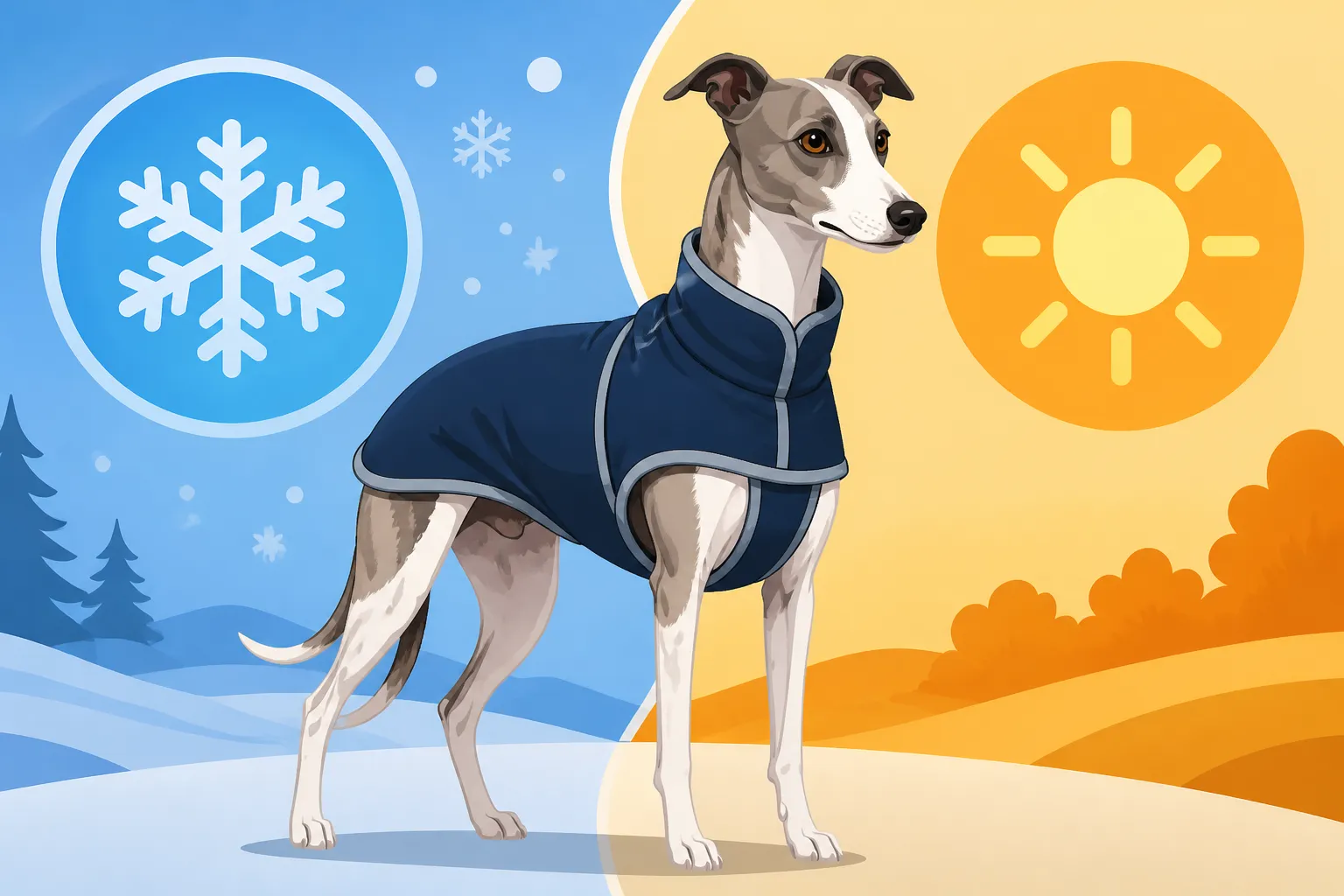
Whether a Whippet Needs a Coat Below Fifty Degrees
It’s a common scenario: you glance at the thermometer, see the temperature dipping, and then look at your sleek, slender Whippet curled up on the sofa, seemingly oblivious to the chill. But a nagging question always lurks in the back of your mind – is it really cold enough for a coat? Understanding your Whippet's unique needs in cooler weather is crucial for their comfort and health, and this guide will help you decide when that perfect stylish (and warm!) coat is more of a necessity than a fashion statement.
Understanding Your Whippet's Unique Physiology in the Cold
Whippets, with their elegant, athletic build, are a marvel of canine engineering, designed for speed and agility. However, these very traits make them particularly susceptible to cold temperatures. It’s not just a matter of them being "prima donnas"; there’s a genuine physiological reason behind their need for warmth.
Why Whippets Feel the Cold More Than Other Breeds
When you look at a Whippet, what do you see? A beautiful, streamlined creature with barely an ounce of superfluous fat. While this is fantastic for their speed, it means they lack the natural insulation that many other dog breeds possess. Think of a Husky or a Newfoundland with their thick double coats and ample body fat – they're practically built for the arctic. Your Whippet, on the other hand, has almost no natural padding to speak of. Their skin is incredibly thin, and their coat is short, fine, and offers minimal protection. It’s like us stepping out in a t-shirt when everyone else is wearing a heavy winter coat. They simply don't have that insulating layer. This is why we often talk about A Whippet Has No Insulation and No Padding.
Their metabolic rate is quite high, which generates heat, but this heat disperses quickly from their lean bodies. When they're active and running, they might warm up, but the moment they slow down or stop, that heat vanishes. This rapid heat loss, coupled with their minimal natural barriers, makes them extremely vulnerable to even moderately cool temperatures. You can often feel their skin is cool to the touch even when they're curled up inside, highlighting their struggle to retain warmth. It's not a perceived cold; it's a very real physical sensation for them.
The Impact of Cold Weather on a Whippet's Comfort and Health
Beyond simply feeling a bit chilly, prolonged or intense cold can have a significant impact on your Whippet's overall well-being. The most immediate and obvious sign is shivering, which can start surprisingly quickly, even when you might think the temperature is perfectly fine. You'll see them hunching their back, tucking their tail, and perhaps trying to burrow into blankets or against you. This isn't them being dramatic; it’s a genuine attempt to conserve body heat and get warm. Observing Telling a Cold Whippet From a Nervous One is crucial for understanding their needs.
While a quick dash outside in the cold usually isn't life-threatening, prolonged exposure, especially in very low temperatures or with wind and dampness, can lead to more serious issues like hypothermia. This is particularly concerning for puppies, elderly Whippets, or those with underlying health conditions. Their body temperature can drop dangerously low, affecting their organ function. Even if it doesn't reach that extreme, consistent exposure to cold can lead to general discomfort and a weakened immune system.
Furthermore, cold weather can exacerbate joint stiffness and muscle cramps. Whippets are prone to various athletic injuries, and cold, stiff muscles are more susceptible to pulls and strains. If your Whippet already has a touch of arthritis, cold temperatures can make movement even more painful and difficult, leading to a reluctance to walk or play. Providing warmth isn't just about comfort; it's about protecting their delicate joints and muscles from unnecessary stress.
Deciphering the "Fifty Degrees" Threshold for Whippet Coats
The idea of "fifty degrees" as a benchmark for when a Whippet needs a coat is widely discussed among sighthound owners, but it's important to understand what this guideline truly means and how to apply it to your specific dog.
Why 50 Degrees Fahrenheit is a Common Benchmark
The 50-degree Fahrenheit (approximately 10 degrees Celsius) mark has emerged as a general rule of thumb for many sighthound breeds, including Whippets, Greyhounds, and Italian Greyhounds. This isn't an arbitrary number; it's based on the collective experience of owners and the physiological realities of these lean, thinly coated dogs. Below this temperature, their bodies typically start to struggle with maintaining core warmth, especially when they are not actively running or are exposed for longer periods. It's the point where their natural defenses against the cold begin to become insufficient. Many pet clothing manufacturers on platforms like Chewy or Amazon will often mention temperature guidelines, and 50 degrees often features prominently for breeds like ours.
However, it’s absolutely vital to remember that this is a guideline, not a strict scientific decree. Every Whippet is an individual, and their tolerance for cold can vary. A robust, young Whippet who is constantly zipping around might be fine for a short period at 45 degrees, whereas an older, thinner Whippet might be shivering miserably at 52 degrees. Factors like their age, overall health, activity level, and even their personal preferences (some just hate the cold more than others!) all play a role. Don't be surprised if your Whippet has their own personal thermometer that differs slightly from the official reading.
Moreover, the feeling of "cold" isn't just about the number on the thermometer. Humidity and wind chill are enormous factors. A dry, still day at 50 degrees feels far different from a damp, windy day at the same temperature. Wind can strip away body heat at an alarming rate, and moisture makes things feel even colder. Imagine standing in a damp breeze versus a dry, still breeze; the damp one penetrates much more. So, when you're looking at that 50-degree mark, also consider what else the weather is doing. Is it spitting rain? Is there a biting wind? If so, your Whippet will likely appreciate a coat even more.
Practical Signs Your Whippet Needs a Coat
Beyond the thermometer, your Whippet will give you plenty of clues that they're feeling the chill and need some extra layers. Learning to read these behavioral cues is one of the most important aspects of being a responsible Whippet owner.
The most obvious sign, as mentioned, is shivering. It might start subtly, a slight tremor, before progressing to full-body shakes. They might also start to hunch their back, tuck their tail tightly between their legs, and pull their limbs close to their body, trying to make themselves smaller and conserve heat. You’ll see them seeking out warm spots – burrowing under blankets, trying to squeeze into your lap, or curling up tightly in their bed. If you have several beds around the house, like many Whippet owners do (we're always looking for the perfect cozy spot, right?), you might notice them migrating to the warmest, most protected one.
Other indicators include a reluctance to go outside for walks or to do their business, or rushing through their outdoor routine much faster than usual. When they are outside, they might lift their paws one by one, indicating the ground is too cold for their thin pads. While their nose and ears are typically cooler than their core body temperature, if they feel excessively cold to the touch, it’s a strong sign they're losing heat too quickly. Your Whippet’s comfort should always be your top priority. If you're ever in doubt, it's always better to err on the side of caution and put a coat on. A little extra warmth never hurt anyone, and it can make all the difference in their comfort and willingness to enjoy their outdoor time.
Choosing the Right Coat for Your Whippet
Once you've determined that a coat is necessary – which, let's be honest, is most of the time below 50 degrees – the next step is finding the right coat. This isn't just about aesthetics; it's about providing effective warmth and ensuring a comfortable fit for your Whippet's unique physique.
Materials and Features for Optimal Warmth and Fit
The material of your Whippet's coat makes a huge difference. For everyday cool weather, fleece is a fantastic option. It's lightweight, soft, and provides good insulation. For colder, windier, or damp conditions, you'll want something more substantial. Look for coats with a windproof and water-resistant or waterproof outer shell, often made from nylon or a similar synthetic fabric. Underneath this, an insulating layer of fleece, wool blend, or synthetic fill will provide the necessary warmth. This combination is especially important if you live in an area with unpredictable weather, as it helps you avoid having to buy Whether a Whippet Needs a Different Coat for Rain and Snow. Brands available on Chewy and Amazon offer a wide range of materials and styles to suit various weather conditions.
Fit is paramount for a Whippet. Their deep chests, narrow waists, and pronounced tuck-ups mean that standard dog coats often don't fit well. They can be too tight across the chest, too loose around the belly, or simply not provide enough coverage. Look for coats specifically designed for sighthounds. These coats are cut to accommodate their unique body shape, ensuring warmth without restricting movement. You'll want a coat that provides good coverage over their chest, belly, and ideally extends well over their hindquarters. Which Coat Brand Fits a Whippet's Deep Chest can be a real struggle, so opting for sighthound-specific brands is often the best route. A well-fitting coat should allow them to move freely, run, and even perform their signature "roach" stretch without hindrance.
Beyond the Basic Coat: Snoods, Pajamas, and Boots
While a good quality coat is your primary defense against the cold, there are other accessories that can provide additional comfort and protection, especially for particularly sensitive or older Whippets.
Snoods are an absolute game-changer for many Whippet owners. These tube-like garments cover your Whippet's neck and ears, offering crucial warmth to areas that are often exposed and can quickly lose heat. Some Whippets have very thin ears that get cold easily, and a snood can prevent discomfort and even frostbite in extreme conditions. Whether a Whippet Needs a Snood often depends on how sensitive their ears are, but many owners find them invaluable. You can find them on Amazon in various materials, from thin fleece to thick wool.
Pajamas or indoor "house coats" might seem excessive, but for Whippets who genuinely struggle with the cold, even inside, they can be a blessing. If your house runs on the cooler side, or if your Whippet is elderly and less able to regulate their body temperature, a lightweight fleece pajama set can provide that extra layer of comfort overnight or when lounging around. Whether a Whippet Needs Pajamas for Sleeping is a question many owners ponder, and for many, the answer is a resounding yes! They allow your Whippet to relax fully without wasting energy trying to stay warm. While a fresh food diet like Ollie can help with overall health and coat condition, it won't replace the need for physical insulation against the cold.
Finally, boots are an option for extreme cold, icy conditions, or when walking on salted pavements. Whippets have delicate paw pads, and icy ground or harsh chemicals can cause discomfort or injury. However, be prepared for a learning curve with boots, as many Whippets find them awkward and might do a comical "boot dance" at first! They're not always necessary but can be beneficial in specific harsh conditions.
Seasonal Coat Guide for Your Whippet
To help you navigate the changing seasons and make informed decisions, here's a quick guide on coat considerations based on common weather scenarios.
| Temperature Range (Fahrenheit) | Weather Conditions | Recommended Coat Type | Notes & Considerations |
|---|---|---|---|
| 50-60°F (10-15°C) | Cool, calm, dry | Lightweight fleece, thin wool sweater, single-layer coat | Good for brisk walks. Check for wind chill. |
| 40-50°F (4-10°C) | Chilly, potentially breezy | Medium-weight fleece, lined coat, waterproof shell (if damp) | Essential for most Whippets. Consider snood if windy. |
| 30-40°F (-1-4°C) | Cold, windy, potentially damp | Insulated, windproof, waterproof coat; snood | Critical for comfort and safety. Layers are beneficial. |
| Below 30°F (-1°C) | Very cold, freezing, snow/ice | Heavy-duty insulated coat, waterproof, snood, boots | Limit outdoor time. Check for signs of extreme cold. |
| Above 60°F (15°C) | Mild to warm | No coat needed | Overheating is a risk. Only raincoats if actively raining. |
This table provides a general framework, but remember to always observe your individual Whippet and adjust accordingly. Their happiness and health are the most important factors.
Ultimately, keeping your Whippet warm when the temperature drops below 50 degrees Fahrenheit is about more than just their comfort; it's about safeguarding their health and ensuring they can still enjoy their walks and outdoor adventures without undue stress. By understanding their unique physiology and learning to read their subtle cues, you can confidently choose the right wardrobe to keep your sleek companion snug and happy, no matter the weather.
Disclaimer
This article is for general informational purposes only and does not constitute professional advice. Laws, prices and regulations vary by location and change over time. Consult a qualified professional for guidance on your specific situation.