Whether a Whippet Tears a Cruciate Ligament
It's a moment no Whippet owner ever wants to experience: seeing your beloved, graceful companion suddenly yelp, hold up a leg, and hobble. Your heart sinks. Whippets are known for their incredible athleticism and speed, but their delicate appearance can make us worry about every little stumble. One of the most dreaded injuries in any active dog breed is a torn cranial cruciate ligament (CCL), often simply called a "cruciate tear." This guide will delve deep into whether Whippets are particularly prone to this type of injury, what signs to look for, and what steps you can take if your lean, speedy friend ever faces such a challenge.
Understanding the Canine Cruciate Ligament and Its Role
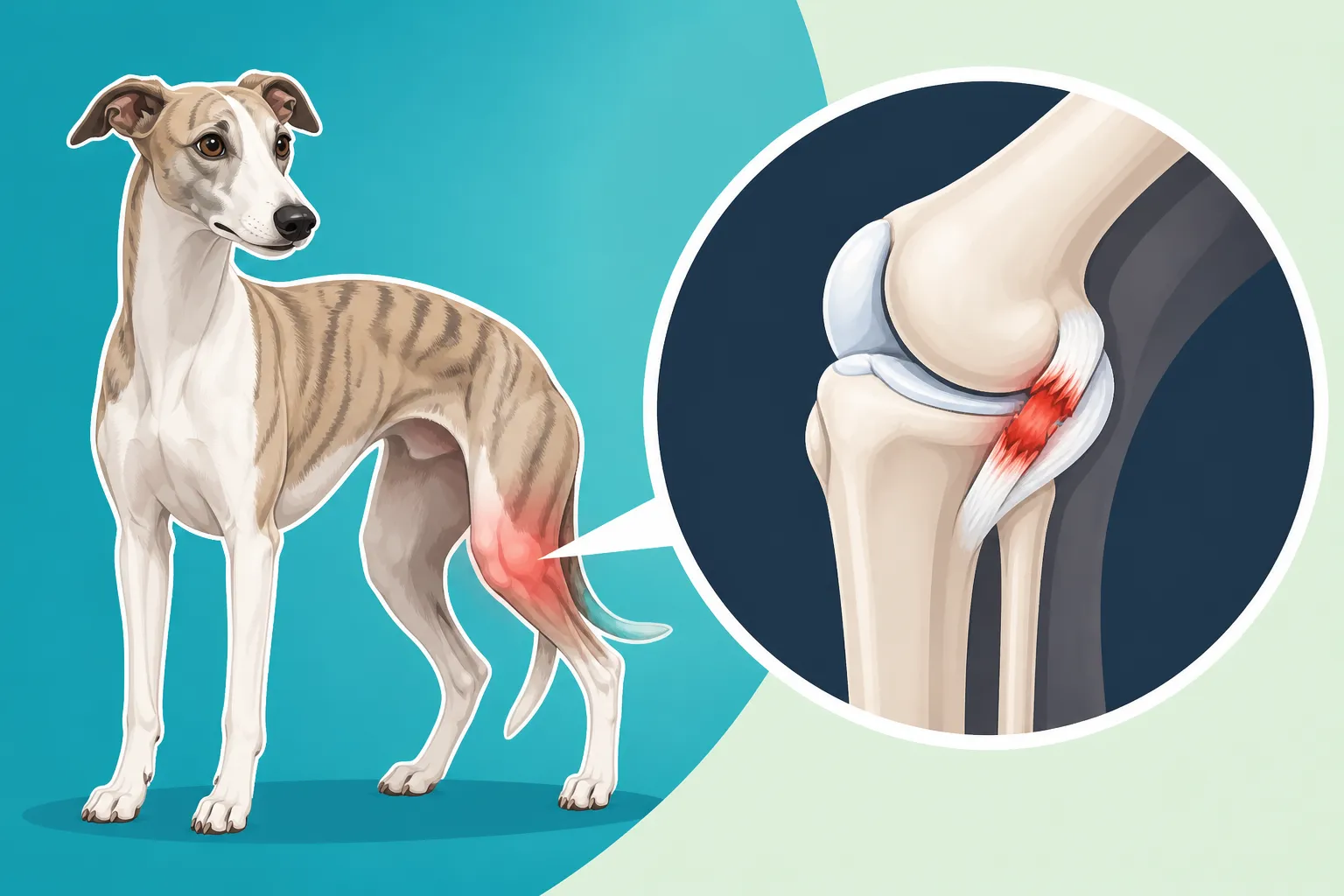
First, let's get a good grasp of what we're talking about. The cranial cruciate ligament is essentially the canine equivalent of the anterior cruciate ligament (ACL) in humans. It's one of two main ligaments in a dog's knee (stifle) joint, and its job is absolutely critical. Think of it as a strong, fibrous band connecting the femur (thigh bone) to the tibia (shin bone).
Its primary functions are twofold: it prevents the tibia from sliding forward relative to the femur and it limits excessive internal rotation of the tibia. Basically, it keeps the knee stable. When this ligament tears, whether partially or completely, that stability is compromised, leading to pain, inflammation, and a significant lameness that won't just "walk off."
The way this ligament can tear is important to understand. Unlike an acute, sudden trauma often seen in human sports injuries (though those happen in dogs too!), many canine cruciate tears are actually degenerative. This means the ligament weakens over time, fraying bit by bit, until a seemingly minor movement—a twist, a jump, or even just stepping off a curb—is enough to cause the final rupture. This "slow burn" aspect means that by the time you see acute lameness, the ligament might have been in trouble for a while.
Cruciate Ligament Tears in Whippets: Reality vs. Perception
So, the big question: are Whippets more susceptible to cruciate ligament tears than other breeds? This is where perception often clashes with reality. Whippets are sighthounds, bred for speed and agility. They're lean, muscular, and incredibly fast. When people see their slender legs and graceful build, it's easy to assume they're fragile and prone to breaking.
Are Whippets Inherently Prone to CCL Tears?
The general consensus in veterinary orthopedics is that certain larger, more active breeds like Labrador Retrievers, Rottweilers, and Newfoundlands tend to have a higher incidence of cranial cruciate ligament tears. These breeds often have conformations or genetic predispositions that put more strain on the ligament, or they might be carrying more weight, adding to the stress.
Whippets, on the other hand, don't typically top the list of breeds genetically predisposed to CCL tears in the same way. Their lighter weight, athletic build, and generally leaner body mass can sometimes work in their favor. However, this absolutely does not mean they are immune. Far from it. Any dog, regardless of breed, can tear a cruciate ligament. The degenerative nature of many tears means that while a Whippet might not have the same "predisposition" as a Lab, their intense bursts of speed, quick pivots, and hard stops during play or lure coursing certainly put their knees under immense stress. It’s less about inherent fragility and more about the mechanics of their high-impact activities. For example, a sudden stop on wet grass could lead to a serious injury.
Factors Increasing Risk in Whippets
While Whippets might not have a strong genetic predisposition in the same way some heavier breeds do, their lifestyle and athletic prowess introduce their own set of risk factors.
- High-Impact Activities: Whippets live for the chase. Whether it's formal lure coursing, racing, or just a spirited game of fetch in the park, their bodies are designed for explosive acceleration and sharp turns. These movements, especially if repetitive or performed on unstable surfaces, can put tremendous torque on the knee joint. Imagine your Whippet hitting its top speed and then executing a sharp 180-degree turn. That's an incredible amount of force directed right at those cruciate ligaments.
- Slippery Surfaces: This is a huge, often overlooked factor. Running on slick floors indoors or wet, uneven ground outdoors can easily lead to a slip, twist, or misstep that strains or tears the ligament. A seemingly innocuous slide while playing zoomies on polished wood floors can be catastrophic. It’s why many Whippet owners invest in runners or rugs, even indoors.
- Lack of Conditioning/Warm-Up: Just like human athletes, dogs need proper conditioning. A Whippet that goes from zero to sixty without a warm-up, or one that isn't consistently active but then engages in an intense sprint session, is at a higher risk. Muscles, tendons, and ligaments need to be pliable and ready for action.
- Obesity: While not typically an issue for the naturally lean Whippet, even a few extra pounds can add unnecessary strain to joints, exacerbating any underlying weakness in the ligament. We talk a lot about how to keep weight on a Whippet without making it fat, but an overweight Whippet is indeed an unhealthy one.
- Previous Injuries: A Whippet that has suffered other leg or joint injuries, such as a muscle pull in a Whippet, might compensate in ways that put additional stress on the knee joint, increasing the risk of a cruciate tear down the line.
- Age and Degeneration: As Whippets get older, just like us, their ligaments can naturally weaken. A tear in an older Whippet might be the culmination of years of wear and tear, rather than a single traumatic event. This is part of caring for a Whippet past ten.
Recognizing the Signs of a Tear in a Whippet
Whippets are stoic creatures, often hiding pain. However, a cruciate tear is typically too debilitating to completely mask. The signs can vary depending on whether it's a partial tear (which might be more subtle) or a complete rupture (which is usually quite dramatic).
Common Signs to Watch For:
- Sudden, Non-Weight-Bearing Lameness: If your Whippet is suddenly holding one hind leg up completely, or barely touching it to the ground, especially after a burst of activity or a slip, a complete CCL tear is a strong possibility.
- Intermittent or Mild Lameness: For a partial tear, you might notice your Whippet "toe-touching" (putting just the tip of the paw down) or a mild limp that seems to get better with rest, only to recur with activity. This can be deceptive, as it might seem less serious. The lameness might be worse after rest, especially after waking up, and improve slightly as they "warm up."
- Sitting with the Leg Out to the Side: A classic sign is a dog who can't comfortably sit squarely. Instead, they might hold the injured leg out to the side rather than tucking it underneath them.
- Swelling in the Knee Joint: While subtle in a lean Whippet, you might be able to feel some warmth or fullness around the knee compared to the healthy leg.
- Muscle Atrophy: Over time, if the leg isn't being used properly, the muscles in the thigh will start to shrink. You might notice one thigh looks visibly thinner than the other.
- Reluctance to Jump or Play: Your normally enthusiastic Whippet might hesitate before jumping into the car or onto the sofa. They might also show less interest in their usual vigorous play sessions.
- Audible Click or Pop: In some acute, complete ruptures, an owner might actually hear a distinct "pop" at the moment of injury.
If you observe any of these signs, especially sudden lameness, it's crucial to seek veterinary attention promptly. The sooner a diagnosis is made, the better the prognosis for recovery.
Diagnosis and Treatment Options for Whippet CCL Tears
When you suspect a cruciate tear, getting an accurate diagnosis is the first and most vital step. Your veterinarian will perform a thorough physical examination, focusing on the knee joint.
Veterinary Diagnosis
- Palpation and Manipulation: The vet will feel the knee for swelling, pain, and instability. The two classic tests are:
- Cranial Drawer Test: The vet attempts to move the tibia forward relative to the femur, much like a drawer opening. If the ligament is torn, there will be abnormal movement.
- Tibial Compression Test: The vet holds the femur still and flexes the ankle joint. If the cruciate is torn, the tibia will move forward.
- Radiographs (X-rays): While X-rays don't directly show the ligament (it's soft tissue), they are invaluable for assessing secondary signs like inflammation, fluid buildup in the joint, and the onset of arthritis, which often follows a CCL injury. They also rule out other potential bone injuries.
- Sedation for Examination: Whippets, being sensitive, might tense up during painful manipulations, making it hard for the vet to get a clear drawer sign. Often, light sedation is needed to relax the muscles and allow for a more accurate assessment.
- Advanced Imaging (MRI): In some complex cases, or if a partial tear is suspected and standard tests are inconclusive, an MRI might be recommended to visualize the ligament directly and assess other soft tissue structures.
Surgical Options for Whippets
For most complete cruciate tears, especially in active dogs like Whippets, surgery is the recommended course of action for optimal long-term stability and function. There are several surgical techniques, each with its pros and cons.
- Tibial Plateau Leveling Osteotomy (TPLO): This is one of the most common and effective procedures. It involves cutting the tibia and rotating the tibial plateau (the top surface of the shin bone) to change the biomechanics of the knee joint. This eliminates the need for the torn ligament by making the joint stable regardless of the CCL. TPLO has a high success rate and allows for a rapid return to function, often considered a good option for active, athletic dogs.
- Tibial Tuberosity Advancement (TTA): Similar to TPLO, TTA also alters the biomechanics of the knee. It involves cutting and advancing a part of the tibia (the tibial tuberosity) to neutralize the forces that cause the tibia to slide forward.
- Lateral Suture (Extracapsular Repair): This is an older, less invasive technique. It involves placing a strong suture material outside the joint to mimic the function of the torn ligament. It essentially acts as a temporary stabilizer while the body forms scar tissue to create new stability. While less expensive and less invasive, it may not provide the same long-term stability as TPLO or TTA, especially for highly athletic dogs, and can sometimes fail in very active canines. However, for smaller or less active Whippets, it can be a viable option.
The choice of surgery depends on several factors, including your Whippet's size, age, activity level, the surgeon's preference, and your budget. It's essential to have a detailed discussion with your veterinary orthopedic surgeon about the best approach for your individual Whippet.
Non-Surgical Management
In certain, very specific circumstances, non-surgical management might be considered. This is usually reserved for:
- Partial Tears: Sometimes, a very minor partial tear might respond to conservative management, but it carries a higher risk of progressing to a complete tear.
- Very Small, Sedentary Dogs: Dogs under 15-20 pounds with a very low activity level might do okay without surgery, relying on scar tissue formation and activity restriction. Whippets typically exceed this weight range and are definitely not sedentary.
- Dogs with Other Significant Health Issues: If a Whippet has other severe medical conditions that make anesthesia or surgery too risky, non-surgical options may be the only choice.
Non-surgical management involves strict crate rest, anti-inflammatory medications, pain management, and often physical therapy. However, for most Whippets, especially those used for racing or lure coursing, surgery offers a far better prognosis for returning to a pain-free, active life. Delaying surgery in a complete tear can also lead to more severe arthritis down the line.
Prevention and Prognosis for Whippets with CCL Injuries
Facing a cruciate tear can be daunting, but with proper care and prevention strategies, you can minimize the risks and ensure the best possible outcome for your Whippet.
Preventative Measures
While no method guarantees complete prevention, a proactive approach can significantly reduce the likelihood of a CCL injury in your Whippet.
- Controlled Exercise and Conditioning: Avoid "weekend warrior" syndrome. Regular, consistent exercise builds strength and stamina. Don't go from couch potato to full-speed sprints in one go. Gradually increase intensity and duration. Remember, raising a Whippet puppy without wrecking its joints means being mindful of over-exercising young, still-developing dogs.
- Warm-Up and Cool-Down: Before intense play or racing, take 5-10 minutes for a brisk walk to warm up muscles. After, a similar cool-down walk helps prevent stiffness.
- Appropriate Running Surfaces: Encourage running on soft, even surfaces like grass or dirt. Avoid hard pavements or slippery floors as much as possible, especially for sudden stops and turns. Running on hard ground can put more stress on joints and increase the risk of injuries like Whether a Whippet breaks a leg running or other soft tissue damage.
- Weight Management: Even a little extra weight puts more strain on joints. Keep your Whippet lean, but not underweight – you should be able to feel their ribs easily, but not see them dramatically.
- Nail Trims: Overly long nails can affect paw mechanics and put unnatural strain on the digits and overall limb alignment. Regular nail trims are a small but important part of overall joint health.
- Strength Training: Incorporate gentle exercises that build core strength and hind-end stability, such as walking up and down hills, gentle weaves, or balancing exercises.
- Regular Vet Check-ups: Annual check-ups can help identify any subtle lameness or joint issues early on, allowing for intervention before a major injury occurs.
Rehabilitation Post-Surgery
Surgery is only half the battle. The rehabilitation phase is absolutely critical for a successful recovery and to prevent complications like when a Whippet gets arthritis prematurely. This isn't just about rest; it's about structured, progressive exercise.
- Strict Activity Restriction: Immediately after surgery, your Whippet will need strict rest. This usually means leash walks only for bathroom breaks, often for 6-8 weeks, depending on the procedure and surgeon's recommendations. No running, jumping, or playing.
- Physical Therapy: This is non-negotiable for optimal recovery. A certified canine rehabilitation therapist can guide you through exercises tailored to your Whippet's needs. This might include passive range of motion, therapeutic exercises, balance work, and hydrotherapy (like underwater treadmill sessions). This dramatically improves outcomes and helps your Whippet regain full function. Whether a Whippet needs physical therapy after injury is a resounding yes for CCL tears.
- Pain Management: Your vet will prescribe pain medication and anti-inflammatories to keep your Whippet comfortable during recovery. Adhere strictly to the schedule.
- Patience and Consistency: Rehabilitation is a marathon, not a sprint. It can take 4-6 months, or even longer, for a Whippet to make a full return to activity. Consistency with exercises and strict adherence to your vet's and therapist's instructions are key.
Long-Term Outlook and Potential Complications
The prognosis for Whippets after a cruciate ligament repair, especially with TPLO or TTA, is generally excellent, with most dogs returning to a good quality of life and regaining significant function. Many can even return to their previous athletic pursuits, though often with some modifications.
However, it's important to be aware of potential long-term issues:
- Arthritis: Despite successful surgery, some degree of arthritis is almost inevitable in the injured joint. The initial injury itself, plus the subsequent inflammation and changes in joint mechanics, predisposes the joint to developing degenerative joint disease over time. Managing arthritis through diet, supplements, controlled exercise, and periodic vet checks will be a lifelong commitment.
- Injury to the Other Leg: Unfortunately, about 30-50% of dogs who tear one cruciate ligament will eventually tear the other. This is because the compensatory weight-bearing and altered gait put increased stress on the "good" leg. Proactive measures to maintain muscle strength and joint health in both hind limbs are vital.
- Infection or Implant Issues: As with any surgery, there's a small risk of infection or complications related to the surgical implants (plates, screws) used in TPLO or TTA.
- Meniscal Tears: Often, when the CCL tears, the meniscus (a cartilage pad in the knee) also tears. If a meniscal tear isn't addressed during the initial surgery, or if one develops later, it can cause continued pain and lameness.
The Role of Pet Insurance
Let's be realistic: a cruciate ligament repair is not a cheap undertaking. The diagnosis, surgery (which can range from $3,000 to $7,000 or more per leg, depending on the technique and location), and subsequent physical therapy can add up quickly. This is where pet insurance, like a plan from Healthy Paws, becomes an absolute lifesaver.
Having good pet insurance coverage means that when that dreaded injury happens, your primary concern can be your Whippet's health, not crippling vet bills. Companies like Healthy Paws often cover a significant portion of these emergency procedures, allowing you to opt for the best possible treatment without financial stress. It’s always a good idea to consider what insuring a Whippet costs monthly, as this foresight can save you thousands in a crisis. While skin injuries are often covered by pet insurance, complex orthopedic surgeries like CCL repair are where the real value of a robust policy shines through.
A cruciate tear can be a significant setback for your active Whippet, but it doesn't have to be the end of their joyful, zoomie-filled life. With prompt veterinary care, appropriate surgical intervention, dedicated rehabilitation, and proactive preventative measures, most Whippets can make an excellent recovery and continue to be the wonderful, energetic companions we adore.
Disclaimer
This article is for general informational purposes only and does not constitute professional advice. Laws, prices and regulations vary by location and change over time. Consult a qualified professional for guidance on your specific situation.