How a Whippet Treats the Family Cat
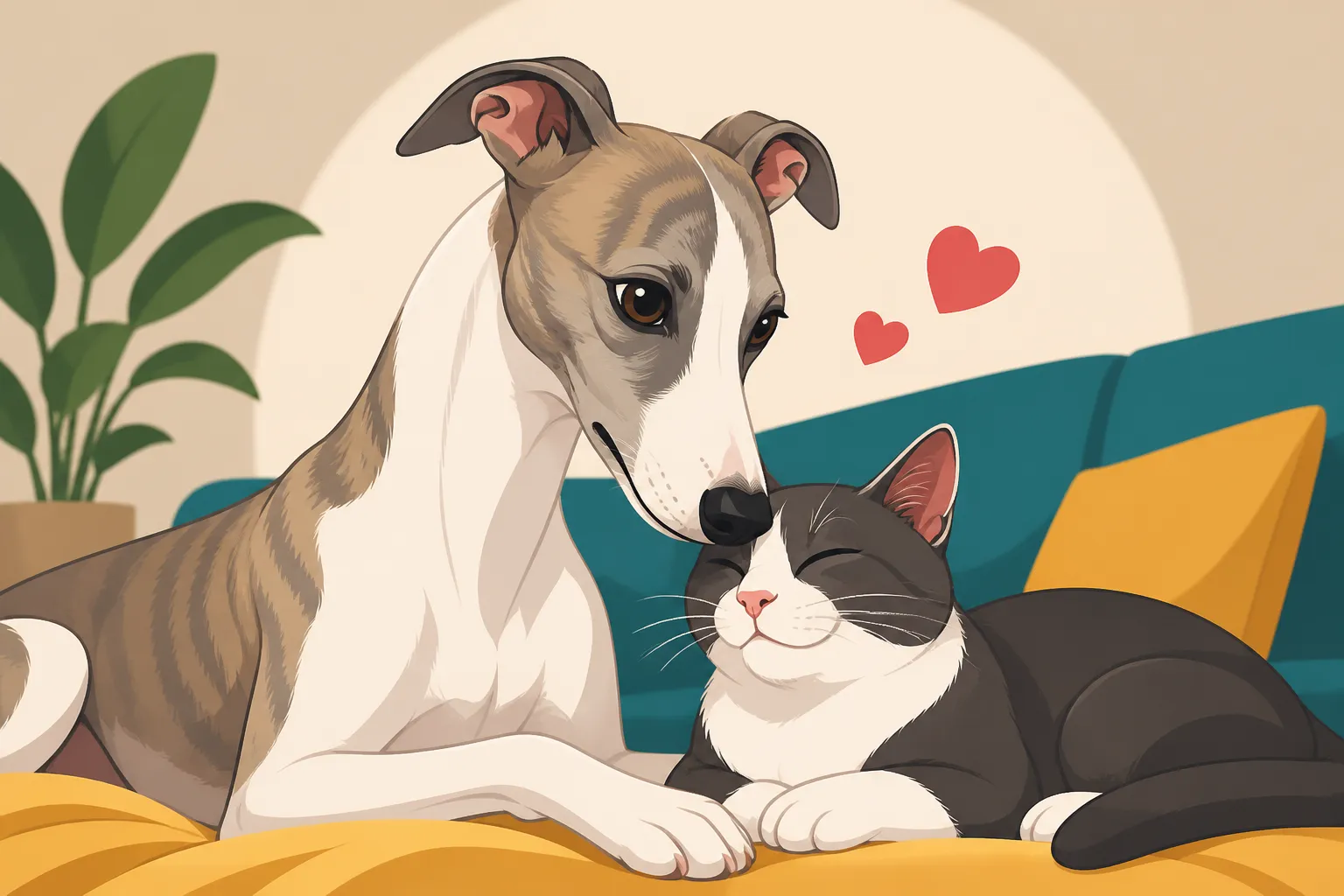
One of the biggest concerns for potential Whippet owners who already share their home with a feline friend is how these two very different creatures will coexist. It's a valid worry, given the Whippet's undeniable sighthound heritage and lightning-fast prey drive. This guide will walk you through the nuances of introducing a Whippet to your beloved cat, managing their relationship, and fostering a peaceful, happy multi-species household.
Understanding the Whippet's Instincts When It Comes to Cats
Before we even think about introductions, it's crucial to understand the fundamental nature of your Whippet. These aren't your average retrievers or terriers; they are sighthounds, bred for centuries to spot, chase, and catch fast-moving objects. This inherent drive, while beautiful in a field, can be a real challenge when it comes to the family cat.
The Sighthound Instinct Explained
Whippets, like all sighthounds, possess an extraordinary visual acuity and an instinct to pursue anything that flees. Their entire physiological makeup – from their deep chest and flexible spine to their powerful hindquarters – is designed for speed and the chase. They are hardwired to react to movement. This isn't a sign of aggression or a desire to harm your cat, necessarily; it's simply a strong, ingrained behavioral pattern. Think of it less as malice and more as a deeply ingrained biological program kicking in. If a cat streaks across the room, it can instantly trigger that chase response, even in a Whippet that otherwise adores its feline housemate. It’s important to remember that this instinct is largely unaffected by training in its initial trigger phase; you can't train away an instinct, only manage its manifestation. This is why discussions around Why a Whippet Cannot Be Let Off Leash in an Open Field are so crucial for understanding their drive.
What often complicates matters is that many house cats, particularly those not used to dogs, will naturally dart away when approached quickly or suddenly by a larger, unfamiliar animal. This fleeing behavior, which is the cat's natural defense mechanism, inadvertently plays right into the Whippet's prey drive. The chase, for the Whippet, is its own reward. Even if the Whippet has no intention of harming the cat, the sheer thrill of the pursuit can be overwhelming for both animals, and potentially dangerous for the cat.
When Prey Drive Kicks In
A Whippet's prey drive can be triggered by a multitude of factors, but movement is definitely the number one culprit. A cat strolling casually across the living room might not spark much interest, but a cat launching itself onto a counter, or a kitten playfully batting at a toy, can instantly flip a switch. The size difference between a Whippet and a cat, while not as vast as with a Greyhound, is still significant enough that even playful chasing can result in accidental injury to the cat.
Beyond direct movement, excitement or arousal in the Whippet can lower its threshold for engaging its prey drive. A zoomie session, a sudden loud noise, or even an enthusiastic greeting from a human can heighten a Whippet's energy levels, making it more likely to react to a cat's presence. It's not always a conscious decision on the Whippet's part; sometimes, it's an almost reflexive burst of speed and focus. Understanding these triggers is the first step in creating a safe and harmonious environment. You'll often find yourself needing to anticipate these moments and intervene before the chase even begins. This is particularly relevant when considering What a Whippet Does When It Catches Something, as the outcome can range from a harmless sniff to a more concerning situation depending on the individual Whippet's temperament and the cat's reaction.
Introducing a Whippet to a Resident Cat
The success of a Whippet and cat living together often hinges on how their initial introductions are handled. Rushing this critical phase can set back their relationship significantly, while patience and proper management lay the groundwork for a peaceful home.
Puppy Introductions
Bringing a Whippet puppy into a home with a resident cat generally offers the best chance for harmonious coexistence. Puppies are usually more adaptable and less likely to have a fully developed, hard-wired prey drive. The key here is early, positive, and controlled exposure. When you bring your Whippet puppy home, the cat should already be well-established and comfortable in its territory. Start with supervised interactions, always on a leash, or with the puppy confined to a crate or playpen. Allow the puppy and cat to see and smell each other from a distance, rewarding calm behavior from both. Slow and steady wins the race.
Think of it as a series of short, positive encounters. Let the puppy see the cat, but don't force interaction. Reward the puppy for looking at the cat calmly, rather than fixating or lunging. Use high-value treats to create positive associations. Similarly, reward your cat for staying relaxed or even ignoring the puppy. Crucially, always have an escape route for the cat – a high shelf, a cat tree, or another room – so it never feels trapped. Remember, the goal is not for them to be best friends overnight, but to learn to tolerate and eventually ignore each other. Consistency during this crucial period, as discussed in Introducing a Whippet Puppy to a Resident Cat, is paramount for success.
Adult Whippet Introductions
Introducing an adult Whippet to a resident cat can be more challenging, as the Whippet's prey drive is typically more established. This process requires even more patience and strict management. The very first interactions should always be through a barrier, like a baby gate across a doorway, or with the Whippet securely leashed. The aim is to allow them to acclimatize to each other's scent and presence without direct physical contact. Rotate them between rooms so they can investigate each other's "territory" without stress.
When you do move to visual introductions, keep the Whippet on a leash. Have a helper manage the cat, or ensure the cat has an easy escape route. Reward the Whippet for calm, neutral behavior towards the cat. If the Whippet fixates, barks, or lunges, immediately redirect its attention with a verbal cue and a treat, or remove it from the situation. Never punish the Whippet for its instincts, but gently guide it towards appropriate behavior. The goal is to teach the Whippet that calm indifference, rather than chase, is rewarded. This stage can take weeks, or even months, and requires unwavering commitment. Consulting resources like Teaching an Adult Whippet to Live With Cats can provide more detailed, step-by-step strategies.
Here’s a simple table outlining key differences in approach:
| Feature | Whippet Puppy Introduction | Adult Whippet Introduction |
|---|---|---|
| Pace | Generally faster, but still requires patience | Much slower, often taking weeks or months |
| Prey Drive | Less developed, more malleable | Established, requires consistent management |
| Supervision | Essential, but can progress to controlled off-leash sooner | Constant, always leashed or behind barrier initially |
| Cat's Reaction | May be more tolerant of a small, playful pup | May be more wary or fearful of a larger, unfamiliar dog |
| Goal | Develop acceptance and mutual respect early | Achieve calm coexistence and mutual indifference |
| Tools | Crate, playpen, leash, treats, cat trees, baby gates | Leash, harness, treats, cat trees, baby gates |
Creating Safe Spaces for the Cat
Regardless of whether you're bringing home a puppy or an adult Whippet, creating inviolable safe spaces for your cat is non-negotiable. Cats need to feel secure and have areas where they can retreat without fear of being pursued or cornered. This dramatically reduces the cat's stress levels and, in turn, can help prevent the cat from fleeing, which would trigger the Whippet's prey drive.
This means ensuring your cat has access to high places – cat trees, shelves, or even the tops of cabinets – that the Whippet cannot reach. Investing in good quality cat trees, perhaps from a retailer like Amazon, can make a huge difference. Consider installing cat shelves or "cat highways" along your walls. You might also want to utilize baby gates (again, easily found on Amazon) to block off certain rooms, allowing the cat access while keeping the Whippet out. A cat flap that only opens for the cat (via a microchip or collar tag) can provide a safe haven where the cat can eat, sleep, and use its litter box without intrusion. These measures are not just about the cat's comfort; they are crucial for preventing dangerous confrontations and ensuring the longevity of their shared home. Remember, a stressed cat is more likely to lash out or flee, both of which can escalate tension.
Managing the Whippet-Cat Relationship Day-to-Day
Once initial introductions are (hopefully) past, the real work of managing a peaceful multi-pet household begins. It's a marathon, not a sprint, and vigilance will be your constant companion.
Supervision and Management
Living with a Whippet and a cat means perpetual vigilance, especially in the early stages and whenever the animals are unsupervised. For the first few months, and potentially for the dog's entire life, direct supervision is absolutely critical. This doesn't mean just being in the same room; it means actively observing their interactions and being ready to intervene at a moment's notice. Never leave them alone together unless you are 100% confident in their safety, which for a Whippet and cat, might mean never leaving them truly unsupervised for extended periods.
When you can't supervise, separate them. This could mean crating the Whippet, confining it to a dog-proofed room, or using baby gates to restrict access. These management tools are not punishments; they are safety measures that protect both animals and reduce stress. It's far better to prevent an incident than to react to one. Over time, as you build trust and observe their interactions, you might be able to relax some protocols, but never completely drop your guard. Even the best-behaved Whippet can have its instincts triggered by a sudden movement. The concept of Living With a Whippet and a Cat highlights that this isn't just a temporary phase, but an ongoing commitment to management.
Training for Coexistence
Training plays a vital role in fostering a positive Whippet-cat relationship. The focus should be on teaching your Whippet impulse control, a strong "leave it" command, and a reliable recall. These commands are invaluable for redirecting your Whippet's attention away from the cat if its prey drive starts to kick in. Positive reinforcement training is key, as Whippets are sensitive dogs and respond poorly to harsh corrections.
Enroll in a good puppy class or consider online training programs like those offered by BAXTER & Bella, which focus on positive, reward-based methods. Teach your Whippet to focus on you even with distractions. Practice "leave it" with various high-value items, then generalize it to the cat. Reward your Whippet heavily for calm behavior around the cat, even if it's just lying quietly in the same room. A solid "stay" or "settle" command can also be useful for keeping your Whippet in place when the cat is present. Remember that the goal is not necessarily for the Whippet to love the cat, but to calmly coexist and respect its space. This kind of training is crucial, as How a Whippet Learns When It Bruises From Pressure reminds us of their sensitivity to adverse methods.
Signs of Trouble and What to Do
Knowing the signs of stress or trouble in both your Whippet and your cat is crucial for preventing incidents. For the Whippet, look for signs of fixation: intense staring, rigid body posture, tensing up, or whining. Any of these could indicate that the prey drive is engaging. For the cat, watch for flattened ears, dilated pupils, hissing, growling, a puffed-up tail, swatting, or constant hiding. These are all clear signals that the cat feels threatened or stressed.
If you see these signs, intervene immediately, calmly, and without punishment. Redirect the Whippet's attention with a sound, a treat, or a toy. If necessary, physically separate them by leading the Whippet to another room or closing a baby gate. Never let a chase develop. If your Whippet does manage to chase the cat, do not yell or chase after your Whippet, as this can inadvertently turn the situation into a fun game for the dog. Instead, use a firm verbal interrupter or, if the Whippet is leashed, calmly guide it away. After separation, allow both animals to decompress before attempting another controlled interaction. Consistent vigilance and quick intervention are essential. It's important to understand the nuance, as How a Cat Teaches a Whippet Manners often involves the cat setting boundaries, but sometimes human intervention is necessary for safety.
Setting Up Your Home for Success
The physical environment of your home plays a significant role in establishing a peaceful coexistence between your Whippet and your cat. Thoughtful setup can minimize opportunities for conflict and maximize safety for both.
Vertical Spaces and Escape Routes
Cats are natural climbers, and they thrive when they have access to high vantage points where they can survey their territory safely. In a multi-pet household with a sighthound like a Whippet, vertical space becomes an absolute necessity, not a luxury. By providing tall cat trees, wall-mounted shelves, or even clear pathways onto bookcases or sturdy furniture, you're giving your cat vital escape routes and safe zones. These elevated areas allow the cat to observe the dog without feeling vulnerable or cornered.
Imagine your cat, Fifi, feeling stressed by a rambunctious Whippet puppy. If she can gracefully leap onto a high shelf or scale a towering cat tree, she immediately removes herself from the perceived threat. This ability to escape reduces her stress response, meaning she's less likely to hiss, swat, or bolt, which in turn means the Whippet puppy is less likely to be triggered into a chase. Ensuring that these vertical spaces are easily accessible only to the cat (meaning the Whippet can't jump or climb to reach them) is paramount. Strategically placed cat trees, possibly from a wide selection on Amazon, can serve as neutral territories where Fifi can relax, eat, or sleep, completely out of reach of your Whippet, Dash. This foresight can prevent countless moments of potential conflict and allow both pets to share the same physical space more comfortably.
Feeding and Potty Arrangements
Separate feeding and litter box arrangements are critical for managing a Whippet-cat household. Food can be a major point of contention, and a Whippet's keen sense of smell can easily lead them to investigate (and possibly consume) a cat's meal, potentially causing digestive upset for the dog and stress for the cat. Similarly, litter boxes can be tempting targets for curious dogs, which is unhygienic for everyone involved.
For feeding, always ensure your cat's food and water bowls are placed in an area inaccessible to the Whippet. This could be on a high counter, inside a cat tree, behind a pet gate with a cat-sized opening, or in a room that the Whippet is not allowed to enter. For example, if you have a kitchen island, placing the cat's food on top where only they can jump up to reach it is an excellent strategy. Using microchip-activated feeders can also be a game-changer, granting access only to the designated pet. For litter boxes, the same principle applies. Place them in a bathroom, laundry room, or utility closet that the cat can easily access but the Whippet cannot. Cat flaps that allow only the cat through (many models scan a microchip or an RFID tag on the collar) can be incredibly useful here, ensuring the cat's privacy and cleanliness, while preventing your Whippet from developing any unsavory litter box habits. These measures reduce competition and stress around vital resources, leading to a much more peaceful home for Living With a Whippet and a Cat.
Specific Scenarios and Troubleshooting
Even with the best planning, specific challenges can arise when a Whippet and a cat share a home. Knowing how to troubleshoot these common scenarios is key to maintaining harmony.
The Whippet That Chases Its Own Cat
It's a frustrating, and frankly, terrifying situation when your Whippet, who seemingly lives peacefully with your cat most of the time, suddenly decides to give chase. This isn't necessarily a sign of aggression; more often, it's the deeply ingrained sighthound prey drive kicking in. The trigger is almost always movement. The cat might dart unexpectedly, a sudden noise might startle both animals, or the Whippet might simply be over-stimulated during a play session of its own. It's a prime example of Why a Whippet Chases Every Cat but Its Own being linked to movement more than malice.
When this happens, the most crucial thing is to interrupt the chase without scaring the cat further or inadvertently rewarding the Whippet. Avoid yelling or running after them, as this can escalate the excitement. A sharp, distinct verbal interrupter (like a clap, a firm "HEY!", or a loud, neutral noise) can break the Whippet's focus. Once the chase is broken, immediately redirect the Whippet to a positive behavior, like a "sit" or "down," and reward it with a high-value treat. Then, safely separate them to allow both animals to decompress. Consistent training on a strong "leave it" and "recall" is your best defense against these moments. Always supervise initial interactions, and keep a long line on your Whippet indoors if its chase instinct is still strong. Consider channeling that prey drive into appropriate outlets, like How Lure Coursing Channels a Whippet's Drive, to give them a safe and controlled way to express their natural behaviors.
When a Whippet Is Too Rough
Sometimes, a Whippet isn't necessarily "chasing" but is simply too boisterous or rough in its play, leading to the cat feeling overwhelmed or even getting accidentally hurt. This can be common with puppies or young adult Whippets who haven't quite learned appropriate social cues with smaller, more delicate creatures. A Whippet's enthusiasm and speed can easily translate into unintended bumps, knocks, or overly zealous sniffing that can scare a cat. This is particularly important if you're introducing a young Whippet to a kitten, as explored in Whether a Whippet Is Safe With a Kitten.
The solution here involves both management and teaching. Firstly, never allow unsupervised interactions until you are absolutely certain of both animals' comfort levels. During supervised times, use a leash to control your Whippet's movements and ensure it approaches the cat calmly and respectfully. If the Whippet gets too close or starts being too "bouncy," calmly interrupt and redirect its attention to an appropriate dog toy or a quiet "settle" command. Teach your Whippet to respect the cat's personal space and reward it for calm, gentle behavior around the cat. Remember that cats will also communicate their boundaries – a hiss or a swat is often a cat's way of saying "too much!" and a wise Whippet will learn to heed these warnings. It's often through these interactions that How a Cat Teaches a Whippet Manners truly comes into play. If the cat repeatedly feels threatened, it will eventually stop trying to communicate and will simply hide, which can lead to a strained relationship.
Introducing New Pets to an Established Pair
The dynamics shift considerably when you consider introducing a new pet into an existing Whippet-cat household. Whether it's a new dog, a new cat, or another small animal, the established hierarchy and routines will be disrupted. If you have an existing Whippet and cat who coexist peacefully, adding another animal requires even greater care and a slower introduction process than the initial pairing.
For a new dog, follow the same careful, gradual introduction steps as you would for an adult Whippet and cat, ensuring that both existing pets feel secure and unthreatened by the newcomer. Maintain separate feeding areas and safe zones, and supervise all interactions. For a new cat, the challenge shifts slightly. Your resident Whippet has become accustomed to your cat, but a new feline face can trigger the prey drive anew. Introduce the new cat to the Whippet slowly, perhaps keeping them separated by a baby gate initially, allowing them to acclimate to each other's scent for several days or even weeks. Reward calm behavior from both your Whippet and your resident cat towards the new addition. The key is to manage expectations, be endlessly patient, and prioritize the safety and comfort of all animals involved. Remember, every animal is an individual, and success hinges on careful observation and adaptation.
Disclaimer
This article is for general informational purposes only and does not constitute professional advice. Laws, prices and regulations vary by location and change over time. Consult a qualified professional for guidance on your specific situation.