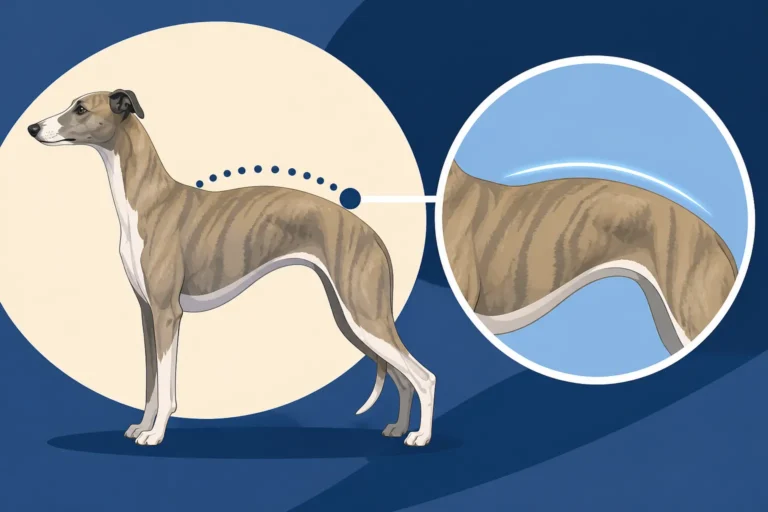
The Whippet’s Link to the Silken Windhound
A Whippet and a Silken Windhound can look like close relatives: both are elegant, athletic sighthounds, and some Silkens have a distinctly Whippet-like outline. The connection is real, but a Silken Windhound is not simply a long-haired Whippet. This guide explains how the breed developed, what the two dogs share, and how to tell their relationship from resemblance alone.
How the Silken Windhound developed from Whippets
The Whippet’s role in the breed’s beginnings
The Silken Windhound was developed in the United States as a distinct sighthound breed. Whippets were part of its foundation, alongside Borzoi. The aim was not just to make a Whippet with a longer coat; it was to develop a dog with its own consistent combination of size, structure, coat, and temperament.
That history helps explain why Silken Windhounds can look familiar to Whippet owners. Both breeds have the lean build and flexible, athletic movement associated with sighthounds. A Silken may remind you of a Whippet at first glance, especially if you focus on its narrow waist, long legs, and streamlined profile. But its ancestry includes another breed with a very different coat and appearance: the Borzoi.
Over generations, breeders selected dogs that fit the developing Silken Windhound type. The result is a separate breed rather than a mixed-breed dog whose ancestry is still being combined in each new litter. The breed’s identity comes from generations of planned breeding, not just from an individual dog having a Whippet parent.
Why the breed has a longer coat
The Silken Windhound’s flowing coat is one of its easiest features to distinguish from a typical Whippet. Its coat can be straight, wavy, or somewhat fuller, with feathering that gives the dog a softer outline. Whippets, by contrast, have a short, close coat that reveals the contours of their body.
The Borzoi’s place in the Silken’s ancestry helps make sense of that difference. A longer coat is not evidence that a Silken is simply a Whippet carrying a single “long hair” feature. Coat length and texture are influenced by inherited traits, and a breed’s appearance reflects the traits selected across generations.
This is also why the Silken Windhound should not be confused with the longhaired Whippet question. A dog may look like a Whippet with a longer coat, but appearance alone does not establish its breed identity or ancestry. For a closer look at the distinction, see The Longhaired Whippet Question.
A separate breed, not an ongoing Whippet cross
Once a breed is established, its identity depends on consistent breeding practices and a shared breed standard, rather than on continually crossing it back to one of its foundation breeds. Silken Windhounds are bred as Silken Windhounds. They are not simply Whippet–Borzoi crosses produced anew in every generation.
Registry and recognition details can vary among kennel organizations, so prospective owners should check which organization registers a particular dog and what that registration means. A pedigree and breeder’s records are more useful than a label in an online listing when you want to understand a dog’s background.
The same distinction matters when someone advertises a “long-haired Whippet” or a “Whippet-Silken.” Those phrases may describe a dog’s appearance or claimed ancestry, but they do not automatically mean the dog is a recognized Silken Windhound or a pedigreed Whippet. Ask for documentation and be cautious if the seller relies on unusual coat length as proof of rarity or special status.
What Whippets and Silken Windhounds have in common
Shared sighthound instincts and athleticism
Whippets and Silken Windhounds are sighthounds: dogs whose hunting heritage is strongly associated with noticing and pursuing movement. That does not mean every dog will chase every animal in every situation, but it does mean owners should take prey drive seriously. A squirrel darting across a path can be more compelling than a familiar recall cue.
The practical lesson is similar for both breeds: do not assume that good manners indoors translate into reliable off-leash behavior in an open area. Use secure fencing, a well-fitted leash or long line, and training that rewards checking in. A secure, enclosed space is much safer for a sprint than an unfenced park or roadside field. How a Whippet Hunts by Sight explains why movement can override a dog’s attention to its handler.
Both breeds can also have a striking contrast between outdoor energy and indoor calm. A dog might enjoy a fast run and then spend much of the afternoon curled up on a comfortable bed. That familiar “sprint, then snooze” pattern is not proof that exercise needs are identical from one dog to the next; age, health, conditioning, and individual temperament all matter.
Similar outlines can hide different proportions
A Whippet and a Silken Windhound may share a graceful, tucked-up silhouette, but a similar outline does not make them interchangeable in the show ring or in breeding. Breed standards describe specific expectations for structure and movement. Coat, size, proportions, head shape, and overall balance all contribute to how a dog is identified and evaluated.
This is one reason photos can be misleading. A Silken Windhound photographed with its coat lying close to its body may appear particularly Whippet-like. A Whippet in a winter coat, by contrast, can look fuller than it actually is. Looking at the whole dog—and checking reliable pedigree information—is more useful than trying to identify breed from one feature.
The broader relationship between sighthound breeds is worth keeping in perspective, too. Sharing a general body type or hunting style does not make one breed a smaller version of another. Whether a Whippet Is Just a Small Greyhound and The Whippet Against the Greyhound and the Italian Greyhound offer useful context for thinking about resemblance without treating separate breeds as substitutes.
Gentle personalities still need thoughtful handling
Whippets are often sensitive to harsh handling, and individual Silken Windhounds may also be reserved or emotionally soft. The sensible approach is to build confidence through calm, reward-based training rather than assuming that a graceful, easygoing appearance means a dog will tolerate pressure or chaos.
A new dog may need time to adjust to a household’s rhythms, particularly if it has lived in a kennel, traveled a long distance, or had limited experience with busy streets and visitors. Give it a predictable resting place and the chance to retreat without being followed. Children should be taught to let a resting dog sleep and to avoid grabbing at its coat, ears, or tail.
If you are choosing between the breeds, meet adult dogs where possible. Ask owners what their dogs are like at home, around unfamiliar dogs, and when they see small animals. A breed description is a starting point; it cannot tell you exactly how an individual dog will behave in your family.
Practical differences for prospective owners
Grooming and coat care
A Whippet’s short coat is usually simple to maintain with occasional brushing and routine checks for scrapes. A Silken Windhound’s longer coat takes more attention, especially where feathering can collect burrs, tangles, or debris. The time involved depends on the individual coat and the dog’s activities, but owners should expect more brushing than they would for a typical Whippet.
After a walk through tall grass or wooded trails, check behind the ears, beneath the legs, around the tail, and through the feathering. Catching a small tangle before it tightens is much easier than trying to comb out a dense knot later. A gentle brush and comb are generally more useful than vigorous grooming, which can be uncomfortable and may irritate skin.
If you are gathering supplies, think about the dog’s actual coat rather than buying tools based on breed photos. Chewy carries general grooming products, but the right choice depends on the coat’s texture and your dog’s comfort. A breeder or groomer familiar with Silken Windhounds can help you choose a suitable brush and show you how to use it without pulling.
Weather, bedding, and daily comfort
Neither breed should be treated as a dog that can live outdoors year-round. Whippets have a short coat and little insulation, so they often need an extra layer in chilly weather. A Silken Windhound’s coat offers a different amount of coverage, but coat length does not make every individual equally comfortable in cold rain, wind, or prolonged exposure.
Watch the dog rather than relying on a rigid temperature rule. Shivering, repeatedly lifting paws, trying to turn home, or seeking warmth are cues to shorten an outing or add protection. A well-fitting coat should allow comfortable movement and should not rub under the legs or across the chest. For more on the Whippet side of this issue, see Whether a Whippet Suits a Cold Climate.
Soft, warm resting places matter for both breeds. Many sighthounds like to curl up on padded beds or under a blanket, although preferences vary. If you shop at Chewy or another retailer, measure the dog and consider its sleeping style before choosing a bed: a dog that stretches out needs a different shape from one that likes a bolster around its body. Give the dog a way to move away from heavy bedding if it becomes too warm.
Exercise and safe opportunities to run
Both breeds benefit from regular exercise, but a fenced run is not a substitute for walks, training, and time spent learning how to settle in the household. A safe sprint can be enriching, but it should happen in a secure, suitable space with footing that is not dangerously slick or rough. Warm up with a calm walk before high-speed play, and stop if the dog appears uncomfortable or unusually tired.
For a Whippet, owners can explore activities such as lure coursing or straight-line sprint events, provided the dog is old enough, healthy, and appropriately conditioned. Silken Windhounds may also enjoy sighthound activities, but owners should check the rules and eligibility requirements of the organization hosting an event. Do not assume that two breeds with similar instincts have identical event access or training needs.
If the dog has little experience with running, start gradually rather than allowing a sudden burst of all-out activity. Puppies and young dogs need age-appropriate exercise, and any dog returning from injury or inactivity should be eased back into work with veterinary guidance. A comfortable coat for the walk home or a padded bed for post-exercise rest may be useful; Chewy is one place owners look for those everyday supplies, but proper fit and comfort matter more than the store.
Choosing between a Whippet and a Silken Windhound
Match the dog to your household, not just its appearance
If you love the Whippet’s short coat and compact sighthound look, a Silken Windhound may appeal for its flowing coat and related athletic style. But it is worth asking what daily care you actually want. Are you happy to brush longer feathering and check for tangles? Would you rather have a lower-maintenance coat? Do you have secure places for exercise, and can you manage a dog that may be strongly interested in moving wildlife?
Spend time with adult dogs from each breed if you can. A breeder, breed club, or event can help you see the difference between a polished photo and ordinary life: how dogs move around a home, how they respond to strangers, and what their coats look like after a normal walk. A breeder should be willing to discuss health, temperament, and the realities of the breed rather than focusing only on color or coat.
If you are considering a dog described as a Whippet mix, remember that appearance does not guarantee a predictable blend of traits. A mixed-breed dog may inherit a short coat, a longer coat, a strong chase instinct, or a combination that is difficult to anticipate. What a Whippet Mix Inherits can help frame those questions without assuming that one parent’s traits will reliably dominate.
Questions to ask a breeder or rescue
Ask for the dog’s documented breed background and, where applicable, pedigree or registration information. Find out what health screening is appropriate for the lines involved and whether the breeder can explain the results. A responsible breeder should welcome thoughtful questions and should be interested in the home the dog is going to, not just in completing a sale.
Ask about the parents’ temperaments and daily lives. Do they live in a home, take part in sport, or spend most of their time in a kennel setting? How do they behave around other dogs and small animals? What grooming routine do their coats require? Those practical details help you picture the adult dog beyond its puppy appearance.
If adopting, ask what is known about the dog’s history and what support is available during adjustment. A rescue may not have a complete pedigree or full background, but staff can often describe observed behavior, care needs, and the kind of home that seems likely to suit the dog. Whether you choose a Whippet or a Silken Windhound, plan for a secure setup, soft bedding, patient training, and the possibility that the dog’s individual temperament will not match every breed stereotype.
A useful comparison at a glance
| Feature | Whippet | Silken Windhound |
|---|---|---|
| Breed relationship | One of the breeds used in the Silken Windhound’s development | A distinct breed developed with Whippet and Borzoi ancestry |
| Typical coat | Short and close | Longer, with possible feathering and varied texture |
| Grooming needs | Generally modest | More brushing and checks for tangles or debris |
| Shared traits | Sighthound build, athleticism, and potential interest in chasing movement | Sighthound build, athleticism, and potential interest in chasing movement |
| What to verify | Pedigree, health background, temperament, and safe exercise needs | Registry and pedigree details, health background, coat care, and safe exercise needs |
The connection between the two breeds is meaningful, but it does not erase their differences. A Silken Windhound carries Whippet ancestry while also reflecting the influence of the Borzoi and generations of deliberate breed development. If you are choosing a dog, focus on the whole animal: its documented background, care needs, temperament, and fit with your household—not just the resemblance that first caught your eye.
Disclaimer
This article is for general informational purposes only and does not constitute professional advice. Laws, prices and regulations vary by location and change over time. Consult a qualified professional for guidance on your specific situation.