Whether Jumping Is Safe for a Whippet
Many Whippet owners find themselves captivated by their dog's incredible athleticism, watching them effortlessly launch themselves into the air for a toy or clear a small obstacle with breathtaking grace. Yet, a quiet concern often nags at us: is all this jumping really safe for their delicate-looking bodies? It’s a valid worry, given their lean build and powerful movements. This guide will explore the nuances of Whippet jumping, helping you understand the potential risks and providing practical ways to protect your beloved sighthound’s joints and overall health throughout their active lives.
The Whippet's Body: Built for Speed, Not Always for Impact
Our Whippets are marvels of canine engineering, designed for incredible bursts of speed and agility. But this very design, while perfect for a sprint across a field, presents unique considerations when it comes to vertical impact activities like jumping. Understanding their distinct anatomy is the first step in ensuring their long-term well-being.
The Anatomy of a Sighthound's Leap
A Whippet's physique is a testament to its sighthound heritage. They possess a deep chest, a gracefully arched loin, and powerful hindquarters, all working in concert to create that characteristic "double suspension gallop." When a Whippet jumps, it’s not a clumsy, brute force motion. Instead, it’s a fluid, almost explosive coil and release, propelling their lightweight frame upwards with surprising verticality. This is often seen in their playful "zoomies" or when they're enthusiastically greeting you, springing off all fours.
However, this spectacular leap is primarily evolved for horizontal acceleration and maneuvering. Their long, lean muscles and flexible spines allow for incredible extension and contraction, making them supremely efficient at covering ground quickly. While they can jump quite high, especially when motivated by prey drive or excitement, their body isn't built with the heavy bone structure or thick muscle padding that might absorb repeated high-impact landings as effectively as some other breeds. Think of them as finely tuned sports cars – exceptional on the track, but not necessarily designed for off-roading or repeated jarring impacts.
Why Their Joints Need Special Consideration
Beneath that sleek, short coat and minimal body fat lies a skeletal structure that, while strong, lacks the "cushioning" you might find in a heavier, more stocky breed. Their joints, particularly in the elbows, hips, and hocks, are covered by relatively thin layers of muscle and skin, offering less natural shock absorption. When a Whippet lands from a jump, especially on a hard surface, the force of that impact travels directly through these joints. Over time, repetitive, uncontrolled impact can lead to microscopic damage to cartilage, ligaments, and tendons.
This isn't to say Whippets are inherently fragile; they are tough and resilient dogs. But their specific conformation means we, as their guardians, need to be mindful of how they interact with their environment and how their natural athleticism is channeled. A sudden, awkward landing from a high jump onto a slippery kitchen floor, for instance, can place immense strain on a joint, potentially leading to sprains, strains, or even more serious injuries. Their inherent grace can sometimes mask the underlying force at play during these dynamic movements.
Age-Specific Jumping Concerns and When to Be Cautious
Just like with humans, a Whippet's body changes significantly throughout its life. What's perfectly fine for a young adult might be detrimental to a growing puppy or a senior dog. Tailoring our approach to jumping activities based on their age is crucial for their long-term health and mobility.
Whippet Puppies and Growing Bones
Whippet puppies are bundles of boundless energy and uncoordinated enthusiasm. They haven't quite figured out their long limbs, and their growth plates – areas of cartilage at the ends of long bones responsible for bone growth – are still open and incredibly vulnerable. These growth plates don't fully close until a Whippet is typically 12-18 months old, sometimes even later for larger males. During this critical period, excessive or high-impact jumping can cause irreparable damage.
Imagine a puppy repeatedly launching itself off a sofa, landing with a thump on a hard floor. Each jarring impact can stress these delicate growth plates, potentially leading to fractures, premature closure, or abnormal bone development. This kind of injury in puppyhood can have lifelong consequences, setting the stage for early arthritis or chronic lameness. It's why many breeders and veterinarians strongly advise limiting a puppy's jumping activities, avoiding long stair climbs, and encouraging controlled play on soft surfaces. Providing ramps or doggy steps for furniture access can be a game-changer for protecting those growing joints. Remember, their exuberance often overrides common sense, so it's our job to set safe boundaries. For more on protecting young joints, check out Raising a Whippet Puppy Without Wrecking Its Joints. We also know that The Age a Whippet Finally Matures is important for understanding when their bones are fully developed.
Adult Whippets: Balancing Activity and Risk
Once a Whippet reaches adulthood and their growth plates have closed, they are generally much more resilient. This is the prime time for channeling their incredible athleticism into appropriate activities. Many Whippets excel at dog sports like lure coursing, where they get to sprint and jump over low obstacles in a controlled, safe environment designed for sighthounds. Similarly, agility can be a fantastic outlet, provided the jumps are kept at appropriate heights and training emphasizes proper form and safe landings. The Age a Whippet Can Start Lure Coursing is often when owners start exploring these avenues.
However, even adult Whippets aren't immune to injury from inappropriate jumping. Consider the common scenario: a Whippet spotting a squirrel outside the window and launching off the sofa or bed without a second thought, landing awkwardly on a hard floor. Or, during an excited play session, a sudden, uncontrolled jump or twist on uneven ground. These impulsive, high-impact jumps can lead to sprains, strains, or even muscle tears. While their bodies are robust, they thrive on controlled and purposeful movement, not haphazard leaps from elevated positions onto unforgiving surfaces. Keeping their muscles conditioned through regular, moderate exercise is key, but it doesn't eliminate the risk entirely if the jump is poorly executed or lands on an unsuitable surface.
Senior Whippets and Arthritic Changes
As our beloved Whippets transition into their senior years, typically around eight years old, their bodies start to experience the natural wear and tear of time. Just like us, they can develop arthritis, making their joints less flexible and more prone to pain. Even if they've had a lifetime of healthy activity, years of running and jumping can contribute to these changes. A senior Whippet might still have the spirit of a puppy and the desire to jump onto the sofa for cuddles, but their body may no longer be able to handle the impact without discomfort or potential injury.
Signs that jumping is becoming an issue for a senior Whippet include hesitation before jumping, stiffness after rising, limping, or a reluctance to engage in activities they once loved. Allowing an arthritic senior to jump off high furniture repeatedly can exacerbate their pain and accelerate joint degeneration. This is a time when ramps, steps, and orthopedic bedding become invaluable tools. Gentle, low-impact exercise like short walks is usually more appropriate than vigorous jumping. Caring for an older Whippet requires attention to their changing physical needs, as discussed in Caring for a Whippet Past Ten, and providing supportive sleep environments, like those described in Beds That Suit an Arthritic Whippet, can make a huge difference in their comfort. While Whether an Old Whippet Still Wants to Run might be true, we need to ensure their body can keep up safely.
Strategies for Encouraging Safe Jumping and Preventing Accidents
Preventing jumping-related injuries in Whippets isn't about eliminating all jumping; it's about making smart choices and creating an environment that supports safe movement. With a few thoughtful strategies, you can help your Whippet enjoy their natural athleticism without undue risk.
Managing Household Hazards
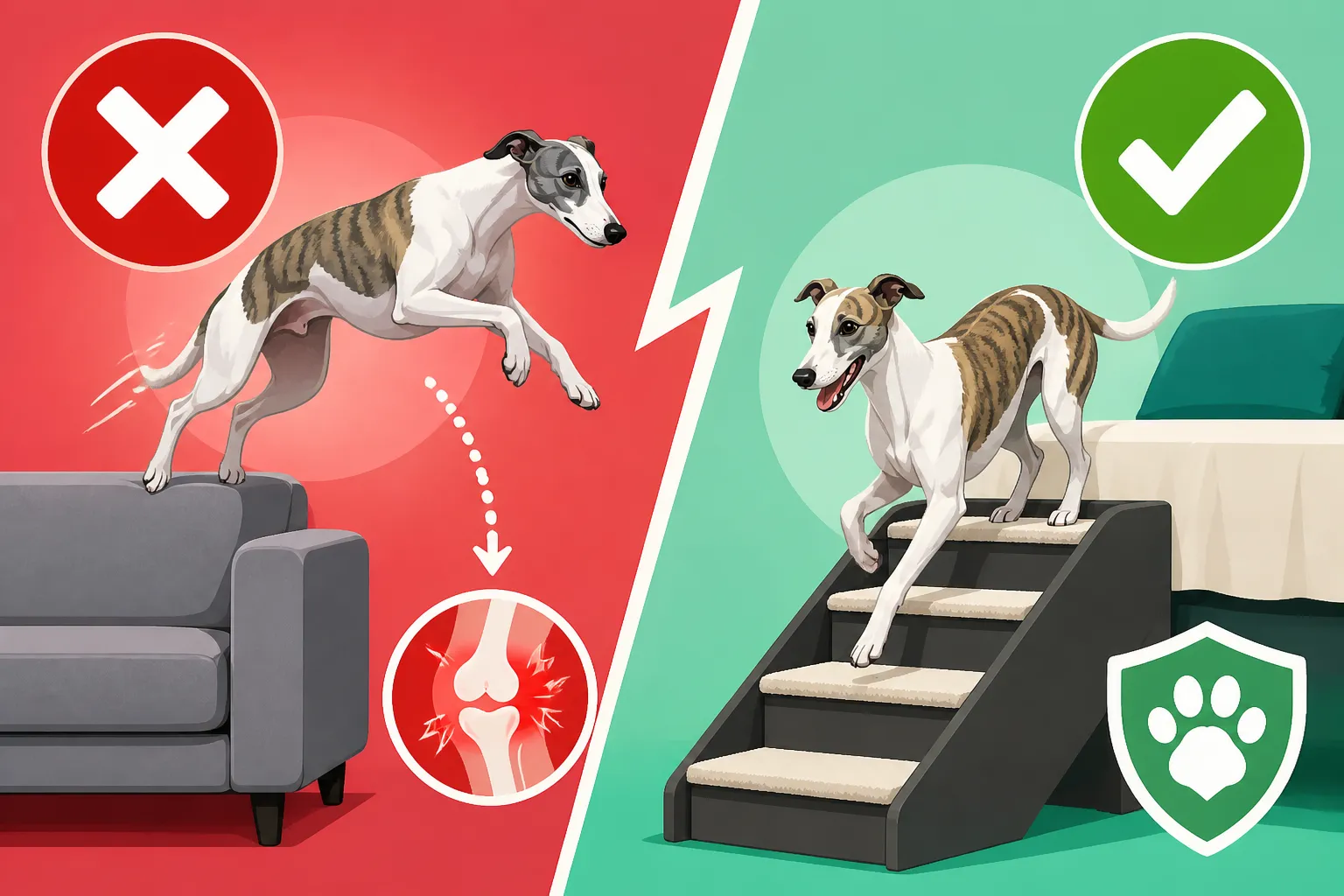
One of the biggest culprits for jumping-related injuries in Whippets isn't necessarily their exuberance outdoors, but rather seemingly innocuous activities within the home. Jumping off furniture, especially high beds or sofas, onto hard tile or hardwood floors, creates a significant impact force on their joints. Think of your Whippet excitedly leaping off the end of the bed to greet you in the morning. That sharp landing, day after day, year after year, can take a toll. This is particularly crucial for puppies, as highlighted in Whether a Whippet Puppy Should Jump Off Furniture.
A simple and effective solution is to provide dog ramps or steps for furniture access. You can find many options on platforms like Amazon that are specifically designed to be gentle on joints. Encourage your Whippet to use these, perhaps with positive reinforcement, rather than free-falling. Placing non-slip rugs or mats in common "jump-off" areas can also reduce the impact and prevent slips that can lead to muscle pulls or strains. Additionally, training a "four on the floor" command, teaching them to keep all paws on the ground when greeting people or waiting for food, can help manage impulsive leaps during exciting moments.
Training for Controlled Movement
While Whippets are sprinters, they are also intelligent and trainable dogs. Incorporating controlled movement into their training routine can significantly enhance their body awareness and reduce the risk of injury. Agility training, when done correctly and with appropriate jump heights, can teach a Whippet how to clear obstacles with proper form and land softly. Focus on technique over speed, especially in the early stages. Whether a Whippet Can Do Agility is a resounding yes, but with careful coaching.
Teaching cues like "off" for furniture, or "wait" before being released to jump for a toy, can help instill impulse control. Positive reinforcement methods work wonderfully with Whippets, as harsh corrections can make them shut down. Resources like BAXTER & Bella offer online training programs that can guide you through teaching these crucial commands, helping your Whippet understand when and how to jump safely. Consistent, short training sessions, using high-value rewards, will build good habits without overwhelming your sensitive sighthound. Remember, it's about teaching them how to use their amazing athletic ability smartly, not suppressing it entirely.
Supporting Joint Health Proactively
Beyond managing jumping, a holistic approach to joint health is vital for Whippets. Maintaining a lean, healthy weight is paramount. Every extra pound puts additional stress on their joints, making them more susceptible to injury and accelerating arthritis. Follow your veterinarian's recommendations for their ideal body condition score and adjust their diet accordingly. What a Whippet Needs Every Day provides a good foundation for daily care.
Consider incorporating joint-supportive supplements, such as glucosamine, chondroitin, or omega-3 fatty acids (like fish oil), into their diet, but always consult your veterinarian first. They can advise on appropriate dosages and whether these supplements are truly beneficial for your individual dog. Providing comfortable, orthopedic bedding in all their favorite resting spots ensures that when they do lie down, their joints are cushioned and supported, preventing pressure sores and reducing discomfort, especially as they age. This constant support is important even for young, healthy Whippets to protect against the minimal padding of their bodies.
Recognizing and Responding to Jumping-Related Injuries
Even with the best precautions, accidents can happen. A sudden twist, an awkward landing, or an unexpected collision during play can result in an injury. Knowing what to look for and when to seek veterinary attention is crucial for your Whippet's speedy recovery.
Common Injuries From Jumping Impact
Whippets are prone to certain types of injuries related to their high-speed, high-impact movements, which often involve jumping or sudden changes in direction. One of the most common issues is Muscle Pulls in a Whippet, often affecting the gracilis or gastrocnemius muscles in their hind legs. These occur when the muscle is overstretched or suddenly contracts during a sprint, jump, or sharp turn. Symptoms can range from a subtle limp to severe lameness, pain on touch, and swelling.
Beyond muscle pulls, jumping can also lead to sprains of ligaments and strains of tendons around the joints. An awkward landing might result in a paw injury, such as a sprain or even a broken toe, especially if they catch their foot on something. While less common, severe impacts could theoretically cause spinal issues, though this is rare in healthy Whippets. Always observe your Whippet carefully after any particularly enthusiastic or clumsy jump.
When to Seek Veterinary Attention
It can be tough to distinguish between a minor bump and a more serious injury, but erring on the side of caution is always best, especially with a Whippet. If you notice any of the following signs after a jump or unusual movement, it’s time to call your vet:
- Sudden or persistent lameness: Your Whippet is limping noticeably, refusing to put weight on a leg, or struggles to walk normally.
- Vocalization of pain: Crying, yelping, or whimpering when moving or when a specific area is touched.
- Swelling or bruising: Any visible swelling around a joint or muscle, or discolored skin.
- Reluctance to move: They seem unwilling to get up, jump, or engage in normal activities.
- Changes in behavior: Lethargy, loss of appetite, or unusual aggression (a sign of pain).
Don't try to "tough it out" or wait too long with significant symptoms. Early veterinary intervention can make a huge difference in the prognosis and recovery time for many injuries. Whippets tend to hide pain well, so even subtle signs warrant attention. It's also worth remembering that emergency vet visits for acute injuries can add up quickly, so being prepared for such possibilities, perhaps by having a dedicated savings fund or pet insurance, is a wise move for any Whippet owner.
Post-Injury Care and Rehabilitation
If your Whippet does suffer a jumping-related injury, the recovery process will depend on the severity and type of damage. Your veterinarian will likely recommend a combination of rest, pain management medication, and potentially anti-inflammatory drugs. For some injuries, strict crate rest might be necessary to allow tissues to heal properly. For more serious cases, physical therapy or rehabilitation may be prescribed. Whether a Whippet Needs Physical Therapy After Injury often depends on the specific diagnosis and can be incredibly beneficial for regaining strength and range of motion.
The key to successful recovery is patience and strict adherence to your vet's instructions. Rushing the process or allowing your Whippet to return to strenuous activity too soon can lead to re-injury or chronic problems. Gradual return to exercise is essential, often starting with short, controlled leash walks and slowly progressing. Your vet might suggest specific exercises or stretches to help rebuild muscle strength and flexibility. Remember, the goal is not just healing the immediate injury, but also preventing future occurrences, especially with fast-healing injuries like those discussed in Whether a Whippet's Racing Injuries Heal Fully.
Disclaimer
This article is for general informational purposes only and does not constitute professional advice. Laws, prices and regulations vary by location and change over time. Consult a qualified professional for guidance on your specific situation.