Telling a Stubborn Whippet From a Sensitive One
It's incredibly frustrating when your beloved Whippet seems to be ignoring you, or worse, completely shutting down. You're left wondering, are they just being stubborn and trying to get their own way, or are they genuinely feeling overwhelmed and sensitive to your tone or the situation? This guide is here to help you unravel the mystery behind your Whippet's behavior, teaching you how to distinguish between genuine stubbornness and deep sensitivity, so you can foster a stronger, more understanding bond.
Understanding the Whippet Temperament Baseline
Before we can even begin to tell the difference between a "stubborn" and a "sensitive" Whippet, it's crucial to understand the foundational temperament of this wonderful breed. Whippets aren't like many other dog breeds; they possess a unique blend of traits that can easily be misinterpreted if you're not familiar with them. What looks like defiance in one breed might be completely different in a Whippet.
The Inherently Gentle and People-Oriented Nature
Whippets were historically bred as companions, often sharing the humble homes of miners, which means they are deeply ingrained with a desire to be close to their people. They thrive on affection and positive interaction, often seeking out physical contact and preferring to be snuggled up on the sofa rather than being left alone. This innate gentleness means they form incredibly strong bonds with their families and are usually eager to please.
Because of this strong bond and gentle nature, Whippets are particularly vulnerable to harsh words or physical corrections. Their world revolves around their humans, and a perceived disapproval can be deeply unsettling for them. They're not the kind of dog that "blows off" a scolding; they internalize it.
This inherent people-orientation also means they often pick up on subtle cues from their owners – your mood, your tone of voice, even your posture can influence their behavior. They want harmony and will often try to maintain it, sometimes by avoiding conflict altogether, which can sometimes be mistaken for disinterest.
The Sighthound Instincts and Independent Streak
While incredibly loving, Whippets are still sighthounds through and through. This means they possess a powerful prey drive and an instinct to chase anything that moves quickly. When a Whippet spots something interesting in the distance – a squirrel, a leaf blowing, or even a dust bunny – their entire focus shifts. They are literally bred to lock onto a visual target and sprint after it.
This intense focus on their environment and prey can often be misinterpreted as an "independent streak" or even outright disobedience. When your Whippet ignores your call because they've seen a rabbit dart across the field, it's not typically a conscious act of defiance. Their ancient sighthound brain has simply taken over, overriding all other commands. It's a hardwired response, not a personal slight. You'll find more about this intense focus in Why a Whippet's Chase Instinct Overrides Its Recall.
Understanding this duality – deeply people-oriented yet instinctually driven – is the first step in decoding your Whippet's responses. They aren't trying to be difficult, but their internal wiring means they perceive and react to the world in a way that might be different from what you expect from other breeds. Their independence isn't a sign they don't care; it's a testament to thousands of years of selective breeding for a specific purpose.
Signs Your Whippet Is Being Stubborn
Sometimes, it truly feels like your Whippet is just being obstinate, digging in their heels and refusing to do what you ask. While it's rarely malicious, what we perceive as stubbornness often stems from a lack of motivation, a strong distraction, or simply their personal preference winning out. Recognizing the subtle signs is key to addressing it effectively.
Refusal to Comply Despite Clear Understanding
A common scenario that makes owners pull their hair out is when their Whippet clearly understands a command but chooses not to execute it. You've taught them "sit," they've done it a hundred times, but today, when you ask, they just stand there, maybe looking at you, maybe looking past you. It's not that they don't know what "sit" means; it's that in that moment, sitting isn't as appealing as whatever else they're doing or thinking about.
This can manifest as a slow, deliberate response, almost like they're weighing their options. You call their name, and they might twitch an ear but remain sprawled on the sofa, giving you a sidelong glance that screams, "Do I have to?" Or perhaps they start moving towards you on recall but then get sidetracked by a fascinating smell, effectively abandoning the command mid-action. This isn't usually born of fear, but a calculated decision about what’s more valuable.
They might also test boundaries, especially if they've learned that ignoring you for a few seconds might mean you give up, or that a better reward might be offered if they wait. This isn't a sign of a "bad" dog, but a smart one who's learned how to optimize their outcomes! It often requires you to re-evaluate what your Whippet truly finds motivating.
Body Language of a "Stubborn" Whippet
Reading your Whippet's body language is crucial here. A truly stubborn Whippet often exhibits subtle cues that differentiate it from a frightened or confused one. They might avoid direct eye contact, not out of fear, but more like a child pretending not to hear their name called. Their body posture might remain relaxed, even comfortable, but completely unmoving despite your requests. There's no tension in their muscles or a tucked tail indicating distress.
You might see a slight head turn away from you, a slow blink, or a deliberate yawn that's not for comfort but a mild "displacement behavior" indicating they're mildly stressed by your request but not truly fearful. It's their way of saying, "I hear you, but I'm choosing not to engage right now." They might even give a soft groan when you insist they move, showing their mild displeasure without any actual anxiety.
Sometimes, they'll simply remain frozen, almost as if they've become a statue. This isn't paralysis from fear, but a determined stillness. The key is the lack of overt distress signals like trembling, wide eyes, or cowering. They might just look… unimpressed by your command.
Common Scenarios Mistaken for Stubbornness
Many behaviors that seem like stubbornness are actually deeply ingrained preferences or reactions to the environment. For instance, many Whippets notoriously despise going outside in the rain or cold. If you try to usher them out, and they brace their paws and give you a look of utter betrayal, it’s not stubbornness in the sense of defying your authority, but a strong aversion to being wet and chilly. You can read more about this specific challenge in The Whippet That Will Not Toilet in the Rain.
Another common scenario is when your Whippet seems "stubborn" about eating. They might turn their nose up at their food, even if it's their usual kibble. This isn't defiance, but often a result of their somewhat delicate digestive systems, or simply being a bit of a picky eater. They're not trying to annoy you; they just genuinely might not be that hungry at that exact moment or find something more appealing elsewhere.
Finally, what looks like stubbornness can often be a direct reflection of the value of the reward. If you're asking for a complex behavior in a distracting environment and only offering a dry piece of kibble, your Whippet might decide the effort isn't worth the paltry reward. They're weighing the pros and cons, and if the "cons" (effort, distraction) outweigh the "pros" (boring treat), they'll opt out. It's a practical decision, not a battle of wills.
Signs Your Whippet Is Being Sensitive
On the other end of the spectrum is the sensitive Whippet, whose reactions are driven by genuine emotional distress, fear, or anxiety. Mistaking sensitivity for stubbornness can severely damage your bond and make training incredibly difficult. These dogs require a much gentler approach and a careful understanding of their subtle cues.
Extreme Reaction to Corrections or Loud Noises
A clear sign of a sensitive Whippet is their exaggerated reaction to corrections, even mild ones. If you raise your voice slightly, or use a sharp "no," a sensitive Whippet might flinch, cower, tuck their tail tightly between their legs, or flatten their ears against their head. They might even try to make themselves smaller or hide behind you. This isn't a dog being defiant; it's a dog in distress.
You'll often see them immediately shut down, completely disengaging from the situation. Why a Whippet Shuts Down When Corrected explains how detrimental this can be. They might stop what they were doing and simply stand or sit frozen, wide-eyed, refusing to move or interact further. This is a common response to feeling overwhelmed or fearful, and it’s a desperate attempt to avoid further perceived punishment.
Even loud, sudden noises that aren't directed at them can trigger a significant reaction. A dropped pan, a car backfiring, or a sudden clap might send them scurrying under the nearest furniture, trembling. Their sensitive nature makes them hyper-aware of their auditory environment, and unexpected sounds can be truly terrifying. Their response is disproportionate to the "offense," highlighting their inherent fragility.
Avoidance and Anxiety Behaviors
Sensitive Whippets often display a range of avoidance and anxiety behaviors when feeling stressed or unsure. These can be subtle, such as excessive lip-licking, yawning (when not tired), or turning their head away to avoid eye contact – not out of defiance, but to signal their discomfort and de-escalate perceived tension. They might also engage in displacement behaviors like suddenly scratching an itch that isn't there, or sniffing the ground intently.
When truly stressed, a sensitive Whippet might try to escape the situation. This could involve trying to back out of their collar, pulling desperately on the leash, or bolting through an open door if they feel cornered or overwhelmed. This isn't a dog trying to "get away with something"; it's a dog trying to get away. You might also notice them becoming clingy, seeking comfort from you by pressing against your legs or trying to get into your lap, almost as if asking for reassurance.
New environments, unfamiliar people, or novel objects can trigger intense shyness or fear, which is easily mistaken for aloofness. A sensitive Whippet might retreat, try to hide, or tremble uncontrollably when introduced to strangers. This isn't them being "snooty" or stubborn; it's a genuine fear response. They need slow, gentle introductions and plenty of positive associations. More insight into this can be found in Whether a Whippet Is Nervous of Strangers.
Physical Manifestations of Stress
The emotional distress of a sensitive Whippet can often manifest physically. Trembling, even when not cold, is a very common sign of anxiety or fear. They might pant heavily, even in a cool room, as their body's "fight or flight" response is activated. Excessive shedding during a stressful event is also a subtle clue that their nervous system is in overdrive.
One particular physical vulnerability of Whippets is their thin skin and minimal body fat. How a Whippet Learns When It Bruises From Pressure delves into this. This means they are incredibly sensitive to physical pressure. Even a slightly firm grip on their shoulder or a gentle push can feel much more intense to them than to a thick-skinned, well-padded breed. What you perceive as a light touch might register as discomfort or even pain, exacerbating their sensitive nature.
Prolonged stress from an environment they find overwhelming or from training methods that are too harsh can also take a toll on their physical health. They might experience digestive upset, have "accidents" indoors, or even show signs of a weakened immune system. Their sensitive emotional state is intricately linked to their physical well-being.
The Impact of Training Methods on Whippet Behavior
How you choose to train your Whippet has a profound impact on whether they appear "stubborn" or "sensitive." With this breed, the wrong approach can quickly lead to a breakdown in communication and trust, making existing behavioral tendencies much worse.
Why Aversive Methods Are Detrimental for Whippets
Aversive training methods, which rely on punishment or fear to suppress unwanted behaviors, are particularly damaging for Whippets. This includes harsh verbal corrections, physical reprimands, or using tools that inflict discomfort. Because Whippets are so gentle and eager to please, these methods don't typically teach them what to do; instead, they teach them to fear their handler, shut down, or avoid interaction altogether. As we've discussed in Why Harsh Handling Ruins a Whippet, such methods can shatter their trust.
When a sensitive Whippet is subjected to aversive techniques, they don't learn faster; they learn to associate the training environment or their handler with fear and discomfort. This can lead to learned helplessness, where the dog simply stops offering any behaviors because they're afraid of making a mistake. It might look like stubbornness because they aren't responding, but it's actually a dog paralyzed by anxiety.
Even a Whippet with a more "stubborn" streak can be negatively impacted. Instead of learning to comply, they might become evasive, actively trying to avoid situations where they anticipate punishment. This doesn't solve the underlying issue and can create new behavioral problems, like fear-based aggression, as they learn to defend themselves against perceived threats. The goal is to motivate, not intimidate.
The Power of Positive Reinforcement
For Whippets, positive reinforcement is not just a gentle option; it's the most effective and humane approach. This method focuses on rewarding desired behaviors, making the dog more likely to repeat them. When a Whippet understands that a specific action leads to a positive outcome – a tasty treat, enthusiastic praise, or a fun game – they are incredibly motivated to learn and participate. Whether Positive Training Alone Works on a Whippet explains why this is especially true for Whippets.
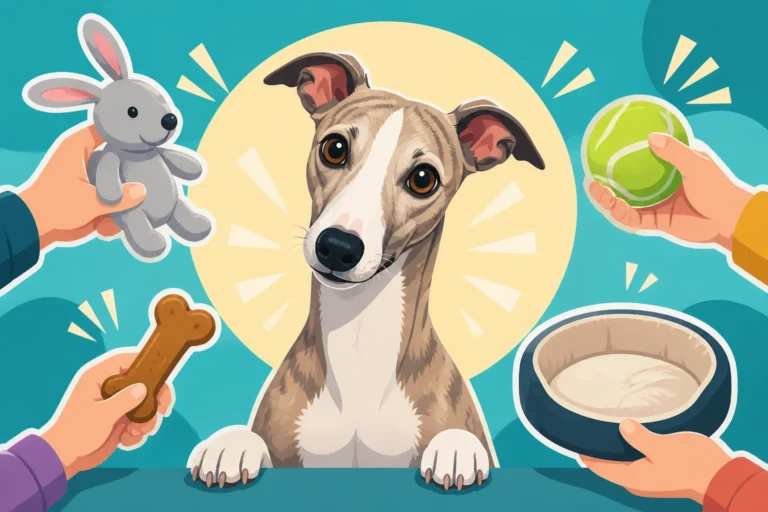
High-value rewards are particularly effective with Whippets. While a sensitive Whippet might respond well to soft praise and gentle petting, a "stubborn" one might need a truly irresistible treat or their favorite squeaky toy to capture their attention and make compliance worthwhile. Understanding What a Whippet Will Work For is crucial for tailoring your rewards to their individual personality and the situation.
Positive reinforcement builds a strong foundation of trust between you and your Whippet. They learn that engaging with you is safe, fun, and rewarding. This fosters a dog who is confident, willing to try new things, and genuinely enjoys learning. It also reduces stress and anxiety, which are common triggers for both "sensitive" and "stubborn" behaviors.
Consistency and Patience: The Whippet Way
While Whippets are intelligent and How Quickly a Whippet Learns can be surprising, they are not typically dogs that respond well to endless drilling or repetitive, monotonous training sessions. Their sighthound brain prefers novelty and can get bored easily. Short, frequent training sessions, as discussed in Whether Short Sessions Suit a Whippet, are far more effective than long, drawn-out ones.
Consistency is also paramount. If you sometimes allow a behavior and sometimes correct it, a Whippet, whether stubborn or sensitive, will become confused. Clear, consistent expectations, coupled with consistent rewards for correct behavior, help them understand what you want. This predictability also helps reduce anxiety in sensitive dogs.
What might appear as stubbornness can often be attributed to a lack of generalization. Your Whippet might perform "sit" perfectly in the quiet living room, but completely "forget" it at the park with all its exciting distractions. It's not defiance; it's that they haven't learned to apply the command in a new context. Patience and slowly increasing the difficulty and distractions of training environments are essential. Their unique intelligence might not always rank high on traditional obedience scales Where the Whippet Ranks for Obedience Intelligence, but it's certainly there.
Tailoring Your Approach: Effective Strategies for Both Types
Now that we've explored the nuances of what might seem like stubbornness or sensitivity in your Whippet, let's talk about practical, tailored strategies. The goal isn't to change your Whippet's core personality, but to understand it and work with it, fostering a harmonious relationship built on trust and clear communication.
For the "Stubborn" Whippet: Motivation and Management
When dealing with a Whippet that appears stubborn, the key is to make compliance far more appealing than non-compliance. This means elevating your rewards, especially for critical commands like recall. If your Whippet isn't coming when called, a dry kibble might not cut it. Think about their absolute favorite treats – perhaps small pieces of cooked chicken, cheese, or hot dogs. For some, a favorite squeaky toy or a quick game of chase might be the ultimate motivator. The higher the value, the more likely your "stubborn" Whippet will decide it's worth engaging.
Environmental management is also a powerful tool. If your Whippet is "stubborn" about not coming when called in an open field, don't set them up for failure. Use a long line – a training leash that can be many feet long – to give them freedom to explore while still allowing you to enforce the recall command safely. You can find durable and lightweight long lines suitable for Whippets on Amazon, allowing them space to sprint safely without the risk of them making a "stubborn" dash after wildlife. Preventing them from practicing undesirable behaviors by controlling their environment is often more effective than trying to correct them after the fact.
Finally, break down commands into smaller, simpler steps. If your Whippet seems to "check out" when you ask for something complex, perhaps they're not being stubborn but overwhelmed. Revert to basics, reward each tiny step of progress, and slowly build up the complexity. This approach makes success more attainable and lessens the chance of them deciding the task isn't worth their energy.
For the Sensitive Whippet: Building Confidence and Trust
For the sensitive Whippet, the primary focus must be on building a sense of safety, confidence, and unwavering trust in you. This means creating a predictable and calm environment. Consistency in routine helps reduce anxiety, as they know what to expect. Use a gentle, soft voice, and always avoid any physical coercion or even sharp gestures. Your hands should be associated with comfort and treats, never discomfort.
Focus on positive-only experiences to build their confidence. Trick training, for example, can be wonderfully empowering because there's no pressure – if they don't get it right, it's just a learning moment, not a failure. Scent work, where they get to use their noses to solve puzzles, can also be a fantastic way to engage their brains and build self-esteem in a low-stress way. Many online puppy programs, such as BAXTER & Bella, offer excellent resources that focus heavily on confidence-building games and positive methods suitable for sensitive dogs, guiding you step-by-step.
Introduce new experiences, people, or places at your Whippet's pace. If they show signs of stress (lip-licking, turning away, trembling), respect that and create distance. Never force them into interactions they're uncomfortable with. Use treats and praise to create positive associations with novel situations. For instance, if they are shy around strangers, have a friend gently toss a high-value treat to them from a distance, without attempting direct interaction, slowly building up positive experiences.
Knowing When to Push and When to Back Off
This is arguably the most challenging, yet crucial, skill you'll develop as a Whippet owner. It requires keen observation and a deep understanding of your individual dog. If your Whippet is giving you subtle cues of anxiety – a slight tail tuck, ears slightly back, a tense mouth – it's time to back off. Pushing a sensitive Whippet when they're already stressed will only erode trust and potentially lead to a complete shutdown or an exacerbated fear response.
However, if your Whippet is giving you the "sidelong glance," a slow response, or an unmoving, relaxed posture, it's more likely a case of low motivation or distraction. In these instances, you might gently increase the value of your reward, change the environment to reduce distractions, or patiently re-engage them with a cheerful tone. It's about knowing the difference between "I can't" (sensitivity) and "I don't wanna" (stubbornness).
Always remember that frustration on your part will be picked up by your Whippet. If you find yourself getting annoyed, take a break. A frustrated handler cannot effectively train either a sensitive or a stubborn dog. A calm, confident, and patient presence from you is the most powerful tool in your training arsenal. Your Whippet looks to you for guidance and reassurance, whether they're deciding if a treat is worth the effort or if a new noise is truly safe.
When to Seek Professional Guidance
Sometimes, despite your best efforts, you might find yourself struggling to understand or manage your Whippet's behavior. This is perfectly normal, and it's a sign of a responsible owner to recognize when expert help is needed. There's no shame in seeking a professional, especially with a breed as unique as the Whippet.
Recognizing When It's More Than Just Temperament
If your Whippet's "sensitivity" manifests as extreme fear, panic attacks, severe separation anxiety, or an inability to cope with normal daily life, it might be more than just a personality trait. These could be signs of underlying anxiety disorders, phobias, or even pain that's making them reactive. For example, if your previously confident Whippet suddenly becomes extremely fearful of being touched in a certain area, it could indicate a physical injury.
Similarly, if what you perceive as "stubbornness" is accompanied by other concerning behaviors – like growling or snapping when corrected, or a complete refusal to engage in any training – it could point to a significant disconnect in communication, chronic stress, or even a lack of early socialization that has left them unable to cope with expectations. While Whippets can be shy, consistent, debilitating shyness that prevents them from enjoying walks or meeting new people could be a deeper issue requiring intervention.
Persistent behaviors that cause distress to your Whippet or significantly impact their quality of life, or your own, are usually indicators that it's time to call in a professional. Don't wait until the problem escalates; early intervention is almost always more effective.
Finding the Right Professional
When seeking professional help, it's absolutely vital to find someone who understands sighthound temperament and uses only positive, force-free training methods. Whippets are not candidates for harsh corrections or "dominance"-based training. Look for certified professional dog trainers (CPDT-KA), certified behavior consultants (CBCC-KA), or veterinary behaviorists (DACVB). These professionals have undergone rigorous education and adhere to ethical standards.
Don't be afraid to ask questions about their methods and experience, especially with sighthounds or sensitive breeds. A good trainer will be happy to explain their philosophy and how they plan to work with your Whippet. They should prioritize your dog's well-being and emotional state above all else. Avoid anyone who suggests physical punishment, choke chains, prong collars, or electronic collars for your Whippet; these tools are entirely inappropriate and harmful for this breed.
A professional who understands subtle canine body language will be invaluable in discerning if your Whippet is truly being stubborn, or if they are communicating fear, confusion, or discomfort.
The Benefits of Expert Intervention
An experienced professional can offer a fresh perspective and identify subtle cues or patterns you might have missed. They can observe your interactions with your Whippet and pinpoint where communication might be breaking down. They can then help you design a tailored training plan that respects your Whippet's individual personality and addresses the root cause of the behavior, rather than just suppressing symptoms.
For a sensitive Whippet, an expert can provide strategies for building confidence, systematic desensitization to triggers, and relaxation protocols. For a seemingly "stubborn" Whippet, they can help you discover higher-value motivators, improve your timing and technique, and troubleshoot specific scenarios where compliance is lacking. They can also help you understand how factors like diet, exercise, and enrichment might be playing a role. A comprehensive online program, like the one offered by BAXTER & Bella, can be an excellent stepping stone, providing a structured curriculum and access to trainers who can offer guidance on foundational behaviors and early socialization, potentially delaying the need for an in-person behaviorist if the issues are mild.
Ultimately, seeking professional help isn't a sign of failure as an owner; it's a testament to your commitment to your Whippet's happiness and well-being. It's about giving them the best chance to thrive as a confident, well-adjusted companion in your home.
| Behavior Type | Common Cues | Underlying Motivation | Effective Approach |
|---|---|---|---|
| Stubborn | Slow response, ignoring commands, looking away, relaxed but unmoving posture | Low motivation, high distraction, preference for other activity | High-value rewards, environmental management, breaking down tasks |
| Sensitive | Flinching, cowering, tail tucked, trembling, panting, avoidance, hiding | Fear, anxiety, discomfort, feeling overwhelmed | Gentle praise, building confidence, slow introductions, positive reinforcement |
Disclaimer
This article is for general informational purposes only and does not constitute professional advice. Laws, prices and regulations vary by location and change over time. Consult a qualified professional for guidance on your specific situation.