Where a Whippet Can Safely Run Off Leash
One of the biggest dreams for any Whippet owner is to see their beautiful dog stretch out and run freely, truly unleashing that incredible sighthound speed. But let's be honest, the thought of them bolting off, deaf to your frantic calls, and potentially running into danger is a nightmare that keeps many of us from ever letting go of that leash. This guide is all about finding those rare, truly safe havens where your Whippet can run to their heart's content, and how to build the confidence to get there.
Understanding the Whippet's Drive: Why Off-Leash is Tricky
It’s not just you; managing a Whippet off-leash in an uncontrolled environment is genuinely challenging, and frankly, often not safe. These aren't your average Golden Retrievers or Labradors who might pause to sniff a bush before returning. Whippets are built for speed and the chase, and their instincts are powerfully strong.
The Sighthound Instinct: Speed and Prey Drive
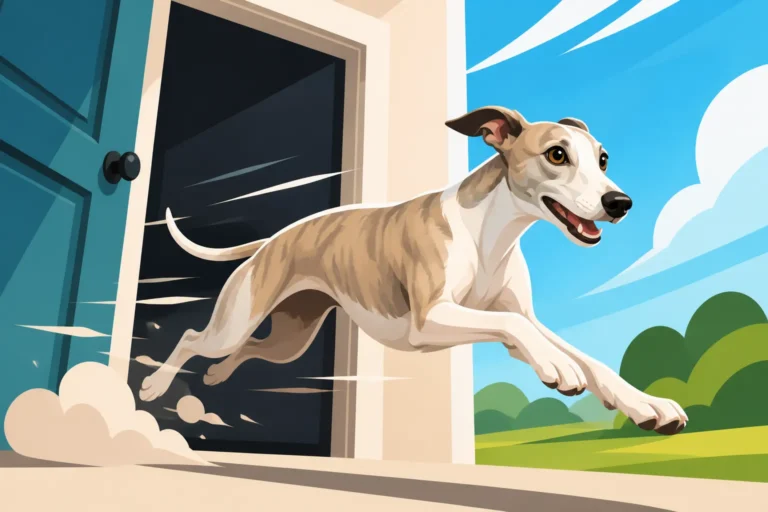
Whippets are sighthounds, pure and simple. This means their primary hunting tool is their eyes, and their response to anything moving quickly in the distance is immediate and intense. A squirrel, a rabbit, a blowing plastic bag, or even just another dog running at a distance can trigger an ancient, hard-wired chase response that often overrides everything else. You might think your Whippet is perfectly trained, but that primal urge is always lurking, ready to take over when the right (or wrong!) stimulus appears. It's truly a marvel to witness, but equally terrifying when safety is a concern.
Their lean, athletic bodies are designed for explosive acceleration and incredible speed. Even a slight incline or a patch of uneven ground won't deter them if they're locked onto a "prey" item. It’s why people say How Fast a Whippet Actually Runs and it's something you have to respect. Ignoring this fundamental aspect of their breed is to put them, and potentially others, at risk. They don't mean to ignore you; their brains are just screaming "CHASE!" louder than "COME!"
When Recall Fails: The Thrill of the Chase
We all work so hard on recall, don't we? Hours in the garden, pockets full of treats, practicing in increasingly distracting environments. But for a Whippet, that moment when a rabbit bursts from the undergrowth, or a deer streaks across a field, can turn even the most reliable recall into a distant memory. This isn't a sign of a badly trained dog; it's simply the Why a Whippet's Chase Instinct Overrides Its Recall. Once that switch flips, the world shrinks to just them and their target.
The sheer joy and genetic imperative of the chase are incredibly powerful. They’re running on pure instinct, adrenaline surging. In that state, your voice becomes background noise. It's a frustrating reality for many sighthound owners, because we want to grant them that freedom, that pure expression of their nature, but it often comes at too high a cost. Understanding this isn't about giving up on training, but about acknowledging the limits of even the best training when faced with millennia of selective breeding.
The Danger of Distance: How Far a Whippet Can Go
A Whippet can cover ground at an astonishing pace. What looks like a safe distance in an open field can be closed in seconds. Before you can even finish shouting their name, they could be hundreds of yards away, completely out of sight. This isn't an exaggeration. The incredible speed they possess, often up to Thirty Five Miles an Hour and No Brakes on a Whippet's Recall, means they can be across a field and out of your visual range faster than you might believe.
This rapid disappearance acts as a double-edged sword: not only are they gone quickly, but they're also much harder to track down. By the time you get to where you last saw them, they could be significantly further on. This distance rapidly increases the risk of them encountering roads, other dogs, or even getting lost in unfamiliar territory. It highlights exactly Why a Whippet Cannot Be Let Off Leash in an Open Field without careful consideration.
Ideal Environments for Off-Leash Whippet Play
So, if open fields are out, where can these magnificent creatures truly stretch their legs without sending our anxiety through the roof? The key lies in control, containment, and understanding their specific needs.
Fully Fenced Private Yards and Fields
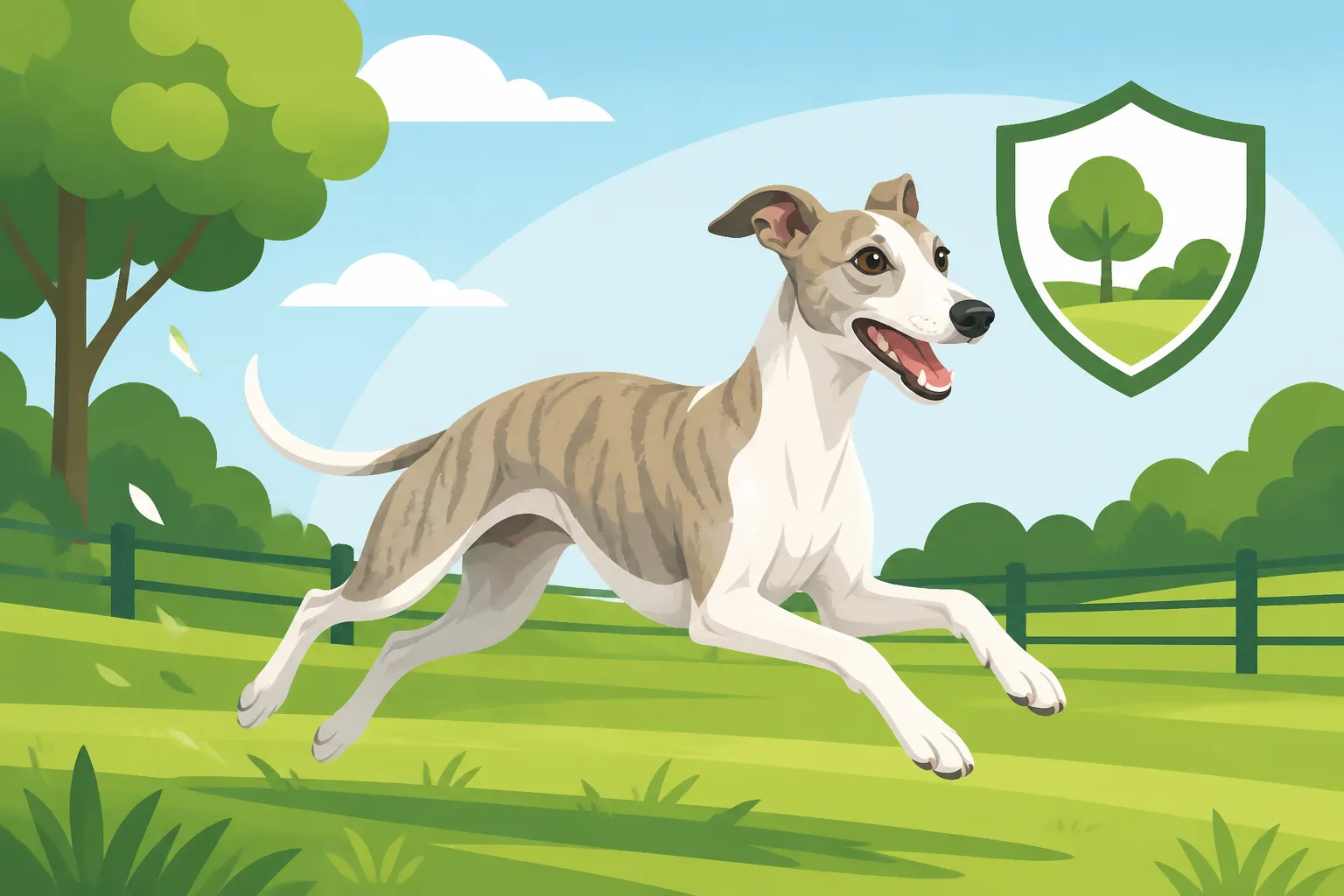
This is, hands down, the gold standard for safe off-leash running. A truly secure, private yard where you know every inch of the perimeter is a gift to a Whippet. The fence needs to be tall enough to deter jumping (Whippets aren't typically high jumpers, but enthusiasm can lead to surprises) and secure at the base to prevent digging under. We're talking at least five to six feet high for peace of mind, especially if they are particularly motivated. Consider How Tall a Fence a Whippet Needs if you're building or assessing one.
The joy of watching your Whippet rocket across your own property, twisting and turning, playing zoomies with abandon, is unparalleled. You can relax, knowing they're safe from traffic, other unknown dogs, and disappearing acts. If you don't have such a space, consider asking friends or family who do, or even looking into private land rentals in your area that offer fully fenced acreage. These dedicated spaces are where they can truly be the "poor man's racehorse" they were bred to be, without the constant worry.
Secure Dog Parks: A Cautious Approach
Dog parks can be a mixed bag, and for a Whippet, they require careful consideration. The main draw is the fenced area, offering a seemingly safe space for off-leash activity. However, not all dog parks are created equal. You need to assess the fence height, the gate security, and crucially, the other dogs present. A dog park packed with boisterous, large breeds might be overwhelming or even dangerous for a more sensitive Whippet.
Look for parks with double-gated entries and secure fencing. Observe the dynamic of the dogs already there. If there's a lot of rough play, or if there are dogs with poor impulse control, it might be best to come back another time or find a different park. Whippets, with their thin skin and delicate bone structure, can be prone to injury if knocked around too roughly. When they run, they're often so focused they don't see another dog in their path, which can lead to collisions. Always stay vigilant and be prepared to intervene or leave if the situation isn't ideal for your dog.
Designated Lure Coursing or Fast CAT Venues
For the ultimate safe, controlled, and fulfilling off-leash experience, nothing beats organized sighthound activities like Lure Coursing or Fast CAT (Coursing Ability Test). These events are specifically designed to tap into a Whippet's natural prey drive in a safe, fenced environment. The dogs chase a mechanical lure, often a plastic bag, across an open field, mimicking the thrill of a hunt without any risk to wildlife or your dog getting lost.
These events are usually held by sighthound clubs or breed clubs, and safety is paramount. The courses are set up in large, secure fields, often with double fencing, and experienced volunteers oversee every run. It's an incredible outlet for their energy and instincts, allowing them to sprint at full speed in a way that’s impossible in most day-to-day settings. Plus, it's a fantastic way to meet other Whippet enthusiasts! For an idea of the commitment and cost, you might look into What Lure Coursing and Fast CAT Cost a Whippet Owner.
Less Obvious Spots: Creative Solutions for Safe Running
Sometimes, the ideal private field or lure course isn't available. But don't despair! With a bit of creativity and careful planning, you can find other places where your Whippet can enjoy some off-leash freedom, or at least a close approximation.
Indoor Arenas and Private Rentals
In areas with harsh weather (think scorching summers or icy winters), outdoor off-leash options might be limited for much of the year. This is where indoor arenas shine. Many equestrian centers or dog training facilities offer private rentals of their indoor spaces, often large, fenced, and climate-controlled. These can be perfect for letting your Whippet zoom around, play fetch, or practice advanced recall in a safe, controlled environment.
Imagine a huge, empty riding arena where your Whippet can run laps to their heart's content, completely oblivious to the rain or snow outside. It's a wonderful way to burn off energy, especially for those Whippets who The Whippet That Will Not Toilet in the Rain and therefore don't get much outdoor activity in bad weather. While it might come with an hourly fee, the peace of mind and the joy your dog experiences are often well worth the investment.
Vacant Tennis Courts or Fenced Sports Fields
Keep an eye out for local tennis courts, basketball courts, or other fenced sports fields that are not in use during off-peak hours. These are often fully enclosed with high fences and offer a hard, flat surface perfect for zoomies and fetch. Always check local rules and etiquette first – some places might not allow dogs, or might only allow them at certain times.
If you find a suitable court, make sure the gates latch securely and there are no gaps for an escape artist. The hard surface can be tough on paws if your Whippet is used to grass, so keep sessions relatively short and check their pads afterward. These spots provide a fantastic, readily available option for a quick, safe burst of energy, especially if you live in an urban or suburban area without large, private yards.
Long Lines: Simulating Freedom Safely
While not truly "off-leash," a long line is an invaluable tool for providing a sense of freedom while maintaining control, especially for Whippets still mastering their recall or in environments that aren't fully secured. A long line can range from 15 to 50 feet and allows your Whippet to explore, sniff, and even get up a good trot without the risk of them bolting into danger. You can find excellent options on platforms like Amazon that are durable and lightweight.
Using a long line requires active participation from you. You need to be mindful of the line, ensuring it doesn't get tangled around your dog's legs, other people, or obstacles. It's crucial to attach it to a well-fitting harness, not a collar, to prevent neck injuries if your Whippet hits the end of the line at speed. A Whether a Whippet Needs a Martingale collar is excellent for on-leash walking, but for long line work where sudden jerks might occur, a harness is safer. It's a fantastic way to practice Proofing a Whippet's Recall Against Prey in a more controlled outdoor setting before even contemplating true off-leash adventures.
What to Avoid: Places That Put Your Whippet at Risk
Just as important as knowing where your Whippet can run is understanding where they absolutely shouldn't. These are the places where their instincts and physical capabilities combine to create dangerous scenarios that are best avoided.
Open Fields Near Roads or Water
This is the classic scenario that haunts every sighthound owner's nightmares. An expansive, unfenced field looks idyllic, perfect for a burst of speed. But if that field is anywhere near a busy road, a lake, a river, or even a steep drop-off, it’s an accident waiting to happen. The moment a Whippet spots something to chase, they become completely oblivious to their surroundings, including oncoming traffic or deep water.
The heartbreaking stories of Whippets and other sighthounds being hit by cars or drowning after chasing a squirrel across a road or into a river are all too common. Their speed, combined with their laser focus on prey, means they simply won't see or hear a vehicle until it's too late. This is precisely Why a Loose Whippet Runs Into Traffic and why such seemingly inviting locations are incredibly high-risk for our fast friends. It's a risk that is almost never worth taking, no matter how good you think your dog's recall is.
Unfenced Public Parks and Hiking Trails
While public parks and trails offer beautiful scenery and opportunities for exercise, they are generally not suitable for off-leash Whippet running unless explicitly designated as fully fenced dog parks. The primary risks here are twofold: other people and dogs, and the ever-present temptation of wildlife. Even if you're on a relatively quiet trail, a sudden encounter with a child, another dog, or a wild animal can lead to unpredictable outcomes.
Whippets, while generally gentle, can be startled or reactive in unexpected situations, and their speed means they can cover distance to another dog or person very quickly. Furthermore, a hiking trail often runs through natural habitats where rabbits, deer, or birds are abundant. One flash of movement, and your Whippet could be off on an uncontrollable chase, potentially getting lost or injuring themselves on uneven terrain or brush. Remember, even the most well-trained Whippet's recall can falter when their prey drive kicks in.
Areas with Wildlife or Livestock
Any area known to have abundant wildlife (rabbits, squirrels, deer, birds) or grazing livestock (sheep, cattle) is a definite no-go for off-leash Whippet activity. This ties directly back to their powerful prey drive. To a Whippet, a rabbit isn't just a rabbit; it's a thrilling, fast-moving target that demands to be chased. This isn't aggression; it's pure, unadulterated instinct.
Chasing livestock can lead to serious consequences, not only for the animals themselves (stress, injury) but also for your Whippet and you, the owner. Farmers have a right to protect their herds, and in some regions, they are legally permitted to take action against dogs harassing their animals. Beyond that, a Whippet charging through a field of cattle could easily be injured by a protective mother or trampled. It’s a situation fraught with danger and legal implications, making these areas simply unsuitable for any off-leash freedom.
Training for Off-Leash Freedom (Even in the Right Spots)
Even in the safest, most contained environments, a solid foundation of training is crucial. This isn't about eliminating their prey drive (that's impossible and undesirable), but about building reliable communication and impulse control.
Building a Rock-Solid Recall
A rock-solid recall is the cornerstone of any off-leash freedom, no matter how contained the space. For a Whippet, this means going beyond basic obedience. You need a recall that is not just reliable, but urgent and irresistible. This often requires making yourself the most exciting thing in their environment, even when there are other distractions. High-value treats (think cooked chicken, cheese, or hot dogs), enthusiastic praise, and playful engagement are key.
Start in low-distraction environments, like your home or a quiet, fenced yard, and gradually increase the difficulty. Practice, practice, practice! Make coming back to you the best decision they can possibly make. Use different tones of voice, run away from them to encourage the chase to you, and reward generously every single time. Consider taking an online puppy or dog training course, like those offered by BAXTER & Bella, which can provide structured exercises for recall and impulse control, teaching you how to make yourself more compelling than that distant squirrel. The goal is that even when something tempting appears, you are still more enticing.
Teaching Impulse Control and "Leave It"
Beyond recall, strong impulse control and a reliable "leave it" cue are invaluable. These skills teach your Whippet to disengage from tempting distractions before they even start the chase. "Leave it" can be practiced with food, toys, and eventually, even a moving lure (safely and in a controlled environment, of course). The idea is to teach them that not chasing, or not grabbing, leads to an even better reward from you.
This training takes patience and consistency. Start by placing a low-value treat on the floor, covering it, and asking your Whippet to "leave it." When they look away from the treat, reward them with a higher-value treat from your hand. Gradually increase the difficulty by making the item more tempting or leaving it uncovered for longer periods. This isn't just about safety; it's also about building a dog who can calmly navigate a stimulating world.
Socialization with Other Dogs (and Small Animals)
Proper socialization, especially during puppyhood, is vital for your Whippet's confidence and appropriate interactions in off-leash settings. Exposure to a variety of friendly, well-adjusted dogs of different sizes and breeds helps them learn canine social cues. This can prevent fearful or overly excited reactions that might lead to an unintended chase or conflict.
When it comes to small animals, remember that complete desensitization to a strong prey drive is rarely achievable, or even desirable, for a sighthound. Instead, focus on management and impulse control. If you have cats at home, Living With a Whippet and a Cat can be a harmonious experience with careful introductions and clear boundaries. For outdoor situations, it's more about teaching your Whippet to focus on you despite the presence of small creatures, rather than expecting them to ignore a rabbit bolting across their path.
The Reality of Off-Leash: When to Keep the Leash On
Ultimately, accepting the reality of living with a Whippet means understanding that true off-leash freedom, as enjoyed by some breeds, might be a rare luxury for them. It’s about prioritizing their safety and well-being above all else.
Assessing Risk in New Environments
Every new environment presents a unique set of risks. Before uncliping that leash, always take a moment to assess: Is the area truly secure? Are there any hidden exits, low spots in fences, or unlocked gates? What are the potential distractions – other dogs, people, wildlife, roads, water? What is the weather like? Will your Whippet be too cold or too hot to enjoy running safely?
If you have any doubt, even a tiny one, err on the side of caution and keep the leash on. It's better to have a slightly frustrated Whippet than a lost or injured one. This careful assessment is part of responsible Whippet ownership, and it becomes second nature over time. You'll learn to spot potential hazards almost instantly.
Understanding Local Leash Laws and Etiquette
Always be aware of and respect local leash laws. These laws exist for a reason – to protect people, other animals, and your dog. Ignorance is rarely an excuse, and fines can be steep. Beyond the law, consider common courtesy and dog park etiquette. Not every dog or person wants an off-leash Whippet zooming up to them, no matter how friendly your dog is.
Being a good dog citizen means being respectful of others' space and comfort levels. This might mean keeping your Whippet on leash even in an otherwise suitable area if it's crowded, or if you encounter someone who is clearly uncomfortable with off-leash dogs. A well-behaved, leashed Whippet is always a welcome sight; a chaotic off-leash one can quickly create problems for everyone.
Embracing the Long Line as a Lifestyle
For many Whippet owners, the long line isn't just a training tool; it's a way of life. It allows your Whippet to explore, sniff, and enjoy a greater range of movement in places where true off-leash isn't safe. It offers a compromise between total freedom and total containment, providing a much-needed mental and physical outlet. You can find robust long lines on Amazon designed for active dogs.
Think of it as an extended umbilical cord, keeping your beloved sighthound connected to you while they revel in the sights, sounds, and smells of the world. It lets them stretch their legs without risking them becoming How Far a Whippet's Recall Can Be Trusted to ignore you when a critter appears. While we all dream of those glorious, unfettered runs, responsible Whippet ownership often means adapting our expectations and embracing tools that ensure their safety and our peace of mind.
Ultimately, finding safe places for your Whippet to run off-leash is about balancing their inherent need for speed and chase with the realities of their instincts and physical vulnerabilities. It requires diligence, careful training, and sometimes, a little creativity. But the joy of seeing them truly fly, even in a contained space, is a reward unlike any other.
| Safe Off-Leash Options for Whippets | Benefits | Considerations |
|---|---|---|
| Fully Fenced Private Yards | Max control, known perimeter, ultimate peace | Requires ownership or access, fence height crucial |
| Secure Dog Parks | Large space, social interaction, often free | Check fence security, dog temperaments, overcrowding |
| Lure Coursing/Fast CAT Venues | Safe outlet for prey drive, full speed sprints | Specific dates/locations, may require travel/fees |
| Indoor Arenas (Private Rental) | Climate controlled, weather independent, safe | Costly, limited availability |
| Vacant Fenced Sports Fields | Often high fences, accessible off-hours | Check rules, hard surface, potentially busy |
| Long Line (Not truly off-leash) | Simulates freedom, builds recall, mobile | Requires active handling, harness not collar |
Disclaimer
This article is for general informational purposes only and does not constitute professional advice. Laws, prices and regulations vary by location and change over time. Consult a qualified professional for guidance on your specific situation.