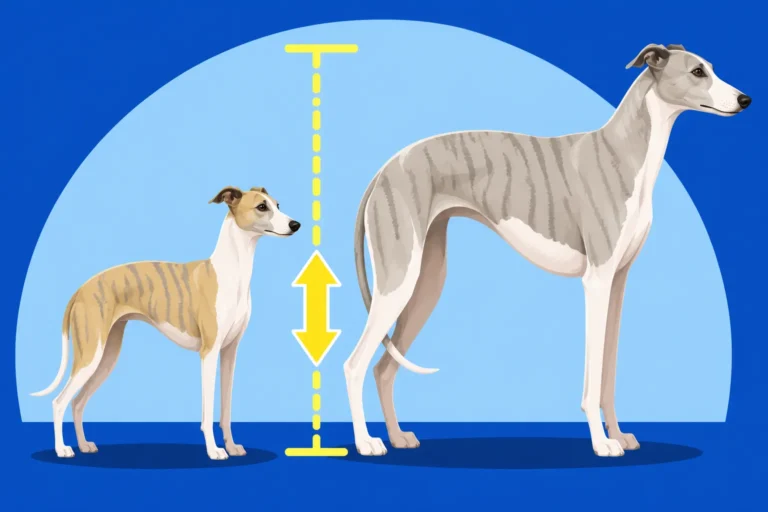
Whether a Racing Whippet Is Leaner Than a Show One
A racing Whippet often looks leaner and more visibly muscled than a show Whippet, but that difference is not a simple sign of better fitness or health. The two can have different lines, workloads, and conditioning routines, while individuals vary widely. This guide explains what you may notice, how to judge healthy body condition, and when a very lean appearance deserves a closer look.
Why racing Whippets can look leaner
Conditioning changes a Whippet’s outline
A Whippet that regularly sprints or trains for racing may develop clearly defined muscles through the thighs, shoulders, and back. Its body can look especially sculpted when it is in active training. That appearance reflects a mix of natural build, genetics, exercise, and conditioning—not just a particular food or a single ideal weight.
Training schedules also change. A dog in a racing season may do more structured work than it does during a quieter period, and its muscles and overall condition can shift accordingly. Even dogs from the same litter can look different if one is training regularly and another is mainly enjoying walks and sofa time.
A show Whippet can be athletic, too. Some take part in racing, lure coursing, or other activities, while others get most of their exercise through walks and play. It’s more helpful to consider what a particular dog does than to assume that every racing Whippet is active and every show Whippet is sedentary.
Line and build matter as much as activity
Racing and show lines may differ in overall type, proportions, and the traits breeders have emphasized. Those differences can affect the impression a dog gives, even when both dogs are healthy and fit. For a broader look at those distinctions, see How Show Whippets Differ in Size From Racing Whippets and What a Whippet Actually Weighs.
Individual variation remains substantial. Two Whippets with similar heights and weights may have different frames and muscle development. A number on the scale cannot, by itself, tell you whether one is too thin or carrying excess weight. A veterinary assessment should consider the dog’s frame, body condition, muscle, health history, and recent changes.
The breed’s outline can also make healthy dogs look startlingly slight to people used to stockier breeds. Whippets naturally have a deep chest and a tucked-up waist. Their ribs may be easy to feel, and the shape of the pelvis or spine can be more visible than it would be on a heavily coated dog. That does not automatically mean the dog is underweight.
How to tell lean and healthy from too thin
Look at the whole body, not one visible bone
A lean Whippet should still have a smooth, balanced outline. Look from above and from the side: there should generally be a clear waist behind the ribs and an abdominal tuck, but the dog should not appear to be losing flesh rapidly or becoming sharply angular across the whole body.
Use your hands as well as your eyes. You should be able to feel the ribs without pressing hard, but they should not feel like a row of prominent ridges beneath tight skin. Compare what you see and feel with How Thin a Whippet Should Look and Feeling a Whippet's Ribs and Hip Bones. Those details are more useful than comparing your dog with a dramatic photograph online, where posture, lighting, and camera angle can exaggerate the outline.
A What Body Condition Score a Whippet Should Be guide can give you a consistent way to discuss weight with your vet. Body-condition scoring looks at the ribs, waist, and abdominal tuck together. It is not a substitute for an exam, but it helps turn “she looks skinny” into a more specific conversation.
Watch for changes, not just a naturally lean shape
A Whippet who has always had a fine frame and maintains it steadily may simply be built that way. A dog who is losing weight without explanation is different. Changes in appetite, energy, muscle, stool, thirst, or general behavior are worth discussing with a veterinarian, especially if the weight loss is sudden or continues despite normal meals.
Muscle loss can be easy to miss because a thin dog’s bones already show more than those of many breeds. Pay attention to whether the dog’s hindquarters or shoulders seem less filled out than before, whether exercise has become harder, or whether the dog seems unusually tired. A vet can help distinguish normal variation from a health or nutrition concern.
Don’t try to “fix” a lean appearance by feeding large extra portions without checking the cause. If the dog is healthy but needs a nutrition adjustment, the vet can help you change food or portions gradually. If there is an underlying problem, simply adding calories may delay finding it.
| What you notice | What it may mean | A sensible next step |
|---|---|---|
| Ribs are easy to feel, with a visible waist and steady weight | May be normal Whippet condition | Track weight and discuss body condition at routine visits |
| More angular shape than usual or reduced muscle | Possible weight or muscle loss | Arrange a veterinary check, especially if the change is new |
| Weight loss alongside appetite, stool, energy, or thirst changes | Could point to a health issue | Contact your veterinarian rather than changing food alone |
| A dog looks different from a racing or show photo | Photos and individual builds vary | Compare your dog with its own usual condition and ask your vet |
Racing, showing, and feeding
Food needs follow the individual dog’s workload
A racing Whippet may need a different feeding plan during periods of more demanding training, but racing status alone does not determine calorie needs. Age, size, activity, health, metabolism, and the intensity of exercise all matter. Some racing dogs do less work than their label suggests; some show dogs are highly active.
If a dog trains regularly, make changes based on its actual body condition and performance rather than assuming that it needs a particular “racing” diet. Whether a Racing Whippet Needs More Calories and Whether a Racing Whippet Eats Differently cover the questions owners often ask when activity changes. Your veterinarian can help you decide whether portions, meal timing, or the food itself needs adjustment.
Keep a simple record when you’re trying to understand a trend: weigh the dog under similar conditions, note food portions, and write down changes in exercise or appetite. If you shop for food or feeding accessories through a retailer such as Chewy, use the feeding directions as a starting point rather than treating them as a personalized prescription. The dog’s actual condition is what matters.
Avoid trying to create a racing look
A sharply defined body is not automatically a sign of superior fitness, and a Whippet should not be underfed to make its muscles or ribs more noticeable. Nor should a show dog be overfed to make it look heavier or “substantial.” The goal is a healthy body for that individual, not a copy of another dog’s outline.
Whippets are naturally built for speed, with a deep chest, flexible outline, and lean appearance. Their shape is part of the breed’s distinctive look; The Whippet Standard Cares So Much About the Topline explains why structure matters in the show context. But conformation standards and a dog’s day-to-day health are not the same thing as a feeding target.
When you’re adjusting portions, make one modest change at a time and give the dog a chance to respond. Avoid frequent, large swings between restriction and extra treats. If you’re unsure how much your dog should eat, bring the food packaging and a record of daily treats to your veterinary appointment. If you use Chewy to reorder a familiar food, check that the formula is still appropriate for your dog’s age and health needs rather than switching solely because a bag describes itself as performance-oriented.
Comparing a racing Whippet with a show Whippet fairly
Use useful comparisons, not a single ideal silhouette
When comparing two dogs, first ask whether they are similar in age, frame, sex, and current activity. A young dog still developing muscle, an older dog with age-related changes, and an athlete in training will not necessarily have the same outline. Even within one household, a dog that runs regularly may look more defined than a companion who prefers shorter outings.
A fair comparison also avoids treating visible ribs as a contest. One Whippet may show more rib detail because of coat color, lighting, posture, or how recently it has exercised. Another may look smoother because of its frame or muscle distribution. Neither appearance alone establishes whether the dog is healthy.
If you’re comparing a potential puppy or adult dog, ask the breeder or current owner about the dog’s usual weight, activity, feeding routine, and health history. For a racing dog, ask what its workload looks like now—not only what it has done in the past. For a show prospect, ask whether it participates in exercise or sports outside the ring.
When to involve your veterinarian
Bring in your veterinarian if your Whippet has lost weight unexpectedly, has become noticeably bonier, or is losing muscle despite eating normally. The same applies if a change in body condition comes with reduced stamina, low energy, appetite changes, vomiting, diarrhea, or unusual thirst. These signs do not point to one specific cause, but they deserve attention rather than guesswork.
It can help to take consistent notes before an appointment. Record the dog’s food and treats, approximate portions, exercise routine, and when you first noticed the change. If possible, bring a recent weight and an older weight for comparison. A series of observations is often more informative than a single photo or a one-time measurement.
A healthy racing Whippet may look more defined than a show Whippet, but there is no universal rule that one type must be leaner. Conditioning, genetics, frame, age, and individual health all shape the silhouette. Judge the dog as an individual, track changes over time, and ask your vet when the outline or weight shifts unexpectedly.
Disclaimer
This article is for general informational purposes only and does not constitute professional advice. Laws, prices and regulations vary by location and change over time. Consult a qualified professional for guidance on your specific situation.