What Colors a Whippet Cannot Be
A Whippet’s color can prompt surprisingly confident opinions: that blue means crossbred, white means deaf, or merle is simply another accepted pattern. The useful answer is more straightforward: Whippet standards allow any color or mixture of colors. This guide explains what that means, which unusual appearances deserve questions, and why coat color alone cannot prove a dog’s pedigree or health.
What Whippet breed standards say about color
No coat color is specifically forbidden
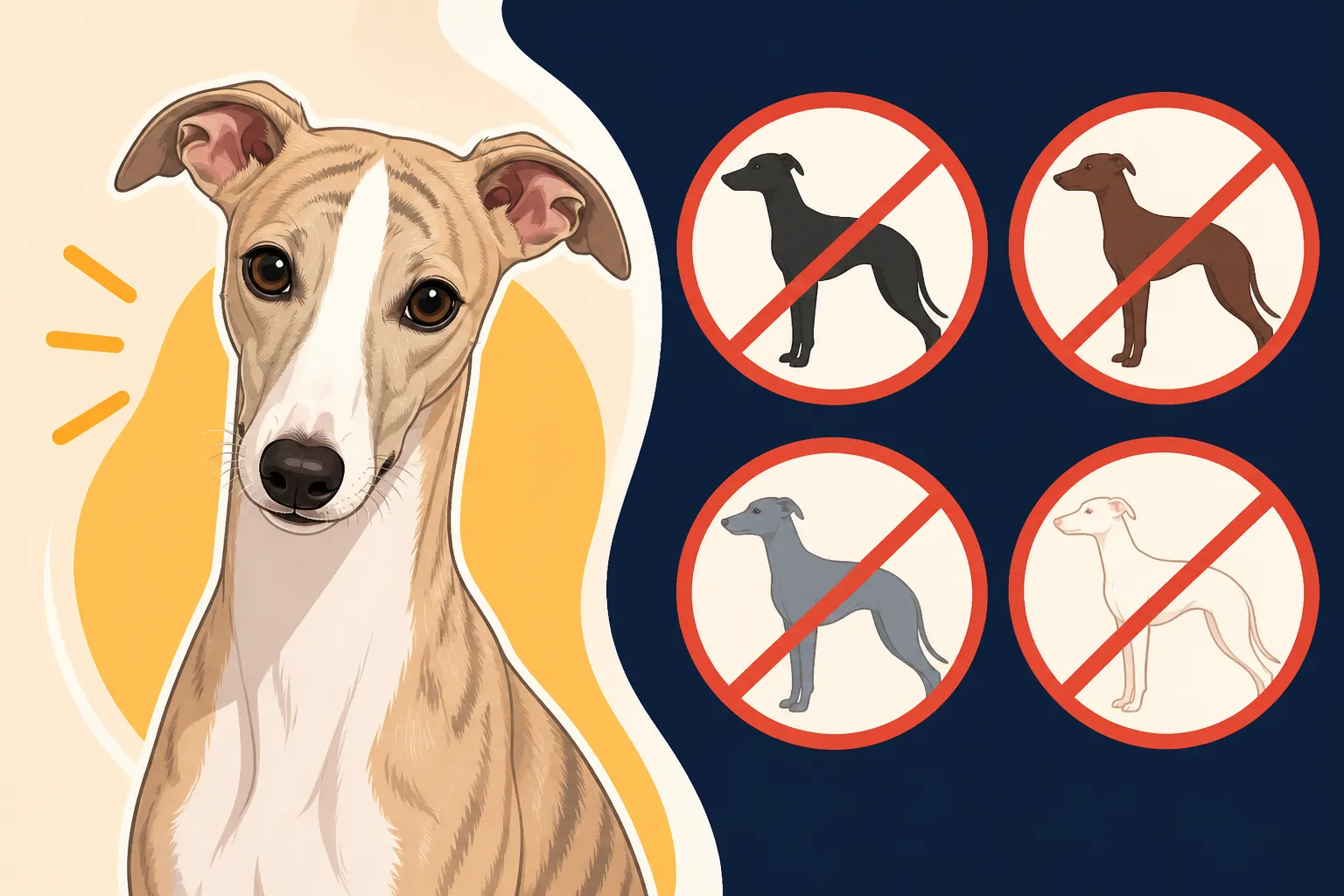
The American and British Whippet standards both allow any color or mixture of colors. In practice, that means there is no simple list of prohibited coat colors that disqualifies a dog from being a Whippet. Black, blue, fawn, red, brindle, cream, white, and many combinations can all occur.
That broad rule also covers patterns and markings. A Whippet may be mostly one color, have white markings, or show a mixture of colors. The range can be confusing if you expect the breed to come in only a small set of familiar shades. For a fuller overview of the palette, see The Colors a Whippet Comes In.
The phrase “any color” refers to the breed standard’s approach to coat color; it is not a guarantee that every imaginable pattern is typical or that a particular dog is purebred. Standards describe how a breed is judged, while pedigree and ancestry are established through documentation and, when appropriate, genetic testing.
Color is not the same thing as pedigree
A dog’s appearance can offer clues, but it cannot confirm ancestry on its own. A blue Whippet, for example, may be purebred. Blue is generally a diluted form of black pigment, not evidence by itself that another breed has been introduced. If someone tells you that a particular color automatically proves a dog is not a Whippet, that claim is too broad. Whether a Blue Whippet Is Purebred explores that question in more detail.
The reverse is true, too: looking like a Whippet does not establish that a dog is purebred. A slender build, narrow head, deep chest, and short coat can be found in mixes as well as in pedigree Whippets. A pedigree from a recognized registry, breeder records, and a dog’s overall characteristics are more useful than color alone.
If you are considering a puppy, ask the breeder about both parents, their health history, and the registration paperwork. A responsible breeder should be comfortable discussing unusual markings without presenting color as a substitute for health information or sound breeding practices.
Unusual Whippet colors and patterns
Blue, dilute, and other less familiar shades
Blue Whippets often attract attention because their coat looks different from black. The color comes from pigment dilution, and the exact shade can vary from a pale gray to a darker slate tone. Some people also use “blue” loosely when describing other gray-looking coats, so it is sensible to ask what the breeder means and look at the dog in natural light.
A dilute coat is a color description, not a diagnosis. Some dogs with dilute coloring can develop coat or skin concerns, but color alone does not tell you whether an individual dog will have a problem. If you are assessing a Whippet with thinning hair, irritated skin, or persistent patches of hair loss, ask a veterinarian rather than assuming the cause from its shade. Learn more in Whether a Blue Whippet Loses Its Coat and Whether Color Dilution Alopecia Affects Whippets.
Merle is not an ordinary Whippet pattern
Merle creates irregular patches of diluted pigment, often giving a marbled or mottled appearance. It is not a familiar, typical Whippet pattern, and it should prompt careful questions about the dog’s ancestry and genetic background. That does not mean you can prove a dog is mixed simply by looking at a photograph: lighting, other coat patterns, and the dog’s history all matter.
If a seller advertises a “rare merle Whippet,” treat the word “rare” as a reason to ask for more information, not as proof of special pedigree or value. Ask how the pattern was identified, whether the parents’ identities and registration can be verified, and whether health screening was done. Avoid making a purchase decision based on an unusual coat label alone.
Here is a practical way to think about common color claims:
| Appearance or claim | What it may mean | What it does not prove |
|---|---|---|
| Blue or gray coat | Often a diluted form of black pigment | That the dog is mixed-breed or unhealthy |
| White markings | A normal type of coat marking | That the dog is deaf |
| Brindle pattern | A striped or banded coat pattern | That the dog is a different breed |
| Merle or marbled coat | An unusual pattern that warrants questions about ancestry | That the dog’s pedigree can be settled by appearance alone |
| “Rare” color | A seller’s description of an uncommon look | That the dog is more valuable, healthier, or better bred |
The standard’s broad wording is important here. It allows color variety, but it does not make every sales claim reliable. If you want a direct explanation of permitted colors and markings, see Which Colors the Whippet Standard Allows.
Color, markings, and health
White markings do not automatically mean deafness
White markings are common in many dog breeds, including Whippets. A white chest, blaze, socks, or larger areas of white should not automatically be treated as evidence that a dog cannot hear. Coat color is not a substitute for checking how the dog responds to everyday sounds or for arranging a hearing assessment when there is a genuine concern.
A puppy that does not respond to voices may be distracted, asleep, anxious, or simply focused elsewhere. But if you repeatedly notice that it fails to react to sounds it cannot see, ask a veterinarian whether a hearing test is appropriate. The relevant concern is the dog’s actual hearing, not a quick guess based on its markings. For a more specific discussion, read Whether a White Marked Whippet Can Be Deaf.
The same principle applies when people make claims about blue eyes or other distinctive features. A single visible trait does not diagnose a health condition or confirm ancestry. Consider the whole dog: its behavior, veterinary history, family background, and any examination or testing recommended by a qualified professional.
Watch the dog, not just the color
Coat shade can be useful when describing a Whippet, but it should not distract from basic health checks. Look for skin that is comfortable rather than persistently itchy or inflamed, a coat without unexplained areas of hair loss, and eyes and ears that appear healthy. If something seems wrong, describe what you have noticed to your veterinarian rather than trying to diagnose it from a color chart.
This is especially helpful when adopting an adult Whippet or meeting a puppy for the first time. A thin coat, bald patch, or visible skin irritation might relate to several causes, including a skin condition, parasites, friction, or another issue unrelated to pigment. Clear photographs and notes about when the change began can help your veterinarian assess it.
For routine care, ask your veterinarian before applying products to exposed or irritated skin. If they recommend a dog-specific sunscreen for a particular situation, you can compare suitable options through retailers such as Chewy. Do not assume that a product made for people is safe for dogs; ingredients and licking behavior matter.
How to assess a Whippet with an unusual color
Ask clear questions before choosing a puppy
When a breeder or seller uses a color label you have not heard before, ask them to explain it plainly. “Is this blue, or is it a different shade?” is a more useful question than accepting an elaborate marketing name. Ask to see the puppy with its mother when possible, find out how the parents are registered, and request the available health and pedigree information.
Be cautious if a seller claims that an unusual color guarantees a special temperament, superior speed, better health, or higher quality. Coat color does not establish those things. Likewise, a seller should not pressure you to pay more simply because a color is described as rare. The quality of the breeding decisions, the puppy’s welfare, and the transparency of the records matter much more.
If ancestry is genuinely uncertain, a canine DNA test may offer additional information, but it should be interpreted appropriately and does not replace reliable pedigree records. A color-based guess from a photo is even less conclusive. Keep the conversation focused on documentation and the dog’s health, not just its appearance.
Use practical skin and coat care
Whippets have short coats and relatively little body fat, so comfort and protection matter regardless of color. Pale or sparsely pigmented areas may be more vulnerable to sun exposure, but the right precautions depend on the individual dog and its environment. Ask your veterinarian about sun protection if your Whippet spends time in strong sun, especially if it has pale skin or a history of irritation.
For a dog that needs extra protection outdoors, a lightweight garment may be useful in addition to limiting exposure during intense sunlight. A retailer such as Chewy can be one place to compare dog clothing, but the fit matters: a garment should not rub the skin, restrict movement, or cause the dog to overheat. Check the skin under straps and seams after use.
If you are shopping for gentle grooming supplies, Chewy may also be a place to compare dog-specific shampoos, but frequent bathing or harsh products can irritate sensitive skin. Follow your veterinarian’s advice if there is an active rash, recurring dandruff, or hair loss; routine grooming products are not a substitute for diagnosing a skin problem.
A simple checklist for color-related claims
Before accepting a claim about what a Whippet “can” or “cannot” look like, work through these questions:
- Is the claim about the breed standard or about ancestry? The standard allows any color or mixture of colors, but color alone does not establish pedigree.
- Is the color being used to sell the dog? Be wary of claims that “rare” automatically means healthier, better, or worth more.
- Is there an actual health concern? Ask a veterinarian about symptoms such as hair loss, irritation, or failure to respond to sounds rather than attributing them to color.
- Are the records available? Pedigree documents and health information are more useful than confident statements about appearance.
- Does the dog seem comfortable? Look at its behavior and physical condition, not just its coat.
The short answer to “What colors can a Whippet not be?” is that the standard does not name a forbidden coat color. Unusual patterns such as merle deserve careful questions because they are not typical Whippet markings, while blue coats, white markings, and brindle patterns do not by themselves establish a problem or disprove a Whippet’s ancestry. For a related look at the range of permitted appearances, see Whether a Whippet Can Be Any Color at All and The Piebald Whippet.
Disclaimer
This article is for general informational purposes only and does not constitute professional advice. Laws, prices and regulations vary by location and change over time. Consult a qualified professional for guidance on your specific situation.