Where the Name Whippet Comes From
It's funny how a name can stick, isn't it? When we hear "Whippet," most of us immediately picture a sleek, speedy dog, all grace and athletic power. But have you ever stopped to think about where that rather unique name actually came from? It’s not as obvious as, say, a "German Shepherd" or a "Labrador Retriever." For this agile, affectionate sighthound, the story of its name is deeply entwined with its humble, working-class origins and provides a fascinating glimpse into history.
The Humble Beginnings of a Noble Breed
Before the Whippet was a beloved family pet or a champion in the show ring, it was a dog of necessity, bred by ordinary people who needed a canine companion that could earn its keep. This isn't a breed that emerged from aristocratic kennels with carefully documented pedigrees and grand titles. Its roots are far more gritty and real, born from the practical needs of communities.
More Than Just a Little Greyhound
Many people look at a Whippet and think it's simply a smaller version of a Greyhound. And while there's certainly Greyhound influence in its lineage, the Whippet is a distinct breed with a unique history forged in the coalfields and mill towns of northern England. Its creation was a testament to ingenuity and resourcefulness. Miners and factory workers couldn't afford a large, expensive Greyhound, but they still desired a fast, capable dog for hunting small game like rabbits and for competitive sports.
They selectively bred smaller sighthounds, likely crossing them with various terriers to introduce traits like tenacity and a more compact size. The goal was a dog that was swift, efficient, and small enough to share a cramped cottage and fit comfortably into their lives. This lineage of working-class design explains much about the Whippet's enduring traits today: its deep bond with its human family, its adaptability to smaller living spaces, and its explosive speed. It truly embodies the spirit of its creators – hardworking, humble, and surprisingly potent. You can read more about this fascinating origin in How Miners Built the Whippet From a Greyhound They Could Afford.
A Dog of the Northern English Coalfields
Imagine the harsh landscape of the late 18th and 19th centuries in places like Northumberland and Lancashire. Life was tough, centered around coal mining and textile mills. For the working class, a dog wasn't just a pet; it was often a crucial part of the family economy, providing food through hunting or entertainment through sport. The Whippet thrived in this environment.
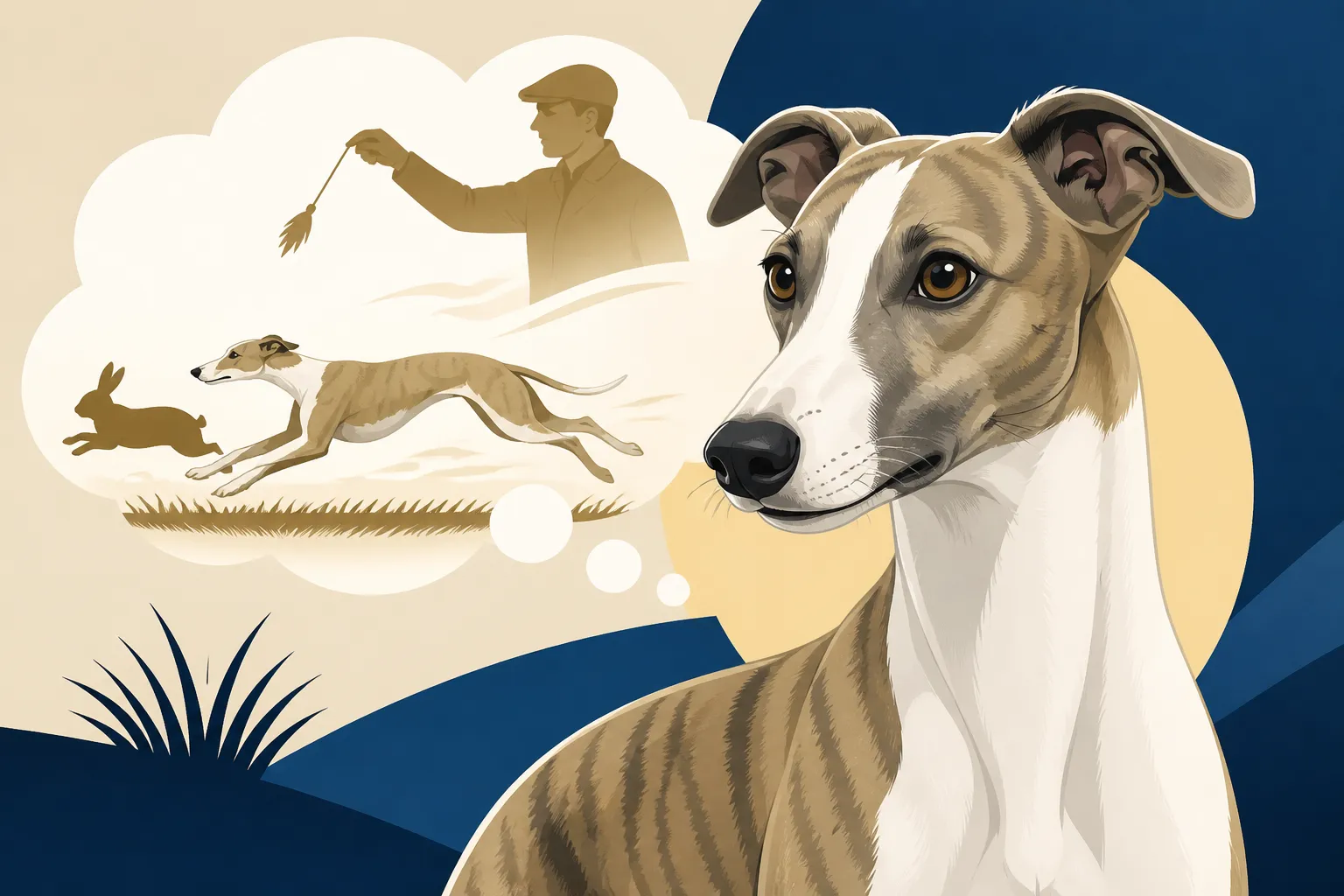
These dogs were cherished companions who often slept by the fire, sometimes even sharing a bed with their owners to keep warm in drafty homes. But come the weekend, they transformed. They were taken to open fields for "rag racing," where they would sprint after a rag waved by their owner, or participate in "snap dog" contests, proving their agility and quickness by catching rabbits. This dual nature – a gentle house dog and an explosive athlete – was integral to their survival and popularity. The Whippet was bred to be agile and fast, a compact hunter perfectly suited for the practical demands of its owners' lives. It truly was a reflection of the people who bred it, a testament to their resilience and their love for a dog that was both a friend and a provider. It's fascinating to consider Why the Whippet Was a Working Class Dog.
Unpacking the "Whippet" Moniker
So, with this background, where does the name "Whippet" actually come from? The exact etymology is a bit murky, as is often the case with working breeds that evolved informally over time. However, there are a couple of strong theories that perfectly capture the essence of this breed.
The Theory of "Whip It" – Speed and Agility
The most widely accepted and evocative theory for the name "Whippet" points directly to the dog's incredible speed and the distinctive way it moves. Picture a Whippet in full sprint: it's not just running, it's a blur of motion, seeming to "whip" around corners, its body contorting and extending with breathtaking agility. This "whipping" motion, particularly when changing direction quickly or launching into a chase, is a hallmark of the breed's athletic prowess.
This theory makes a lot of sense when you consider their original purpose in rag racing. These were impromptu events where miners would wager their week's wages on their dogs. A dog that could "whip" to the finish line, leaving competitors in its dust, was a prized possession. The sheer velocity and rapid turns required in these races certainly lend credence to the idea that their name sprung from this visual descriptor of their movement. Just watching a Whippet run today, it's easy to see why someone would describe their speed as a "whiplash" of motion. They truly are an explosion of controlled energy. It's no wonder their speed is legendary; you can delve deeper into it in How Fast a Whippet Actually Runs and Rag Racing and the Week's Wages Riding on a Whippet.
From "Snap Dog" to Whippet
Before the name "Whippet" became common, these dogs were often referred to by a less formal, but equally descriptive, term: "Snap Dog." This name highlights another key aspect of their original function: hunting. These dogs were incredibly adept at catching small, fast-moving prey, particularly rabbits. The term "snap" refers to the swift, decisive bite with which they would capture their quarry.
"Snap Dog" contests were popular, where dogs would compete to kill the most rabbits in a given time, often referred to as "rabbit coursing" or "snapping" races. While this might sound brutal to modern sensibilities, it was a practical skill in a time when hunting provided food for the family. As the breed gained more formal recognition and moved beyond purely utilitarian roles, the name "Snap Dog" likely fell out of favor, replaced by the more elegant and less visceral "Whippet." It marked a transition for the breed from a purely working animal to one that was appreciated for its athletic form and gentle temperament, even if its hunting instincts remained. To understand more about this period, check out The Older Name Snap Dog for the Whippet and What Snap Dog Contests Asked of a Whippet.
The Broader Context of Sighthound Naming Conventions
The Whippet's name, whether derived from its speed or its earlier hunting role, fits into a broader pattern seen across many sighthound breeds. Names often tell a story about purpose, appearance, or the region of origin.
Describing Function Through Name
Think about other sighthounds, and you'll often find their names subtly hinting at their key characteristics or the type of game they hunted. The Greyhound, for example, is believed by some to derive its name from an Old English word "grai" meaning "dog," or possibly from the word "Grecian." Another theory links it to grajus, meaning "crane-like," referencing its elegant, long-limbed build. Similarly, the Scottish Deerhound's name clearly indicates its heritage as a hunter of deer in the Scottish Highlands.
The Whippet's name, therefore, follows this tradition. If it refers to their "whipping" speed, it describes their unparalleled function as a sprinter. If it comes from "snap dog," it highlights their predatory efficiency. In either case, the name isn't just a label; it's a shorthand for what the dog was for. It reflects a time when a dog's value was directly tied to its abilities, and its name served as a constant reminder of that purpose. This connection to function is a fascinating thread running through the history of many working dog breeds, shaping how we understand them even today.
Evolution of Breed Names Over Time
It's important to remember that breed names aren't static; they evolve. Before formal kennel clubs and breed standards, names were often regional, informal, and varied. As dog breeding became more organized, and as certain types of dogs gained popularity, a more standardized name would emerge. For the Whippet, this transition happened as it moved from the hands of the working class into a more recognized position within the dog fancy.
The late 19th century saw an increased interest in dog shows and formalized breeding. It was around this time that the term "Whippet" started to become widely adopted, replacing the more colloquial "Snap Dog." The English Kennel Club recognized the Whippet as a distinct breed in 1891, a pivotal moment that cemented its name and standard. This recognition elevated the Whippet from a simple working-class companion to a dog admired for its unique physical attributes and gentle temperament. The formalization of the breed meant a formalization of its name, which helped it gain recognition and respect beyond its industrial heartland. To learn more about this historical recognition, check out The Year the Kennel Club Recognized the Whippet and how it led to How the Show Ring Refined the Whippet.
The Whippet Today: A Legacy of Speed and Affection
Today, our Whippets are usually lounging on the sofa, maybe dreaming of chasing squirrels, rather than earning their keep in a rag race. But the echoes of their past, including their name, are still very much present in their character and charm.
Still a "Lightning Rag Dog" at Heart
The description "lightning rag dog" is one of the most vivid and accurate historical monikers for the Whippet. It perfectly encapsulates their blinding speed and their original purpose. Even though modern Whippets are far removed from the dirt tracks of industrial England, that spirit of quickness and the drive to chase are still deeply ingrained. When you see a Whippet tear across a field, performing those characteristic tight turns and explosive bursts of speed, you're watching a living embodiment of that "lightning rag dog" legacy.
They may not be chasing a rag for a miner's wages anymore, but the joy they find in a good sprint, whether it's after a lure or just playing zoomies in the yard, is undeniable. This intrinsic need for speed is a fundamental part of their being, and it's what makes them such captivating athletes. While they might be bundled up in a cozy sweater from Chewy in winter, their core identity as a swift, agile sighthound remains unchanged. Why the Whippet Was Called the Lightning Rag Dog really captures this enduring spirit.
The Enduring Appeal of the Whippet Name
The name "Whippet" has, despite its somewhat obscure origins, developed a certain elegance and distinctiveness. It rolls off the tongue, evoking images of grace, speed, and sleek lines. It’s a name that has come to perfectly suit the breed's physical characteristics and its generally refined demeanor indoors. Regardless of whether its name specifically refers to its "whipping" motion or evolved from "snap dog," it's a name that has endured and become synonymous with a truly wonderful companion.
For us Whippet owners, the name doesn't just represent a historical curiosity; it signifies a dog that brings incredible joy, a dog that can be a blur of motion one moment and a snuggle bug the next. They might be incredibly sensitive, sometimes even refusing to go out in the rain (yes, it's true, sometimes it's like The Whippet That Will Not Toilet in the Rain!), but their endearing personalities make them unforgettable. They might even be the perfect fit for a Whether a Whippet Suits a First Time Owner. This breed, with its unique name and even more unique charm, continues to capture hearts, proving that some things, like a perfect companion, transcend simple labels and historical footnotes. With their average lifespan often reaching The Twelve to Fifteen Years a Whippet Lives, that's a lot of love and companionship under any name.
| Name Origin Theory | Key Characteristic | Historical Context | Modern Relevance |
|---|---|---|---|
| "Whip It" | Explosive speed, agile turns | Rag racing, competitive sprinting in northern England | Still a descriptor for their incredible acceleration and grace. |
| "Snap Dog" | Quick, decisive bite for hunting | Hunting small game (rabbits) for sustenance and sport | Highlights their inherent prey drive, even if domesticated. |
| Regional/Informal | Working-class companion | Evolved informally among miners and mill workers | Emphasizes their humble, resilient origins. |
Disclaimer
This article is for general informational purposes only and does not constitute professional advice. Laws, prices and regulations vary by location and change over time. Consult a qualified professional for guidance on your specific situation.