Why the Whippet Was a Working Class Dog
It's easy to look at our sleek, elegant Whippets curled up on the sofa today and forget their humble, gritty origins. But these wonderful dogs weren't always the pampered house pets we adore; they sprang directly from the needs and ingenuity of the working classes in industrial England. This guide will take you back in time to explore why the Whippet became such an indispensable part of a working family's life, how their unique traits made them perfectly suited to their environment, and the legacy of resilience and devotion that continues to define the breed.
The Birth of a Breed: Necessity as the Mother of Invention
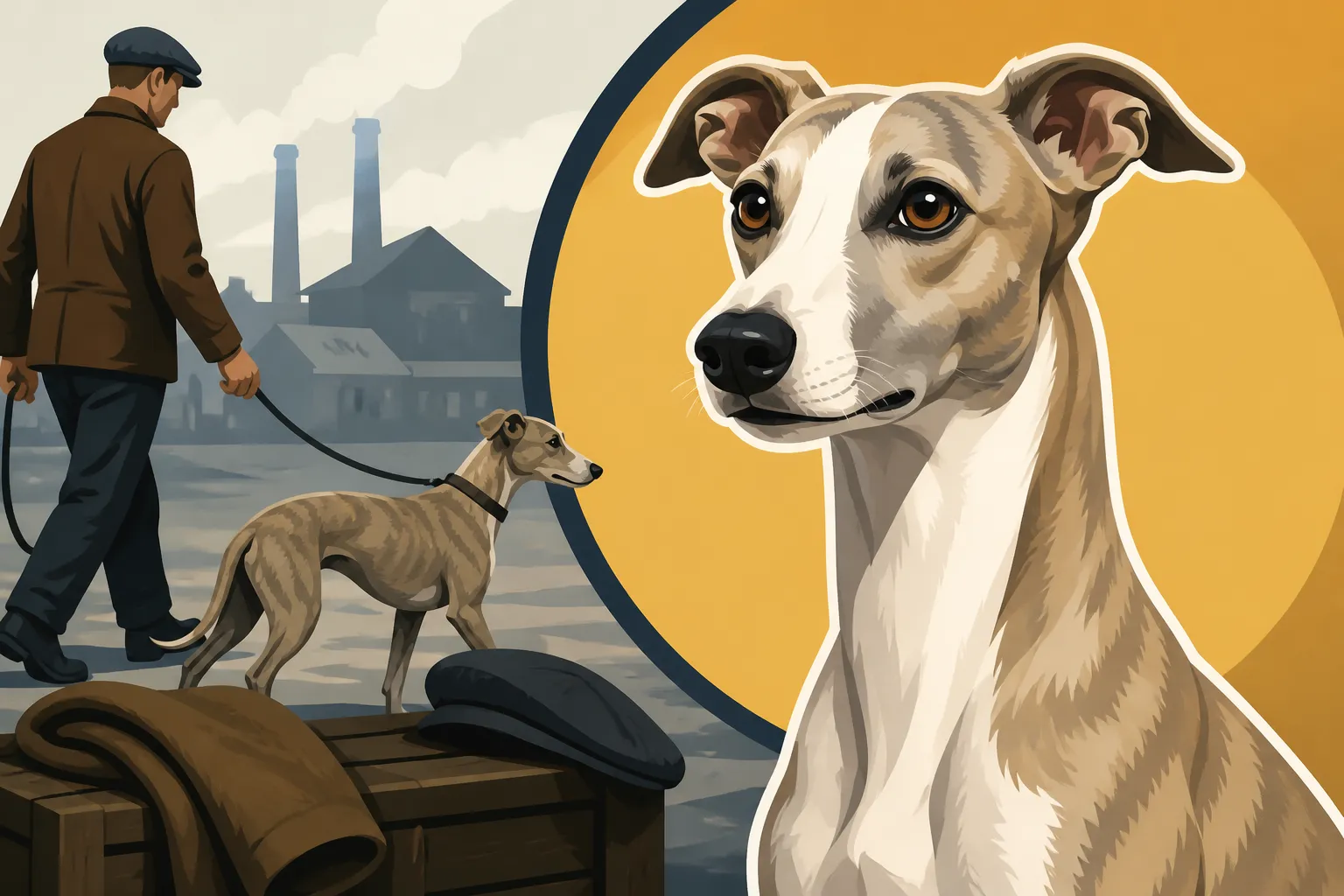
In the harsh realities of 19th-century industrial England, particularly in the coalfields of Northumberland and Yorkshire, life for the working class was far from glamorous. Miners and factory workers faced long hours, meager wages, and often, the gnawing specter of hunger. Owning a dog was a luxury many couldn't afford if that dog didn't contribute meaningfully to the household. This desperate need for a multi-purpose companion, hunter, and entertainer directly led to the development of the Whippet. These were not dogs bred for aristocratic estates or show rings, but for survival and the simple joys in a tough life.
The concept of a "pet" in the modern sense was often impractical. Every mouth to feed needed to earn its keep, and dogs were no exception. Miners, who often spent their lives underground in dangerous conditions, needed solace, loyalty, and practical assistance. They cherished dogs that could adapt to small living spaces, be quiet and unobtrusive indoors, yet transform into formidable hunters or fast racers when the opportunity arose. This unique blend of characteristics wasn't accidental; it was carefully, albeit informally, cultivated out of sheer necessity and a deep understanding of what made a dog valuable to their way of life.
It wasn't just about utility; there was a profound emotional connection, too. These dogs were often the only source of unconditional affection and companionship in lives that were often brutal and short. The bond between a miner and his Whippet ran deep, forged in shared hardship and mutual reliance. The dog wasn't just a tool; it was a confidant, a family member, and sometimes, the only bright spot in a dreary existence. It's a testament to the Whippet's adaptable nature that it thrived in such an environment.
How Northumberland Miners Bred the First Whippets
The exact lineage of the Whippet is a fascinating blend, a testament to practical breeding driven by specific desired traits rather than purebred aesthetics. Miners in areas like Northumberland, with their keen eye for performance, selectively bred smaller, faster Greyhounds, often crossing them with various terrier types. This combination aimed to create a dog that retained the incredible speed and sight-hunting prowess of the sighthound but in a more compact, manageable size that could fit into a small cottage. It wasn't about pedigree papers; it was about results.
The terrier influence, while debated in its specifics, likely contributed to the Whippet's tenacity and alertness, making them excellent ratters in homes and mines. More importantly, it helped downsize the larger Greyhound without sacrificing too much speed or the desire to chase. They wanted a dog that could outrun a rabbit but was also small enough to be carried home in a coat, quiet enough not to draw attention, and economical to feed. The miners knew their dogs inside and out, understanding which traits were beneficial for different tasks, and they bred accordingly.
The result was a dog perfectly adapted to its environment: fast enough to catch game for the pot, small enough to be inconspicuous, and affectionate enough to be a cherished family member. This pragmatic approach to breeding, focused purely on functionality and suitability for a working-class lifestyle, is the very foundation of the Whippet breed. You can still see this legacy in how comfortable they are today, switching between a full-speed sprint and a deep, cozy nap on the sofa. To understand their roots better, consider reading How Northumberland Miners Bred the First Whippets.
The Whippet as a Poacher's Best Friend
Poaching was a grim necessity for many working-class families struggling to put food on the table. With game reserves tightly controlled by landowners, hunting was often the only way to supplement a meager diet. For this dangerous and often illegal activity, a fast, silent, and intelligent dog was invaluable. The Whippet fit this role perfectly, earning them the nickname "the poor man's racehorse" or "snap dog" for their ability to quickly snatch up rabbits and hares.
Imagine a miner, after a long shift, venturing out under the cover of darkness with his Whippet. The dog's exceptional eyesight, honed for spotting movement across open fields, would be its primary tool. It could pursue and catch small game with lightning speed, often before the animal even knew what hit it. Unlike larger hunting dogs that might draw too much attention, the Whippet's quiet demeanor and compact size made it an ideal accomplice, easy to conceal and control. They weren't just for sport; they were critical to survival.
These dogs weren't just fast; they were clever. They learned quickly to be stealthy, to respond to subtle cues, and to work in tandem with their owners to avoid detection. The success of a poaching expedition could mean the difference between a family eating or going hungry, making the Whippet a literal lifesaver. This intimate partnership in illicit, yet often vital, activities further cemented the Whippet's place as a working-class dog, directly contributing to the sustenance of its human companions. If you're curious about this aspect of their history, Whippets as Poachers' Dogs delves deeper.
Earning Their Keep: Beyond Just the Hunt
While poaching was a critical role, the Whippet's contributions to the working-class household extended far beyond just putting food on the table. They were versatile animals, integrated into various aspects of family life, embodying frugality and resourcefulness. Their needs were minimal, yet their impact was immense, proving their worth in myriad ways that aligned perfectly with the economic realities of their owners.
The small size of a Whippet meant they ate less than a large sighthound like a Greyhound, making them economical to feed in households where every penny counted. What little food they consumed was often scraps from the family table, supplemented by any game they caught. This lean diet, combined with their naturally efficient metabolism, allowed them to maintain a healthy weight without requiring expensive specialty foods. Even today, you'll find that Whether a Whippet Is Cheaper to Feed Than a Beagle is a common question, speaking to their enduring reputation for being economical.
Beyond food, their minimal grooming needs and robust health (for the most part) also contributed to their low cost of upkeep. They didn't need elaborate kennels or frequent trips to the groomer. They were hardy, despite their delicate appearance, capable of enduring the elements when necessary, although they always preferred the warmth of a hearth. Their ability to thrive on so little, while offering so much, was a core reason for their widespread adoption among the working class.
The Original "Couch Potato" and Its Small Footprint
One of the most appealing traits of the Whippet for a working-class family living in a small, often crowded cottage, was its ability to be a "forty-mile-an-hour couch potato." Despite their incredible speed and athletic prowess outdoors, Whippets are remarkably calm and quiet indoors. They loved nothing more than to curl up by the fire or on a bed, becoming almost invisible when not actively engaged. This trait was not just charming; it was essential for survival in cramped living conditions.
In homes where space was at a premium and every square inch counted, a large, boisterous dog would have been an intolerable nuisance. A Whippet, however, could tuck itself away, occupying minimal space and demanding little attention once its exercise needs were met. They were masters of quiet contentment, an invaluable quality in a busy, close-knit household. This docile indoor temperament made them perfectly suited to small homes, apartments, and the often-shared living quarters common among the working poor.
Their lean build and short coat also meant they didn't shed excessively or bring in a lot of dirt, further reducing the maintenance burden on already overworked families. They were clean dogs, easily maintained with a quick brush, which meant less work for the already busy homemaker. Even if a miner's family had access to modern conveniences like a Chewy order for bedding, the Whippet's natural tendency to burrow and snuggle would mean they'd be happy with a simple blanket on the floor. Their low-impact presence was a huge advantage, allowing them to be fully integrated into the family unit without creating additional chores or demanding too much space. To truly appreciate their dual nature, explore The Whippet Is a Forty Mile an Hour Couch Potato.
Why a Whippet Slept in the Family Bed
The deep bond between a Whippet and its working-class family often manifested in the dog sharing sleeping quarters with its humans. This wasn't just about affection, though that was certainly a powerful component; it was also a practical arrangement born out of necessity, especially given the Whippet's unique physical characteristics. These lean dogs, with their thin skin and virtually no body fat, are notoriously sensitive to cold.
Working-class homes often lacked central heating and were notoriously drafty, especially during the cold English winters. For a Whippet, sleeping on a cold floor could lead to discomfort or even illness. Sharing a bed with family members provided much-needed warmth, keeping both the dog and the humans cozy. It was a mutual benefit: the dog got warmth, and the humans got a living hot water bottle, especially useful in homes where fuel for fires was scarce and expensive. This practice highlights the intimate integration of the Whippet into the family's daily survival strategies.
Beyond warmth, sleeping with the family reinforced the dog's place within the household as a cherished member rather than a mere animal. It fostered an unparalleled level of trust and companionship, which was vital in an era when dogs were often left to fend for themselves. This closeness also allowed for subtle cues and communication, further enhancing the Whippet's effectiveness as a partner in various tasks. The shared bed was a symbol of their importance, a testament to the fact that they were not just dogs, but integral parts of the human family, a tradition many Whippet owners still uphold today. It's truly eye-opening to consider Why a Whippet Slept in the Family Bed.
The Thrill of the Race: Entertainment and Wager
Life for the working class was tough, often monotonous, and filled with hardship. Entertainment was a precious commodity, and often, it was self-made and highly localized. Whippet racing emerged as a hugely popular sport among miners and factory workers, providing not just thrilling entertainment but also a potential source of income through wagering. This aspect of their utility cemented the Whippet's status as a working-class dog, intertwining their athletic prowess with the social and economic fabric of their owners' lives.
These were not formal, grand spectacles with elaborate tracks; early Whippet races were often held in open fields, alongside cobbled streets, or on hastily prepared dirt paths. Owners would gather, often after a long week of work, to pit their beloved Whippets against each other in short, electrifying sprints. The thrill of the chase, the speed of the dogs, and the hope of a winning wager provided a much-needed escape and excitement from their otherwise arduous lives. This was grassroots sport at its finest, driven by passion and pride in their dogs.
The informal nature of these races also meant that almost anyone with a fast Whippet could participate. It leveled the playing field, making dog ownership and racing accessible to those who couldn't afford expensive Greyhounds or elaborate training facilities. These events fostered a strong sense of community, camaraderie, and friendly rivalry among working-class neighbors, creating a social hub around their shared love for these "lightning rag dogs." The concept of Rag Racing and the Week's Wages Riding on a Whippet truly captures the spirit of these times.
The Lightning Rag Dog and Its Speed
The nickname "Lightning Rag Dog" wasn't just a catchy phrase; it was a descriptor born of the Whippet's incredible acceleration and speed over short distances. In the rag races, a handler would typically stand at the finish line, waving a rag or a piece of cloth to entice the dog to run towards them. The Whippet, with its intense prey drive and natural speed, would launch itself forward, a blur of motion across the field. This raw speed was their greatest asset, both in the hunt and on the racetrack.
Whippets are built for speed. Their deep chests house powerful lungs, their flexible spines allow for an incredible double-suspension gallop, and their finely tuned muscles propel them forward with astounding force. This physical design, optimized for chasing down fast-moving prey, made them natural sprinters. The thrill of watching these dogs explode from the start, covering ground at an astonishing pace, was undeniable and fueled the popularity of the races. Their performance was a source of immense pride for their owners.
It wasn't just about winning money; it was about the glory, the bragging rights, and the sheer joy of seeing their dog perform at its peak. The speed of a Whippet was a testament to the skill of its owner in breeding and conditioning. Even today, Whippets are admired for their speed, a characteristic that remains central to their identity. To understand this amazing trait, you might enjoy How Far a Whippet Can Sprint Before It Tires and Why the Whippet Was Called the Lightning Rag Dog.
Wagering and Community Spirit
Wagering was an integral part of working-class Whippet racing. With little disposable income, a successful bet could provide a welcome boost to a family's finances. Miners and other workers would pool their small stakes, adding an extra layer of excitement and consequence to each race. This wasn't about getting rich; it was often about making ends meet, buying a few extra necessities, or simply having a bit of fun with the possibility of a small payout. The bets were modest, but the hopes were high.
These racing events were more than just gambling opportunities; they were vital social gatherings. They brought people together, fostering a strong sense of community and shared experience in an otherwise fragmented and challenging existence. Men would discuss their dogs' conditioning, share tips, and bond over their mutual passion. Women and children would often attend too, turning race days into rare family outings. Even if they couldn't afford much from a modern pet supply store like Chewy, the shared love for their dogs transcended material possessions.
The community spirit extended beyond race day. Owners often helped each other with training and care, exchanging knowledge about the best ways to keep their Whippets in prime condition. This cooperative environment underscored the deeply embedded nature of Whippets within the working-class culture. They were not just individuals' dogs; they were community assets, celebrated and supported by all.
The Enduring Legacy of a Hard-Working Breed
The Whippet of today, often a beloved fixture in homes around the world, still carries the echoes of its working-class past. While most modern Whippets may never chase a wild rabbit for the pot or race for a wager, their intrinsic traits—their incredible speed, their quiet indoor demeanor, their need for warmth, and their profound affection for their families—are all direct inheritances from their origins. Understanding this history gives us a deeper appreciation for the breed we cherish.
Today's Whippets are admired for their elegance, grace, and athleticism, often participating in organized sports like lure coursing and Fast CAT, which are modern interpretations of their historical racing instincts. They remain fantastic companions, equally happy to sprint across a field as they are to cuddle on a couch. The breed’s popularity has grown far beyond the industrial towns, but its core characteristics, shaped by generations of working-class needs, remain unchanged.
We, as modern Whippet owners, benefit from the thoughtful, albeit informal, breeding decisions made by those early miners. Their focus on practicality, health, and a balanced temperament created a dog that is not only beautiful but also wonderfully adaptable to family life. The Whippet is a living testament to the resourcefulness and resilience of the working class, a silent reminder that true value often comes from utility and an unbreakable bond, not just pedigree.
| Whippet Trait | Benefit to Working-Class Family | Modern Day Relevance |
|---|---|---|
| Compact Size | Fits small cottages, easy to hide | Suits apartments, small homes |
| Efficient Metabolism | Cheap to feed on scraps | Economical feeding, stays lean |
| High Speed/Prey Drive | Hunts for food, excels at racing | Lure coursing, Fast CAT, exercise |
| Quiet & Calm Indoors | Unobtrusive in crowded homes | Ideal house pet, "couch potato" |
| Thin Coat/No Body Fat | Needs warmth from humans/fire | Loves blankets, snuggles for warmth |
| Low Grooming Needs | Minimal upkeep for busy owners | Easy maintenance, clean pet |
| Affectionate Nature | Companionship, emotional support | Devoted family member, good with kids |
Why the Whippet Was a Working Class Dog
The narrative of the Whippet is inherently tied to the working class because these were the people who needed and created them. They didn't have the luxury of breeding dogs purely for aesthetics or abstract ideals. Their dogs had to contribute tangibly to their survival and quality of life. The Whippet was a creature of utility, a living answer to the challenges faced by families with limited resources and immense hardship. Every characteristic, from its size to its temperament to its speed, was honed by these practical requirements.
Consider the stark contrast to breeds developed for nobility, often for grand hunting parties or as symbols of status. The Whippet's development was democratic, driven by the collective needs and observations of ordinary people. This grassroots origin imbues the breed with a unique humility and resilience. They were "everyman's dog," accessible and valuable to those for whom every resource counted. The fact that the breed has transcended its origins to become a globally admired companion dog speaks volumes about the inherent quality and thoughtful development by its original breeders.
This history teaches us a powerful lesson about the profound connection between humans and animals, especially when both are striving to survive. The Whippet didn't just share a home; it shared a life, participating actively in the struggles and small triumphs of its human family. It provided food, entertainment, warmth, and unwavering companionship—roles that made it truly indispensable. Its very existence is a testament to the ingenuity and enduring spirit of the working class.
The Lasting Appeal: From Coalfields to Couches
The journey of the Whippet from the smoky coalfields to the comfortable cushions of modern homes is a remarkable one. What makes these dogs so enduringly appealing is that the very traits that made them perfect for a working-class existence translate beautifully into being exceptional modern companions. Their calm indoor nature, coupled with their explosive outdoor energy, makes them incredibly versatile. They are as happy to accompany you on a brisk walk or a spirited run as they are to spend hours napping at your feet, sometimes even under a cozy blanket from Chewy.
Their low maintenance coat and relatively small size continue to be practical advantages for today's busy owners, particularly those in urban environments. But it's their gentle, affectionate, and sensitive temperament that truly captures hearts. They form deep bonds with their families, offering quiet devotion and an almost uncanny ability to understand human moods. This emotional intelligence, likely fostered by their close living arrangements with their original owners, makes them exceptional therapy dogs or simply wonderful, empathetic companions.
The Whippet serves as a beautiful reminder that a dog's true value isn't measured by its pedigree or its price tag, but by its ability to enrich human lives. From providing food and entertainment to offering solace and companionship, the Whippet has consistently proven its worth across generations and socioeconomic divides. They are, and always will be, a testament to the powerful, reciprocal relationship between humans and the dogs we choose to share our lives with. Their story is a powerful one, and you can learn even more about their history in The Poor Man's Racehorse: Whippets in the Northern Coalfields.
Disclaimer
This article is for general informational purposes only and does not constitute professional advice. Laws, prices and regulations vary by location and change over time. Consult a qualified professional for guidance on your specific situation.