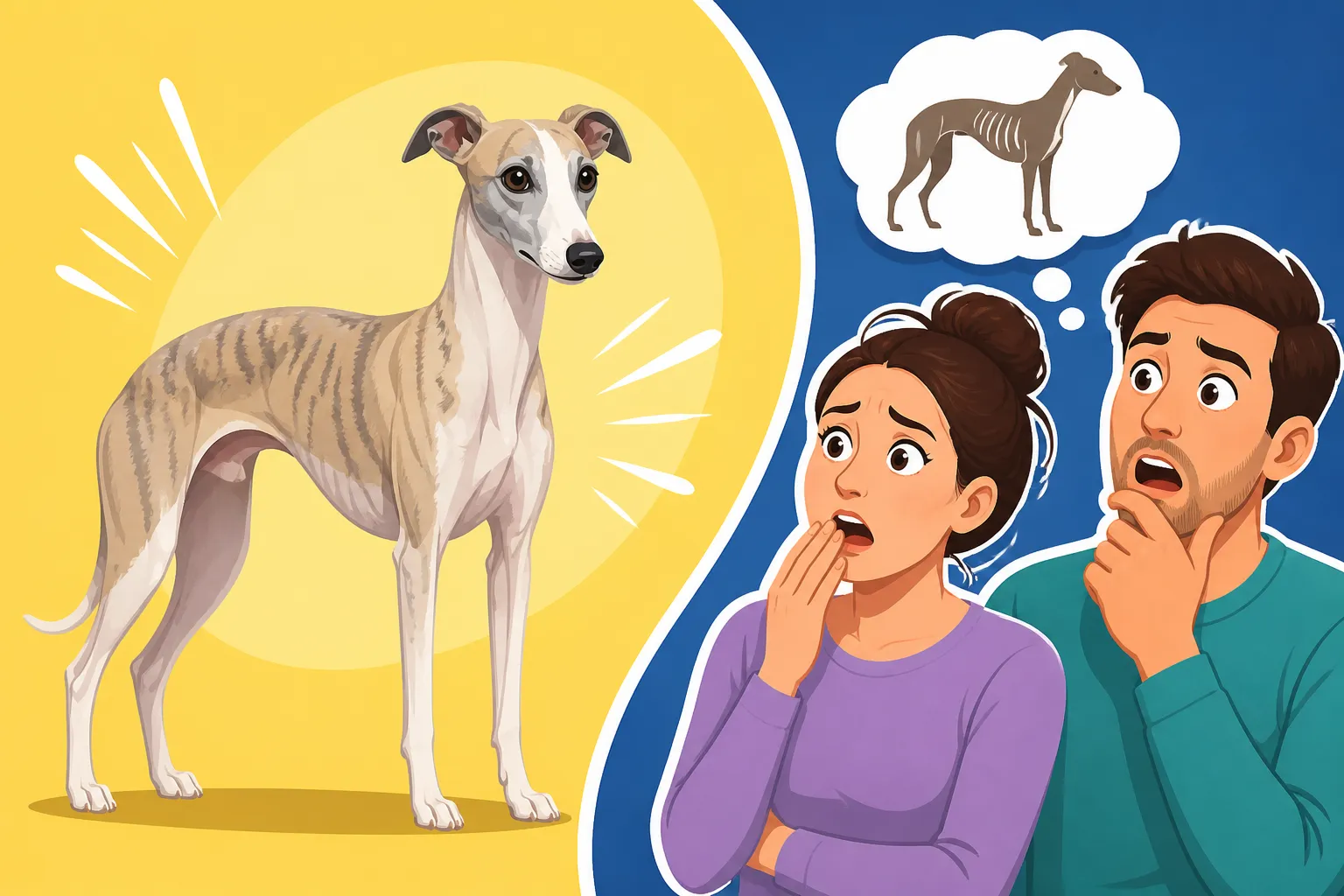
Why Strangers Think a Whippet Is Underfed
It’s a comment nearly every Whippet owner has heard, and it stings: "Your dog looks so thin, are you feeding him enough?" Or perhaps, "Poor thing, he looks starved!" This kind of unsolicited advice from well-meaning but misinformed strangers can be incredibly frustrating and even make you second-guess yourself. This guide is here to reassure you that your Whippet’s lean, athletic build is perfectly normal and healthy, and to equip you with the knowledge to understand and confidently explain their unique physique.
Understanding the Whippet's Unique Physique
Whippets are not built like your average Labrador or Golden Retriever. They are sighthounds, a group of dogs specifically bred for speed, agility, and the ability to chase prey over open ground. Their entire physical structure is a testament to this purpose, designed for maximum efficiency in motion rather than bulk or power. When you understand this fundamental difference, their lean appearance makes perfect sense.
Built for Speed, Not for Bulk
Imagine a finely tuned racing car – sleek, aerodynamic, and with no excess weight. That's essentially what a Whippet is in the canine world. Their long, arching back, deep chest, and tucked-up abdomen are all hallmarks of a sighthound built for explosive sprints. Their musculature is long and lean, providing power without the heavy, dense bulk you see in many other breeds. There’s simply no room for excessive fat or heavy bone structure on a dog that needs to accelerate from zero to nearly 40 miles an hour in mere seconds.
This specialized anatomy means they naturally carry very little body fat. It's not a sign of poor nutrition; it's a genetic blueprint. In fact, carrying extra weight would be detrimental to their health, placing undue strain on their joints and cardiovascular system, and hindering the very athleticism they were bred for. Their skin is also quite thin, contributing to the impression of fragility, which can sometimes lead to The Thin Skin That Sends a Whippet to the Vet for Stitches.
When Visible Ribs and Hip Bones are Normal
For many breeds, visible ribs or hip bones would indeed be a red flag, indicating an underweight dog. However, for a Whippet, a certain degree of bone visibility is not just acceptable, it’s often indicative of a healthy weight. You should typically be able to see the last two or three ribs, and easily feel all of them without pressing hard. Their hip bones, also known as the iliac crests, often appear prominent, especially when they are standing or turning. The spine may also be easily palpable, with the individual vertebrae discernible.
This isn't to say a Whippet should look like a skeletal outline. There's a fine line between lean and emaciated. But for these dogs, a slight "knobbiness" or distinct outlines of bones like the ribs, spine, and hip bones are simply part of their standard physique. Their musculature should be well-defined, not hidden under layers of fat. This is part of How Thin a Whippet Should Look and why Feeling a Whippet's Ribs and Hip Bones is a key part of assessing their health. Without this natural leanness, they wouldn't be able to perform the high-speed maneuvers inherent to their sighthound heritage.
Addressing Public Misconceptions About Whippet Weight
The frustration isn't just about hearing the comments; it's about the feeling that your careful care is being judged unfairly. Most people’s perception of a "healthy" dog is heavily influenced by the more common, stockier breeds they see every day. When confronted with a Whippet’s unique build, their frame of reference doesn't fit, leading to misunderstandings and often, unwarranted concern.
The "Too Thin" Comment and Why It Stings
It’s disheartening to hear someone imply you're neglecting your beloved pet when you pour so much love, effort, and good nutrition into their well-being. The "too thin" comment often comes from a place of genuine, albeit misinformed, concern. People often associate a more rounded, robust body with health and vitality, which is understandable given the prevalence of breeds like Retrievers, Bulldogs, or even many terrier types. These dogs are built differently; they have heavier bones, more subcutaneous fat, and often a denser coat that masks their underlying physique.
When they see a Whippet, whose short, fine coat does little to hide their lean frame, the visual contrast is stark. What they perceive as a lack of flesh, you know is simply efficient muscle and minimal fat. It feels like an accusation, and it can be hard not to get defensive. It's a social challenge many sighthound owners face, almost a rite of passage, navigating these comments gracefully while standing firm in your knowledge of your dog's health.
Comparing the Whippet to Other Popular Breeds
Let’s take a moment to put things in perspective. Think about the physical differences between a marathon runner and a bodybuilder. Both are incredibly fit, but their bodies are conditioned for entirely different purposes. Similarly, comparing a Whippet to a Beagle or a Border Collie is like comparing apples to oranges.
- Beagles: These scent hounds are built to be sturdy, with a solid, compact body and sufficient padding to protect them while tracking through brush. They carry more weight and have a visibly more substantial frame.
- Labrador Retrievers: Bred for retrieving game, Labs are robust, with broad chests and strong, muscular bodies designed for endurance and carrying. They naturally have more fat and muscle mass than a Whippet.
- Bulldogs: Known for their heavy, stocky build and loose skin, Bulldogs are on the opposite end of the spectrum entirely. No one would expect a Whippet to look anything like a Bulldog!
The Whippet, much like its larger cousin the Greyhound, has a specific blueprint for its role as a pursuit predator. This involves a deep chest to house large lungs and a powerful heart – vital for oxygen exchange during sprints – and a narrow waist that allows for maximum spinal flexibility and reach. Their overall frame is delicate yet incredibly strong. Understanding The Whippet Against the Greyhound and the Italian Greyhound can help illustrate these differences within the sighthound family too. If you are ever truly concerned about their weight, consulting your vet, especially one familiar with sighthounds, is always the best course of action.
Ensuring Your Whippet is Truly Healthy, Not Underfed
While it's important to understand the Whippet's natural leanness, it's equally important to know how to accurately assess your own dog's condition to ensure they are indeed healthy and not actually underweight. This knowledge will not only give you peace of mind but also empower you to confidently address any concerns, whether from a stranger or your own internal doubts.
Performing a Body Condition Score on Your Whippet
The best way to objectively assess your Whippet's weight is by performing a Body Condition Score (BCS). This is a widely used veterinary tool that evaluates a dog's fat reserves and musculature. While a standard BCS chart might show a healthy dog with no ribs visible, a sighthound-specific interpretation is crucial.
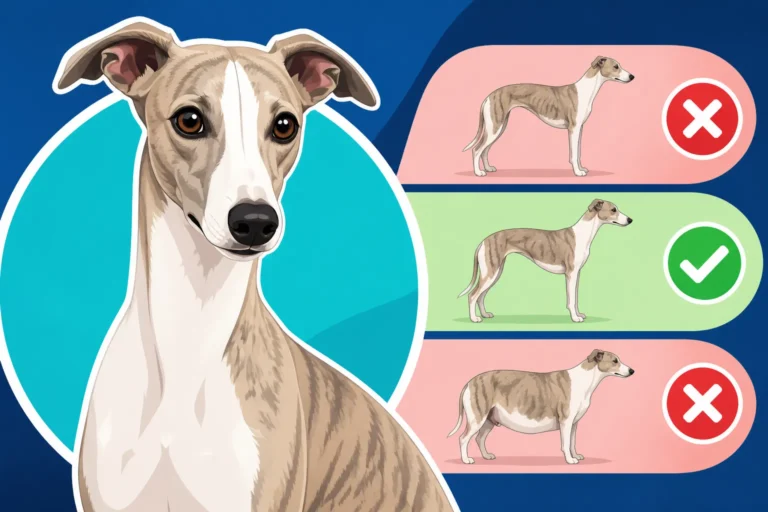
For a healthy Whippet, you should aim for a BCS of 4 or 5 out of 9 (or 2.5 to 3 out of 5 on a simpler scale). Here’s how you can check:
- Ribs: You should be able to easily feel the ribs without having to press hard. The last two or three ribs might even be visible with the naked eye, especially when your Whippet is standing or stretching. They shouldn't be sharply protruding, but distinct. This aligns with How Many Ribs Should Show on a Whippet.
- Spine: You should be able to feel the individual vertebrae of the spine without excessive padding, but they shouldn't feel sharply angular or prominent like a row of knuckles.
- Hip Bones: The hip bones (pelvic bones) should be easily felt and often slightly visible, particularly from above or when your dog moves.
- Waist: When viewed from above, your Whippet should have a distinctly visible waist that tucks in sharply behind the rib cage.
- Abdominal Tuck: From the side, their abdomen should clearly tuck up from the bottom of the rib cage towards the groin. This deep tuck is a hallmark of the breed.
If your Whippet's ribs, spine, and hip bones are too prominent, feeling sharp and bony with no discernible muscle definition, or if their energy levels are low, then it might be time for a vet check. But simply being able to see or easily feel these bones is normal for the breed. What Body Condition Score a Whippet Should Be is something your vet can help you determine accurately.
Nutritional Strategies for Maintaining Optimal Weight
Maintaining a healthy weight for a Whippet often involves a balance of high-quality nutrition and appropriate exercise. Despite their speed, Whippets are often described as "40 mph couch potatoes," meaning they do best with short bursts of intense exercise followed by long periods of rest. This isn't a breed that needs endless hours of jogging to stay fit. Twenty minutes of vigorous play or a good sprint at a Where a Whippet Can Safely Run Off Leash can be enough to satisfy their exercise needs.
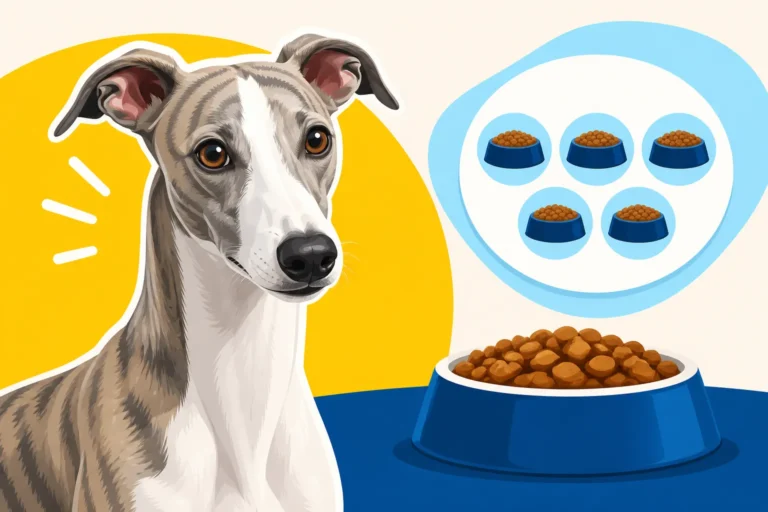
When it comes to feeding, quality matters more than quantity. Whippets generally don't require massive amounts of food, but what they do eat needs to be nutrient-dense.
- High-Quality Diet: Choose a premium dog food that lists a meat source as the first ingredient. Many Whippets thrive on diets with moderate protein and fat content. If you're looking for a convenient way to get high-quality, fresh ingredients, services like Ollie offer customizable meal plans that can be excellent for picky eaters or those needing specific dietary support. For a wider range of options, including specialized performance foods if your Whippet is very active, online retailers like Chewy are excellent resources.
- Consistent Meal Times: Feeding two meals a day is typical for adult Whippets. Consistency helps regulate their metabolism.
- Monitoring Weight: Regular weigh-ins (every few weeks) can help you track any significant changes. Pay attention to their energy levels, coat condition, and stool quality, all of which are indicators of overall health.
- Treats and Supplements: Use treats judiciously to avoid adding unnecessary calories. If your vet recommends supplements, such as fish oil for coat health or joint support for an older Whippet, you can find a wide variety of reputable brands on platforms like Amazon.
- When to Consult a Vet: If you truly struggle to keep weight on your Whippet, or if they suddenly lose weight without an obvious reason, consult your veterinarian. They can rule out underlying health issues like parasites, dental problems, or metabolic conditions. Sometimes, a "picky eater" might have an underlying issue. Your vet can also advise on Keeping Weight On a Whippet Without Making It Fat and help you understand What a Vet Says About a Whippet's Weight.
Remember, a healthy Whippet is a lean Whippet. Their elegance and speed are directly linked to their specific body composition. Next time a stranger comments, you can confidently explain that your Whippet is perfectly healthy – just built a little differently than most dogs!
Disclaimer
This article is for general informational purposes only and does not constitute professional advice. Laws, prices and regulations vary by location and change over time. Consult a qualified professional for guidance on your specific situation.