Bloat in a Whippet
Few things strike terror into a Whippet owner's heart quite like the word 'bloat.' This isn't just an upset tummy; it's a terrifying, life-threatening emergency that can strike without warning in deep-chested breeds like our beloved sighthounds. Navigating this health crisis requires quick thinking and preparation. This guide will walk you through what bloat is, how to spot the crucial early signs, what urgent steps you need to take, and practical prevention strategies to protect your Whippet from this silent, swift killer.
Understanding Bloat in Whippets: What It Is and Why It's Terrifying
The fear of bloat, or Gastric Dilatation-Volvulus (GDV), is a heavy one for many dog owners, particularly those of us with Whippets. It’s not just a case of feeling full after a big meal; it’s a sudden, aggressive, and often fatal condition that demands immediate veterinary intervention. Knowing what you're up against is the first step in being prepared, even though the thought of it can be utterly chilling.
The Mechanics of Gastric Dilatation-Volvulus GDV
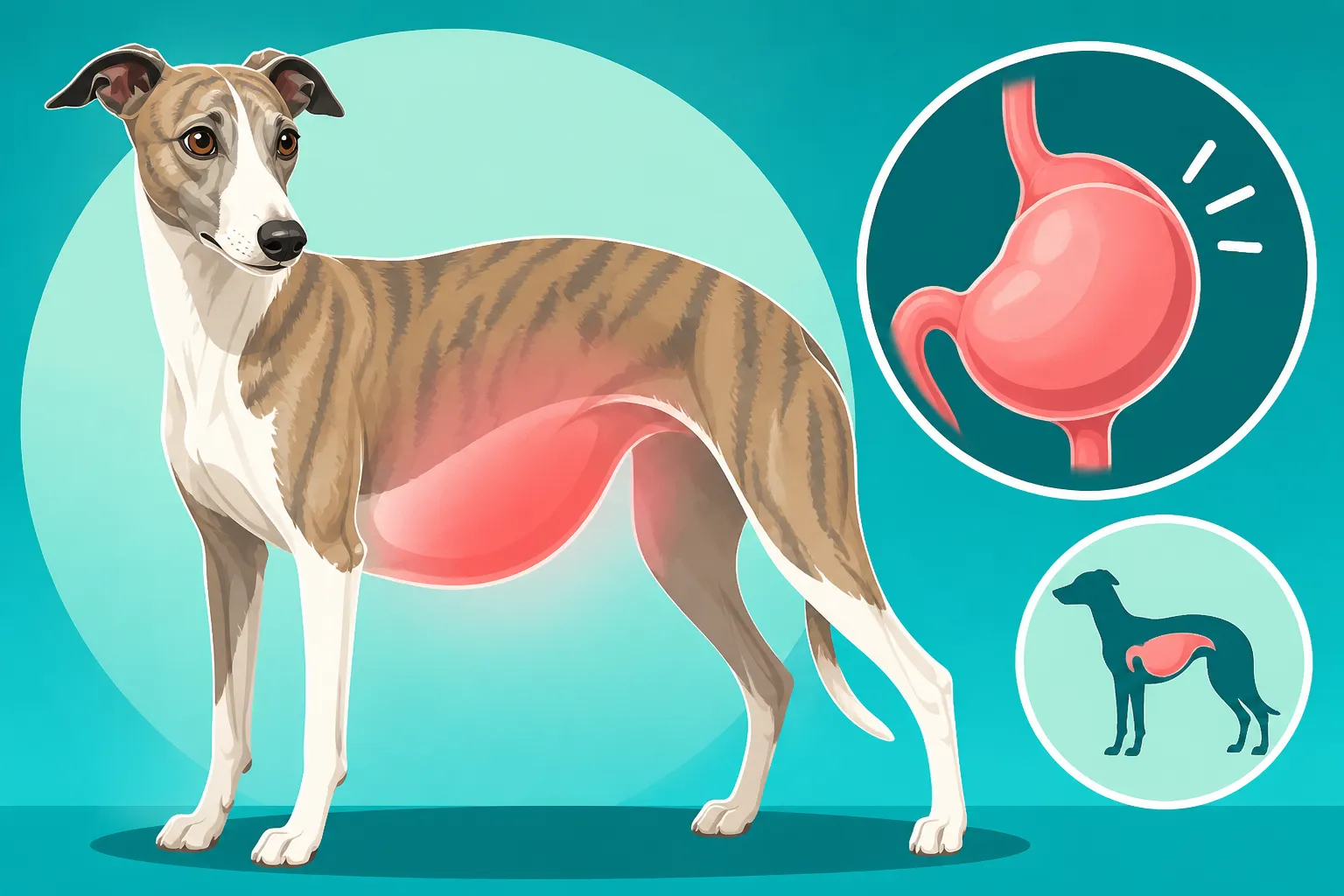
At its core, GDV involves two primary events: gastric dilatation (the stomach fills with gas and fluid, expanding dramatically) and volvulus (the stomach twists on its axis, often 180 to 360 degrees). When the stomach twists, it effectively seals off both the entrance and exit, trapping gas, food, and fluids inside. This isn't just uncomfortable; it's a catastrophic internal event.
The real danger comes from the twisting itself. This rotation cuts off the blood supply to the stomach, causing tissue death, and often kinks other vital blood vessels, including the major vein returning blood to the heart. This leads to a rapid drop in blood pressure, shock, and can severely impact other organs. The stomach also presses against the diaphragm, making it incredibly difficult for your Whippet to breathe. It’s a cascading failure that can progress from seemingly fine to critical in a matter of minutes or a few hours, leaving you with very little time to act.
Why Whippets Are at Risk
While any dog can technically bloat, certain breeds are genetically predisposed, and unfortunately, our Whippets fall into this category. Their deep, narrow chests are a significant anatomical risk factor. Imagine their stomach suspended in a large cavity with plenty of room to swing and rotate when distended. This body shape is common in sighthounds and is thought to contribute to the likelihood of the stomach twisting once it fills with gas.
Beyond anatomy, the active lifestyle many Whippets enjoy can also play a role. A high-energy romp too soon after eating can, in some cases, contribute to the stomach moving around excessively. While we cherish their bursts of speed and playful nature, we also need to be mindful of activities around meal times. Factors like eating too quickly, stress, or even consuming certain types of food (though research is ongoing) are also thought to increase risk, making it a complex issue with no single, clear cause. Understanding these risks, even if we can't eliminate them entirely, helps us be more vigilant.
Recognizing the Early Warning Signs of Bloat
The insidious nature of bloat is that its early signs can be subtle and easily mistaken for general discomfort. However, for a Whippet owner, recognizing these crucial initial indicators can be the difference between life and death. You need to be a detective, constantly attuned to your dog's normal behavior so you can spot anything amiss right away. Don't fall into the trap of thinking it's just a bellyache; with bloat, time is truly of the essence.
Behavioral Changes and Discomfort
One of the first things you might notice is a change in your Whippet's demeanor. They might become restless, pacing around the house, unable to settle down or find a comfortable position. This isn't just typical Whippet "zoomie" restlessness; it's an anxious, persistent inability to relax. They might frequently look at their side or abdomen, almost as if trying to communicate that something is wrong. You might observe whining, groaning, or other unusual vocalizations that signal discomfort and pain.
This distress can escalate quickly. A normally calm dog might seem panicked or withdrawn, avoiding interaction. They might refuse to lie down, or if they do, they might get up again quickly. Any combination of these behavioral changes, especially after a meal or a period of activity, should raise a red flag. Trust your gut; you know your Whippet best, and if something feels off, it probably is.
Physical Symptoms to Watch For
As bloat progresses, the physical signs become more pronounced and alarming. The most characteristic symptom is a distended abdomen, which might appear visibly swollen, particularly on one side. This isn't always obvious in very early stages, so don't wait for a huge belly to confirm your suspicions. The abdomen might also feel hard or tight to the touch.
Perhaps the most classic and terrifying sign is unproductive retching or dry heaving. Your Whippet will try desperately to vomit, gagging and heaving forcefully, but nothing will come up except perhaps a small amount of foamy saliva. This indicates that their stomach is twisted and sealed. Other signs can include excessive drooling, pale gums (a sign of shock), rapid heart rate, and increased respiratory effort. As their condition worsens, your Whippet may become weak, collapse, and show signs of extreme pain. At this stage, minutes count. Every second you delay seeking professional help drastically reduces their chances of survival.
Here’s a quick checklist to help you identify potential bloat symptoms and gauge their urgency:
| Symptom | Description | Urgency Level |
|---|---|---|
| Restlessness/Pacing | Your Whippet can't get comfortable, keeps moving, appears anxious. | High |
| Unproductive Retching | Trying to vomit, dry heaving, nothing comes up (or just foam). | CRITICAL |
| Distended Abdomen | Swollen, tight, or hard belly, especially on one side. Can be subtle initially. | CRITICAL |
| Excessive Drooling | More than usual, sometimes thick or stringy. | High |
| Whining/Groaning/Pain | Unusual vocalizations, sensitivity when touched near the abdomen. | High |
| Pale Gums | Gums appear lighter than normal pink, possibly white. | CRITICAL |
| Rapid Heart Rate | Heart beating faster than normal, often a sign of shock. | CRITICAL |
| Weakness/Collapse | Inability to stand, disorientation, severe lethargy. | EMERGENCY |
| Shortness of Breath | Labored breathing, rapid shallow breaths. | High |
| Looking at Flanks/Abdomen | Your Whippet repeatedly turns its head to look at its stomach area. | Medium-High |
Emergency Action: What to Do If You Suspect Bloat
This is the part that no Whippet owner ever wants to experience, but being mentally prepared can make all the difference. When bloat strikes, there's no time for hesitation or second-guessing. It's a true medical emergency, and your immediate, decisive actions are paramount for your dog's survival. Forget internet searches or home remedies; your only priority is getting to an emergency veterinary clinic.
The Critical Race Against Time
If you suspect bloat, even slightly, you must treat it as a dire emergency. Do not wait to see if the symptoms improve, do not try to induce vomiting, and do not waste precious moments wondering if it’s "bad enough." Bloat is not something you can ride out. The condition can deteriorate from bad to fatal in a matter of minutes or a few hours. This means immediate veterinary attention is non-negotiable.
Before you ever face this situation, you should already know the location and phone number of your nearest 24-hour emergency veterinary clinic. Have it programmed into your phone, taped to your fridge, and perhaps even in your Whippet's emergency kit. When symptoms appear, call them on your way, or have someone else call, to alert them that you are coming with a suspected bloat case. This allows them to prepare their team and equipment for your arrival, saving critical minutes. Remember that a delay of even an hour can drastically reduce survival rates.
Preparing for the Vet Visit
Once you're on your way to the vet, stay as calm as possible for your Whippet's sake. Keep them comfortable in the car – perhaps with a favorite blanket or bed – but understand they will likely be distressed. When you arrive, be ready to provide key information: when you first noticed symptoms, what those symptoms were, when your Whippet last ate and drank, and any recent changes in their routine or food. Every detail can help the veterinary team piece together the situation quickly.
At the clinic, the veterinary team will perform an immediate physical examination and typically take X-rays of your Whippet's abdomen to confirm if the stomach is dilated and twisted. If GDV is confirmed, the treatment involves immediate stabilization, which may include IV fluids for shock, pain medication, and potentially trying to decompress the stomach with a tube. However, the definitive treatment is surgery. During this surgery, the stomach is untwisted (detorsion) and then often permanently attached to the abdominal wall (gastropexy) to prevent it from twisting again in the future. This prophylactic gastropexy is a lifesaver, and understanding the risks and benefits of such a procedure is crucial, especially for a high-risk breed. Any surgery, especially emergency surgery, comes with its own considerations, and it’s important your vet follows a proper Why a Whippet Needs a Sighthound Anesthesia Protocol to ensure the best outcome. Preparing for such an event can also mean considering What Insuring a Whippet Costs Monthly as these emergency procedures are often expensive. Thinking about your Whippet's long-term care and The Twelve to Fifteen Years a Whippet Lives you hope to share, it becomes clear that preparation is key.
Prevention Strategies: Minimizing the Risk of Bloat
While we can't completely eliminate the risk of bloat in a susceptible breed like the Whippet, there are definite strategies we can employ to significantly reduce its likelihood. These aren't just guesses; they're based on extensive research and veterinary recommendations. Incorporating these simple changes into your Whippet's daily routine can provide you with some peace of mind and, more importantly, protect your beloved companion.
Feeding Practices That Help
How and what your Whippet eats can have a substantial impact on their bloat risk. Instead of feeding one large meal a day, break their daily ration into two or three smaller meals. This prevents the stomach from becoming excessively full all at once, which is a major contributing factor to dilatation. Many Whippet owners, accustomed to their dogs being Feeding a Whippet That Sprints and Then Sleeps, find this schedule also helps maintain energy levels throughout the day.
Another critical step is to slow down rapid eaters. If your Whippet inhales their food in seconds, consider using a slow-feeder bowl or a puzzle feeder. These devices make it harder for your dog to gulp down food, reducing the amount of air they swallow along with their meal. Avoid strenuous exercise immediately before or after meals. Give your Whippet at least an hour to digest before or after any vigorous activity. This reduces the chances of the stomach moving excessively when it's full. There's also some debate about elevated food bowls; while once thought to prevent bloat, some studies, particularly in large, deep-chested breeds, have suggested they might actually increase the risk. It's best to discuss this with your vet, but generally, feeding at ground level is now often recommended for at-risk breeds.
Considering a Prophylactic Gastropexy
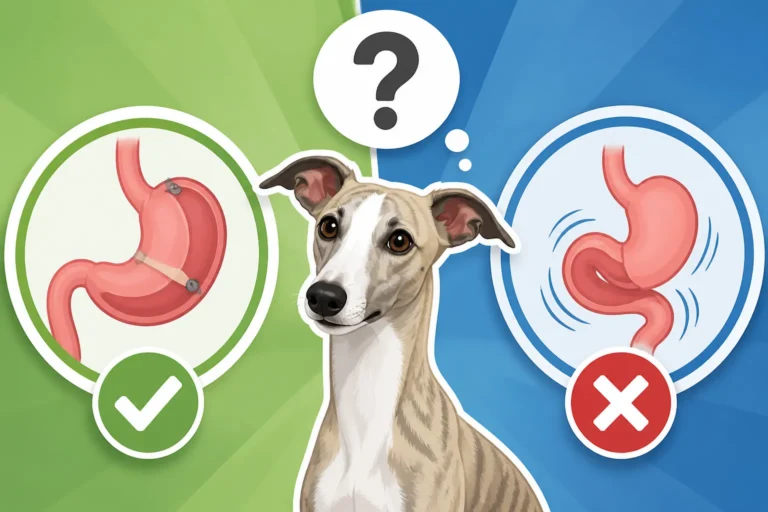
For many owners of high-risk breeds, a prophylactic gastropexy is a serious consideration. This surgical procedure involves permanently tacking or stitching the stomach to the abdominal wall. The stomach can still dilate (fill with gas), but it cannot twist (volvulus), thus preventing the most life-threatening aspect of GDV. It essentially takes the "V" out of GDV.
This procedure is often performed at the same time as a spay or neuter, especially in younger Whippets, or can be done as a standalone laparoscopic procedure with minimal invasiveness. While it is still surgery, the risks are far lower when performed preventatively on a healthy dog compared to an emergency situation when the dog is already in shock. The peace of mind this offers can be invaluable, knowing you've eliminated the twisting risk. It's an investment in your Whippet's future health and can save their life. Many pet insurance providers, such as Healthy Paws, offer coverage for preventive procedures like gastropexy, which can make this proactive step more accessible. Remember, even with a gastropexy, it's still good practice to follow sensible feeding routines to minimize stomach dilation. Before any surgical procedure, including a gastropexy, it's wise to ensure your vet performs Whether a Whippet Needs Pre Anesthetic Bloodwork and has a plan for Warming a Whippet During Surgery, given sighthounds' unique physiological responses.
Lifestyle Adjustments and Stress Reduction
Beyond feeding, general lifestyle choices can also contribute to a lower risk. Maintaining a calm and consistent feeding environment can reduce stress-related gulping. If your Whippet is prone to anxiety, consider ways to manage their stress, as stress is thought by some to be a potential trigger for bloat. Ensuring they always have access to fresh water is also crucial. Hydration is vital for overall digestive health and can help prevent issues.
Think about the general daily routine for your Whippet, encompassing What a Whippet Needs Every Day. While their desire to sprint is undeniable, particularly if they're used to running as hard as Thirty Five Miles an Hour and No Brakes on a Whippet's Recall, make sure these bursts of activity are not immediately surrounding meal times. If your Whippet is prone to tearing their delicate skin, which often The Thin Skin That Sends a Whippet to the Vet for Stitches, you're likely already on high alert for any physical injury. This same vigilance should extend to internal health concerns like bloat. Being proactive with these measures can provide your Whippet with the best chance for a long, healthy, and bloat-free life.
Disclaimer
This guide is intended for informational purposes only and is not a substitute for professional veterinary advice. If you suspect your Whippet is experiencing bloat or any other medical emergency, please contact your veterinarian or a 24-hour emergency veterinary clinic immediately. Do not attempt to self-diagnose or treat the condition at home.