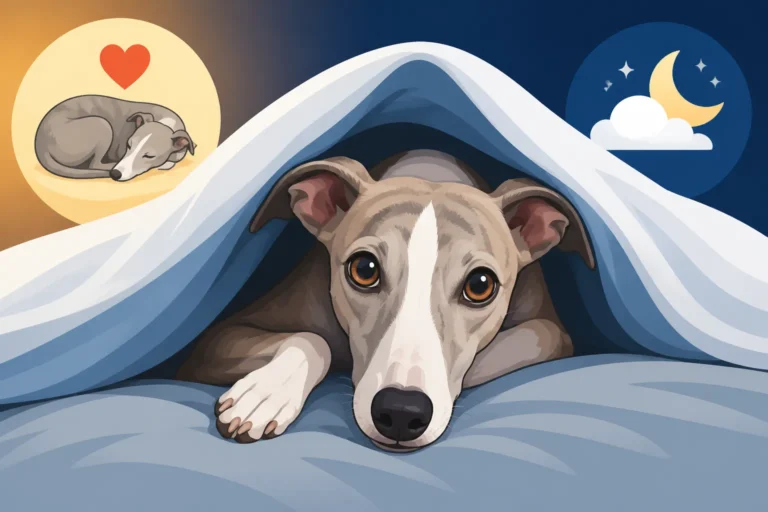
Why a Whippet Howls
One of the most unique and, let's be honest, sometimes baffling things about living with a Whippet is their vocalizations – especially that mournful, almost operatic howl. You've probably found yourself wondering, "Why on earth is my usually quiet, cuddly companion suddenly sounding like a wolf?" It can be frustrating, confusing, and even a little concerning when your elegant sighthound belts out a tune. This guide is here to shed light on the various reasons behind your Whippet's howling and offer practical, empathetic advice on how to understand and manage it.
Unpacking the Mystery: Why Do Whippets Howl Anyway?
It’s easy to think of howling as something only wild canids do, or perhaps large, fluffy breeds like Huskies. But our sleek Whippets, with their deep chested builds and quiet dispositions, also have this primal vocalization in their repertoire. When a Whippet howls, it’s rarely just noise; it’s a form of communication, a way for them to express a range of emotions or react to their environment. For us, their human companions, it can be a real head-scratcher to figure out what they’re trying to tell us.
The Echoes of Ancestry: Sighthound Vocalizations
Let’s not forget, Whippets are sighthounds, and while they might be distant cousins to the wolves of the wild, some of those ancient instincts still echo through their behavior. Howling is a fundamental vocalization in the canine world, often used to communicate over long distances, signal presence, or rally the pack. While your Whippet probably isn't trying to call their wild cousins to dinner, that deep-seated instinct to use a long, resonant sound to connect or react is still there.
Unlike many terrier or herding breeds known for their incessant barking, Whippets are generally on the quieter side. They're not typically the type to bark at every leaf blowing past the window. This makes their howling all the more noticeable when it happens. It's often a more deliberate, significant sound for them, and understanding its roots in their sighthound heritage can help us appreciate it for what it is: a powerful, albeit sometimes inconvenient, form of expression. Think of it as their way of saying something important, not just chattering.
It's Not Always a Cry for Help: Understanding Different Howls
Before we dive into specific triggers, it's crucial to understand that not all howls are created equal. Just like humans have different tones of voice for different situations, a Whippet's howl can vary in pitch, duration, and intensity, each potentially signaling something different. A short, sharp "oof-howl" might be a sudden reaction, while a long, drawn-out wail could indicate profound distress.
Many owners, myself included, have learned to distinguish between these nuances over time. Is it a high-pitched, almost operatic sound that rises and falls? Or a deeper, more urgent tone? Observing the context – what’s happening right before, during, and after the howl – is key. A howl might be a joyous announcement, a frustrated plea, or even a pain response. It's our job to become amateur Whippet linguists, listening closely to their unique vocabulary. Sometimes, you might even hear a subtle difference between a "hey, I see a squirrel!" howl and an "oh no, you left me alone!" howl.
The Specific Messages Behind Your Whippet's Howls
Now, let's get down to the nitty-gritty and explore the most common reasons your Whippet might be howling. Understanding these specific messages is the first step towards addressing the behavior effectively.
The "Pay Attention to Me!" Howl
This is perhaps one of the most common reasons for any dog to vocalize excessively, and Whippets are no exception. They are incredibly people-oriented dogs who thrive on companionship and interaction. If they feel like they're being ignored, or if they want something – food, a walk, a cuddle – and their usual nudges or soft barks aren't working, they might escalate to a howl.
Imagine this scenario: you're engrossed in a book or a TV show, and your Whippet, who has been patiently waiting for attention, decides enough is enough. They might start with a gentle poke of their nose, then perhaps a soft whimper. If that doesn't get a reaction, a deliberate, resonant howl might just do the trick. For some Whippets, they've learned that a howl gets a swift response, even if that response is you telling them to be quiet. To them, any attention is good attention. If you consistently reward howling with attention, even negative attention, you're inadvertently teaching them that howling is an effective way to get what they want. You might notice this behavior escalates around meal times or when you're getting ready to go for a walk. This is a learned behavior, and like all learned behaviors, it can be unlearned.
The "I Heard That!" Response Howl
Whippets, like many sighthounds, have excellent hearing. They can pick up sounds that are completely imperceptible to our human ears, and sometimes, a howl is simply their way of responding to those distant noises. This could be anything from a faraway siren, another dog howling in the neighborhood, a child screaming down the street, or even a specific frequency on a TV show.
My own Whippet, for instance, has a particular disdain for the ice cream truck song and certain opera music on television. The moment those sounds hit her ears, she'll often let out a series of responsive howls, almost as if she's saying, "I hear you, and I acknowledge your presence!" It's a natural, almost involuntary reaction for many dogs, especially those with a strong pack instinct. They're essentially broadcasting their location or responding to what they perceive as another dog's call. It’s a very common reason for a sudden, seemingly unprovoked howl. Often, if the sound stops, so does the howling. How a Whippet Reacts to the Doorbell is another example of how external sounds can trigger a Whippet's vocal responses.
The "I'm Alone and Unhappy" Howl: Separation Anxiety
This is perhaps one of the most heartbreaking reasons for a Whippet to howl. Whippets are incredibly devoted to their families and can form very strong attachments. If they are left alone for periods that feel too long or if they haven't been properly accustomed to solitude, they can develop separation anxiety. Howling is a classic symptom of this distress.
When a Whippet with separation anxiety is left alone, their howls are not about getting attention; they are genuine expressions of panic, fear, and loneliness. These howls are usually continuous, mournful, and can last for extended periods, escalating in intensity. They might be accompanied by other distress behaviors like destructive chewing, inappropriate urination or defecation, or pacing. This isn't your Whippet being "naughty"; it's a genuine cry for help from a dog experiencing real emotional pain. It's a critical sign that needs to be addressed with patience and understanding. Understanding Separation Anxiety in a Whippet is crucial if you suspect this is the cause.
The "Something Hurts" or "I Don't Feel Well" Howl
While less common for howling specifically, any unusual vocalization, including howling, can sometimes be an indicator of pain, discomfort, or an underlying medical issue. Whippets are generally stoic dogs and can hide signs of pain well, but a sudden onset of howling, especially if it seems unprovoked and out of character, should always prompt a closer look.
If your Whippet is howling seemingly without a clear trigger, and particularly if it's accompanied by other changes in behavior like lethargy, loss of appetite, limping, or sensitivity to touch, a trip to the vet is definitely in order. They might be experiencing internal discomfort, joint pain, dental issues (though they also tend to hide The Age a Whippet Starts Losing Teeth), or any number of health problems that manifest as vocal distress. Always rule out medical causes first, especially if the howling is new and persistent. It's better to be safe than sorry when it comes to your beloved companion's well-being.
Practical Strategies for Managing Excessive Howling
Once you've started to piece together why your Whippet is howling, you can begin to implement strategies to help manage or reduce the behavior. Remember, consistency and patience are your best friends here.
Decoding Your Whippet's Cues and Triggers
The first, and arguably most important, step is becoming a master detective. Keep a journal or simply make mental notes every time your Whippet howls.
| Aspect to Observe | What to Look For | Potential Meaning |
|---|---|---|
| Time of Day | Morning, evening, middle of the night | Could relate to routine, presence of specific sounds, or loneliness |
| Environment | Indoors, outdoors, specific room, near a window | Suggests response to external stimuli or feeling confined/isolated |
| Accompanying Actions | Pacing, staring, tail wagging, scratching, restlessness | Provides clues to underlying emotion (e.g., anxiety, boredom, need) |
| Recent Events | Just left the house, heard a siren, saw a person/animal | Direct correlation to a specific trigger |
| Your Response | Did you react immediately? Ignore? Scold? | Helps identify if the behavior is being inadvertently reinforced |
This detective work helps you identify patterns. Does your Whippet only howl when a certain delivery truck goes by? Or only when you leave for work? Is it an "I need to go potty!" howl? Or an "I'm bored!" howl? Understanding these nuances is crucial for tailoring your approach. For instance, if you notice the howling starts after you’ve been out for a certain period, that points strongly towards separation issues. If it's always when you're on the phone, it’s likely an attention-seeking behavior.
Training Techniques to Reduce Unwanted Howling
Once you know the "why," you can apply targeted training. For attention-seeking howling, the key is to never reward the howling with attention. This is incredibly difficult, especially when you're trying to work or sleep, but it's vital. When your Whippet howls for attention, turn your back, walk away, or leave the room. Only give them attention when they are quiet. This teaches them that calm, quiet behavior gets them what they want. You might find a dog camera (like those compatible with Amazon Alexa) helpful for monitoring and even interacting remotely during this process.
For reactive howling (e.g., sirens, other dogs), counter-conditioning can be effective. When you anticipate a trigger (e.g., you hear a siren approaching), immediately distract your Whippet with a highly valued treat or toy. The goal is to change their emotional response from "howl at the scary sound" to "look to me for a treat when I hear that sound." Gradually, they'll associate the trigger with something positive rather than something that warrants a vocal response.
Consider enrolling in positive reinforcement obedience classes. Even though Whippets have a reputation for being sensitive, positive training methods work wonderfully for them. Brands like BAXTER & Bella offer online resources that can be incredibly helpful for learning these techniques from home, at your own pace. Using treats and praise to reward quiet behavior can make a huge difference. Remember, How a Whippet Learns When It Bruises From Pressure means harsh methods are definitely out of the question for these sensitive souls.
Creating a Calming and Secure Environment
A comfortable and secure environment can go a long way in reducing anxiety-induced howling. Whippets adore comfort; they have very little body fat, so plush bedding is a must. Providing a cozy, designated safe space, like a soft crate or a bed in a quiet corner with a blanket, can make a huge difference. If your Whippet suffers from separation anxiety, this safe space can become their den where they feel protected when you're away. Make sure it's always inviting, never used for punishment. Whether a Whippet Should Sleep Under a Blanket is a resounding yes for many owners, as it provides comfort and a sense of security.
For Whippets struggling with being left alone, creating a "den" can be really helpful. A soft, comfortable crate with a blanket over it can feel very secure. You can also try leaving on calming music, a podcast, or the TV (consider a smart speaker like an Amazon Echo playing gentle tunes) to provide some background noise and mask external triggers. Puzzle toys or long-lasting chews filled with their favorite treats can also distract them and associate alone time with positive experiences. For some dogs, a synthetic pheromone diffuser can also help create a sense of calm in the home. Make sure they have a comfortable place to rest, as Why a Whippet Needs Soft Bedding Everywhere is not just a luxury, but a necessity for preventing pressure sores.
When Your Whippet's Howling Calls for Professional Intervention
Sometimes, despite your best efforts, the howling persists or even worsens. This is especially true if you suspect separation anxiety is the primary cause, as it can be a complex and deeply distressing issue for dogs.
If your Whippet's howling is continuous, severe, causing significant distress to them (and you!), or if it's accompanied by destructive behavior, house soiling, or self-harm when left alone, it's definitely time to seek professional help. This isn't a sign of failure on your part, but rather an acknowledgment that some behavioral issues require expert guidance. A certified professional dog trainer or a veterinary behaviorist can provide invaluable support.
They can help you accurately diagnose the underlying cause of the howling, especially if it's a deep-seated anxiety or fear. They'll work with you to develop a tailored behavior modification plan, which might include specific counter-conditioning exercises, desensitization techniques, and management strategies. In some severe cases of separation anxiety, a veterinary behaviorist might even suggest medication to help manage the panic while you work through the behavioral training. Remember, asking for help shows you're committed to your Whippet's well-being and happiness. Investing in their emotional health is just as important as their physical health.
Disclaimer
This article is for general informational purposes only and does not constitute professional advice. Laws, prices and regulations vary by location and change over time. Consult a qualified professional for guidance on your specific situation.