Whether a Whippet Should Run on Hard Ground
It’s a common sight: a Whippet, a blur of motion, flying across a field, muscles rippling under that famously thin coat. There’s nothing quite like watching their sheer joy and explosive speed. But as a responsible Whippet owner, you’ve probably found yourself wondering about the surfaces they run on. Is that concrete path or even hard-packed dirt really safe for their delicate build? You're not alone in that concern; many Whippet parents worry about the impact of hard ground on their dog's long-term health, and this guide is here to unravel those worries and help you make the best choices for your speedy companion.
The Impact of Hard Surfaces on a Whippet's Anatomy
Whippets are marvels of engineering, built for incredible speed and agility. Their slender bones, powerful muscles, and flexible spines are all designed to propel them forward with minimal effort and maximum velocity. However, this specialized physique also comes with certain vulnerabilities, especially when it comes to the surfaces they interact with at high speeds. Unlike some heavier, more robust breeds, a Whippet's frame isn't cushioned by a thick layer of fat or dense muscle mass, leaving their skeletal system and soft tissues more exposed to the harsh realities of unforgiving ground.
Fragile Bones and Joints Under Pressure
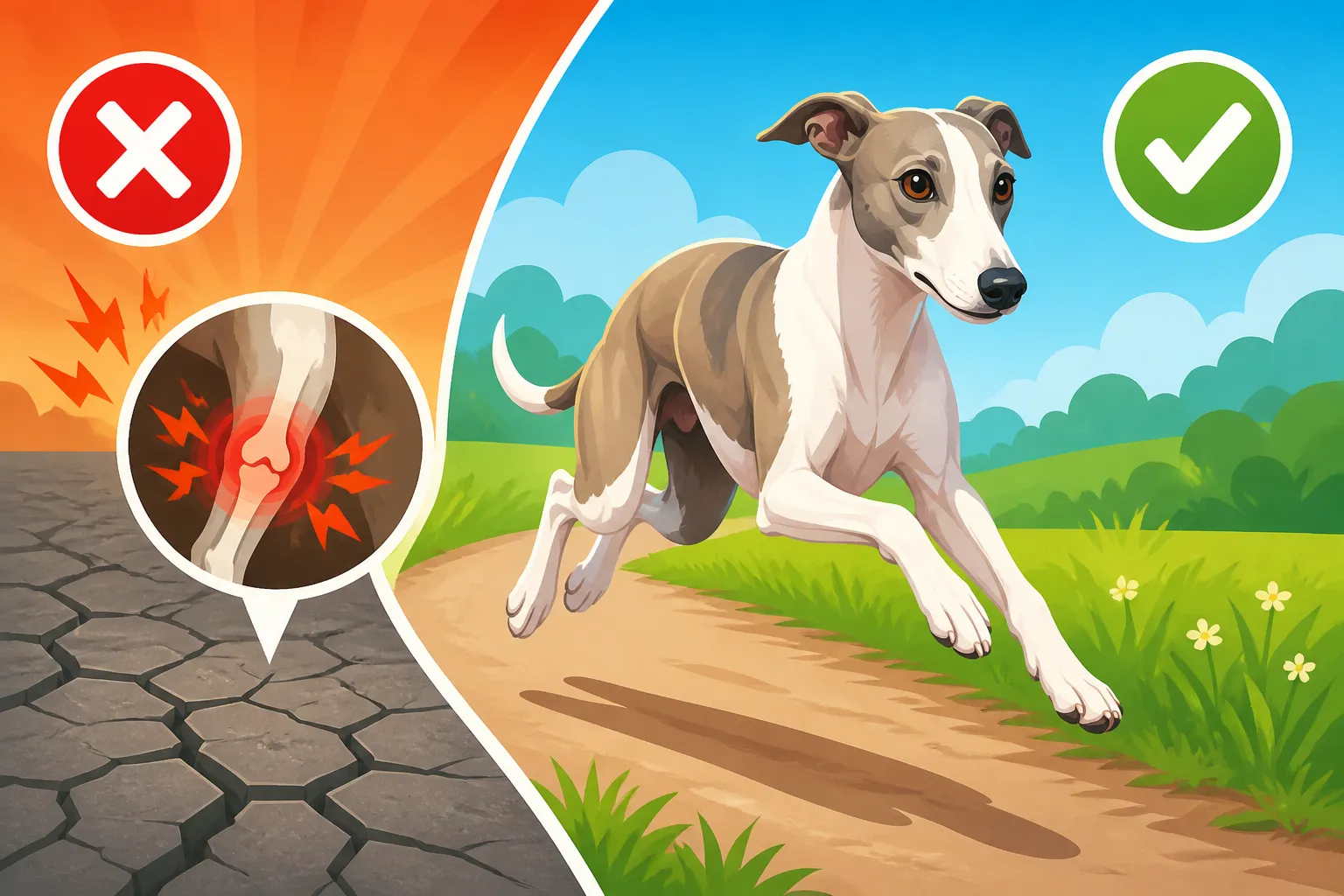
Imagine trying to sprint full-out on concrete versus a soft, grassy track. You'd instinctively know the concrete is harder on your knees and ankles. The same principle, amplified, applies to a Whippet. Their bones are elegant and fine, not thick and heavy. While incredibly strong for their purpose—bursts of acceleration and agile turns—they are not designed for the constant, jarring impact of hard surfaces. When a Whippet runs at top speed on concrete, asphalt, or even very hard-packed dirt, each stride sends a shockwave up their legs, through their joints, and into their spine.
Over time, this repetitive stress can lead to micro-traumas in the joints, particularly in the ankles, knees, and hips. The cartilage that acts as a natural shock absorber can begin to wear down prematurely, leading to inflammation and pain. For puppies, who are still growing, the risks are even greater. Their growth plates, which are areas of soft, developing cartilage at the ends of long bones, are extremely vulnerable to injury. High-impact activities on hard surfaces during these critical developmental stages can cause permanent damage, leading to lifelong lameness or abnormal bone development. It's why so many breeders and vets advise caution and suggest specific guidelines for Raising a Whippet Puppy Without Wrecking Its Joints. We want our puppies to grow strong, not to set them up for early joint issues.
Soft Tissue Strains and Abrasions
It’s not just bones and joints that take a beating. The soft tissues – muscles, tendons, and ligaments – are equally susceptible to injury on hard ground. When a Whippet sprints, their muscles contract powerfully, and their tendons and ligaments stretch and recoil to propel them. On a soft surface, the ground gives slightly, allowing for a more forgiving landing and push-off. On a hard surface, however, the resistance is unyielding. This can cause the muscles to work harder, increasing the risk of strains and tears. Sudden stops, sharp turns, or even just repeated powerful strides on a rigid surface can lead to painful Muscle Pulls in a Whippet, often in the powerful hindquarters or the delicate hock area.
Furthermore, a Whippet's skin is famously thin, particularly on their legs, chest, and flanks. This lack of protective padding means that even a minor tumble or scrape on a rough, hard surface can result in a significant injury. A slip on asphalt can easily lead to deep abrasions, sometimes requiring veterinary attention and stitches. We’ve all seen how easily a Whippet can pick up a nick or tear, and this is compounded when they're running at speed on unforgiving terrain. That delicate skin, while contributing to their aerodynamic form, also means you’re often dealing with The Thin Skin That Sends a Whippet to the Vet for Stitches more often than you might with other breeds if they encounter sharp objects or rough falls. It’s not uncommon to hear tales of minor mishaps turning into emergency vet visits because of the depth of a skin tear.
Where a Whippet Naturally Thrives: The Ideal Running Environment
Understanding a Whippet's origins and natural predatory behaviors helps us appreciate the kind of environment their bodies are truly designed for. They were bred for speed and the chase, often across open fields and uneven terrain. This isn't just about tradition; it's about biomechanics. Their bodies are optimized for certain conditions, and replicating those as closely as possible is key to their long-term health and happiness.
The Spring of Natural Terrain
Think about a Whippet bounding through a grassy meadow or streaking across a sandy beach. These natural surfaces provide crucial shock absorption that pavement simply cannot. Each footfall sinks slightly, dissipating the impact forces across the ground rather than having them rebound directly back into the dog's limbs. This "spring" in the ground protects their joints, muscles, and bones from excessive wear and tear. It allows their elegant frame to function as intended, absorbing the impact of their powerful strides in a way that minimizes stress.
Running on grass also engages different muscle groups and proprioceptive senses (the body's awareness of its position in space) more effectively than running on a flat, even surface. The slight irregularities of the ground force their muscles to constantly adjust, improving balance, coordination, and overall athletic conditioning in a healthy, low-impact way. It’s not just about speed; it’s about fluid, resilient movement, which is what a Whippet's body excels at. This is the environment where their bursts of speed, their famous "zoomies," can truly be enjoyed without undue risk.
The Dangers of Unseen Hazards on Paved Paths
Beyond the sheer impact, paved surfaces present a host of other dangers that natural ground largely avoids. One of the most immediate concerns is temperature. Asphalt and concrete absorb and retain heat, becoming incredibly hot on sunny days. You might not feel it through your shoes, but a Whippet's delicate paw pads are directly exposed to these extreme temperatures, leading to burns and blisters. Always remember the "seven-second rule": if you can't comfortably hold your hand on the pavement for seven seconds, it's too hot for your dog's paws.
Another significant hazard is debris. Paved paths, sidewalks, and roads are often littered with sharp objects like broken glass, discarded nails, gravel, or even thorns that can easily cut through a Whippet's relatively thin paw pads. These injuries are not only painful but can become infected, leading to further complications. Moreover, chemicals like antifreeze, oil, or road salt, which are common on paved surfaces, can be toxic if ingested or cause irritation to paws. Finally, the smooth, hard nature of pavement offers less traction, especially when wet or icy. A Whippet, with its powerful acceleration and quick turns, can easily slip and slide, leading to awkward falls, sprains, or even more severe injuries, similar to the risks associated with The Muscle a Whippet Tears Sliding on Wet Grass.
Safely Exercising Your Whippet: Best Practices for Happy Zoomies
It's clear that hard surfaces aren't ideal for vigorous Whippet exercise, but that doesn't mean your dog needs to live in a bubble. The key is to be mindful, make informed choices, and prioritize their safety and long-term health. There are plenty of ways to let your Whippet stretch their legs and satisfy their need for speed without putting them at undue risk.
Prioritizing Soft, Secure Spaces
The golden rule for Whippet exercise is to seek out soft, secure, and spacious environments. A large, securely fenced grassy yard is ideal, allowing them to open up into a full sprint without fear of running into traffic or other hazards. Local sports fields, such as soccer or baseball pitches, can also be excellent options during off-peak hours, provided they are well-maintained and free of debris. When considering a dog park, exercise caution; not all dog parks are created equal, and some have hard-packed dirt or gravel that can be detrimental. Always assess the surface and the other dogs present. A calm, well-maintained grass park where your Whippet can run with appropriate playmates is always preferable. If you don’t have access to a fenced area, a long line (a long leash, typically 20-50 feet) can be an excellent tool in a safe, open field, allowing them to run and explore while remaining under your control. This gives them a sense of freedom without the inherent dangers of an unreliable recall around prey animals. Many owners find value in structured training guidance for things like recall and leash manners, and resources like BAXTER & Bella can offer support in building those foundational skills, allowing you to feel more confident in various environments, even if the primary running isn't on pavement.
Smart Roadwork and Pavement Exposure
While sustained high-speed running on hard ground is generally discouraged, this doesn’t mean your Whippet can never touch pavement. Short, controlled walks on sidewalks or paved trails are typically fine and even necessary for socialization and potty breaks. The key is moderation and avoiding intense activity. During these walks, observe your dog's gait and paw health. Avoid sudden stops, sharp pivots, or prolonged sprinting. If you're walking on very rough concrete or asphalt, especially in extreme temperatures, consider protective paw balm or even dog booties. There are many options available on platforms like Amazon that can offer a thin layer of protection for delicate paws, though many Whippets aren't keen on wearing them!
It's about balancing necessary exposure with risk mitigation. Think of it as "roadwork" for a runner – beneficial in measured doses, but not where the main training (or in this case, the main fun!) happens. This also applies to activities like jogging with your Whippet. While some Whippets can make good jogging companions, it's crucial to stick to softer trails and gradually build up their endurance, always observing for signs of discomfort or lameness. Remember that their bodies are built for bursts of speed, not sustained distance running, especially on hard surfaces.
Preparing and Recovering from Activity
Just like human athletes, Whippets benefit immensely from proper preparation and recovery. Before any vigorous exercise session, especially if your Whippet is going to be doing some serious sprinting, take a few minutes for a gentle warm-up. A brisk walk or some light stretching can help get their muscles ready and reduce the risk of strains. This is particularly important for active dogs, and a good routine can prevent many common injuries. Consider reviewing resources on Warming Up a Whippet Before It Runs to ensure you're doing it effectively.
Equally important is a cool-down period after intense activity. Don't let your Whippet go from a full sprint directly to lying down. A gentle walk for 5-10 minutes helps their heart rate return to normal, prevents blood pooling, and aids in muscle recovery. Hydration is also key; always have fresh water available. For active or older Whippets, incorporating joint supplements into their diet might be beneficial. Consult your veterinarian to see if a supplement could support your Whippet’s joint health, especially if they are frequently engaging in high-energy activities. There's a lot to consider regarding Whether a Whippet Needs Joint Supplements, and your vet can provide tailored advice.
Long-Term Consequences and Preventative Care
Our Whippets are family members, and we want them to enjoy a long, healthy, and pain-free life. Understanding the potential long-term consequences of inappropriate exercise surfaces can motivate us to make the best choices now, preventing issues down the road.
The Specter of Early Arthritis and Chronic Pain
One of the most significant long-term risks of repetitive, high-impact running on hard surfaces is the accelerated development of degenerative joint disease, commonly known as arthritis. While arthritis is a natural part of aging for many dogs, chronic stress on the joints from unforgiving ground can bring it on much earlier and make it more severe. Imagine the constant pounding on cartilage, leading to its erosion and subsequent bone-on-bone friction. This can manifest as stiffness, lameness, reluctance to jump or play, and general discomfort. When a Whippet Gets Arthritis can be a heart-breaking time for owners, as it can significantly reduce their quality of life, impacting their ability to enjoy their favorite activities, even just a gentle trot around the yard.
Whippets, being stoic creatures, might not always vocalize their pain, making it crucial for owners to be vigilant for subtle signs. A slight limp after exercise, difficulty rising after a nap, or even a change in their usual enthusiastic demeanor could be indicators of joint pain. Early intervention and preventative measures, like providing soft bedding and choosing appropriate exercise surfaces, can make a world of difference in managing or delaying the onset of these painful conditions.
Regular Health Checks and Awareness
Maintaining your Whippet's overall health requires a proactive approach. Regular veterinary check-ups are essential, allowing your vet to monitor their joint health, assess their gait, and catch any potential issues early. Don’t hesitate to discuss your Whippet’s exercise routine and the types of surfaces they run on with your veterinarian. They can offer personalized advice based on your dog’s age, activity level, and any pre-existing conditions. For example, some vets might recommend specific supplements or even physiotherapy if they notice early signs of joint stress.
Beyond vet visits, you, as the owner, are your Whippet’s best advocate. Pay close attention to how they move. Does their usual happy trot seem a little off? Are they hesitant to climb stairs or jump onto the sofa? Do they seem stiffer in the mornings? These small observations can be crucial clues. Regularly check their paws for cuts, scrapes, or tenderness. Feel their legs and joints gently for any swelling or warmth. Early detection of any issue, whether it's a minor strain or the beginning of joint discomfort, allows for quicker intervention and can prevent a small problem from escalating into a debilitating condition.
Here's a quick comparison of various running surfaces and their suitability for your Whippet:
| Surface Type | Pros | Cons | Recommended Usage for Whippets |
|---|---|---|---|
| Grass (soft) | Excellent shock absorption, natural traction. | Can be uneven, hidden holes/debris, muddy when wet. | Ideal for all high-speed running, fetch, and general exercise. |
| Sand (beach) | High shock absorption, good muscle workout. | Can be tiring, abrasive (sand in pads), hot in sun, salt irritation. | Excellent for controlled sprints, swimming (if they like it). |
| Dirt/Trail | Better shock absorption than pavement, varied terrain. | Can be rocky, roots, uneven, muddy, sharp stones. | Good for walks and moderate jogs, choose smooth trails for sprints. |
| Artificial Turf | Consistent, clean, good traction (modern types). | Can get very hot, less shock absorption than natural grass. | Acceptable for play, use caution on hot days, avoid prolonged sprints. |
| Pavement/Concrete | Even, easy for short walks, predictable. | Zero shock absorption, extreme heat retention, high abrasion risk. | Short, controlled walks only. Avoid high-speed running and jumping. |
| Wet Grass | Still provides cushion. | Very slippery, high risk of muscle tears and falls. | Use extreme caution; avoid fast, uncontrolled sprints. Whether a Whippet Should Run on Wet Grass |
This article is for general informational purposes only and does not constitute professional advice. Laws, prices and regulations vary by location and change over time. Consult a qualified professional for guidance on your specific situation.