Whether a Whippet Is Safe With Small Dogs
Many Whippet owners find themselves walking a fine line when it comes to integrating their sleek, speedy companions with smaller, more delicate dogs. It's a completely understandable worry – the Whippet's powerful build and inherent sighthound instincts can seem at odds with the tiny stature of a Chihuahua or a toy Poodle. This guide aims to shed light on how Whippets interact with small dogs, exploring the potential challenges and offering practical strategies to ensure a safe, harmonious environment for all.
Understanding the Whippet's Nature and Play Style
Whippets are magnificent creatures, built for speed and possessing a unique blend of athleticism and gentle domesticity. However, their physical prowess and ingrained behaviors can pose challenges when paired with significantly smaller canine companions. It’s crucial to understand these fundamental aspects of Whippet behavior.
Prey Drive vs. Play Drive: Distinguishing the Instincts
The defining characteristic of a sighthound like a Whippet is its powerful prey drive. This isn't aggression; it's a hardwired instinct to spot, chase, and capture fast-moving objects, honed over centuries of selective breeding for hunting small game. A fluttering leaf, a fleeing squirrel, or even a small dog darting across the yard can trigger this instinct. While many Whippets are affectionate and gentle, that switch can flip in a heartbeat.
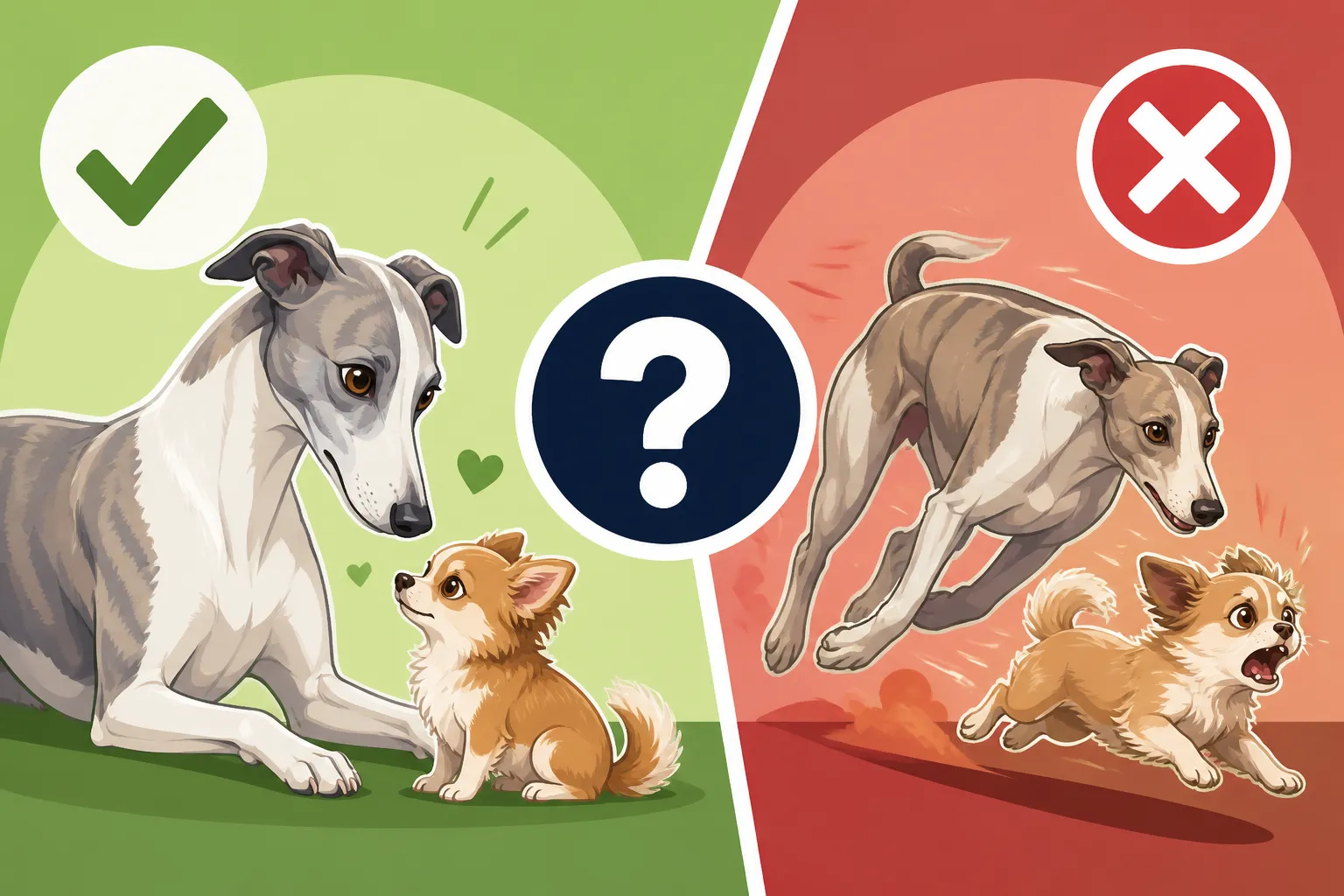
Separating this instinct from pure play drive is essential. Play drive is the desire to engage in social, often mock-hunting behaviors with other dogs, like chasing, wrestling, and tugging. In a Whippet, these two drives can look remarkably similar, making it difficult for an owner to discern if their Whippet is truly playing with a small dog or if the prey drive has been subtly activated. The danger lies in the speed and force a Whippet can generate, even in what might start as play. Your Whippet might genuinely want to play, but if the smaller dog suddenly runs in a way that mimics prey, the line between play and chase can blur with potentially serious consequences.
The Whippet's "Zoomies" and How They Impact Smaller Dogs
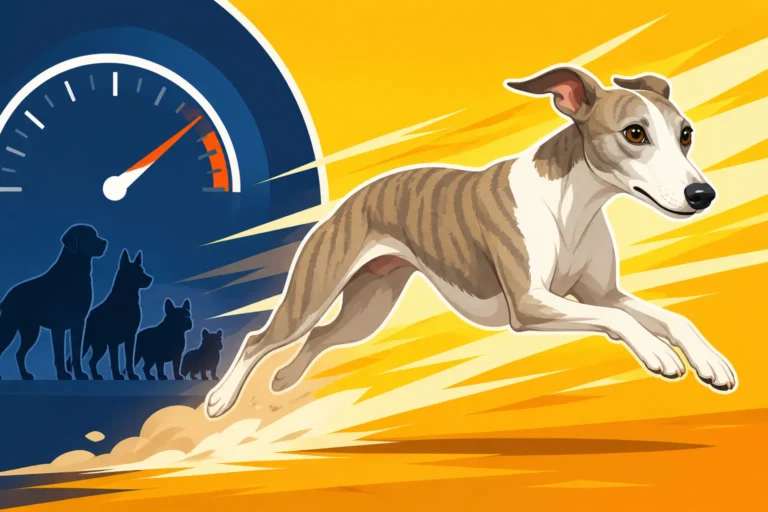
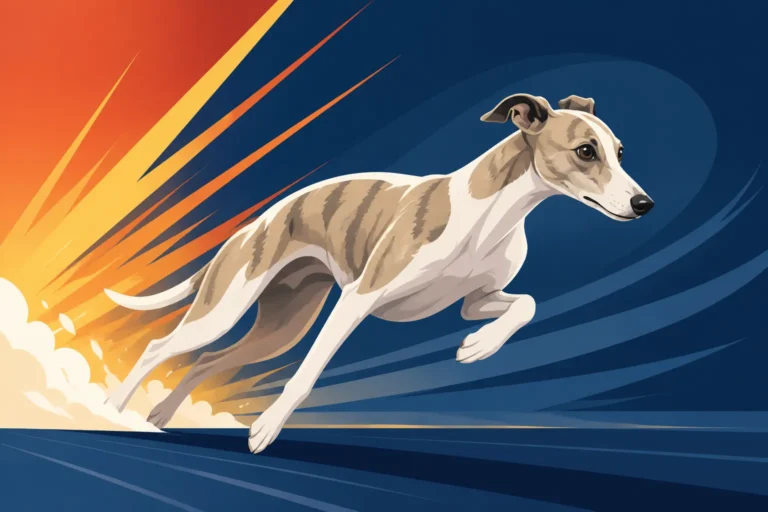
Ah, the zoomies! Every Whippet owner knows and loves them – those sudden, explosive bursts of speed where your dog races around the house or yard at top velocity, often doing tight turns and bouncing off furniture. It's pure, unadulterated joy and a natural outlet for their athletic energy. However, these uninhibited sprints can be terrifying and dangerous for a small dog in their path.
Imagine a tiny dog trotting along, oblivious, when suddenly a blur of fawn or brindle streaks past at How Fast a Whippet Actually Runs. Even if your Whippet has no ill intent, the sheer momentum of its body can accidentally knock over, trip, or even collide with a small dog, leading to bumps, bruises, or worse. The Whippet isn't looking to hurt its friend; it's simply lost in the thrill of the run, often with limited peripheral vision during these high-speed maneuvers. This is why managing environments where zoomies occur is paramount, especially if a small dog is present.
Sighthound Play: Chasing and Body Slamming
Whippet play is often characterized by high-speed chasing, body-slamming, and a certain rough-and-tumble style that is typical of sighthounds. They love to run full-out with another dog, body-checking each other, and using their lean, muscular frames to block and redirect. This is perfectly normal and appropriate play when two Whippets, or two similar-sized and robust dogs, engage.
However, a Whippet's play style simply isn't suited for most small breeds. A gentle body slam between two 30-pound Whippets is a friendly nudge; the same force applied to a 10-pound Pomeranian could cause severe injury. The chasing instinct, even in play, can overwhelm a tiny dog, causing immense stress or fear. What one Whippet might interpret as an invitation to chase, a small dog might perceive as a terrifying pursuit by a predator. Understanding this inherent difference in play dynamics is key to preventing accidental harm or undue stress.
Potential Risks and Challenges with Small Dogs
Given the Whippet's unique characteristics, it's not surprising that specific risks and challenges arise when they share a home or play space with smaller dogs. Being aware of these potential pitfalls is the first step toward proactive management.
Accidental Injuries: Speed and Weight Disparity
This is arguably the most significant risk. A Whippet's incredible speed, combined with its weight (typically 25-40 pounds) and powerful musculature, means that even an accidental collision with a much smaller dog can lead to serious injury. Think about the kinetic energy involved when a dog capable of Thirty Five Miles an Hour and No Brakes on a Whippet's Recall suddenly stops or changes direction near a tiny dog. Fractures, concussions, internal injuries, or even spinal damage are very real possibilities.
It’s not about malice; it’s about physics. A playful bump that would be innocuous between two medium-sized dogs can become a devastating impact for a toy breed. This risk is amplified during sudden movements, zoomies, or boisterous play sessions. Owners often recount situations where their Whippet simply tripped over a smaller dog in the excitement, leading to an unplanned and often expensive vet visit. The disparity in size means that what feels like harmless fun to the Whippet can be catastrophic for the little one.
Miscommunication in Play: Different Cues, Different Worlds
Dogs communicate through a complex language of body postures, facial expressions, and vocalizations. However, different breeds, especially those with vastly different play styles, can sometimes speak different dialects. A Whippet's play invitation might involve a low bow and a quick dart away, followed by intense chasing. A smaller dog, particularly one from a less chase-oriented breed, might interpret this as aggressive posturing or a predatory signal.
Conversely, a small dog's squeaks or high-pitched barks, which might be typical play vocalizations for their size, could inadvertently trigger or intensify a Whippet's prey drive, making the chase instinct even harder to control. The subtle nuances of canine body language can be missed across such a size and breed divide, leading to misunderstandings that escalate into fear or accidental harm. It's like trying to have a conversation where one person is shouting and the other is whispering – the message gets lost or distorted.
When Prey Drive Kicks In: The Danger Zone
While Whippets are generally gentle and loving, their innate prey drive is powerful and ever-present. This isn't a flaw; it's a fundamental part of their genetic makeup. The danger zone arises when a small dog, especially one running or yelping, inadvertently triggers this deeply ingrained instinct. It's not personal; it's biological. Why a Whippet's Chase Instinct Overrides Its Recall is a very real phenomenon, and once that instinct is fully engaged, even the best-trained Whippet can become temporarily deaf to commands.
This is why letting a Whippet off-leash in an unfenced area with small, unfamiliar dogs is incredibly risky. Even in a familiar home environment, a sudden, unexpected movement from a small dog can switch on that drive. The Whippet may not intend to harm, but the act of chasing and 'snapping' at what it perceives as prey can result in severe injury. Owners must always be vigilant, understanding that while their Whippet is a beloved pet, it also carries the ancient instincts of a hunter.
Introducing a Whippet to Small Dogs Safely
Bringing a Whippet and a small dog together, whether permanently or for a temporary visit, requires careful planning and execution. Safety is always the priority, and a structured approach can make all the difference.
Controlled Introductions: On-Leash and Neutral Territory
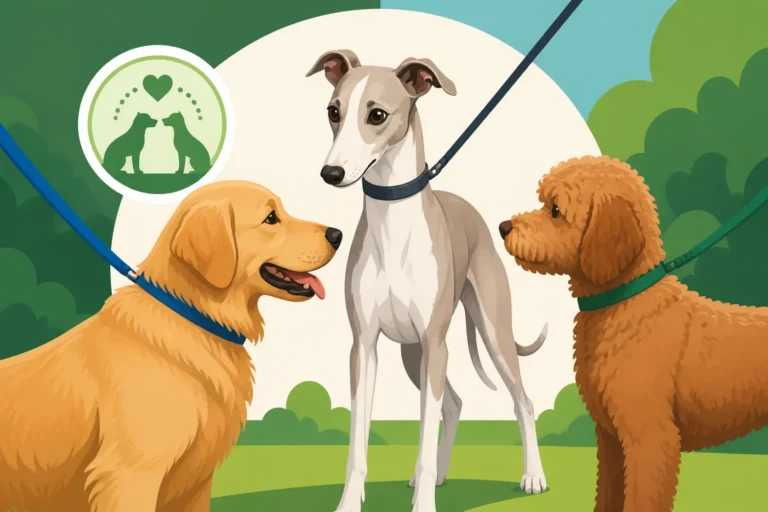
When introducing a Whippet to a new small dog, or even re-introducing them after a long separation, always start with controlled encounters. The goal is to minimize excitement and potential triggers. A neutral territory, like a quiet park or a friend's yard they both haven't visited, can help prevent territorial aggression. Both dogs should be on leashes, handled by calm, confident individuals.
Keep the initial meeting brief and positive. Allow them to sniff each other, perhaps with a barrier like a baby gate between them at first, or maintaining enough distance that neither feels overwhelmed. Look for relaxed body language: loose tails, soft eyes, gentle sniffing. Avoid direct nose-to-nose greetings if either dog seems tense. Offer high-value treats to both dogs for remaining calm in each other's presence. Gradually decrease the distance over multiple short sessions, always ready to step in and separate them if tension arises. Never force an interaction; patience is key.
Supervised Play: Always Be Present and Ready to Intervene
Once initial introductions are successful, any interaction, especially play, between a Whippet and a small dog must be fully supervised. This means you are actively watching, not just in the same room. You need to be prepared to intervene at a moment's notice. Keep play sessions short, especially at first, to prevent over-excitement and fatigue, which can lead to mistakes or increased prey drive.
Look for signs of stress or fear in the smaller dog, such as tail tucked, ears back, hiding, or excessive growling/snapping. Similarly, watch for your Whippet becoming too focused, overly intense in its gaze, or exhibiting stiff body language that suggests the play drive might be tipping into prey drive. Have a reliable verbal interrupt or a sound (like clapping) that can break their focus instantly. Consider using a long line for your Whippet during supervised outdoor play, especially if you're not fully confident in its recall, to give you an extra layer of control. Products like a durable long line from Amazon can be invaluable tools here.
Setting Boundaries and Managing Expectations
Clear boundaries are crucial for safety. This includes physical boundaries, like baby gates or crates, that can provide safe zones for both dogs. For example, the small dog might have a room or a raised bed that the Whippet isn't allowed to access, offering a sanctuary. Conversely, the Whippet might need its own space to decompress after a burst of energy. Creating safe spaces for both dogs within the home environment reduces stress and provides an escape route if either dog feels overwhelmed.
It's also important to manage your own expectations. Not every Whippet can safely coexist with every small dog without intense, constant supervision. Some individual Whippets may have such a strong prey drive that living with a tiny dog is simply too risky, regardless of training. It's a hard truth, but recognizing and respecting these limitations is part of being a responsible owner. Never put a small dog in a situation where it feels constantly threatened or is at high risk of injury. Sometimes, a strictly separate-and-rotate system is the safest option.
Training and Management Strategies for Harmony
While a Whippet's instincts are powerful, thoughtful training and consistent management can significantly improve the chances of a peaceful multi-dog household. These strategies focus on proactive measures rather than reactive corrections.
Reinforcing Calmness: Rewarding Non-Chasing Behavior
Instead of only correcting unwanted behaviors, focus on rewarding the behaviors you do want. When your Whippet is calm around a small dog – ignoring it, lying down quietly, or engaging in gentle sniffing – shower it with praise and high-value treats. This positive reinforcement helps your Whippet associate the small dog's presence with good things, building a positive emotional response.
Practice structured relaxation exercises. Teach your Whippet to settle on a mat or a specific bed while the small dog is nearby, gradually increasing the duration. This teaches impulse control and a default calm state. Avoid stimulating play between the Whippet and small dog that could escalate, especially early on. Instead, encourage parallel play where they are in the same area but engaged in separate, non-interactive activities, like chewing on a favorite toy. The goal is to desensitize your Whippet to the small dog's movement and presence without triggering that chase instinct.
Teaching "Leave It" and a Rock-Solid Recall
These two commands are absolute non-negotiables for any Whippet owner, but they become even more critical in a household with small dogs. A reliable "Leave It" can prevent your Whippet from fixating on a small dog that starts to move quickly, allowing you to redirect its attention before the prey drive takes over. Practice this command diligently with various distractions, starting with low-value items and working up to more tempting ones.
A rock-solid recall is your emergency brake. If, despite your best efforts, your Whippet begins to eye a small dog or even starts a chase, your ability to call it back immediately is paramount. Proofing a Whippet's Recall Against Prey requires consistent, high-intensity training, often in controlled environments with long lines. Consider resources like the online training programs from BAXTER & Bella, which often emphasize building strong foundational skills like recall through positive reinforcement. Your recall needs to be more rewarding than the thrill of the chase. This means using super high-value treats or toys and making coming back to you the absolute best thing in the world.
Creating Safe Spaces for Both Dogs
Every dog in a multi-dog home deserves its own sanctuary – a place where it can retreat, relax, and feel completely safe from the others. For the small dog, this might be a raised bed inaccessible to the Whippet, a crate, or a room behind a baby gate. For the Whippet, it might be its own comfortable bed in a quiet corner where it won't be bothered by a curious small dog.
These safe spaces are not just for sleeping; they are for decompression, eating, and feeling secure. This helps reduce stress for both animals, preventing resource guarding issues and giving each dog a sense of autonomy. It also provides practical management options. For instance, if you need to leave the house for a short period, you can crate or gate one dog while the other has free roam, ensuring no unsupervised interactions occur. This separation can be crucial in preventing accidental harm.
Factors That Influence Compatibility
Not all Whippets are the same, nor are all small dogs. Several factors can play a significant role in determining how well a Whippet and a small dog might get along. Understanding these individual differences is key to predicting success.
Age and Temperament of Both Dogs
A Whippet puppy might be easier to integrate with an adult small dog, as the puppy's prey drive is typically less developed, and it's still learning social cues. An older, more sedate Whippet might also be less inclined to engage in high-speed, rough play that could endanger a smaller dog. Conversely, a boisterous young Whippet with a high play drive might be a challenging match for a very tiny or fragile older dog.
The temperament of the small dog is equally important. A confident, resilient small dog that stands its ground or avoids chase might fare better than a timid one that flees at the slightest provocation. A small dog that has grown up around larger dogs and understands their play style might also adapt more easily. Observing how both dogs react to other animals of varying sizes before introducing them to each other can provide valuable clues about their potential compatibility.
Early Socialization: Key for a Well-Adjusted Whippet
Early and positive socialization is paramount for any dog, but especially for a sighthound like a Whippet. A well-socialized Whippet puppy, exposed to a wide variety of sights, sounds, people, and other dogs of different sizes from a young age, is more likely to be well-adjusted and less prone to reacting impulsively to small dogs. This doesn't mean allowing them to roughhouse, but rather exposing them to small dogs in a controlled, positive way.
A puppy class focused on positive reinforcement, like those that might recommend methods from BAXTER & Bella, can be incredibly beneficial. It teaches puppies appropriate play boundaries and helps them develop bite inhibition and social manners. Crucially, early positive experiences with small dogs can help a Whippet puppy learn that small, fast-moving objects are not always prey, but can be friends. Without this foundation, the Whippet may be more likely to default to its chase instinct when encountering anything small and quick.
The Role of the Owner: Consistent Supervision and Training
Ultimately, the success of a Whippet living with a small dog rests heavily on the owner's shoulders. Consistent, diligent supervision and ongoing training are non-negotiable. It means being proactive, not reactive. You are the one responsible for creating a safe environment and managing interactions. This includes understanding Whether a Whippet Needs a Vet Who Knows Sighthounds and their unique needs.
This isn't just about training commands; it's about being an observant, engaged advocate for both dogs. It means understanding their individual personalities, recognizing their stress signals, and being willing to adjust your management strategies as needed. A truly committed owner will prioritize the safety and well-being of both animals, even if it means altering their routine or investing in tools like extra baby gates (easily found on Amazon) to maintain peace and security. Your consistency, patience, and commitment to training will be the most significant factors in fostering a harmonious relationship.
When to Seek Professional Help
Even with the best intentions and diligent efforts, some situations may require expert guidance. Knowing when to call in a professional can prevent problems from escalating and ensure the safety of all your pets.
Recognizing Warning Signs: When Play Becomes Predation
It's vital for owners to be able to distinguish between boisterous, though perhaps clumsy, play and genuine predatory behavior. Watch for these warning signs:
- Intense Staring/Fixation: Your Whippet becomes rigid, focused intensely on the small dog, often with a low head position and a taut body.
- Muzzle Punches/Biting without Inhibition: While some dogs "mouth" in play, any hard biting or repeated targeting of the small dog's neck or body, especially if the small dog is yelping in genuine fear/pain, is a serious concern.
- Ignoring Correction: Your Whippet completely tunes out your verbal cues or physical attempts to interrupt when it's focused on the small dog.
- Stalking Behavior: Crouching, creeping, and then pouncing in a manner reminiscent of a cat hunting, rather than playful bouncing.
- Excessive Chasing with No Reciprocity: The Whippet is relentlessly pursuing the small dog, which is clearly trying to escape and showing signs of fear, not engagement.
If you observe these behaviors, especially if they are escalating in frequency or intensity, it's a clear signal that the situation is beyond typical home management and requires professional intervention.
Consulting a Certified Professional Dog Trainer
If you're struggling to manage interactions, notice concerning behaviors, or simply feel overwhelmed, don't hesitate to seek help from a Certified Professional Dog Trainer (CPDT) or a Certified Applied Animal Behaviorist (CAAB). Look for professionals who use positive reinforcement methods and have experience with sighthounds and multi-dog households. A good trainer can observe your dogs' interactions, help you interpret their body language, and develop a personalized training and management plan.
They can guide you on advanced obedience, specific impulse control exercises, and strategies for counter-conditioning and desensitization. They can also provide invaluable insights into your Whippet's specific prey drive triggers and help you learn Teaching a Whippet an Emergency Recall that could literally be a lifesaver. Avoid trainers who advocate for harsh corrections or punishment, as these methods can severely damage your Whippet's sensitive temperament and exacerbate fear or aggression. How a Whippet Reacts to a Raised Voice or physical punishment is often to shut down, which isn't effective for building trust or addressing underlying behavioral issues.
Management Over "Fixing": Accepting Limitations
It's important to understand that while training can modify behavior, it may not completely eliminate deeply ingrained instincts like prey drive. Sometimes, the most responsible approach is to accept that some Whippets and small dogs simply cannot safely interact without extreme, constant supervision. In these cases, the focus shifts from "fixing" the problem to "managing" the environment.
This might mean a "crate and rotate" system, where dogs are always separated when unsupervised, or dedicating specific times and spaces for each dog to have individual attention. It might involve always keeping them separated by baby gates, even when you are home. This isn't a failure; it's a pragmatic and humane approach to ensuring the safety and well-being of all animals involved. Prioritizing management is a sign of a responsible owner who understands and respects the inherent nature of their pets.
| Safety Measure | Description | Benefit |
|---|---|---|
| Leashed Introductions | Initially meet on neutral territory with both dogs on leash, maintaining distance. | Prevents uncontrolled interactions, allows for immediate separation, reduces stress. |
| Constant Supervision | Actively watch all interactions, especially play. Never leave them alone. | Allows for timely intervention, prevents accidental injuries, helps identify escalating tension. |
| Safe Zones/Crates | Provide individual retreat spaces (crates, gated rooms, elevated beds) for each dog. | Offers security and stress relief, prevents resource guarding, ensures peace. |
| Strong "Leave It" | Teach and proof a reliable "Leave It" command to interrupt fixation on the small dog. | Redirects attention, prevents chase initiation, gives owner control over exciting situations. |
| Emergency Recall | Develop a bulletproof recall that overrides strong distractions, including prey drive. | Crucial for safety if a chase begins, allows immediate intervention to prevent harm. |
| No Rough Play | Discourage physical, high-speed play between the Whippet and the small dog. | Minimizes risk of accidental injury due to speed and weight disparity. |
| Positive Reinforcement | Reward calm, appropriate behavior around the small dog with treats and praise. | Builds positive associations, encourages desired behaviors, strengthens bond without relying on punishment. |
| Baby Gates | Install physical barriers to separate dogs in different rooms when unsupervised or during periods of high activity. | Prevents unsupervised access, creates secure zones, reduces opportunities for unintended interactions. |
Disclaimer
This article is for general informational purposes only and does not constitute professional advice. Laws, prices and regulations vary by location and change over time. Consult a qualified professional for guidance on your specific situation.