Whether a Long Line Suits a Whippet
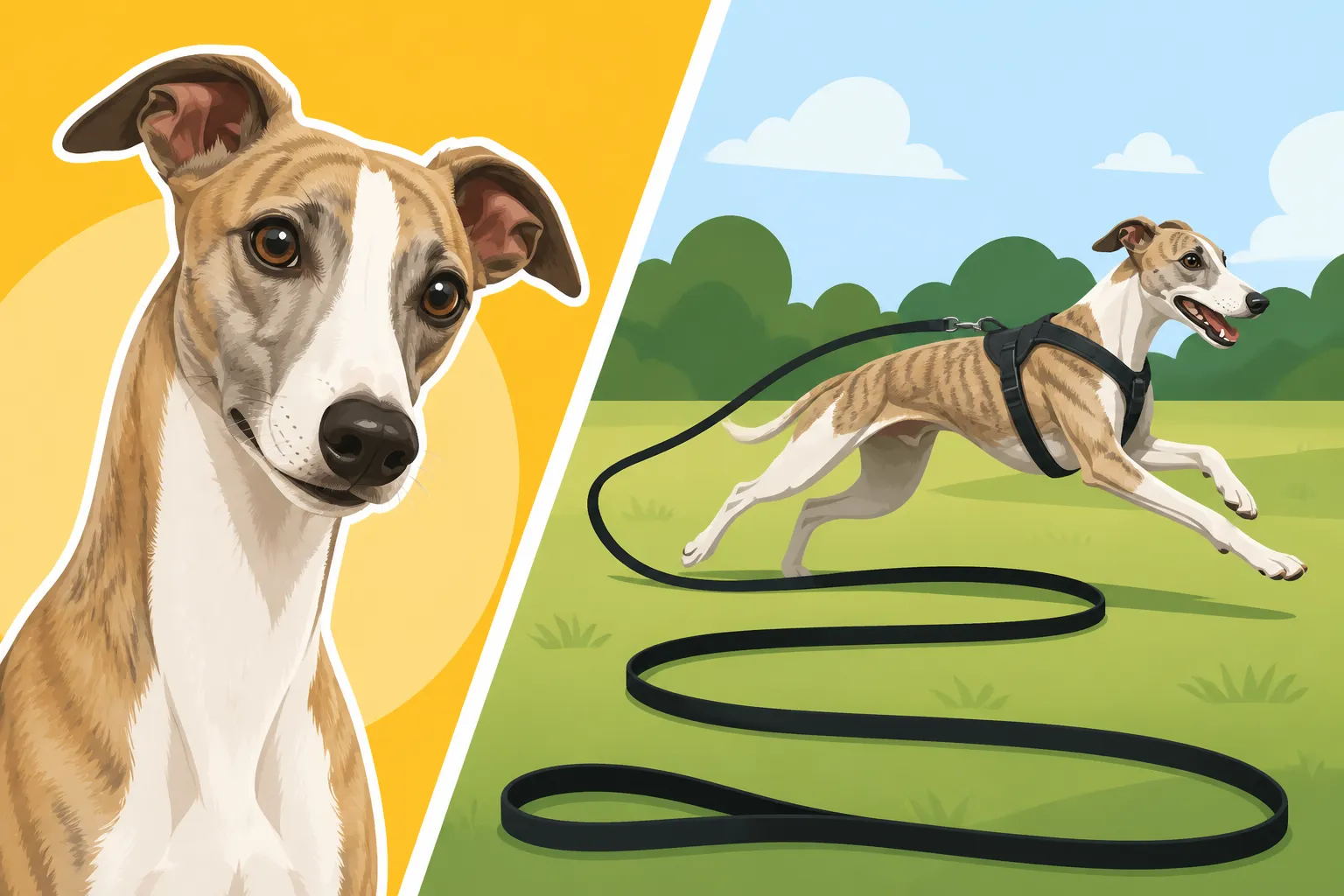
It’s a familiar scenario for so many of us Whippet owners: you dream of letting your elegant, athletic companion stretch their legs and truly run in a wide-open space. You imagine them soaring across a field, ears streaming, a picture of pure joy and freedom. Then reality hits – that terrifying thought of them spotting a squirrel, a leaf, or another dog in the distance, and the absolute certainty that your carefully practiced recall will vanish into thin air as they take off at 35 miles an hour. It's a deeply frustrating paradox, wanting to give them that freedom while knowing it could put them in serious danger. This guide is all about exploring whether a long line can bridge that gap, offering a safe compromise for controlled exercise and effective training.
Understanding the Whippet's Need for Speed and Space
Whippets, by their very nature, are built for speed. They are sighthounds, bred for generations to spot, chase, and capture small prey. This inherent drive isn't something you can simply train out of them with a few treats and a polite "come." It's a deeply ingrained instinct that dictates much of their behavior, especially when it comes to off-leash freedom.
The Instinct to Chase: A Whippet's Core Drive
Let's be honest, trying to ignore a Whippet's prey drive is like trying to ignore the sun rising in the morning. It's fundamental to who they are. Imagine your Whippet, usually so calm and cuddly indoors, suddenly transforming into a sleek, focused predator the moment they lock onto something moving in the distance. Their body language changes instantly: ears forward, tail high, eyes narrowed. In that split second, their ancestral programming kicks in, and the world shrinks to just them and their target.
This intense focus is why a Whippet's speed makes traditional recall unreliable. You might have the best recall in the world in your backyard, with no distractions. But introduce a rabbit darting across a field, or a distant cyclist, and suddenly your voice is just background noise. Their brain isn't processing "come," it's processing "chase." This isn't disobedience; it's instinct. It’s a frustration many Whippet owners face, understanding that their dog isn't being stubborn, but simply acting on millennia of selective breeding. Why a Whippet's Chase Instinct Overrides Its Recall explains this phenomenon in more detail.
The Desire for Freedom vs. Safety Concerns
As Whippet owners, we feel this constant tug-of-war. On one hand, we see these magnificent athletes lounging around the house, and we know they have this incredible, pent-up energy that needs an outlet. We want them to experience the joy of a full-speed gallop, to stretch their long legs and truly open up. It feels unfair to deny them that fundamental part of their being. We often envy owners of other breeds who can confidently let their dogs roam free in open spaces, knowing they'll come back when called.
However, that desire for freedom is always tempered by serious safety concerns. A Whippet running at full tilt, fixated on a chase, is oblivious to potential hazards. Roads, barbed wire fences, ditches, or even other dogs can become invisible in their pursuit. The thought of them running into traffic, or getting injured far from help, is enough to make any responsible owner anxious. This is why a safe alternative for exercise, one that allows for movement and exploration without the terrifying risk of escape, is so vital. It’s not about stifling their spirit, but about protecting their fragile bodies and boundless enthusiasm. It's important to understand the very real dangers, as highlighted in Why a Loose Whippet Runs Into Traffic.
What Exactly is a Long Line and How Does it Work for a Whippet?
Given the Whippet's unique blend of athleticism and prey drive, a conventional walk on a 6-foot leash often feels inadequate. This is where a long line comes into play – it's a piece of equipment designed to offer a controlled form of freedom, acting as a crucial bridge between a standard leash and true off-leash reliability.
Anatomy of a Long Line: Length, Material, and Attachments
A long line is essentially a very, very long leash. They come in various lengths, typically ranging from 15 feet, which is great for closer work or smaller areas, to 30 feet, which offers a decent amount of room for sniffing and some acceleration, and even 50 feet or more for maximum exploration in truly wide-open spaces. The length you choose often depends on the environment you're training in and your comfort level.
When it comes to materials, you'll commonly find long lines made of nylon or biothane. Nylon is generally more affordable and comes in a wide array of colors, but it can absorb water and mud, becoming heavy and harder to clean. Biothane, a coated webbing, is fantastic for Whippets because it's waterproof, easy to wipe clean, and doesn't get tangled as easily. It's a bit more of an investment, but for a dog like a Whippet who might be exploring damp fields or brushing through wet grass, it's often worth it. You can find a great selection of both types on platforms like Amazon. For any Whippet, a well-fitting harness is absolutely critical, as a collar alone, even a martingale, is not safe for use with a long line, especially if your Whippet takes off suddenly. This protects their delicate neck and throat from jarring impacts. Make sure the clips are sturdy and the handle comfortable, as you'll be holding onto it for a while!
How a Long Line Provides Controlled Freedom
Think of a long line not as a way to "walk" your dog in the traditional sense, but as an invisible fence that moves with you. It allows your Whippet to wander further, sniff that interesting patch of grass 20 feet away, or even break into a short trot or canter, all while you maintain a physical connection. You're still in control, but your dog gets to experience the world more fully, engaging their natural curiosity and desire to explore.
Unlike a retractable leash, which applies constant tension and can be dangerous due to its thin cord and sudden locking mechanisms, a long line is meant to be managed actively. You let out slack, gather it in, and always have the option to step on the line or gently guide your Whippet back. This active management is key. It prevents your Whippet from building bad habits of pulling against a constant tension, and it trains them to be aware of their boundaries. It's a tool for teaching, not just restraining.
Benefits of Using a Long Line for Whippets
Embracing the long line can truly transform your Whippet's exercise routine and significantly enhance your training efforts. It's a versatile tool that addresses many of the challenges specific to sighthound ownership, offering a secure path to greater freedom and better communication with your dog.
Safe Exploration and Exercise in Open Areas
This is perhaps the biggest draw for Whippet owners. Imagine taking your Whippet to a vast park or an empty sports field, far from roads or obvious dangers. With a long line, they can truly spread out, follow interesting scents, and engage in those wonderful bursts of speed that are so characteristic of the breed. They can zig and zag, roll in the grass, and chase imaginary prey (or real ones, within the limits of the line!) without you having a panic attack.
The line provides a continuous, tangible tether, giving you peace of mind while allowing your dog to decompress and fulfill their natural urges to move. It’s an incredibly valuable way to provide mental and physical stimulation that a standard leash walk simply can't offer. This controlled freedom means they can explore without the overwhelming fear of losing them, and it’s a wonderful way for them to burn off energy safely. Knowing you can give your Whippet this kind of joy in a secure environment is incredibly rewarding. You're giving them a taste of true freedom without compromising their safety. Where a Whippet Can Safely Run Off Leash discusses ideal locations, many of which are perfect for long line work.
Building a Reliable Recall on a Long Line
One of the most powerful benefits of a long line is its role in recall training. For a Whippet, whose chase instinct is so strong, practicing recall off-leash can be a huge gamble. The long line removes that risk, allowing you to build a rock-solid foundation for coming when called. When you give your "come" command, and your Whippet is distracted or ignores you, you have a physical way to gently reinforce the command.
The process is simple: you call your Whippet, and if they don't respond immediately, you gently reel in the line while continuing to encourage them with happy, enthusiastic words. The moment they start moving towards you, you praise them lavishly and reward them with a high-value treat. They learn that "come" means good things happen when they return to you, and crucially, they learn that you will follow through, even if they'd rather be sniffing that enticing patch of grass. This consistency, made possible by the line, builds trust and understanding, moving you closer to that dream of a truly reliable recall. Mastering this is key to Teaching a Whippet an Emergency Recall.
Socialization and Desensitization
For a sensitive breed like the Whippet, controlled exposure to new sights, sounds, and experiences is crucial for building confidence. A long line is an excellent tool for this, especially for puppies or rescue Whippets who might be shy or overwhelmed. It allows you to introduce them to bustling parks, new people, or even other calm dogs from a safe distance, while always maintaining control.
You can let them observe, process, and gradually approach new stimuli without feeling rushed or forced. If they get spooked, you can gently guide them away. If they show curiosity, you can allow them to explore. This controlled environment reduces stress and builds positive associations with the outside world. Similarly, it's great for desensitizing them to triggers like joggers, cyclists, or even the dreaded squirrel, allowing them to practice their impulse control in a low-stakes way. Socializing a Whippet Puppy can be greatly aided by incorporating long line work early on.
Challenges and Considerations When Using a Long Line
While long lines offer immense benefits, they aren't without their own set of considerations and potential pitfalls. It's crucial to be aware of these challenges to ensure both your Whippet's safety and your own, making the experience positive and productive for everyone involved.
Safety Risks for Dog and Handler
First and foremost, using a long line requires vigilance and awareness. The sheer length of the line means there's a greater potential for tangles, especially if your Whippet is zipping around excitedly. Imagine your Whippet circling a tree or darting between your legs – suddenly you have a knotty mess. More seriously, a fast-moving Whippet can build up surprising momentum, and if the line snags or you grip it incorrectly, you could easily suffer rope burns. Always, always wear gloves, especially when starting out, and avoid wrapping the line around any part of your body. A sudden pull could cause serious injury.
Beyond tangles and burns, there's the tripping hazard. A long line trailing on the ground can easily catch your feet or the feet of unsuspecting passersby. Choose your training environment carefully, steering clear of crowded areas or places with lots of obstacles like benches, trees, or playground equipment. The goal is open space where you and your Whippet can move freely without risk. Remember, the idea is controlled freedom, not chaotic freedom.
Choosing the Right Gear and Environment
The right equipment is non-negotiable for a Whippet using a long line. As mentioned, never attach a long line to a standard neck collar. A sudden sprint and jolt could cause severe damage to their delicate trachea and neck muscles. Instead, invest in a comfortable, well-fitting harness. A Y-front harness is often preferred as it distributes pressure across their chest and shoulders, away from their throat. Avoid harnesses that allow a Whippet to back out of them easily; The Harness a Whippet Backs Out Of details some of these escape artist tendencies.
Consider the material of your long line based on your typical training environment. If you're in muddy fields or near water, a biothane line will be a godsend for easy cleaning and preventing it from becoming waterlogged. If you're mostly on dry grass, a good quality nylon might suffice. Always inspect your line for wear and tear before each use. Beyond gear, the environment is critical. Look for genuinely open, relatively flat spaces away from roads, dense brush, or areas with hidden hazards. A local sports field during off-hours, a large, quiet park, or even a private, securely fenced property are ideal starting points. The fewer distractions, the more your Whippet can focus on you and the training.
Learning Proper Handling Techniques
Using a long line effectively is a skill that takes practice. It’s not just a matter of clipping it on and letting your dog run. You need to become an active participant in managing the line. One common technique is the "shuffle" method, where you constantly gather and release the line in your hand, keeping it from dragging too much or becoming too taut. This allows you to react quickly if your Whippet makes a sudden move, or to give them more slack for exploration.
Avoid letting the line become slack and then snapping taut when your dog reaches the end; this can be jarring and painful for your Whippet and lead to negative associations with the line. Instead, try to anticipate their movements and maintain a gentle, consistent tension. Patience is paramount. Your Whippet will make mistakes, and you will get tangled. It’s all part of the learning curve. If you're feeling a bit lost, don't hesitate to seek out resources. Online training platforms, like those offered by BAXTER & Bella, sometimes cover long line techniques as part of their comprehensive puppy or adolescent dog programs, offering video tutorials and expert advice. Practice in short, fun sessions, and both you and your Whippet will become masters of the long line in no time.
Practical Tips for Introducing and Using a Long Line Effectively
Getting started with a long line can feel a bit daunting, but with a few practical tips and a consistent approach, it quickly becomes an invaluable tool. Remember, the goal is to create a positive experience for your Whippet, fostering their confidence and strengthening your bond.
Starting Small and Gradually Increasing Freedom
Don't dive straight into a huge, unfamiliar park with your new 50-foot line. Begin in a very familiar, low-distraction environment. Your securely fenced backyard is ideal. This allows your Whippet to get used to the feel of the line trailing behind them without the added stress of new smells or sights. Keep these initial sessions short – perhaps 10-15 minutes – and make them incredibly positive. Focus on gentle encouragement, praise, and plenty of high-value treats. Let them drag the line, sniff around, and get comfortable.
Once they're relaxed in the backyard, you can slowly introduce them to slightly larger, still secure, and less distracting spaces. Maybe a quiet corner of a park during off-peak hours, or an empty sports field. Gradually increase the length of the line as your confidence grows and your Whippet learns to respond to your cues. The key is to set them up for success, ensuring they have a positive association with the line and the freedom it provides. Think of it as a ladder: each successful step builds towards the next.
Essential Training Principles
When working with a long line and a Whippet, a few core training principles will make all the difference. First, treats are your best friend. Whippets are intelligent and often highly food-motivated. Use irresistible, high-value treats – think tiny pieces of cooked chicken, cheese, or hot dogs – to reward every successful recall or moment of checking in with you. This creates a powerful positive reinforcement loop. What a Whippet Will Work For often revolves around these delicious motivators.
Second, keep it fun and engaging! Your tone of voice, your body language, and the overall atmosphere of the training session should be light and playful. Whippets thrive on connection and positive interaction. If training feels like a chore, they'll pick up on that. Incorporate games, silly noises, and lots of praise. Third, and perhaps most importantly, consistency is absolutely vital. Every time you call your Whippet on the long line, follow through. If they don't come, gently reel them in. Don't repeat the command endlessly; say it once, give them a moment, and then use the line to assist. This teaches them that "come" means come, every single time. Whippets are surprisingly quick learners when motivated and kept engaged, as explored in How Quickly a Whippet Learns and Whether Short Sessions Suit a Whippet.
Integrating Long Line Work into Daily Routine
Don't let your long line gather dust in the closet! Make it a regular part of your Whippet's exercise routine. Instead of always defaulting to a short leash walk, seek out opportunities for long line adventures a few times a week. These sessions can be fantastic for physical exercise and mental stimulation, allowing your Whippet to decompress and fulfill their innate desire to explore and move.
You can use it for structured training sessions focusing on recall, or simply for a relaxing "sniffari" where they get to explore new scents at their own pace. Consider how you'll store and clean your long line, especially if it's a biothane one that might pick up mud. You can find durable long lines and convenient storage solutions, like waterproof bags or buckets for muddy lines, on platforms like Amazon. Making long line work a consistent part of your routine will strengthen your bond, improve your Whippet's responsiveness, and provide them with much-needed freedom in a safe, controlled manner.
When to Consider Alternatives or Advanced Training
While a long line is an exceptional tool for many Whippet owners, it's not a magical solution for every scenario, nor does it fully replicate true off-leash freedom. There comes a point when you might consider whether your Whippet needs more space to truly stretch out, or if you're ready to push for more advanced recall reliability.
Secure Fenced Areas and Lure Coursing
For those moments when your Whippet really needs to run, unhindered by a line, the best alternative is a secure, fully fenced area. This could be a private dog park rental, a friend's property, or even a community dog park if you're confident in its security and your Whippet's temperament around other dogs. The key is full security – high fences that a Whippet can't jump (or dig under, though less common for Whippets) and double-gated entries are essential. These spaces allow your Whippet to hit top speeds, perform tight turns, and engage in vigorous play without any tether.
Another fantastic option for satisfying that deep-seated chase drive is organized activities like lure coursing or Fast CAT. These events are specifically designed for sighthounds, channeling their natural instincts in a safe, controlled, and fun environment. How Lure Coursing Channels a Whippet's Drive perfectly illustrates how these activities tap into their inherent love of the chase, allowing them to sprint and pursue a "prey" (a plastic lure) at full speed, often in open, fenced fields. It's an incredible outlet for their energy and an amazing sight to behold!
Advanced Recall Training and Professional Guidance
Even with extensive long line practice, achieving a truly reliable off-leash recall for a Whippet in a distracting environment remains a significant challenge, often requiring a level of commitment and understanding that goes beyond casual training. While a long line provides a safety net, it doesn't entirely replicate the responsibility and decision-making required for genuine off-leash freedom. How Far a Whippet's Recall Can Be Trusted is a crucial question, and for many, the answer is "not far enough without a tether."
If your goal is to have a Whippet that can reliably come when called in varied, high-distraction environments without a line, you might need to seek professional guidance. A certified professional dog trainer, particularly one experienced with sighthounds and their unique drives, can provide advanced strategies, impulse control exercises, and specialized techniques to further proof your Whippet's recall. They can help you understand the nuances of your dog's motivation and offer tailored advice that takes you beyond what you can achieve on your own, pushing the boundaries of what's possible while always prioritizing safety.
Ultimately, whether you rely solely on a long line, integrate it with fenced parks, or pursue advanced off-leash training, the long line remains an incredibly valuable tool in a Whippet owner's kit. It’s not just a leash; it’s a pathway to controlled freedom, enriched exercise, and a stronger, safer bond with your beautiful, speedy companion. It allows them to express their true Whippet nature while keeping them safe in a world that isn't always designed for a dog that can outrun a car.
Disclaimer
This article is for general informational purposes only and does not constitute professional advice. Laws, prices and regulations vary by location and change over time. Consult a qualified professional for guidance on your specific situation.