Whether a Whippet’s Wound Needs Glue or Stitches
It’s a scenario no Whippet owner ever wants to face, but it's an unfortunate reality for many of us: you turn your back for a moment, and suddenly your beloved Whippet has a nasty cut, a deep scratch, or a skin flap hanging loose. Our dogs, with their incredibly thin skin, are just so prone to these kinds of injuries, often from seemingly innocuous objects or play. This guide is here to walk you through how to assess these frightening wounds and understand when a veterinary visit for either surgical glue or traditional stitches is absolutely necessary.
Understanding Whippet Skin and Wound Vulnerability
If you’ve spent any time with a Whippet, you know their skin is remarkably different from many other breeds. It’s almost like tissue paper – incredibly delicate, with very little underlying fat or muscle padding. This unique anatomy, while contributing to their sleek, aerodynamic physique, also makes them particularly susceptible to skin injuries. It’s not a flaw, per se, but it's definitely a characteristic that requires extra vigilance from us as owners.
The Delicate Nature of Whippet Skin
The skin of a Whippet is designed for speed and agility, not for bushwhacking through dense undergrowth or rough-and-tumble play with thick-coated breeds. Unlike a Labrador or a German Shepherd, a Whippet lacks that protective layer of subcutaneous fat and thick fur. This means that even a minor scrape or bump that another dog might shrug off can result in a significant tear or laceration for a Whippet. Think of it like comparing a robust canvas to a fine silk – both are fabrics, but they behave very differently under stress. When we talk about The Thin Skin That Sends a Whippet to the Vet for Stitches, it's truly no exaggeration; their skin really is that fine.
This thinness means there's less tissue to absorb impact, less elasticity to prevent tearing, and less cushioning over prominent bone structures like elbows, hips, and hocks. You might find yourself wondering why your dog got such a deep gash from simply brushing past a rose bush or bumping into a table leg. The answer lies in this delicate dermal architecture.
Common Scenarios for Whippet Wounds
Whippets are typically indoor dogs, often found curled up on the sofa, but when they do get outside, their zest for life can lead to mishaps. One of the most common scenarios we see is when they're running full tilt – whether in a fenced yard, at the dog park, or while lure coursing – and they misjudge a turn, slide on wet grass, or collide with something stationary. A thin branch, a sharp edge on playground equipment, or even another dog’s tooth during energetic play can cause a significant wound in an instant.
Another frequent culprit is the home environment itself. Whippets love to zoom around the house, and a sharp corner on furniture, a metal edge on a crate door, or even a loose nail on a floorboard can inflict a painful tear. I've heard countless stories, and experienced a few myself, of a Whippet jumping off the sofa and catching themselves on something completely unseen. Their speed combined with their delicate skin makes them masters of self-inflicted injuries in the most mundane of situations. It’s always worth considering Where a Whippet Tears Its Skin Most so you can be extra cautious.
Assessing Your Whippet's Wound: When to Act Fast
Discovering a wound on your Whippet can be alarming, especially if there's a lot of blood. Your immediate reaction might be panic, but taking a deep breath and performing a quick, calm assessment is crucial. Your first steps at home can greatly influence the success of the eventual veterinary treatment and whether it's a simple glue job or a more involved stitching procedure.
Initial Home Assessment and First Aid
When you find a wound on your Whippet, the first priority is to stop any bleeding. Apply direct pressure to the wound with a clean cloth or gauze. Many Whippet cuts bleed quite a bit, even if they're not incredibly deep, simply because of how thin their skin is and the vascularity close to the surface. Elevating the injured limb, if possible, can also help reduce blood flow. Keep the pressure on for several minutes without peeking to see if it’s stopped. Patience is key here.
Once the bleeding is under control, or significantly slowed, you can gently clean the area. Use a mild antiseptic solution designed for pets, like chlorhexidine or povidone-iodine diluted with water, or simply flush with lukewarm tap water. The goal is to remove any visible dirt, debris, or hair from around the wound edges. Resist the urge to scrub vigorously; be gentle to avoid further damage. After cleaning, you can cover the wound with a clean, non-stick dressing and secure it with vet wrap, but not too tightly that it cuts off circulation. This basic first aid is vital before you even consider heading to the vet. It’s a good idea to have What Belongs in a Whippet Owner's First Aid Kit readily available for these emergencies.
Distinguishing Between Minor and Serious Lacerations
Now for the critical part: deciding if this is a "wait and see" situation or an immediate vet trip. Many Whippet owners, myself included, have learned the hard way that even small-looking tears can be deceptively deep.
Here’s what to look for:
- Depth: Can you see underlying fat, muscle, or even bone? If so, this is serious.
- Length and Width: Long or wide gaping wounds, especially those that don't come together easily when you gently push the skin, usually require professional closure.
- Location: Wounds over joints (like elbows, hocks, or knees) or areas of high movement (chest, abdomen) tend to gape more and are harder to heal on their own. Wounds on the head or face, while sometimes seeming minor, can involve delicate structures like eyes or ears and warrant a vet check.
- Bleeding: Persistent, heavy bleeding that you can't control with sustained pressure means an urgent vet visit.
- Contamination: If the wound is dirty, has grit embedded, or was caused by a bite from another animal, there’s a high risk of infection. Even a seemingly small puncture wound can be deep and introduce bacteria.
- Severity of Skin Flap: Sometimes, a Whippet will have a "degloving" injury where a flap of skin is completely torn away from the underlying tissue. These are always serious and need immediate veterinary attention.
Generally, if you're in doubt, err on the side of caution and contact your veterinarian. It’s much better to be told it's minor than to let a serious wound fester.
To Glue or To Stitch: Veterinary Approaches to Whippet Wounds
Once you’ve made it to the vet, they will thoroughly examine the wound and decide on the best course of action. For our delicate Whippets, this decision often comes down to balancing effective closure with minimal trauma and good healing prospects. Sometimes, they might even suggest a combination of techniques, depending on the wound's characteristics.
When Surgical Glue is the Right Choice
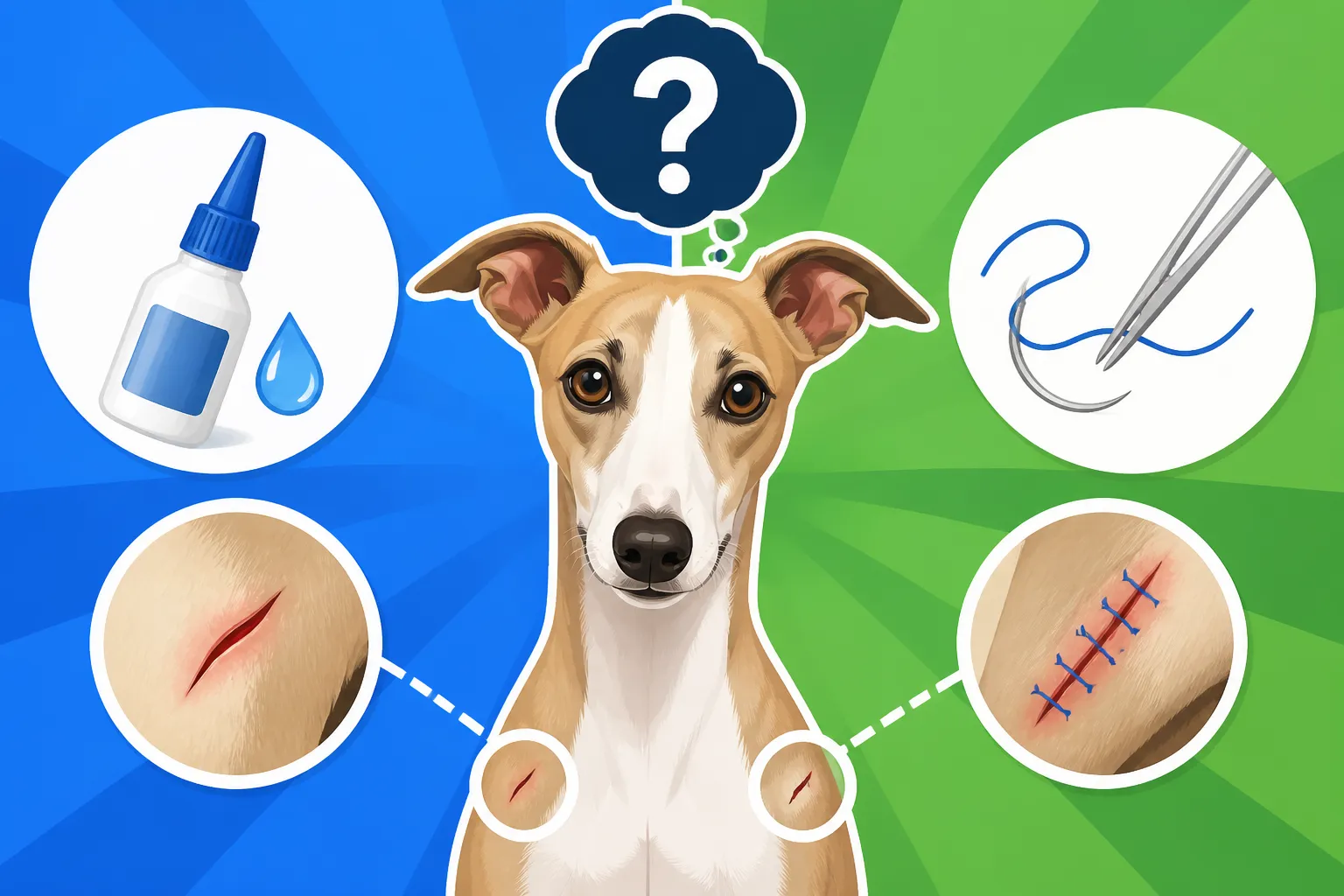
Veterinary surgical glue, often referred to as tissue adhesive or liquid stitches, is a fantastic option for certain types of wounds, especially on Whippets. It's quick, minimally invasive, and can be less stressful for both the dog and the owner.
Surgical glue works best for:
- Small, superficial lacerations: Wounds that are clean, relatively straight, and don’t involve deep layers of skin or underlying tissue.
- Wounds with edges that approximate easily: This means the edges of the skin can be gently pushed together without tension, creating a neat seam.
- Low-tension areas: Parts of the body where there isn't a lot of skin movement, preventing the glue from being stretched or pulled apart.
- Cooperative patients: For some Whippets, avoiding the trauma of needles and sutures can make the experience much calmer.
The adhesive essentially bonds the superficial layers of the skin together, forming a protective barrier and allowing the underlying tissues to heal. It then flakes off naturally as the skin heals, usually within 5-10 days. The beauty of glue is its speed and the reduced need for sedation compared to stitching, which can be a relief when considering Why Anesthesia Is Riskier in a Whippet. However, it's not a magic bullet and isn't suitable for all injuries. The vet will need to ensure the wound is perfectly clean before applying the glue, as trapping bacteria beneath it could lead to infection.
The Necessity of Traditional Stitches
For many Whippet wounds, especially those that are deeper, wider, or in high-motion areas, traditional sutures (stitches) are the most reliable and often the only appropriate method of closure. This method involves using sterile needles and thread to physically sew the skin layers back together.
Stitches are usually necessary for:
- Deep lacerations: Wounds that penetrate through the skin into the subcutaneous tissue, muscle, or even deeper. These require layered closure to promote proper healing and prevent dead space that can fill with fluid.
- Wounds with significant tension: If the skin edges pull apart when gently approximated, glue won't hold. Stitches provide the strength needed to keep the wound closed.
- Contaminated wounds: In some cases, a vet might clean and debride a contaminated wound and then stitch it, sometimes leaving a small drain.
- Wounds over joints or highly mobile areas: Knees, elbows, and other areas that bend and stretch constantly usually require the strength of sutures to stay closed and heal effectively.
- Puncture wounds or irregular tears: These can be hard to seal properly with glue alone and may need precise surgical reconstruction.
The vet will thoroughly clean and debride the wound (removing any damaged or contaminated tissue) before stitching. Often, especially for deeper wounds or anxious Whippets, some form of sedation or local anesthetic will be used to ensure the dog is comfortable and still during the procedure. This ensures precise closure and minimizes discomfort. Depending on the type of suture material used, stitches may need to be removed by your vet in 10-14 days, or they may be absorbable and dissolve on their own. You might be curious about What a Whippet Laceration Repair Costs, and often, stitching is more involved, impacting the price.
Special Considerations for Whippet Wound Closure
Because Whippets have such unique skin, vets often take extra precautions during wound closure. Their thin skin means that sutures can sometimes cut through the skin if too much tension is applied, or if the dog is particularly active during healing.
Here are a few things your vet might consider:
- Minimal Tension Closure: Vets will always try to close Whippet wounds with as little tension as possible to avoid tearing and promote better healing. This might involve undermining the skin (separating it from underlying tissue to allow it to stretch more easily) or using special suturing techniques.
- Suture Material: They might opt for very fine, non-reactive suture material that is less likely to irritate the delicate skin.
- Protection: Regardless of whether glue or stitches are used, protecting the wound is paramount. Whippets are notorious for licking and chewing, which can undo stitches, dissolve glue, and introduce infection. This often means sending your Whippet home with an Elizabethan collar (the "cone of shame") or an alternative like a soft collar or even a medical pet shirt. Your vet will likely discuss Whether a Whippet Should Wear a Cone After Stitches with you in detail.
- Fragile Skin Around Stitches: Even when stitches are well-placed, the skin around them can be fragile. You'll need to be very careful when cleaning the area or handling your dog to avoid pulling on the sutures.
Post-Procedure Care and Healing for Whippet Skin
The vet has done their part, but a huge portion of successful wound healing rests on you, the owner. Whippets heal surprisingly well, but their delicate skin also means the healing process can be easily disrupted. Diligent post-operative care is absolutely essential to prevent complications and ensure a smooth recovery.
Keeping the Wound Clean and Protected
Your vet will give you specific instructions for wound care at home, and it’s critical to follow them to the letter. This typically involves keeping the wound clean and dry.
- Cleaning: You might be instructed to gently clean the wound area with a prescribed antiseptic solution or sterile saline. Pat it dry thoroughly afterward. Avoid harsh scrubbing or using alcohol, which can irritate the delicate healing tissue.
- Dressing Changes: If a bandage was applied, you’ll likely need to change it regularly, perhaps daily or every other day, as instructed by your vet. This allows you to inspect the wound for signs of infection (redness, swelling, discharge, foul odor) and keep it free from external contaminants. Always wash your hands thoroughly before and after handling the wound.
- Keeping it Dry: Moisture is the enemy of healing wounds. Avoid letting your Whippet get wet in the rain or letting them swim, even if they were inclined to (most aren't!). If you need to bathe them, discuss it with your vet first – they might advise against it entirely or suggest a specific method to protect the wound. For bathroom breaks, consider a raincoat if it's wet outside.
Remember, a clean environment is a healing environment. Ensure your Whippet's bedding is clean, and keep them away from muddy or dusty areas during their recovery period.
Preventing Licking and Chewing
This is, hands down, one of the biggest challenges for Whippet owners dealing with a healing wound. Whippets, like most dogs, have an instinct to lick any irritation or injury. While a little licking might seem harmless, excessive licking and chewing can cause serious problems:
- Opening the wound: Licking can pull out stitches or dislodge surgical glue, setting the healing process back to square one, or worse, creating a larger, more contaminated wound.
- Infection: A dog's mouth, while possessing some antimicrobial properties, is also full of bacteria. Introducing these bacteria to an open wound is a recipe for infection.
- Irritation: Constant licking can irritate the skin, leading to inflammation and delayed healing.
This is why the "cone of shame" (E-collar) is often a non-negotiable part of the recovery process. While your Whippet might initially protest, they usually adjust within a day or two. There are softer, inflatable, or fabric-based alternatives available that some dogs tolerate better, so discuss options with your vet. Another excellent option is a medical pet shirt or bodysuit, which covers the wound directly and prevents access, often being much more comfortable for the dog. Whatever method you choose, consistency is key – don't remove the barrier, even "just for a minute," unless explicitly instructed by your vet.
The Healing Journey and Potential Complications
Whippet skin can sometimes take a little longer to heal compared to breeds with more robust tissue, and the healing journey isn't always linear. You might notice some mild swelling or redness around the wound initially, which is normal. However, you need to be vigilant for signs of complications.
Watch out for:
- Increased redness, swelling, or heat: These can indicate infection or inflammation.
- Pus or foul-smelling discharge: Definite signs of infection.
- Opening of the wound (dehiscence): If stitches come out or glue detaches, and the wound edges separate, contact your vet immediately. This might require further intervention.
- Lethargy or loss of appetite: While normal for a day or two post-sedation, persistent changes in your Whippet's behavior or appetite could signal a problem.
- Excessive pain: Your dog may be on pain medication, but if they still seem to be in a lot of discomfort, it warrants a call to the vet.
The timeline for healing varies depending on the size and depth of the wound, but generally, superficial cuts can heal in a week or two, while deeper ones might take several weeks. Stitches are usually removed around 10-14 days after placement. Even after the initial healing, the skin will be more delicate and prone to re-injury for a while, so continue to be careful, especially with activity levels. It’s also worth noting that How Slowly a Whippet's Skin Heals can be a factor, so don't rush the process.
Should complications arise, having pet insurance like Healthy Paws can provide immense peace of mind. Emergency vet visits and follow-up care can quickly add up, and knowing that a significant portion of those costs might be covered takes a huge burden off your shoulders. When budgeting for your Whippet, understanding What an After Hours Vet Visit Costs for a Whippet or What Repairing a Whippet's Skin Tear Costs can help prepare you for these common, unexpected expenses. Insurance like Healthy Paws can be a lifesaver in these situations, allowing you to focus on your dog's recovery without the added financial stress.
| Feature | Surgical Glue (Tissue Adhesive) | Traditional Stitches (Sutures) |
|---|---|---|
| Best For | Small, clean, superficial cuts; low-tension areas | Deep, wide, jagged wounds; high-tension areas; contaminated wounds |
| Procedure Time | Very quick, often minutes | Longer, requires more precision and potential sedation |
| Sedation Required | Often none, or minimal restraint | Usually required, especially for deep wounds or anxious dogs |
| Strength | Moderate; less robust against tension or pulling | Strong; provides excellent structural support |
| Removal Needed? | No, flakes off naturally in 5-10 days | Yes, typically 10-14 days post-procedure (unless absorbable) |
| Cost | Generally less expensive | Generally more expensive, especially if sedation is needed |
| Risk of Licking | Can peel off easily if licked | Can pull out sutures, lead to infection, or dehiscence |
| Appearance | Minimal scarring, often a neat line | Can leave minor scars, but good closure minimizes this |
| Aftercare | Keep dry, prevent licking; minimal dressing needed | Keep clean, dry; bandage changes; strict no-licking protocol |
Disclaimer
The information provided in this article is for general informational purposes only and is not a substitute for professional veterinary advice. Always seek the advice of your veterinarian or other qualified animal health provider with any questions you may have regarding a medical condition or treatment for your pet. Never disregard professional veterinary advice or delay in seeking it because of something you have read in this article.