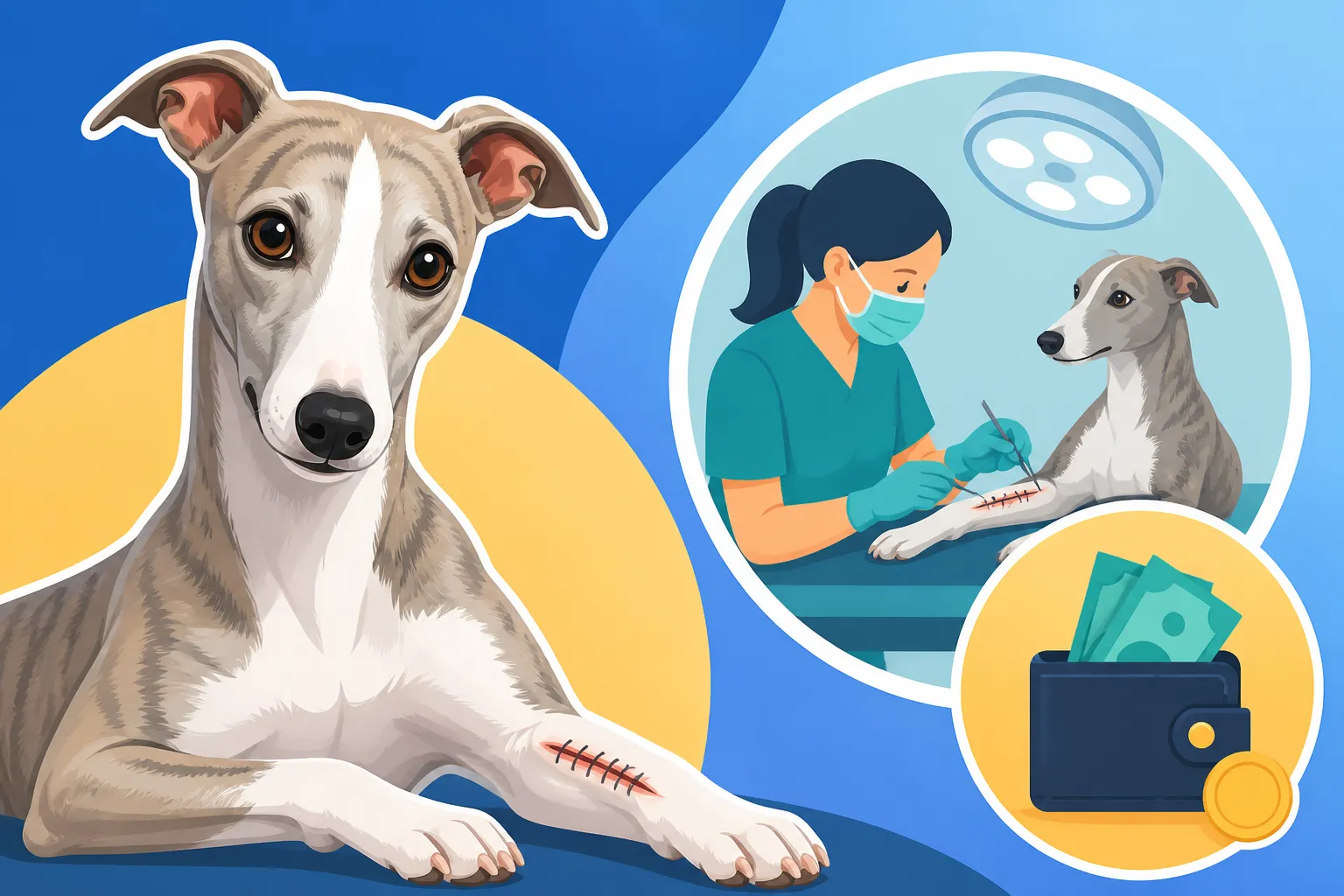
What a Whippet Laceration Repair Costs
Seeing your beloved Whippet with a gaping skin tear, especially when they're usually so agile and graceful, can send a wave of pure panic through you. Beyond the immediate worry for their well-being, the thought that often immediately follows is: "How much is this going to cost?" It's a valid and stressful concern for any pet parent, as vet bills, particularly for emergencies, can be unpredictable and substantial. This comprehensive guide aims to demystify the costs associated with repairing a Whippet's laceration, helping you understand what goes into the bill and how to better prepare.
Understanding Why Whippets Are Prone to Skin Lacerations
Whippets, with their sleek, fine coats and minimal body fat, are unfortunately quite susceptible to skin tears and lacerations. It's one of those unique characteristics of the breed that new owners often learn the hard way. Their skin is simply thinner and less cushioned than many other breeds, making them more vulnerable to injury from seemingly minor incidents.
The Unique Vulnerability of Whippet Skin
Unlike breeds with thick fur or a generous layer of subcutaneous fat, a Whippet's skin lies quite close to their muscle. This anatomical reality means there's less "buffer" to absorb impact or protect against sharp objects. Imagine a piece of fine silk stretched taut over a frame versus a sturdy canvas – the silk tears much more easily. This is precisely why a Whippet's skin seems so delicate. A quick brush against a sharp branch, a misstep while playing zoomies near furniture, or even an accidental snag on a rusty fence can lead to a surprisingly deep and extensive laceration. It's a heartbreaking reality that many Whippet owners face, and it often means an unexpected trip to the emergency vet. You might find yourself researching topics like The Thin Skin That Sends a Whippet to the Vet for Stitches after one of these incidents.
Common Scenarios Leading to Whippet Skin Tears
It's not always dramatic accidents that cause these injuries. Often, it's everyday occurrences that take an unfortunate turn. For instance, a Whippet might be running full tilt in a seemingly safe dog park, take a tumble, and scrape themselves on a hidden rock or a piece of jagged metal. Or perhaps they're playing with another dog, and a playful nip turns into a skin tear because their playmate's tooth just happened to catch them in an unlucky spot. I've even heard stories of Whippets catching their skin on the edge of a crate door as they enthusiastically burst out to greet their owner. These aren't clumsy dogs; they're incredibly athletic and agile, but their natural speed combined with their delicate skin can be a challenging combination in many environments.
When a Whippet's Laceration Demands Veterinary Attention
It's tempting to try and manage every scrape at home, but with a Whippet, it's often a judgment call that errs on the side of caution. Knowing when to head straight to the vet versus when you can manage a minor wound yourself is crucial for their health and your peace of mind (and wallet!).
Differentiating Minor Scrapes from Serious Lacerations
A minor scrape might involve just the superficial layer of skin, possibly with some light bleeding that stops quickly with gentle pressure. Think of a child's skinned knee. These can often be cleaned thoroughly at home with mild antiseptic solution and kept clean and dry. However, a laceration, especially one that exposes underlying tissue, muscle, or fat, or one that is wide open and bleeding significantly, absolutely needs professional attention. If you can see anything beyond the immediate surface layer of skin, or if the wound doesn't close easily when you gently press the edges together, it's time for the vet. The location of the wound also matters; lacerations near joints, eyes, or in areas where skin is constantly flexing tend to be more problematic. You might be asking Whether a Whippet's Cut Always Needs Stitches, and the answer is often yes for anything beyond a superficial scrape.
The Urgency of Veterinary Care
Time is of the essence when dealing with a significant laceration. The sooner a wound is cleaned and closed, the lower the risk of infection and the better the cosmetic outcome. A wound that is left open for too long begins to dry out, making surgical repair more difficult and increasing the chance of complications. Deep wounds can also bleed excessively, leading to further complications if not addressed promptly. Even if the bleeding seems to have stopped, the risk of infection in an open wound, especially if it's been exposed to dirt or debris, is very high. This is why even a wound that doesn't look like an immediate emergency can quickly become one if you delay seeking help.
Breaking Down the Costs of Laceration Repair
So, your Whippet has a wound and you know it needs a vet. Now for the part that makes every pet owner's stomach clench: the bill. The total cost of laceration repair for a Whippet isn't just one flat fee; it's a sum of several components, each contributing to the final amount.
Initial Assessment and Diagnostics
When you arrive at the vet, whether it's your regular clinic or an emergency hospital, the first step is always a thorough examination.
- Emergency Exam Fee: If you're visiting an emergency veterinary clinic outside of normal business hours, expect a higher "emergency exam fee." This covers the immediate assessment and stabilization.
- Physical Exam: Even during regular hours, there's a consultation or exam fee. The vet will assess the wound, check for other injuries, and get a general health picture of your Whippet.
- Pain Management & Sedation: Many Whippets are incredibly sensitive and will be in pain or highly anxious, especially if the wound is deep or in an uncomfortable spot. To properly clean and examine the wound, and often to stitch it, some form of sedation or pain relief is almost always necessary. This can range from a mild sedative to deeper anesthesia, which significantly impacts the cost. You'll definitely want to understand What Sedation Adds to a Whippet's Wound Repair.
- Wound Cleaning and Prep: Before any stitching can happen, the wound needs to be meticulously cleaned to remove dirt, debris, and bacteria. This might involve shaving the fur around the area and flushing the wound thoroughly with sterile solutions.
The Repair Procedure Itself
Once your Whippet is comfortable and the wound is clean, the actual repair begins. This is where the bulk of the cost often lies.
- Surgical Closure: This is the act of stitching the wound. The complexity depends on the size, depth, and location of the laceration. A simple, straight cut might just need a few layers of sutures, while a jagged, deep wound might require multiple layers of internal stitches before the outer skin can be closed. The materials used, like specialized suture threads, also factor in.
- Anesthesia Monitoring (if required): For more extensive repairs or for particularly anxious dogs, general anesthesia might be necessary. Given that Why Anesthesia Is Riskier in a Whippet due to their unique physiology, careful monitoring by a vet technician throughout the procedure is critical, adding to the cost. This includes monitoring heart rate, blood pressure, oxygen levels, and temperature.
- Medications Administered: This includes the anesthetics or sedatives themselves, as well as any antibiotics or anti-inflammatory drugs given during or immediately after the procedure.
- Surgical Supplies: All the sterile drapes, gloves, blades, and other equipment used during the repair contribute to the overall fee.
Post-Procedure Care and Follow-up
The vet visit doesn't end when the stitches are in. Proper aftercare is crucial for healing and to prevent complications.
- Take-Home Medications: Your Whippet will likely go home with a course of antibiotics to prevent infection and pain medication to keep them comfortable during recovery.
- E-Collar (Cone of Shame): Essential to prevent your Whippet from licking or chewing at their stitches, which can pull them out or introduce infection. Expect to purchase one if you don't already have one. You might be wondering Whether a Whippet Should Wear a Cone After Stitches – and the answer is almost always yes.
- Follow-up Appointments: A recheck appointment to ensure the wound is healing correctly and potentially to remove stitches (if they're not dissolvable) is usually needed. Some vets include this in the initial cost; others charge a separate follow-up exam fee. You should also be aware of How Slowly a Whippet's Skin Heals in general, which might necessitate more diligent aftercare.
Estimated Costs for Whippet Laceration Repair
So, let's get down to some numbers. It's tough to give an exact figure because prices vary wildly based on location, the specific veterinary clinic (emergency clinic vs. regular), the time of day, and, most importantly, the severity of the laceration. However, we can look at ranges.
For a relatively minor laceration (say, a few inches long, not terribly deep, no major complications), you might expect costs in the $300-$800 range. This would likely include the exam, sedation, stitches, and basic take-home medications.
For a more complex laceration (deep, jagged, very long, infected, or in a difficult location requiring general anesthesia), the costs can quickly climb to $800-$2,500+. This might involve more extensive anesthesia, multiple layers of sutures, longer surgical time, and more intensive post-op care.
Here’s a simplified breakdown to give you an idea of potential line items:
| Service/Item | Simple Laceration Estimate ($) | Complex Laceration Estimate ($) |
|---|---|---|
| Emergency Exam Fee (if applicable) | N/A – 150 | 100 – 250 |
| Regular Exam/Consultation | 60 – 120 | 80 – 150 |
| Sedation/Pain Management | 80 – 250 | 200 – 500 |
| General Anesthesia (if needed) | N/A – 300 | 400 – 1000+ |
| Surgical Supplies | 50 – 150 | 100 – 300 |
| Laceration Repair (Sutures) | 150 – 500 | 400 – 1500+ |
| Take-Home Antibiotics | 30 – 80 | 50 – 120 |
| Take-Home Pain Medication | 20 – 70 | 40 – 100 |
| E-Collar (Cone) | 15 – 40 | 20 – 50 |
| Recheck/Suture Removal (if separate) | 0 – 60 | 0 – 80 |
| Total Estimated Range | $300 – $800 | $800 – $2,500+ |
Please note: These are general estimates and actual costs will vary significantly. It's always best to get a detailed estimate from your veterinary clinic.
Factors That Influence the Final Bill
- Location: Vet costs can be much higher in large metropolitan areas like New York City or Los Angeles compared to rural areas.
- Type of Clinic: Emergency veterinary hospitals generally have higher fees than a regular daytime clinic due to their specialized staffing and equipment for urgent cases. If you're wondering What an After Hours Vet Visit Costs for a Whippet, it will almost always be more than a scheduled appointment.
- Severity and Complexity: As discussed, a small, clean cut is far less expensive than a large, deep, or contaminated wound. The need for extensive debridement (removal of damaged tissue) or multiple layers of closure drives up costs.
- Anesthesia vs. Sedation: General anesthesia requires more staff (anesthetic monitoring technician), more drugs, and more time, all of which increase the price.
- Complications: If the wound gets infected post-surgery or if the stitches break down, you might be looking at additional vet visits and treatments, further increasing the total expense.
The Lifeline of Pet Insurance
This is where pet insurance, like a plan from Healthy Paws, truly shines. Dealing with a sudden laceration, especially an expensive one, can be financially devastating for many families. Pet insurance helps mitigate these unexpected costs by reimbursing a significant portion of your veterinary bills after you've met your deductible.
With a good pet insurance policy, you typically pay your vet bill upfront, then submit a claim for reimbursement. For example, if you have a Healthy Paws plan with a 90% reimbursement rate and a $250 deductible, and your Whippet's laceration repair costs $1,500, you'd pay the $1,500 at the clinic. After your deductible is met, Healthy Paws would reimburse you $1,125 (90% of $1,250, which is $1,500 minus the $250 deductible). This can make a huge difference in managing the financial stress of an emergency. It's a question many ask: Whether Insurance Covers a Whippet's Emergency Stitches, and with a comprehensive plan, they usually do. Having a plan from a reputable provider like Healthy Paws provides immense peace of mind.
Minimizing Costs and Preventing Future Lacerations
While some accidents are unavoidable, there are definitely steps you can take to both reduce the risk of lacerations and manage the costs when they do occur.
First Aid at Home for Minor Wounds
For truly minor scrapes or superficial cuts that aren't deep or bleeding heavily, having a well-stocked first-aid kit at home can save you an unnecessary vet visit.
- Cleaning: Gently clean the wound with a mild antiseptic solution, such as diluted povidone-iodine or chlorhexidine. Avoid harsh cleansers like hydrogen peroxide or rubbing alcohol, which can damage tissue.
- Protection: Apply a thin layer of antibiotic ointment (like Neosporin, but ensure it's safe for dogs and they won't lick it off) and cover with a non-stick gauze pad, secured with vet wrap or medical tape. Change dressings regularly.
- Monitoring: Keep a close eye on the wound for any signs of infection (redness, swelling, pus, foul odor, increased pain). If it worsens, head to the vet.
You might want to check out What a Whippet Owner Should Keep a First Aid Kit to be prepared. For anything that looks like it might need stitches, don't attempt to glue it yourself, even if you’re wondering Whether a Whippet's Wound Needs Glue or Stitches—that's a vet's call.
Proactive Prevention Strategies
The best way to avoid a hefty vet bill for laceration repair is to prevent the injury in the first place!
- Safe Exercise Environments: Choose open, grassy areas free of debris, sharp objects, or rough terrain for off-leash play. Avoid areas with dense brush, thorny bushes, or hidden hazards. When running or lure coursing, inspect the ground beforehand.
- Appropriate Outerwear: In wooded areas or during colder months, consider dressing your Whippet in a protective coat or sweater. This provides an extra layer of defense against scrapes and snags. This is especially true if you are concerned about Whether a Whippet Should Wear a Coat in Cover.
- Home Safety: Walk through your home and yard, looking for potential hazards at your Whippet's eye level. Secure loose wires, cover sharp furniture edges, and ensure fences are in good repair.
- Supervision: Always supervise your Whippet during play, especially with other dogs or in new environments. Their speed means an injury can happen in a flash.
The Value of Early Intervention
Never delay seeking veterinary attention for a wound you're unsure about. A small, seemingly innocuous cut can quickly become a much larger, more complicated, and more expensive problem if infection sets in or if the wound is left open too long. Early assessment means a simpler repair, less pain for your dog, and likely a lower overall cost. Investing in pet insurance, such as through Healthy Paws, before an incident occurs, is another form of early intervention, ensuring you're financially prepared for the unexpected when it inevitably arises.
Ultimately, owning a Whippet means embracing their unique characteristics, including their delicate skin. Being prepared, both with knowledge and a plan for unexpected expenses, allows you to enjoy their wonderful companionship without constant worry.
Disclaimer
The information provided in this article is for general informational purposes only and is not a substitute for professional veterinary advice. Always consult with a qualified veterinarian regarding any health concerns or before making any decisions about your pet's medical care. Costs are estimates and can vary widely.