Mitral Valve Disease in a Whippet
That moment when your vet says, "I hear a heart murmur," can stop your own heart. It’s a terrifying phrase, especially when your beloved Whippet seems perfectly healthy, zooming around the yard one minute and curled up on the sofa the next. This guide aims to demystify mitral valve disease in Whippets, helping you understand what it means, what to look for, and how to navigate this common condition to give your sighthound the best possible life.
Understanding Mitral Valve Disease in Whippets
Learning that your Whippet might have a heart condition, specifically mitral valve disease (MVD), can be incredibly unsettling. It often starts subtly, perhaps as a chance finding during a routine check-up, leaving you with a thousand questions about what it means for your active, seemingly robust companion. Let’s break down what MVD is and why it's something Whippet owners need to be aware of.
What is Mitral Valve Disease?
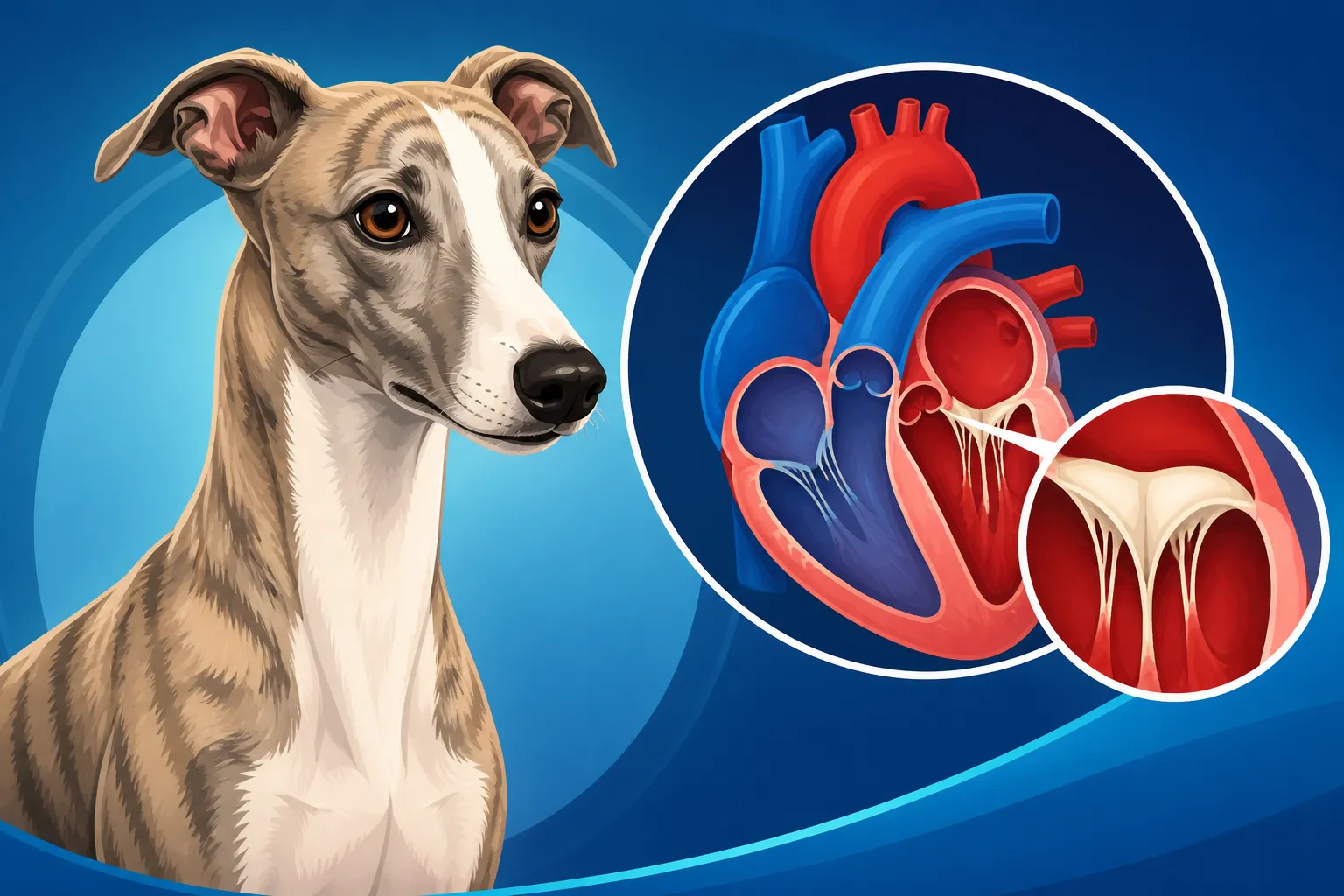
Imagine your Whippet’s heart as a beautifully efficient pump, working tirelessly to send blood around its lean, athletic body. Inside this pump are four valves, acting like one-way doors, ensuring blood flows in the right direction. The mitral valve is one of these crucial doors, situated between the left atrium and the left ventricle – the two main chambers on the left side of the heart responsible for pumping oxygen-rich blood to the rest of the body. In a healthy heart, the mitral valve opens wide to let blood flow from the atrium to the ventricle, and then snaps shut tightly when the ventricle contracts, preventing blood from leaking backward.
Mitral valve disease, specifically degenerative mitral valve disease (DMVD) or myxomatous mitral valve disease (MMVD), is a progressive condition where the mitral valve leaflets (the "doors" themselves) begin to thicken, nodule, and stiffen over time. This degeneration prevents the valve from closing completely, creating a tiny gap. When the left ventricle contracts to push blood out to the body, some blood leaks backward into the left atrium through this faulty valve. This backward flow is called regurgitation. Over time, the heart has to work harder to maintain adequate blood flow to the body, leading to enlargement of the heart chambers and, eventually, a decrease in its pumping efficiency. This condition is what ends most old Whippets, as it's a very common age-related issue across many breeds.
Why Whippets Are Prone to MVD
While MVD is famously associated with smaller breeds like Cavalier King Charles Spaniels, where it can manifest at a much younger age and progress aggressively, it is also a significant concern in Whippets, particularly as they get older. It’s important to understand that while a Whippet's heart is naturally large and powerful, reflecting their athletic build, this isn't necessarily a sign of disease. In fact, a condition called Why a Whippet's Big Heart Is Not a Diagnosis clarifies that their athletic physiology often presents with a larger-than-average heart on X-rays or even a "physiologic murmur" that isn't pathological. However, this doesn't make them immune to genuine degenerative heart conditions.
The exact genetic predispositions for MVD in Whippets are still being researched, but it's widely accepted that certain breeds have a genetic susceptibility. For Whippets, it typically presents as an age-related degenerative condition, meaning it’s more common in senior dogs. While you might not see the extremely early onset that you would in, say, a Cavalier, it's still a condition that needs careful monitoring in your Whippet as they approach their golden years. This breed-specific tendency means that while all dogs can get MVD, Whippet owners should be particularly vigilant about regular cardiac checks as their dogs age.
Recognizing the Early Signs and Diagnosis
One of the trickiest things about mitral valve disease is how silently it can begin. Your Whippet might seem completely normal for months, even years, after the first subtle changes begin to manifest in their heart. Being informed about these early indicators and the necessary diagnostic steps is crucial for proactive management.
The Silent Start: Heart Murmurs
The very first sign of MVD is almost always a heart murmur, detected by your veterinarian during a routine physical exam using a stethoscope. A heart murmur isn't a disease in itself; it's simply an abnormal whooshing sound caused by turbulent blood flow. In the case of MVD, this "whoosh" is the sound of blood leaking backward through the degenerating mitral valve when it should be closing tightly. It’s like hearing a leaky faucet – the sound tells you there’s a problem, but not necessarily how big the leak is.
Murmurs are graded on a scale from I to VI, with I being very soft and barely audible, and VI being very loud, sometimes even felt through the chest wall. A low-grade murmur (I or II) in a young, athletic Whippet might be an "innocent" or "physiologic" murmur, especially given their athletic nature, and may not indicate a problem. However, a murmur that develops later in life, or one that increases in intensity over time, is much more likely to be indicative of MVD. It's truly a moment of anxiety when your vet says, "I hear a murmur," especially since the symptoms of the actual disease might be absent for a long time. This is often the age a Whippet develops a heart murmur, usually when they are middle-aged or senior. It's a prompt for further investigation, not an immediate death sentence.
Beyond the Murmur: Diagnostic Steps
Once a heart murmur is detected, your vet will likely recommend further diagnostic tests to assess the severity of the MVD and determine if it's impacting your Whippet's heart function. These steps are essential for understanding the full picture and formulating a treatment plan.
The first step usually involves chest X-rays. These images allow the veterinarian to evaluate the size and shape of your Whippet's heart, looking for evidence of enlargement in specific chambers, particularly the left atrium. X-rays can also reveal if there's any fluid buildup in the lungs (pulmonary edema), which is a sign of congestive heart failure (CHF) – a more advanced stage of MVD. Next, your vet might suggest a cardiac exam, often performed by a veterinary cardiologist, which includes a detailed assessment.
The gold standard for diagnosing and staging MVD is an echocardiogram. This non-invasive ultrasound of the heart provides real-time images of the heart's structure and function. A specialist can visualize the mitral valve leaflets, assess their thickness and movement, quantify the amount of blood regurgitation, and precisely measure the size of the heart chambers. This detailed information is critical for determining the specific stage of MVD and guiding treatment decisions. While the cost of specialized diagnostics can be a concern for many pet owners, understanding What a Cardiology Referral Costs a Whippet Owner and What an Echocardiogram Costs on a Whippet can help you prepare financially, perhaps even with the help of pet insurance like Healthy Paws. Blood tests might also be performed, including a proBNP test, which measures a hormone released when heart muscle cells are stretched or stressed, providing another indicator of heart strain.
| ACVIM Stage | Description | Symptoms | Treatment | Prognosis |
|---|---|---|---|---|
| A | High risk, no structural disease or murmur | None | Regular monitoring | Excellent (no disease) |
| B1 | Murmur, structural changes, no symptoms | None | Regular monitoring (6-12 months) | Good (slow progression possible) |
| B2 | Murmur, structural changes, heart enlargement, no symptoms | None | Medication initiated (Pimobendan, ACE inhibitor) | Good (can live for years) |
| C | Past or current symptoms of heart failure | Coughing, difficulty breathing, exercise intolerance, fainting | Multiple medications, hospitalization for acute crisis | Fair to Guarded (depends on response) |
| D | End-stage, refractory heart failure | Severe symptoms despite maximum medication | Intensive care, advanced therapies, quality of life focus | Poor (shortened lifespan) |
Progression of MVD and Staging
Understanding that mitral valve disease is a progressive condition is vital for any Whippet owner. It doesn't usually stay static; it tends to get worse over time, albeit at varying rates. Fortunately, veterinary cardiology has developed a comprehensive staging system that helps vets and owners monitor the disease's advancement and implement interventions at the most appropriate times.
The ACVIM Staging System for MVD
The American College of Veterinary Internal Medicine (ACVIM) has established a widely accepted staging system for MVD, which is incredibly useful for guiding treatment decisions. It breaks the disease down into several stages, moving from risk to end-stage heart failure.
- Stage A: This stage describes dogs at high risk for developing MVD, but who currently show no structural heart disease or murmur. While Whippets are prone to MVD, a Whippet would typically only be classified in this stage if there's a strong family history of early-onset MVD, which is less common for their breed compared to others. For most Whippets, this stage is more theoretical as it's often an age-related issue rather than a pre-existing genetic "risk."
- Stage B1: This is often where many Whippets first enter the MVD journey. Dogs in Stage B1 have a heart murmur due to mitral valve regurgitation and detectable structural changes in the heart (like mild valve thickening), but their heart size is not yet significantly enlarged, and they show no clinical signs or symptoms of heart failure. At this point, no medication is typically prescribed, but regular monitoring, often every 6-12 months, is recommended to track progression. It's a waiting game, but an informed one.
- Stage B2: This is a crucial turning point. Dogs in Stage B2 have a heart murmur, structural changes, and significant enlargement of the left atrium and/or ventricle due to the leaky valve, but they still show no outward clinical signs of heart failure. This is often the point where prophylactic medication, primarily pimobendan, is introduced. Studies have shown that starting medication at this stage can significantly delay the onset of clinical signs of heart failure and prolong a dog's life. This stage emphasizes why regular check-ups, even for seemingly healthy Whippets, are so important – catching the disease at B2 allows for life-extending intervention.
- Stage C: Dogs in Stage C either currently have or have had clinical signs of congestive heart failure (CHF) that are secondary to MVD. This means fluid buildup has occurred, typically in the lungs (pulmonary edema) or, less commonly in Whippets, in the abdomen (ascites). Symptoms like coughing, difficulty breathing, exercise intolerance, or fainting become apparent. Treatment at this stage is aggressive, often involving multiple medications to manage fluid and support heart function, and may require hospitalization for stabilization.
- Stage D: This is the end-stage, characterized by refractory CHF. Dogs in Stage D have clinical signs of heart failure that persist despite maximum conventional medical therapy. Managing these dogs often involves very high doses of multiple medications, frequent vet visits, and a focus on maintaining comfort and quality of life.
Symptoms as the Disease Advances
While the early stages of MVD (B1 and B2) are often asymptomatic, as the disease progresses and the heart's compensatory mechanisms begin to fail, symptoms will inevitably emerge. These symptoms are a direct result of the heart's inability to pump blood efficiently and the buildup of fluid.
One of the most common and concerning symptoms for Whippet owners to watch for is a cough. This isn't just any cough; it's often a soft, moist cough, especially noticeable at night or when your Whippet wakes up. It’s caused by fluid accumulating in the lungs, irritating the airways. It can sometimes be mistaken for kennel cough or a minor respiratory issue, but if it's persistent or worsening, it warrants immediate veterinary attention. You might also notice a decrease in your Whippet's typical boundless energy. While they are known as The Whippet Is a Forty Mile an Hour Couch Potato, a true exercise intolerance means they tire more quickly during walks or play, become reluctant to engage in activities they once loved, or take longer to recover after exertion. This isn't just an "old age" slowdown; it's a specific inability of the heart to keep up with the demands of activity.
As the condition worsens into Stage C or D, more severe signs appear. Difficulty breathing, known as dyspnea, is a critical sign of acute heart failure. Your Whippet might breathe rapidly (tachypnea) even at rest, struggle to catch their breath, or exhibit shallow, labored breathing. Their gums might appear pale or bluish. These are emergency symptoms requiring immediate veterinary intervention. Fainting or collapsing (syncope) can also occur if the heart's output is so severely compromised that the brain doesn't receive enough oxygen. This is a terrifying experience for any owner to witness. Other, less common signs might include a distended abdomen if fluid accumulates there, or unexplained weight loss despite a good appetite, as the body struggles to maintain itself. If you're Caring for a Whippet Past Ten, being vigilant about these subtle changes can make a significant difference. Keeping a watchful eye on any changes in your Whippet's behavior or physical presentation is paramount, especially as they enter their senior years, and promptly communicating these observations to your veterinarian can lead to earlier intervention and better outcomes.
Managing Mitral Valve Disease in Whippets
Receiving a diagnosis of mitral valve disease for your Whippet is undoubtedly challenging, but it's important to remember that it's a manageable condition, especially with early detection and appropriate veterinary care. The goal of management is always to slow the progression of the disease, alleviate symptoms, and maintain the best possible quality of life for your beloved companion.
Treatment Options and Medications
Once your Whippet has been diagnosed with MVD, particularly if they are in Stage B2 or beyond, your veterinarian will likely discuss a medication regimen. The choice and timing of these medications are critical and based directly on the ACVIM staging.
- Pimobendan: This is often the first medication introduced, typically in Stage B2. Pimobendan is a unique drug that works in two ways: it enhances the heart muscle's ability to contract (positive inotropy) and dilates blood vessels (vasodilation), making it easier for the heart to pump blood forward. Research has shown that starting pimobendan in asymptomatic B2 dogs can significantly delay the onset of congestive heart failure and improve survival times. For many owners, it's a lifeline, giving their Whippets more happy, active years.
- ACE Inhibitors (Enalapril, Benazepril): These medications are often used in conjunction with pimobendan, or sometimes introduced at different stages depending on the individual case. ACE inhibitors work by blocking a hormone system that causes blood vessels to constrict and encourages fluid retention. By dilating blood vessels, they reduce the workload on the heart and help prevent fluid buildup. Whether Heart Medication Extends a Whippet's Life is a common question, and for drugs like these, the answer is often a resounding yes when prescribed at the correct stage.
- Diuretics (Furosemide): Furosemide is a powerful diuretic, meaning it helps the body eliminate excess fluid. This medication becomes critical when a Whippet develops congestive heart failure (Stage C or D) and experiences fluid accumulation, particularly in the lungs, leading to coughing and difficulty breathing. It helps "dry out" the lungs, making breathing easier. It's often used in combination with other heart medications.
- Other Medications: Depending on the specific symptoms and progression, other drugs like spironolactone (another diuretic that helps conserve potassium), or anti-arrhythmic medications if abnormal heart rhythms develop, might be prescribed. Dietary modifications, such as a low-sodium diet, are also often recommended, especially in more advanced stages, to help manage fluid retention.
It’s a lot to take in, and managing multiple medications can feel overwhelming at first. But working closely with your vet, and perhaps a specialist, will ensure your Whippet receives the most effective treatment plan tailored to their needs. Pet insurance providers like Healthy Paws can often help with the ongoing costs of these crucial medications and regular veterinary visits.
Lifestyle Adjustments and Quality of Life
Beyond medications, making certain lifestyle adjustments can play a significant role in managing MVD and maintaining your Whippet's comfort and happiness. It’s all about supporting their heart without compromising their inherent joy for life.
One of the most common questions from active Whippet owners is about exercise. While your Whippet probably loves a good sprint, it's essential to modify their activity level as MVD progresses. In earlier stages (B1/B2), maintaining regular, moderate exercise is generally fine and beneficial. However, once symptoms appear or the disease is advanced, intense bursts of activity or prolonged strenuous exercise should be avoided. Instead, focus on shorter, more frequent, gentle walks. The goal is to prevent your Whippet from over-exerting their compromised heart. Knowing Whether a Whippet With a Murmur Can Still Run depends entirely on the stage of their disease and veterinary advice.
Regular monitoring at home is also incredibly helpful. Learning to count your Whippet's resting respiratory rate (breaths per minute while sleeping peacefully) can give you an early warning sign of worsening fluid in the lungs. A normal resting rate is typically under 30 breaths per minute. A consistent increase above this should prompt a call to your vet. Providing a stress-free environment, ensuring they have comfortable, well-padded beds (which Whippets always appreciate anyway!), and maintaining a consistent routine can also help. Keeping an eye on your Whippet's appetite and overall demeanor will also give you clues about their well-being. Ultimately, management is about finding a balance, allowing your Whippet to enjoy life as much as possible, for as long as possible, while providing the necessary medical and environmental support.
Prognosis and Living with a Whippet with MVD
When facing a diagnosis of mitral valve disease, one of the most pressing questions is always about what the future holds. It’s natural to feel anxious about prognosis and how this condition will impact your Whippet’s vibrant personality and lifespan. While MVD is progressive and ultimately incurable, advancements in veterinary medicine offer hope for many years of good quality living.
Expected Lifespan and Factors Influencing Prognosis
It’s impossible to give a universal timeline for every Whippet with MVD, as the progression is highly individual. However, understanding the general outlook and the factors that influence it can help set realistic expectations.
Generally, Whippets diagnosed with a murmur in Stage B1, with no heart enlargement or symptoms, can live for many years without intervention. The average The Twelve to Fifteen Years a Whippet Lives means that a Whippet developing a murmur in their senior years might live out their natural lifespan with proper management. For those diagnosed in Stage B2, where heart enlargement is present but symptoms are absent, the introduction of medications like pimobendan has been shown to significantly extend the time until the onset of heart failure, often by many months, even years. This means dogs can live a good quality of life for a considerable period after diagnosis.
Once a Whippet reaches Stage C (symptomatic heart failure), the prognosis becomes more guarded. At this stage, the heart is struggling, and while medications can manage symptoms and improve comfort, the underlying disease continues to advance. The average survival time once congestive heart failure is diagnosed can range from several months to a couple of years, depending on the individual Whippet's response to treatment, the severity of the disease, and the presence of other health issues. Stage D, end-stage refractory heart failure, carries the poorest prognosis, with survival often measured in weeks to a few months, despite intensive therapy. Factors that significantly influence prognosis include:
- Stage at Diagnosis: Earlier diagnosis and intervention (e.g., in Stage B2) generally lead to a longer and better quality of life.
- Response to Medication: How well your Whippet responds to prescribed heart medications.
- Overall Health: The presence of other co-existing health conditions can complicate management and worsen prognosis.
- Owner Compliance: Consistent administration of medications and regular follow-up veterinary care are crucial.
- Individual Variation: Just like people, every dog is different, and some Whippets will progress slower or faster than others.
It’s crucial to remember that Whether a Whippet's Murmur Is Always Serious is not a simple yes or no answer; it depends on the stage and progression.
Emotional Support for Owners and Financial Considerations
Living with a Whippet diagnosed with MVD can be an emotional rollercoaster. You're trying to balance the desire for them to live a full life with the reality of a progressive disease. It's completely normal to feel grief, anxiety, and even guilt. Allow yourself to feel these emotions, and don't hesitate to seek support from your veterinary team, online communities, or fellow Whippet owners who have been through similar experiences. The bond we share with our Whippets is incredibly strong, and watching them face health challenges is one of the hardest parts of pet ownership.
Beyond the emotional toll, the financial aspect of managing MVD can also be substantial. Regular cardiac exams, echocardiograms, blood tests, and lifelong daily medications can add up quickly. This is where having pet insurance can be a huge relief. Providers like Healthy Paws, for example, can help cushion the financial impact of chronic conditions, allowing you to focus on getting your Whippet the best possible care without constant worry about the cost. It’s always a good idea to research What Heart Medication Costs a Whippet Owner Monthly and factor these expenses into your long-term budget.
Ultimately, living with a Whippet with MVD means becoming their most ardent advocate. It involves vigilant observation, open communication with your veterinary team, consistent adherence to treatment plans, and an unwavering commitment to their comfort and happiness. While the road may have its challenges, the unconditional love and joy your Whippet brings make every effort worthwhile.
Disclaimer
The information provided in this article is for general informational purposes only and does not constitute veterinary advice. Always consult with a qualified veterinarian for any health concerns or before making any decisions about your Whippet's care.