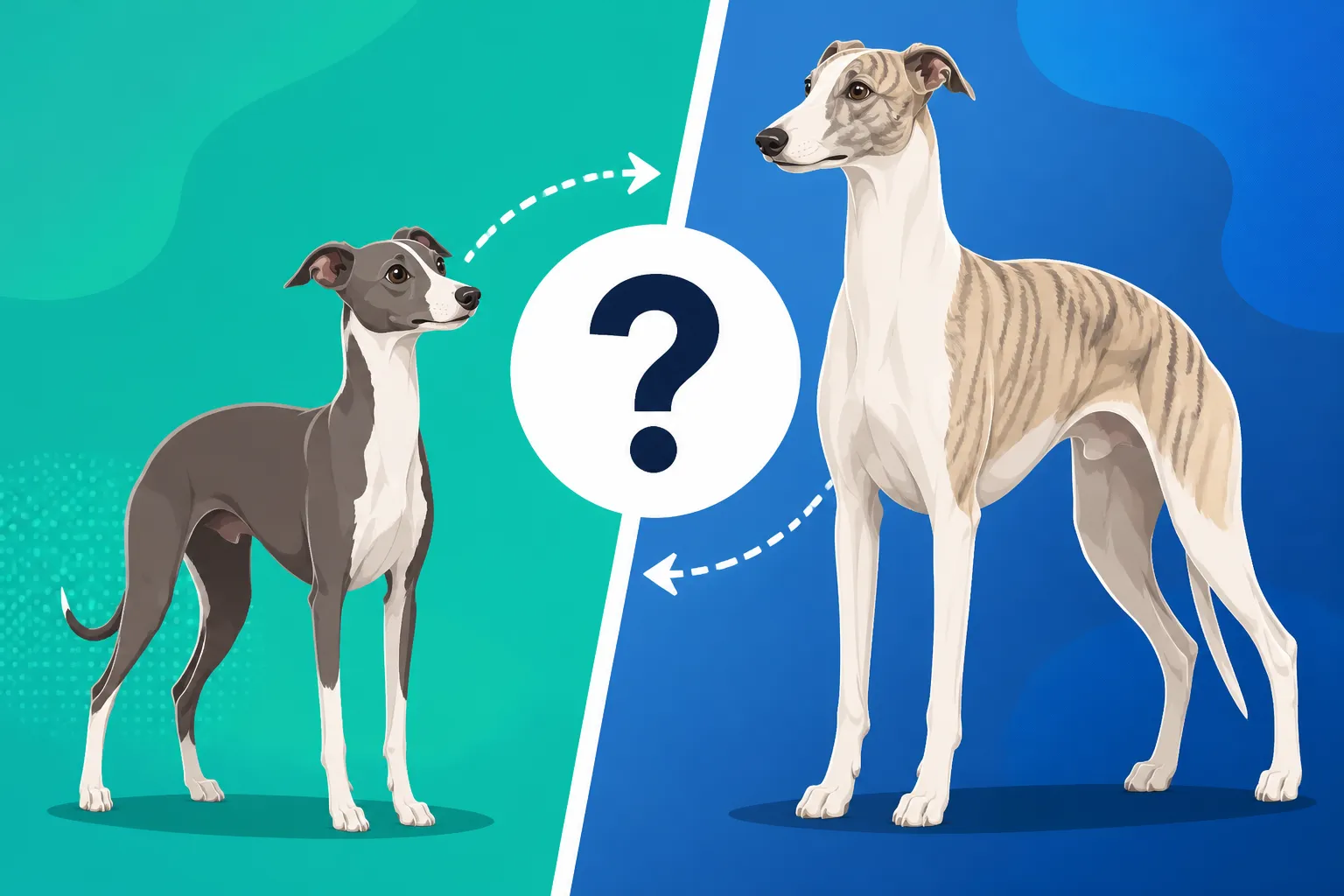
Whether an Italian Greyhound Is a Miniature Whippet
People often see an Italian Greyhound and assume it is simply a Whippet scaled down. The resemblance is understandable: both are elegant, short-coated sighthounds with long legs and a tucked waist. But they are separate breeds, with different histories, sizes, and everyday needs. This guide explains what they share, where they differ, and how to decide which dog fits your home.
Is an Italian Greyhound a miniature Whippet
They look alike because both are sighthounds
Italian Greyhounds and Whippets share a recognizable sighthound shape: a narrow waist, deep chest, fine coat, long legs, and a light, springy way of moving. Both were built for speed and rely heavily on sight when pursuing moving animals. Their similar silhouettes can make an Italian Greyhound look like a smaller Whippet, especially when you see them from a distance or in a photograph.
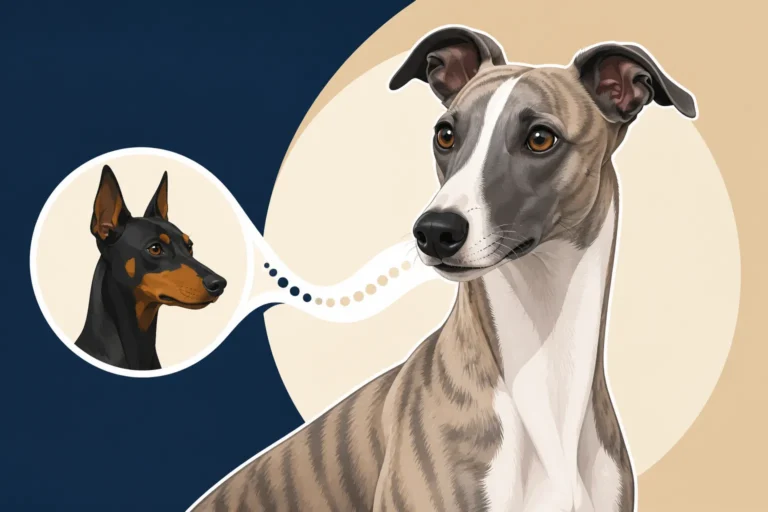
That resemblance reflects shared sighthound traits, not a simple parent-and-miniature relationship. The Italian Greyhound is its own established breed, not a small Whippet produced by selectively shrinking Whippets. The Whippet is also a distinct breed, developed in England and associated with working-class families who valued a fast, manageable dog for hunting and racing. The Italian Greyhound has a much older history as a companion breed.
If you are comparing the two, The Whippet Against the Italian Greyhound gives you a useful starting point. It helps to think of them as relatives in the broad sighthound family rather than as two sizes of the same dog. Similar outlines do not mean identical temperaments, care needs, or physical toughness.
Small does not mean the same dog in a smaller package
A miniature version of a breed would usually be expected to retain much the same proportions and practical needs, just in a smaller body. That is not a safe assumption here. Italian Greyhounds are typically much smaller and more lightly built than Whippets. Their fine limbs and small frames can make them more vulnerable to accidental injuries, particularly when they are young, jumping from furniture, or playing roughly.
Whippets are larger and generally more robust, though they are still lean dogs with thin skin and a risk of cuts during active play. Their size does not make them immune to injury. In either breed, a sudden limp, swelling, or reluctance to bear weight deserves attention rather than a guess based on how athletic the dog looks.
The comparison with a Greyhound can also cause confusion. A Whippet is not just a scaled-down Greyhound, and an Italian Greyhound is not simply a scaled-down Whippet. Breed differences are more than height and weight. For a broader look at those distinctions, see Whether a Whippet Is Just a Small Greyhound and How Much Smaller a Whippet Is Than a Greyhound.
The main differences in size and build
Compare their proportions, not only their height
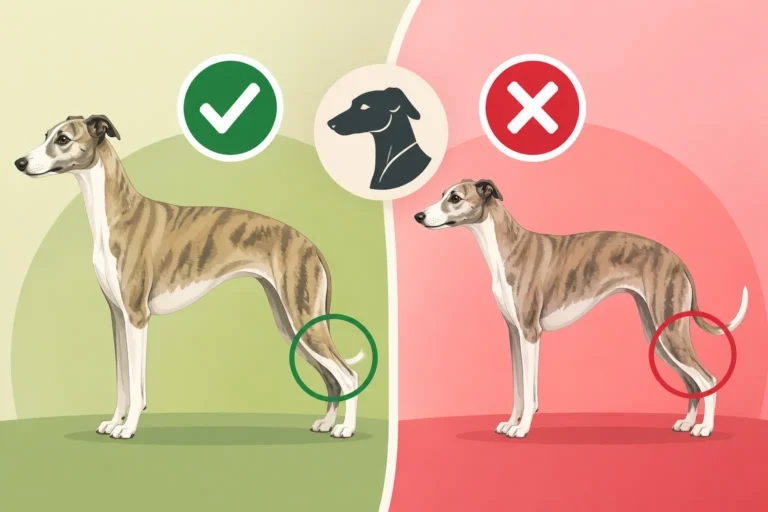
Whippets are medium-sized dogs, while Italian Greyhounds are small dogs. A Whippet may feel like a substantial athletic companion beside an Italian Greyhound, even though both have the long-legged outline people associate with sighthounds. Individual dogs vary, so a particular Whippet may be smaller or a particular Italian Greyhound larger than someone expects. Sex, family lines, age, and condition all influence the impression a dog makes.
The table below gives a practical overview. It is a general comparison, not a substitute for breed standards or an assessment of an individual dog.
| Feature | Italian Greyhound | Whippet |
|---|---|---|
| Breed type | Small sighthound and companion | Medium-sized sighthound |
| Overall build | Very fine-boned and lightweight | Lean and athletic, with more substance |
| Typical household impression | Small enough to lift and carry easily | Larger, longer-striding, and more powerful |
| Exercise style | Enjoys play and short bursts of speed | Often enjoys vigorous sprinting in a secure area |
| Physical caution | Take extra care around falls and rough play | Protect thin skin and avoid uncontrolled high-speed play |
| Cold-weather needs | Often benefits from warm clothing | Commonly needs a coat in cold or wet weather |
A common surprise for new owners is that neither dog should be judged by the amount of rib or waist they show in isolation. Sighthounds are naturally lean, but an individual dog’s body condition should be assessed by looking and feeling, ideally with guidance from a veterinarian. A very small dog that looks delicate is not automatically underweight, and a Whippet with a visible waist is not automatically unhealthy.
Their movement and handling needs differ
Both breeds can accelerate quickly, but a Whippet’s larger frame and stride make its bursts of speed feel more powerful. Neither should be allowed to run loose in an unfenced area simply because it seems well trained. A sudden chase can override a practiced recall, and a road, cyclist, or unfamiliar dog can turn a harmless-looking moment into an emergency.
Italian Greyhounds need careful handling because their smaller, finer limbs can be vulnerable to falls and collisions. That does not mean they should be treated as ornaments or kept from normal play. It means setting up play thoughtfully: avoid roughhousing with much larger dogs, block unsafe jumps where practical, and teach children to handle the dog gently and support its body when lifting.
Whippets are sturdier than their elegant appearance suggests, but their skin can tear more easily than many owners expect. Running through brambles or colliding during play can result in a cut that needs veterinary attention. Why a Whippet Is Tougher Than It Looks explains why “fragile-looking” and “invulnerable” are both poor assumptions about this breed. An owner considering a Whippet should also learn the basics of The Thin Skin That Sends a Whippet to the Vet for Stitches.
Temperament and everyday life
Both can be affectionate, sensitive companions
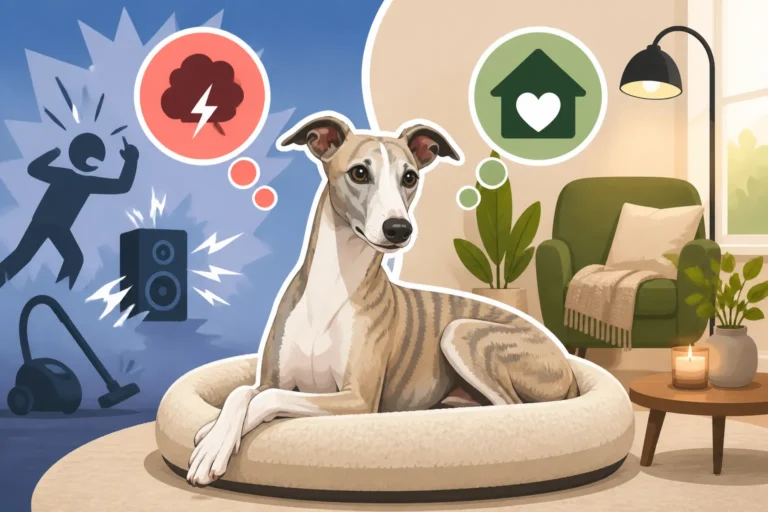
Italian Greyhounds and Whippets are often affectionate with their people and enjoy relaxing close to family. Their shared sighthound heritage can make them quiet indoors after activity, but individual dogs vary. Some are outgoing and playful; others are cautious with new people, noises, or unfamiliar places. Early, gentle exposure to ordinary household life can help, without forcing a worried puppy into interactions it cannot handle.
Neither breed should be expected to respond well to harsh corrections. A dog that freezes, avoids eye contact, or retreats during training is not necessarily being stubborn. It may be confused or worried. Short, reward-based sessions and predictable routines tend to be more productive than repeated pressure.
Whippets are larger, so their physical presence and exercise style may suit a household looking for a medium-sized companion that can enjoy a run and then settle. Italian Greyhounds can suit people who want a genuinely small dog, but their size brings practical considerations: keeping them warm, protecting them from accidental knocks, and choosing safe places to play. A small body does not automatically mean an easy dog or a low-energy dog.
Cold, exercise, and safe space matter for both
Their short coats provide little protection from cold and rain. Italian Greyhounds often feel the chill, and Whippets can be uncomfortable outdoors in cold weather too. A coat is a practical tool, not a fashion requirement. Look for a fit that covers the body without restricting the shoulders or rubbing the armpits. If you shop online through a retailer such as Chewy, measure your dog’s chest and back rather than choosing a size based only on breed name; body shapes vary, and a poorly fitted coat can chafe.
For exercise, focus on safe opportunities for movement rather than assuming either dog needs hours of nonstop running. A securely fenced area is much safer for sprinting than an open field. On leash walks, use equipment that fits the dog’s shape and cannot slip off easily. If a harness or coat is ordered from Chewy, check the fit at home before taking the dog somewhere busy, and follow the retailer’s return guidance if the item rubs or restricts movement.
At home, soft, warm resting places are welcome for both breeds. Italian Greyhounds may be especially drawn to blankets and warm laps; Whippets are also famous for seeking comfortable places to curl up. A quiet bed away from household traffic can help either dog settle. The right setup matters more than trying to make the dog fit a stereotype about being either delicate or demanding.
Choosing the right breed for your household
Think about the dog you can safely live with
If you want a small companion, an Italian Greyhound may be the more natural fit. Consider whether your household can manage a fine-boned dog around children, large pets, stairs, and furniture. A home with young children is not automatically unsuitable, but supervision and calm handling are essential. Children should be taught not to chase, grab, or lift the dog without an adult’s help.
If you want a medium-sized sighthound that can join you for active outings and still enjoy a quiet home, a Whippet may be a better match. You will need to plan for secure running opportunities, warm clothing, and sensible injury prevention. For a deeper look at lifestyle fit, compare Whippet or Italian Greyhound for a Small Home with Whether a Whippet Suits a First Time Owner.
Either breed can be a poor match if the household expects perfect off-leash reliability, outdoor living, or a dog that tolerates rough play. Sighthound instincts and physical needs are part of the package. Before deciding, consider your daily routine, access to safe exercise space, ability to supervise interactions, and willingness to use a leash around wildlife and roads.
Consider cats, children, and other dogs individually
A dog’s breed can offer clues, but it cannot guarantee how one individual will behave with a cat or another small animal. Sighthounds may have a strong chase response, so introductions should be managed carefully. Keep the cat’s escape routes and elevated resting places available, use barriers when needed, and do not leave the animals together unsupervised until their behavior is reliably safe. For Whippet-specific considerations, see Whether a Whippet Suits a Household With Cats.
The same practical approach applies to dogs and children. A calm, respectful dog can still be startled by a sudden grab or fall. A playful larger dog can unintentionally knock an Italian Greyhound over. Give pets room to move away, reward quiet interactions, and step in before play becomes frantic. This is particularly important during puppyhood, when coordination and judgment are still developing.
If you are unsure which breed matches your home, talk with responsible breeders or breed-experienced rescue groups and spend time with adult dogs—not just puppies. Ask about the dogs’ temperaments, health history, exercise habits, and how they respond to the situations your household will present. A calm conversation and a realistic look at daily life can tell you more than a label like “miniature Whippet.”
Disclaimer
This article is for general informational purposes only and does not constitute professional advice. Laws, prices and regulations vary by location and change over time. Consult a qualified professional for guidance on your specific situation.