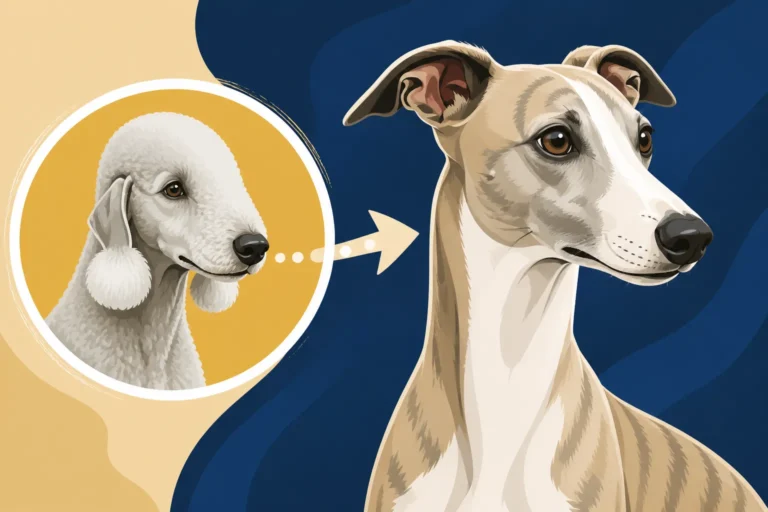
Whether a Show Whippet Can Still Race
A show-bred Whippet can still race. Being bred for the conformation ring does not automatically rule out sprinting, lure coursing, or other running sports. The real questions are whether the individual dog is healthy, physically prepared, interested in the activity, and eligible under the event’s rules. This guide explains how to assess those factors without assuming every show Whippet is built or inclined to compete.
What show breeding does and does not mean
Show type is not the same as unable to run
A show Whippet is bred with attention to how closely the dog fits its breed standard, including its proportions, movement, and overall balance. That purpose is different from selecting primarily for racing performance, but it does not make a show-bred dog incapable of running. Whippets remain athletic sighthounds, and many enjoy having a chance to chase a lure or sprint in a suitable setting.
It helps to avoid treating “show” and “racing” as two entirely separate kinds of Whippet. Breeding lines can differ in size, build, conditioning, and the qualities their breeders prioritize, but individual dogs vary too. A show-bred Whippet may be fast and eager to chase; another may prefer a short run followed by a long nap. Neither the pedigree label nor the dog’s appearance alone tells you exactly how it will perform.
The same distinction matters when people compare show and racing lines. A dog bred with racing in mind may have a history of relatives competing, but that is not a guarantee of success or soundness. Likewise, a show pedigree does not mean the dog has lost its athletic ability. For more context on the difference in breeding priorities, see The Split Between Racing and Show Whippets.
Conformation is not a racing verdict
The show ring evaluates the whole dog against a breed standard. A judge’s assessment is not a test of sprint speed, lure drive, stamina, or racing temperament. A Whippet can be an excellent example of the breed and still have little interest in a lure. Another may not be a standout show prospect but may love running and show impressive enthusiasm.
A dog’s frame can influence how it moves, but a person should not decide that a Whippet is “too showy” or “too delicate” to try an appropriate sport based on a quick glance. Instead, consider the dog’s health history, movement, recovery after exercise, and response to gradual conditioning. If you have questions about whether a particular dog’s body condition or gait is suitable, ask your veterinarian and, where useful, a qualified canine conditioning professional.
It is also worth remembering that being lean is not the same as being race-fit. Whippets naturally look slender, and a show dog should not be pushed to lose weight just to look more like a racing dog. A healthy body condition, adequate muscle, and a gradual fitness plan matter more than copying another dog’s outline. What a Whippet Actually Weighs offers useful context for understanding why breed-typical weight can vary.
Which kinds of racing and running may suit a show Whippet
Track racing and lure sports are not identical
When someone asks whether a show Whippet can race, they may mean different things. Organized track racing, straight racing, lure coursing, and timed sprint activities each have their own formats. A Whippet that enjoys chasing a lure may be a good candidate to explore a running sport, but that does not automatically mean every event format will suit the dog.
In track racing, dogs run in a structured setting with event procedures and other dogs involved. Lure coursing typically asks a dog to follow a moving lure over a course, while some timed activities focus on a short straight sprint. These sports can differ in their physical demands, rules, and the dog skills they reward. A calm dog that is uncertain around a group, for example, may find one format less comfortable than another.
Before entering an event, identify the organization and read its current eligibility and safety requirements. Rules can specify matters such as registration, age, equipment, conduct, and how dogs are handled. Do not assume that a dog is eligible just because it is a Whippet or has a pedigree. For a broader look at the activity, Whether Whippet Racing Still Happens explains why the word “racing” can cover different kinds of participation.
Prey drive and confidence matter as much as breeding
A Whippet’s willingness to chase varies. Some dogs are intensely focused as soon as a lure moves; others need patient introductions, and some are simply not interested. That response is not a measure of whether the dog is well bred or well trained. A show Whippet that does not chase enthusiastically is not a failed athlete—it may just prefer different activities.
Watch how your dog responds in a controlled, low-pressure introduction. Does the dog notice and follow movement? Can it remain engaged without becoming distressed? Is it able to settle afterward? These observations can help you decide whether to explore a sport further, but they should not be used to force participation. Keep early experiences short and positive, and follow the event organizer’s guidance rather than trying to create a race at home.
Safety around other dogs also deserves attention. Some Whippets find the excitement of a group stimulating; others become overwhelmed or distracted. If your dog is unsure, speak with organizers about observing an event before entering. A familiar, supportive setting can tell you more than a pedigree description ever will. Why a Whippet Enjoys Racing explores the motivation many owners see when a dog genuinely enjoys the activity.
How to decide whether your Whippet is ready
Start with health, age, and movement
Before introducing fast running, consider the dog’s age, general health, and exercise history. Puppies and adolescents are still developing, so intense sprinting and repetitive high-speed work should not be added casually. Ask your veterinarian about appropriate activity for your dog’s stage of growth, especially if you have concerns about joints, previous injuries, or unusual movement.
For an adult dog, a veterinary check is sensible if it has been inactive, has a known medical condition, or shows signs such as limping, stiffness, reluctance to move, or a change in recovery. A Whippet that appears eager can still have an issue that is not obvious during a brief burst of excitement. The goal is not to obtain blanket permission for unlimited exercise; it is to understand what level and type of activity is appropriate for that individual.
Observe your dog during everyday movement. Does it move freely and evenly? Does it recover normally after a walk or play session? Does it seem sore later, or hesitate to get up after resting? If anything changes, stop strenuous activity and seek veterinary advice. For more on gradual preparation, see Warming Up a Whippet Before It Runs and Cooling a Whippet Down After a Sprint.
Build fitness gradually rather than chasing a race result
A dog that spends most of the day relaxing at home may not be ready for repeated sprints simply because it is a Whippet. Short bursts at high speed place different demands on the body than a relaxed walk. Build a general routine first, then follow guidance from experienced event organizers or a canine conditioning professional about preparing for the specific activity.
Keep sessions manageable and pay attention to how the dog responds during and afterward. Give the dog time to rest between strenuous efforts, and do not add intensity, duration, and frequency all at once. Surface conditions matter too: slippery grass, uneven ground, debris, and sharp turns can raise the risk of injury. Running should happen only in a secure area where the dog cannot bolt toward a road or other hazard.
Do not use weight loss as a shortcut to speed. If your Whippet needs a body-condition adjustment, discuss an appropriate plan with your veterinarian. A dog that is too thin or under-muscled is not better prepared simply because it looks lean. The guide How Much Exercise a Whippet Really Needs can help distinguish everyday exercise needs from the more specific demands of sport conditioning.
Practical questions before entering an event
Check the rules, equipment, and event environment
Once you know what type of activity you want to try, contact the organizing group and ask what a first-time participant should expect. Confirm whether your dog meets the event’s eligibility requirements and what equipment is required. Organizers can explain how dogs are checked in, where they wait, how participants are called, and what to do if a dog becomes stressed or loses interest.
Plan for the practical details as well as the run itself. Bring water, a secure leash and collar or harness, and a comfortable place for your dog to rest away from the action. If you are gathering basic supplies, retailers such as Chewy may be one option for comparing everyday items like water bowls, treat pouches, or travel bedding. Choose equipment that fits your individual dog and is suitable for the event rather than assuming one product works for every Whippet.
A racing muzzle or other specialized equipment should be selected and fitted according to the event’s requirements and guidance. Do not improvise with gear that restricts breathing, rubs the skin, or can come loose while running. Whippets have fine coats and relatively delicate skin, so check for rubbing after using any new equipment. For questions about racing equipment, What a Whippet's Racing Muzzle and Blanket Cost provides useful background on what owners may need to consider.
Make the first outing a low-pressure test
Your first event does not need to be a performance test. Arrive with enough time to let the dog take in the surroundings, and give it room to observe from a comfortable distance. If the dog is tense, overwhelmed, or uninterested, leaving early can be the best decision. A positive first visit may involve watching, greeting a few people, and going home without running at all.
If your Whippet does participate, focus on the experience rather than comparing its speed with another dog’s. Notice whether it appears comfortable, whether it recovers well, and whether it seems keen to try again. A dog can enjoy running without being competitive, and a dog that loves one sport may not enjoy another. Good participation is measured by safety and enjoyment, not by whether the dog wins.
Pack familiar rewards and comfort items so the outing feels manageable. Some owners use a treat pouch or travel supplies purchased from places such as Chewy, but the important part is choosing items the dog already knows and tolerates. Avoid introducing unfamiliar food or equipment at the event itself; the excitement and noise are enough new things for one day.
Be realistic about the trade-offs
Running sports can give an athletic Whippet a structured outlet and a chance to use its natural interest in movement. They can also require travel, event preparation, time for recovery, and careful attention to injury prevention. A dog may need rest after a demanding activity, and participation should fit the dog’s health and temperament rather than the owner’s hopes for a racing career.
There is no need to choose between appreciating a show Whippet’s conformation and letting it enjoy suitable activity. Show status does not automatically disqualify a dog, and racing ability does not define the dog’s value. The right question is not whether a show Whippet can race in the abstract, but whether this particular dog is healthy, eligible, prepared, and happy doing it.
If the dog does not enjoy the sport, there are plenty of other ways to provide enrichment. A secure fenced run, scent activities, training games, or calm walks may suit its preferences better. Whatever you choose, keep the dog’s wellbeing ahead of titles, speed, or expectations. If you are also considering activities that are not formal racing, How Lure Coursing Channels a Whippet's Drive may help you compare ways to offer a safe outlet for chasing.
Disclaimer
This article is for general informational purposes only and does not constitute professional advice. Laws, prices and regulations vary by location and change over time. Consult a qualified professional for guidance on your specific situation.