Whether a Long Haired Whippet Exists
It's a common question, and one that often sparks debate among dog enthusiasts and prospective owners: do long-haired Whippets actually exist? For many who adore the elegant lines and gentle nature of a Whippet, the idea of one with a flowing, feathery coat can be quite appealing, leading to a hunt for something that, for a purebred Whippet, simply isn't real. This guide will unravel the mystery, explore the origins of this misconception, and help you understand the true nature of the Whippet's coat, ensuring you're well-informed about this wonderful breed.
The Standard Whippet Coat: A Lesson in Sleek Simplicity
When you picture a Whippet, you likely imagine a dog of refined elegance, with a smooth, short coat that gleams in the sun. This isn't just a popular image; it's the defining characteristic of the breed's coat, a hallmark of its sighthound heritage and functional design. There's a reason why the Whippet's coat is so consistently described in breed standards, and it's deeply tied to their history and purpose.
The Short, Smooth, and Fine Reality
A purebred Whippet's coat is undeniably short, exceptionally smooth, and finely textured. It lies flat against their lean, muscular body, showcasing every curve and angle of their athletic build. There's no fluff, no curl, and certainly no long feathering on the ears, legs, or tail that you might see on other breeds. This isn't by accident; it's a deliberate characteristic honed over generations. Their coat is remarkably dense despite its brevity, offering some protection from the elements, but critically, they lack an insulating undercoat. This absence of a thick underlayer contributes to their signature sleek profile and their distinct sensitivity to cold, something many owners quickly learn about.
When you run your hand over a Whippet, it feels like velvet, a sensation that is as much a part of their charm as their gentle eyes. This smooth texture minimizes drag when they sprint, which was vital for their historical role as small game hunters and "rag racers." It also means that mud and dirt often just dry and flake off, making their grooming needs incredibly straightforward, which is a major bonus for busy households. This fine, close-lying coat also makes them fantastic cuddle partners, as there’s no excess fur to get in the way of a good snuggle on the sofa.
Why the Standard Matters for Health and Function
The Whippet's short, smooth coat is more than just an aesthetic choice; it's intricately linked to their health, comfort, and the very function they were bred for. Their minimal body fat and lean musculature mean that this coat offers little insulation, making them acutely sensitive to cold temperatures. This is why you'll often see Whippets sporting stylish coats and sweaters even indoors, and why a full wardrobe becomes an essential part of owning one. A Whippet Has No Insulation and No Padding is a reality every owner comes to understand deeply, especially when the thermostat dips.
Furthermore, the short coat helps regulate their body temperature during intense bursts of speed. A heavy, long coat would cause them to overheat much more quickly during a full-out sprint, hindering their performance and potentially risking their health. This sleek design reduces air resistance, allowing them to cut through the air with remarkable efficiency. From a health perspective, a short coat generally means fewer places for parasites to hide and easier detection of skin issues or injuries, which, given their thin skin, can be frequent occurrences. The short coat is also less prone to matting, which can cause skin irritation and infections if left untended.
Unraveling the Myth: Where the "Long-Haired Whippet" Idea Comes From
The idea of a long-haired Whippet often springs from seeing dogs that look a lot like Whippets but possess longer coats, or from breeders who mislabel their dogs. It's a persistent myth that can lead to confusion for those seeking a true purebred Whippet.
The Silken Windhound Connection
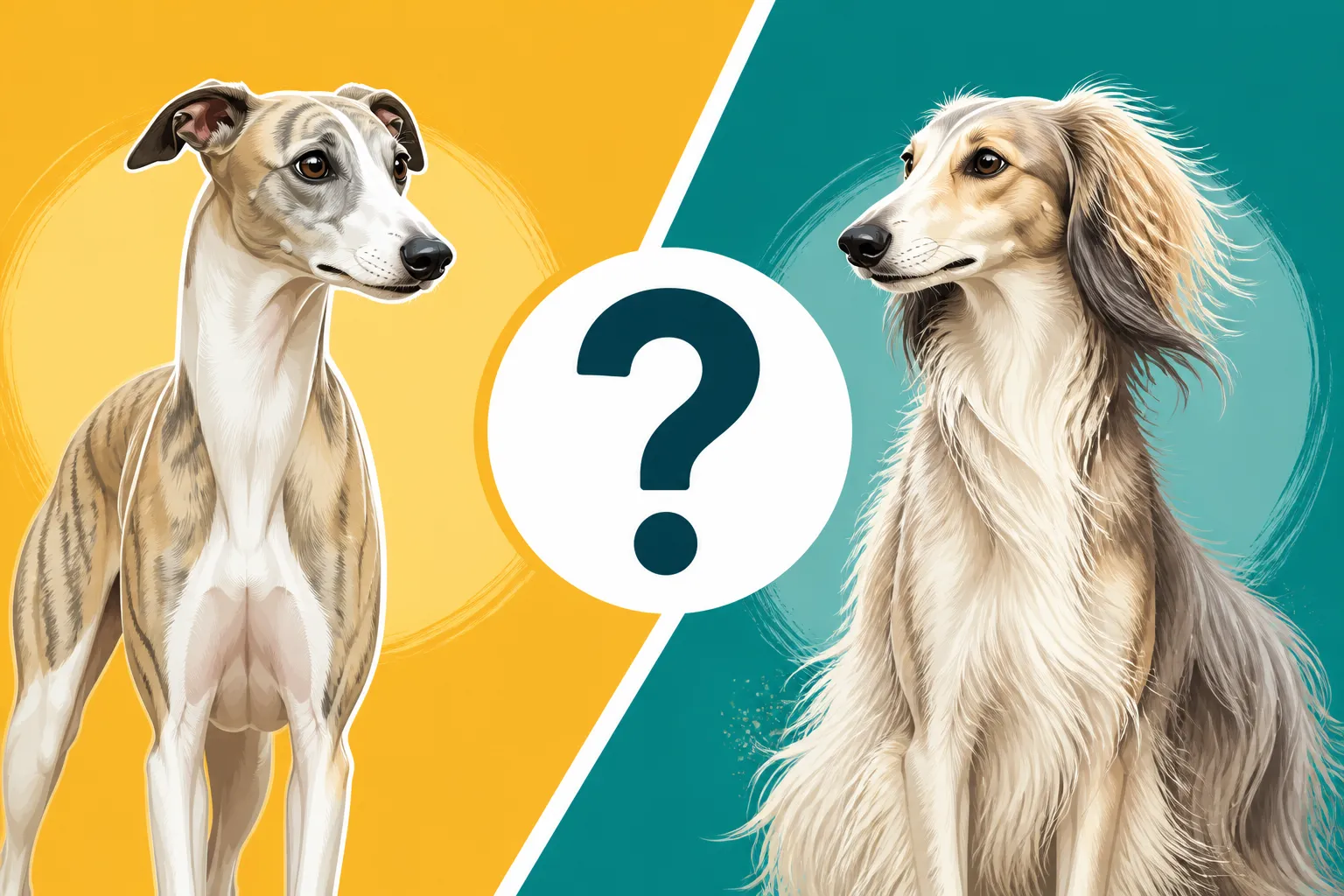
Perhaps the most common source of the "long-haired Whippet" misconception is the Silken Windhound. This beautiful breed undeniably shares many physical similarities with the Whippet, including the elegant sighthound build, arched back, and gentle temperament. However, Silken Windhounds are a distinct breed, specifically developed to have a longer, softer coat, often with feathering on the ears, tail, and legs. They were created in the late 20th century using Borzoi, Shetland Sheepdog, and Whippet lines, among others, to achieve a small, long-haired sighthound.
When people encounter a Silken Windhound, they might reasonably assume it's a type of Whippet, especially if they're not deeply familiar with sighthound breeds. The physical resemblance is striking, and their personalities often align with the affectionate, couch-potato nature of a Whippet. But it's crucial to understand they are not simply "long-haired Whippets" but a separate, recognized breed with their own standard and genetic history. How the Silken Windhound Came From Whippets can shed more light on their fascinating origins, showcasing how careful breeding created this lovely, distinct canine.
Whippet Mixes and "Fluffy" Variations
Another significant contributor to the myth comes from Whippet mixes. When a purebred Whippet breeds with another dog breed that carries genes for longer hair, the resulting puppies can exhibit a range of coat lengths and textures. For instance, a Whippet crossed with a Border Collie, a Spaniel, or even certain terriers might produce offspring with longer, wavier, or coarser coats than a purebred Whippet. These mixes can still inherit the Whippet's lean body, speed, and temperament, making them appear "long-haired Whippets" to the casual observer.
Unfortunately, some less scrupulous breeders might intentionally cross Whippets with other breeds to create a "unique" look, or accidentally produce such mixes, and then market them using misleading terms to fetch a higher price or simply to offload puppies. They might not be intentionally deceptive but rather ignorant of breed standards or genetics. This can lead to confusion and disappointment for buyers who expect a purebred Whippet with a specific coat type. It's always vital to know the lineage of any dog you consider bringing into your home.
The Misleading "Longhaired Whippet" Label
The term "Longhaired Whippet" has sometimes been used by individuals or small breeding programs trying to establish a new variety or even a new breed, or simply as a catchy, if inaccurate, marketing term. Historically, there have been discussions and even attempts to introduce a long-haired variant into the Whippet breed standard, but these have not gained widespread acceptance or recognition by major kennel clubs like the American Kennel Club (AKC) or The Kennel Club (UK). These official bodies adhere strictly to the established breed standard, which unequivocally describes a short, smooth coat.
Any dog explicitly advertised as a "Longhaired Whippet" should be approached with caution. It's almost certainly either a Silken Windhound, a Whippet mix, or a dog from an unrecognized breeding program that does not meet the purebred Whippet standard. Understanding this distinction is key to making an informed decision and ensuring you're supporting ethical breeding practices. The existence of these labels simply muddies the waters for those genuinely trying to learn about the breed.
The Genetics of Coat Length in Whippets
Understanding basic canine genetics can really clear up why purebred Whippets don't come in a long-haired variety. It's not about preference or selective breeding for aesthetics alone; it's rooted in the fundamental genetic makeup of the breed.
Understanding the FGF5 Gene
The primary gene responsible for determining coat length in dogs is called Fibroblast Growth Factor 5, or FGF5. Dogs carry two copies of every gene, one from each parent. The FGF5 gene has different variants, or alleles, that dictate whether a dog will have a short coat or a long coat. Typically, the allele for short hair is dominant over the allele for long hair. This means that if a dog inherits even one copy of the "short hair" allele, it will likely have a short coat. For a dog to have a long coat, it usually needs to inherit two copies of the "long hair" allele, one from each parent.
Think of it like this:
- S/S: Two copies of the short hair allele – short coat.
- S/L: One short, one long hair allele – still a short coat (because short is dominant). This dog is a "carrier" for long hair.
- L/L: Two copies of the long hair allele – long coat.
This genetic mechanism explains why some breeds consistently have short coats, while others have long coats, and why sometimes two short-coated dogs can produce a long-coated puppy if both are carriers (S/L). However, for a breed like the Whippet, specific breeding has selected for and solidified the presence of only the short-hair alleles within its gene pool.
Why Purebred Whippets Are Genetically Short-Coated
Through generations of careful, intentional breeding, the Whippet's genetic code has become highly consistent for its characteristic short, smooth coat. Reputable Whippet breeders select for dogs that conform to the breed standard, which specifies a short coat. This means that the "long hair" allele (L) has largely been bred out of the purebred Whippet gene pool, or at least to such a low prevalence that it's virtually non-existent in recognized lines.
Therefore, when you acquire a purebred Whippet from a reputable breeder, you can be confident that it will have the characteristic short coat. There's no hidden long-hair gene waiting to surprise you. This genetic consistency is part of what defines a breed and ensures that offspring will largely resemble their parents and fit the established standard. This also means that even if a purebred Whippet were to somehow mate with another purebred Whippet who did carry a rare long-hair allele, the chances of producing a long-haired puppy would be exceedingly slim, as both parents would need to be carriers. The Whippet gene pool is simply not set up for long hair.
Distinguishing True Whippets from Look-Alikes
With the rise of designer dogs and the internet, it can be tricky to tell a genuine purebred Whippet from a clever mix or another breed entirely. Knowing the key distinctions can save you a lot of confusion and ensure you're getting the dog you truly want.
Key Physical Differences to Spot
Beyond the obvious coat length, there are several subtle yet important differences that can help you distinguish a purebred Whippet from a Silken Windhound or a Whippet mix:
- Coat Texture and Feathering: A purebred Whippet's coat is uniformly short and smooth across its entire body, with no feathering around the ears, legs, or tail. A Silken Windhound, by contrast, will have a noticeable longer, softer coat, often with distinct "feathering" on the back of the legs, chest, and a plumy tail. Whippet mixes, depending on the other breed involved, could have coats ranging from slightly longer and coarser to wavy or even shaggy.
- Head and Ear Set: While both breeds have elegant heads, the nuances can differ. Whippets typically have rose ears, which fold back and lie flat against the neck, only partially rising when alert. Silken Windhounds also have rose ears, but sometimes their slightly longer ear leather and framing hair can give them a slightly different appearance.
- Overall Size and Substance: While both are medium-sized sighthounds, there can be slight variations. Whippets generally adhere to a specific height and weight range. What a Whippet Actually Weighs outlines these standards clearly. Silken Windhounds are generally similar in size, but mixes can vary wildly depending on the other parent breed. For example, a Whippet-Greyhound mix might be significantly larger.
- Tail: A purebred Whippet's tail is long, tapering, and carried in a gentle curve. It should be sparsely haired. A Silken Windhound will typically have a more feathered or plumy tail.
Here's a quick comparison:
| Feature | Purebred Whippet | Silken Windhound (General) | Whippet Mix (Varies) |
|---|---|---|---|
| Coat Length | Short, smooth, fine | Medium to long, silky, often with feathering | Any length/texture, depending on parent breeds |
| Undercoat | Absent | Present, contributes to soft feel | Varies |
| Feathering | None | Common on ears, legs, chest, tail | Possible, depending on parent breeds |
| Tail | Long, tapering, thin hair | Plumy, feathered | Varies |
| Ear Set | Rose ears, smooth | Rose ears, sometimes framed by longer hair | Varies (rose, prick, drop) |
| Breed Status | Recognized by major kennel clubs (AKC, KC) | Recognized by various international rare breed clubs | Not a recognized breed, by definition a mix |
The Importance of Pedigree and Breeder Transparency
When you're looking for a purebred Whippet, the absolute best way to ensure you're getting a dog with the correct coat and other breed characteristics is to work with a reputable breeder. These breeders are dedicated to preserving the breed standard and will be transparent about their dogs' lineage and health. They should be able to provide you with:
- Registration Papers: Proof that the puppy's parents are registered with a recognized kennel club (like the AKC in the US or The Kennel Club in the UK), indicating their purebred status.
- Pedigree: A multi-generational record of the dog's ancestors, showing its purebred lineage.
- Health Clearances: Documentation of health testing for the parents, such as OFA (Orthopedic Foundation for Animals) certifications for heart and eye health. A good breeder will prioritize the health of their lines. The Health Tests Both Whippet Parents Should Have is an excellent resource for understanding what to look for.
- Opportunity to Meet Parents: A reputable breeder will welcome you to meet the puppy's mother (and sometimes the father if he's on site) and see their living conditions. This allows you to observe their coats, temperaments, and overall health.
If a breeder uses terms like "rare long-haired Whippet" and cannot provide these assurances, it should be a red flag. True rarity in a purebred often comes with genetic issues, not a new coat type that deviates from the breed standard. Always do your homework and don't be swayed by unusual claims or premium pricing for non-standard variations.
The Practicalities of Coat Care: Short vs. Long
One of the often-overlooked aspects of coat type is the practical daily care involved. A short, smooth coat like the Whippet's demands a vastly different routine than a longer, feathered coat.
Minimal Grooming for the Standard Whippet
One of the many joys of owning a purebred Whippet is their incredibly low-maintenance coat. Their short, smooth hair means that grooming is a breeze, requiring minimal effort to keep them looking pristine. For most Whippets, a quick once-a-week brush with a soft bristle brush or a grooming mitt is all that's needed to remove loose hairs and stimulate the skin. This routine helps distribute natural oils, keeping their coat shiny and healthy. Why a Whippet's Coat Takes Five Minutes a Week is not an exaggeration – it's truly that simple.
Bathing is also infrequent, usually only when they get genuinely dirty from rolling in something interesting (or not so interesting!). Their short coat dries quickly, and because they have very little doggy odor, they don't need frequent washing. This minimal grooming requirement is a huge advantage for owners with busy schedules or those who dislike dealing with shedding and mats. While they do shed, it's generally fine, short hair that's less noticeable than the longer hair of other breeds.
The Added Demands of a Longer Coat
Contrast this with a dog possessing a longer, feathered coat, like a Silken Windhound or a Whippet mix with long-haired genetics. These coats require significantly more attention and effort. Longer hair is prone to tangling and matting, especially behind the ears, under the legs, and on the tail. Without regular, often daily, brushing, mats can form, which can be painful for the dog and may require professional grooming to remove.
Longer coats also tend to shed more visibly, and the hair can cling to furniture and clothing more readily. They may also trap more dirt, debris, and moisture, leading to more frequent bathing and longer drying times. For some long-haired breeds, professional grooming every 6-8 weeks is a necessity to keep their coat healthy and manageable. This added time, effort, and potential cost (especially if you factor in trips to a professional groomer) is a significant commitment. Items for detangling, different brush types, and specialized shampoos are often found at pet supply stores like Chewy, demonstrating the broader range of products needed for long-haired pets. Therefore, if you're drawn to the Whippet's easy-care coat, be very wary of any "long-haired" variant, as it would fundamentally alter this practical advantage.
Embracing the Whippet as It Is: Beauty in Brevity
Ultimately, the Whippet's true beauty and charm are inextricably linked to its sleek, short-coated form. There's a profound elegance in its simplicity, and understanding its genuine characteristics only deepens our appreciation for this remarkable breed.
Celebrating the Whippet's Unique Appearance
The Whippet's short, smooth coat is part of what makes it so distinctive and beautiful. It highlights their incredible musculature and graceful lines, allowing their athletic physique to shine without obstruction. Every arch of their back, every curve of their chest, and the elegant sweep of their tail is visible, a testament to generations of breeding for speed and agility. This understated beauty is what captivates so many, making them stand out in a crowd without needing a fancy coiffure.
Their short coat also allows for their wonderful array of colors and patterns to be displayed vividly. From deep brindles to solid blues, reds, fawns, and various pieds, the colors are sharp and clear against their close-lying hair. The Colors a Whippet Comes In is truly diverse, and the short coat ensures each shade and mark is seen to its fullest potential. This is a breed where less truly is more, and its clean, aerodynamic form is a work of art in itself.
Why the Standard Coat is Best Suited for the Breed's Lifestyle
The Whippet's short coat isn't just about looks; it's about functionality, comfort, and fitting perfectly into the lifestyle of this unique sighthound. As a breed built for explosive speed, a short coat provides minimal drag, essential for their impressive sprints. It also allows for efficient heat dissipation during intense exercise, preventing overheating, which would be a concern with a thicker coat.
Beyond their athletic prowess, Whippets are renowned for being incredible house dogs, often referred to as "40 mph couch potatoes." Their short coat means they shed minimally and are easy to keep clean, making them ideal companions for indoor living. Their need for warmth is also directly related to their short coat, driving owners to provide cozy blankets and beds, fostering the very cuddly, affectionate nature they are so loved for. This reciprocal relationship between their physical attributes and their beloved personality creates the quintessential Whippet experience. They truly embody the saying that they are perfectly designed for both the chase and the chaise lounge, and their short, smooth coat is fundamental to both aspects of their existence.
Disclaimer
This article is for general informational purposes only and does not constitute professional advice. Laws, prices and regulations vary by location and change over time. Consult a qualified professional for guidance on your specific situation.