Why a Whippet Is a Picky Eater
Whippet physiology, efficient metabolism, and cold sensitivity explain why these lean dogs often display finicky eating habits.
The daily stuff, done right.
Feeding amounts by life stage, coat and skin routines, dental and nail care, exercise needs, and what changes as they age.

Whippet physiology, efficient metabolism, and cold sensitivity explain why these lean dogs often display finicky eating habits.

Whippet digestion, sensitive stomach signs, vomiting, and diarrhea explained to help your athletic sighthound stay healthy.

Proper daily meal schedules for Whippets, from puppyhood to older ages, maintain a healthy lean body condition and proper energy levels.

Racing Whippet calorie needs, based on sprinting, training, and cold weather, help owners optimize nutrition and muscle maintenance.

Whippet dietary needs and body condition assessment help owners determine proper feeding amounts for a healthy sighthound.
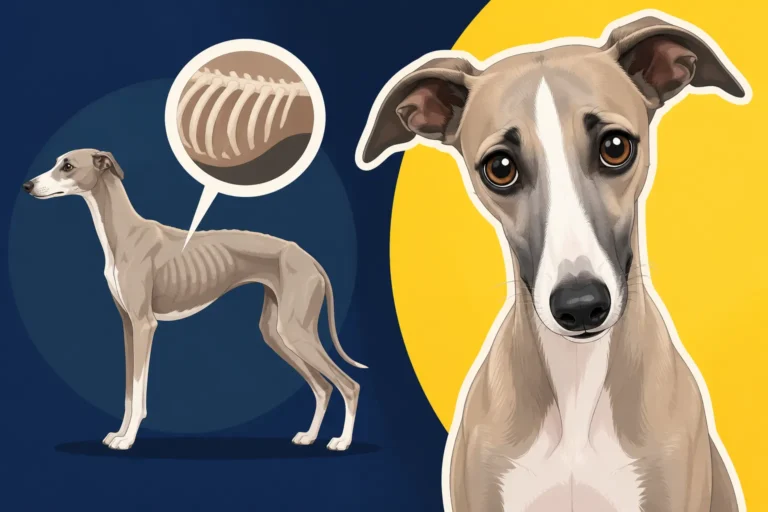
Whippet body condition assessment helps owners distinguish healthy lean frames from genuinely underweight dogs needing veterinary attention.
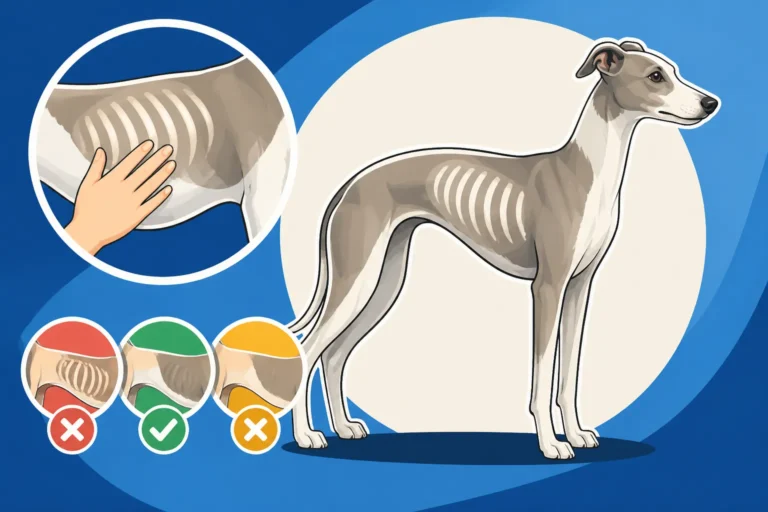
Healthy Whippet body condition guidelines explain why owners should typically see the last two or three ribs and hip bones.
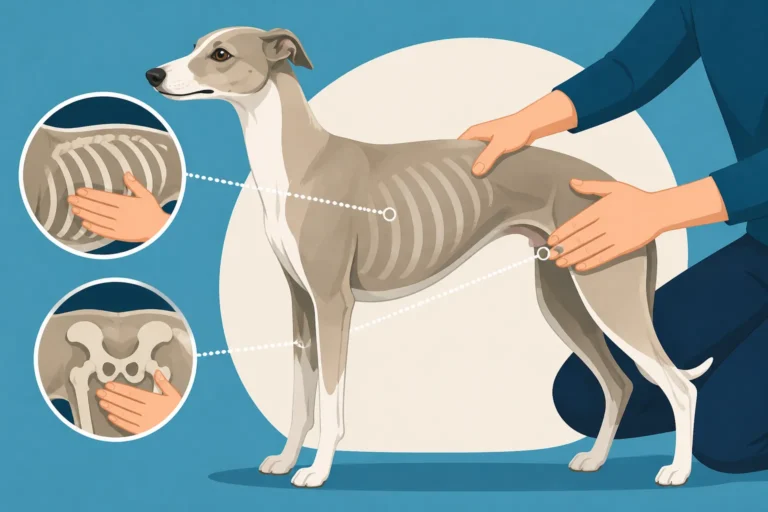
Whippet body condition assessment using touch rather than sight helps owners determine healthy weight, body fat, and proper skeletal coverage.

Healthy Whippet weight involves feeling distinct rib and hip bones on a naturally lean, athletic sighthound built for speed.
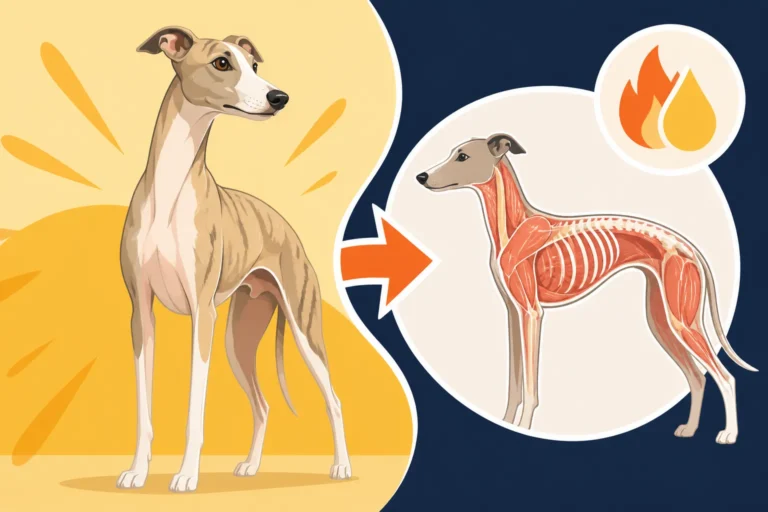
Whippet metabolism and myostatin gene mutations explain why this athletic sighthound naturally maintains a very lean physique.