Teaching a Whippet to Wait at a Doorway
That moment when the front door swings open, even just a crack, and your Whippet transforms into a blur, a streak of graceful speed heading straight for the great unknown – it's a heart-stopping experience for any owner. This incredible instinct to dart off can turn a simple delivery or a visit from a friend into a high-stakes game of chase, leaving you breathless with worry about their safety. This guide is here to walk you through a clear, positive reinforcement approach to teaching your Whippet to wait politely at any doorway, turning potential escapes into calm, controlled exits.
Understanding the Whippet's Doorway Drive
Before we dive into training, it's vital to grasp why your elegant Whippet might be so inclined to bolt. It's not defiance; it's deeply ingrained instinct, coupled with their unique physical traits. When you understand these motivators, you can approach training with more empathy and devise strategies that truly work with, rather than against, your dog's nature.
The Power of Prey Drive
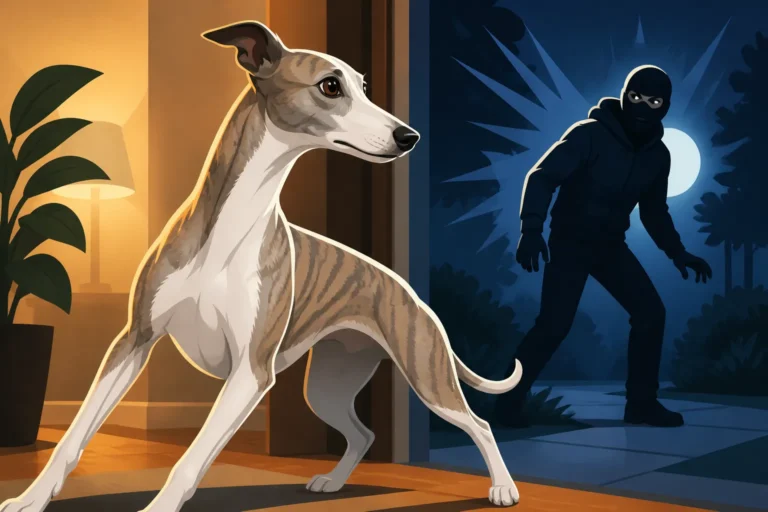
Whippets are sighthounds, bred for centuries to spot movement and chase. Their world is one of visual triggers, and an open door often represents an exciting, unpredictable frontier. To them, it's not a boundary; it's an opportunity. The rustle of leaves, a distant squirrel, a neighbor walking their dog – these are all potential "prey" that trigger their incredible speed and unwavering focus. Once that chase instinct kicks in, it's incredibly powerful. You might find that Why a Whippet's Chase Instinct Overrides Its Recall sheds more light on just how hardwired this behavior is for our speedy companions. This isn't a malicious act; it's simply a strong, natural impulse.
Imagine you're driving, and suddenly you see something utterly captivating – a rare bird, a dazzling meteor shower – and your immediate, unthinking impulse is to look, maybe even pull over. For a Whippet, that's what a squirrel across the street through an open door feels like, but multiplied by their genetic imperative to hunt. Their recall, even if normally good, can vanish in that instant.
The Thrill of Exploration and Freedom
Beyond prey drive, there's the simple joy of freedom. Whippets love to run, to stretch those magnificent legs, and to explore new scents and sights. An open door promises adventure. For a dog that spends a good portion of its day napping (and let's be honest, Whippets are champion nappers!), the outside world is a vibrant, stimulating place. This desire to explore isn't a bad thing, but it needs to be managed for their safety.
They might not be planning a grand escape; they might just see a patch of sunbeam on the sidewalk that looks irresistible, or hear a sound that piques their curiosity. It's less about escaping from you and more about rushing towards something perceived as exciting. This zest for life is part of what makes them such charming companions, but it requires us to set clear boundaries for their protection.
Minimal Physical Barriers
Let's be realistic: a Whippet is a lean, aerodynamic machine. They have very little body fat, making them less robust than some other breeds. They can slip through small gaps with surprising ease and accelerate from a standstill in the blink of an eye. Their physical build, while beautiful, means that a momentary lapse in your attention at a doorway can have immediate, concerning consequences. A clumsy push or a sudden lunge could even lead to injury for them if they get tangled or hit something at speed. Knowing The Thin Skin That Sends a Whippet to the Vet for Stitches highlights just how delicate they can be.
This is why physical management, like leashes and baby gates, are so important when you're initially working on doorway manners. We can't rely on their physical bulk to slow them down or stop them; we have to rely on their training and our proactive management.
Foundation Training: Teaching "Wait" Away From the Door
Before you even think about working at an actual doorway, you need to build a strong foundation for the "wait" command in a low-distraction environment. This skill is critical for any Whippet, not just for safety at doors, but for general impulse control. Remember, Whippets are sensitive souls, so positive reinforcement is key. How a Whippet Learns When It Bruises From Pressure is an excellent read on why harsh methods simply don't work for these dogs.
Introducing the "Wait" Cue
Start in a quiet room with no tempting exits. Have some high-value treats ready – little bits of cheese, cooked chicken, or their favorite soft treats work wonders.
- Start Simple: Stand directly in front of your Whippet. Hold a treat in a closed fist right at their nose.
- Say "Wait": As you say "Wait," slowly move your hand, with the treat, away from their nose, maybe a foot or two. The goal isn't for them to sit or lie down, but simply to pause and not lunge for the treat.
- Reward the Pause: The instant they hesitate, even for a second, or look at you instead of the treat, say "Yes!" or use a clicker, and immediately give them the treat from your other hand. This teaches them that "Wait" means to pause, and looking at you brings the reward.
- Repeat and Lengthen: Practice this many times, gradually increasing the distance you move your hand away, and the duration they have to wait before you release them with "Free!" or "Okay!" and reward. Keep sessions short and fun. Five minutes, several times a day, is far more effective than one long, boring session.
- Add Movement: Once they're consistently waiting for a few seconds with your hand movement, start taking a tiny step back after saying "Wait." If they stay, step back to them, praise, and reward. Slowly increase the number of steps.
Building Duration and Distance
Once your Whippet understands the basic concept of "wait" for a few seconds, it's time to build up duration and distance. This is where the command really starts to become useful.
- Duration: After saying "Wait," count to one silently, then reward. Then two, then three. If they break the wait, simply reset without fuss, and try again with a shorter duration. The key is to set them up for success. Always reward them before they fail.
- Distance: With duration increasing, start moving further away. Say "Wait," take one step back, wait a second, then step back to them to reward. Gradually increase your distance from them. Try walking a full circle around them. If they move, gently guide them back to their original spot, reset, and try again with less distance.
- Proofing in New Areas: Once they're solid in one room, move to another room with slightly more distractions, like the living room or hallway. Each new environment is a new learning experience for them, so you'll need to drop back to simpler steps initially and build up again. Consistency is key across all areas.
Using Management Tools for Success
While you're training, management tools are your best friend. They prevent accidental "practice" of bolting and keep your Whippet safe.
- Baby Gates: These are invaluable. Place them at doorways where your Whippet might be tempted to dart out. They create a physical barrier, giving you time to manage the situation and reinforcing that not all doors are open invitations. You can find many effective baby gate options on sites like Amazon.
- Long Lines: For supervised outdoor time in a safe, enclosed yard (before proofing off-leash recall), a long line can give them a sense of freedom while still allowing you to intervene if they try to bolt.
- Crate Training: A well-crate-trained Whippet can be crated when you need to answer the door without worry. Whether a Whippet Can Be Crate Trained highlights the benefits of making their crate a safe, comfortable den. This isn't a punishment; it's a secure space for them during chaotic moments.
Applying "Wait" to the Doorway: Step-by-Step
Now that your Whippet has a solid grasp of "wait" in low-distraction environments, it's time to bring that training to the actual doorway. This is where many owners get frustrated, but remember, every step forward, even a tiny one, is progress.
Starting with a Closed Door
Begin with the door completely closed. This minimizes the temptation of the outside world.
- Leash Up: Always put your Whippet on a leash for these training sessions. This gives you control and safety, preventing them from practicing the unwanted behavior.
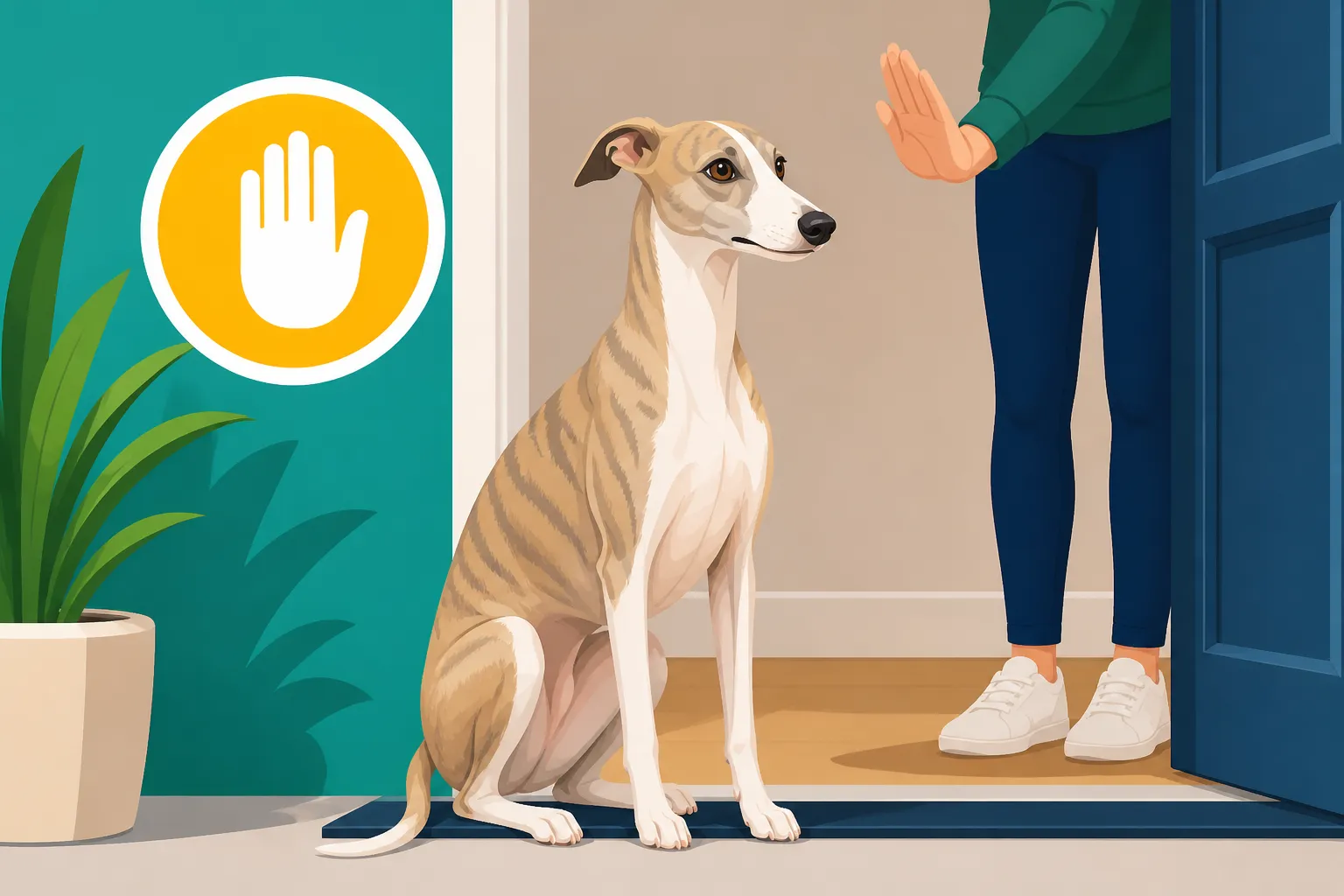
- Position and "Wait": Walk with your leashed Whippet to the closed door. Ask them to "Wait" a few feet away from it. Reward heavily for staying in place. Practice just walking to the door, asking for "Wait," rewarding, and walking away, without ever opening the door. Do this many, many times.
- Hand on Doorknob: Once they are consistently waiting calmly as you approach the closed door, add the next step: reach for the doorknob. Say "Wait." If they stay, reward. If they lunge or break the wait, stop, reset, and try again. Your goal is for them to remain calm even as you touch the doorknob.
- Turn the Knob: Progress to turning the doorknob, but still don't open the door. Say "Wait." Reward for calmness. The sound and motion of the knob turning are new cues for them to ignore.
Gradually Opening the Door
This is the most critical stage. You will introduce the sight and sounds of the outside world slowly and incrementally.
- Crack the Door: With your Whippet on leash and in a "Wait," slowly crack the door open just an inch or two. The instant they make any move towards the door, quickly and calmly close it. Don't say anything, just close it.
- Reward for Calmness: If they remain in their "Wait" position as the door cracks open, even for a second, immediately say "Yes!" and reward generously with treats and praise. Then close the door and repeat.
- Increase Opening: Gradually increase how wide you open the door, always closing it if they break their "Wait." Only proceed to the next step when they are consistently holding their wait for the current door opening. This might mean opening it a foot, then two feet, then a bit wider.
- Step Outside: Once they are reliably waiting at a fully open door, take one step outside yourself while they remain in their "Wait" just inside. Reward. Then step back in. Slowly increase the time you spend outside. This teaches them that an open door doesn't automatically mean they get to go through it.
The Release Cue
It's crucial that your Whippet understands they are not to go through the doorway until you give them a clear release cue.
- Choose a Cue: Pick a consistent release word like "Okay," "Free," or "Let's go!"
- Practice: Once your Whippet is reliably waiting at the open doorway, give your release cue and immediately take a step forward, allowing them to follow you. Reward them as they move through the doorway with you. This reinforces that waiting patiently and then being released by you is the desired behavior.
- Consistency: Every single time you go through a doorway with your Whippet, practice this. It might feel tedious at first, but consistency builds strong habits. This applies to your front door, back door, crate door, and even car doors.
Troubleshooting and Advanced Doorway Manners
Even with the best intentions, you might hit some bumps in the road. Whippets are smart, but they are also driven by instinct. Don't get discouraged! This section offers advice on common challenges and how to further refine your Whippet's doorway manners.
Common Pitfalls and How to Address Them
It's easy to accidentally reinforce unwanted behaviors, especially when dealing with a fast and clever Whippet.
- Rushing to the Door: If your Whippet consistently races to the door the moment they hear the doorbell or see you reach for your keys, you need to go back to basics. Practice approaching the door without the intent to go out. Reward your Whippet for staying calm and not rushing. Have "dummy" doorbell rings or key jingles. Use a tether or a baby gate to prevent them from practicing the dash.
- The "Push-Through": Some Whippets will try to nudge or push their way past you once the door is slightly open. This is where the leash is invaluable. If they push, immediately close the door. Their forward momentum stops. Wait for them to settle, then try again. The door only opens when they are calm and still.
- Distractions are Too High: If your Whippet is failing their "wait" when the neighborhood kids are playing outside or another dog walks by, the distraction level is too high. You need to reduce the difficulty. Practice at quieter times of day, or use an opaque barrier for the first few stages before cracking the door open. You might even need to work on general impulse control in more distracting environments first, away from the door entirely. The Job a Whippet Actually Needs is often about managing their instincts, not suppressing them.
Generalizing the "Wait" Command
"Wait" shouldn't just apply to the front door. A truly well-mannered Whippet will wait at all thresholds.
- Car Doors: This is a huge safety concern. Practice the exact same steps you used for the house door. Your Whippet should wait until you give the release cue before jumping into or out of the car. Many trainers recommend teaching dogs to wait for permission before exiting the car, especially in busy parking lots.
- Crate Doors: When you open their crate door, do they bolt out? Apply "Wait" here. This teaches them patience and ensures they don't knock you over or dash past you when you're trying to manage their exit.
- Gates in the House: If you use baby gates, teach them to wait for the gate to be opened and for your release cue before walking through. This reinforces the concept that boundaries require permission to cross.
Consistency and Patience
Teaching a Whippet to wait at a doorway is not a one-and-done lesson. It's an ongoing process that requires consistent reinforcement from every family member.
- Everyone on Board: Make sure everyone in the household uses the same cues and follows the same rules. Inconsistency will confuse your Whippet and undermine your training.
- Be Patient: There will be days when your Whippet seems to have forgotten everything. Don't get frustrated. Simply go back to an earlier, easier step and build up again. Remember, Whippets are sensitive, and harsh corrections can make them shut down. Why a Whippet Shuts Down When Corrected explains this well.
- Positive Reinforcement is King: Always reward the behaviors you want to see. Your Whippet should associate the doorway with good things (treats, praise, then going outside on your terms), not with stressful corrections. Think about keeping a small pouch of treats by the door, readily available. Many excellent treat pouches can be found on Amazon.
- Advanced Training Resources: If you're struggling, consider looking into online training programs that specialize in positive reinforcement. Some services, like BAXTER & Bella, offer comprehensive online training options that can help you with specific challenges like doorway manners. Learning how to motivate them with What a Whippet Will Work For will make a huge difference.
By consistently applying these steps, you'll transform that anxiety-inducing doorway into a calm, controlled transition, ensuring your elegant Whippet's safety and your peace of mind.
Disclaimer
This article is for general informational purposes only and does not constitute professional advice. Laws, prices and regulations vary by location and change over time. Consult a qualified professional for guidance on your specific situation.