How Big a Space a Whippet Needs to Open Up
It’s a common worry for any prospective Whippet owner, or even those already living with one: how much space do these lightning-fast dogs truly need? We see their incredible bursts of speed, and immediately our minds jump to vast, sprawling fields or endless acres. The truth is, while a Whippet can certainly use that space, their actual day-to-day needs might surprise you, and it’s a big source of frustration for many who feel they can’t provide a grand estate. This guide will delve into what kind of space truly allows a Whippet to thrive, balancing their innate need to run with their equally strong desire for comfort and companionship.
Understanding the Whippet's Need for Speed vs. Couch Potato Nature
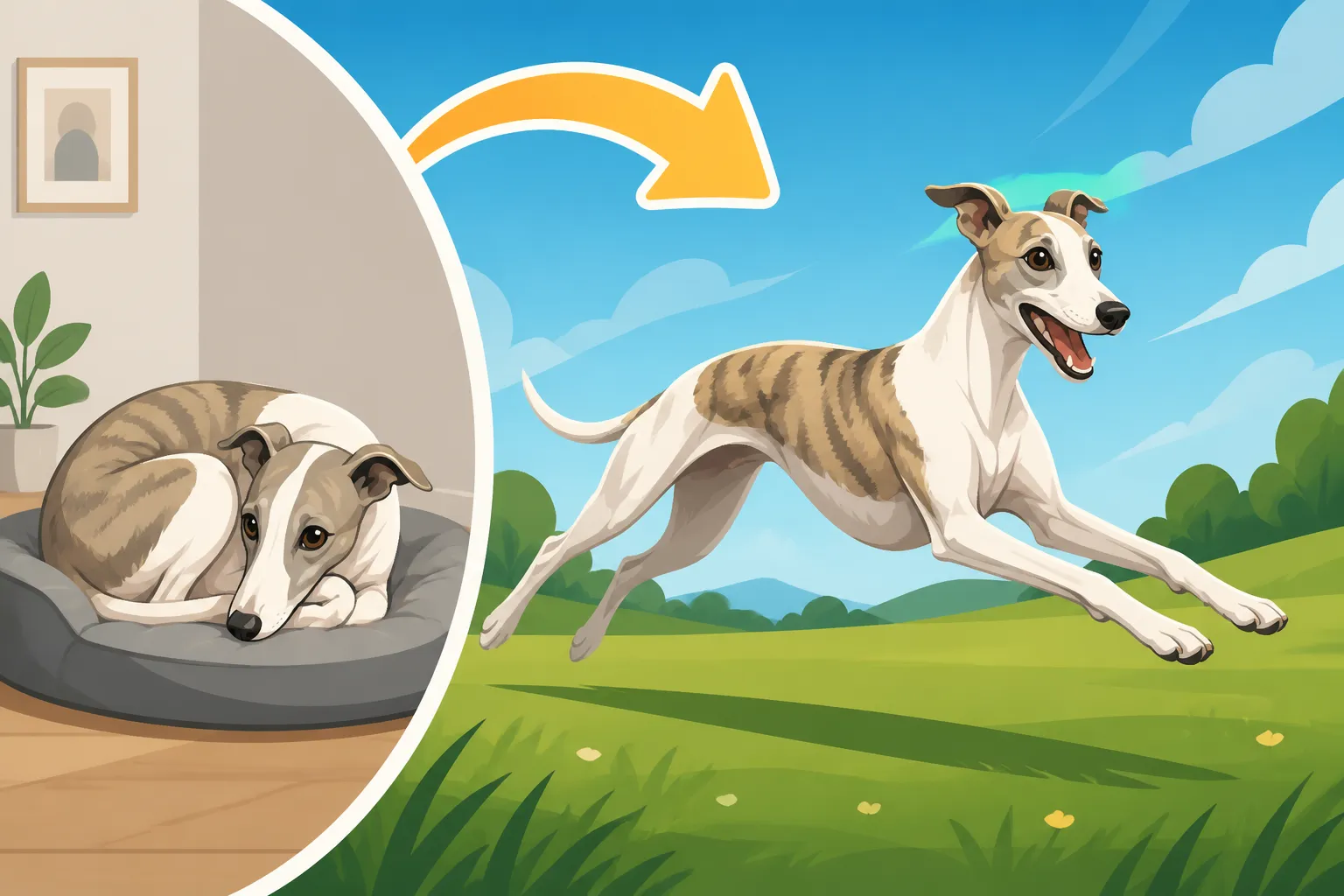
Whippets are magnificent athletes, built for speed and agility. Their slender bodies, deep chests, and powerful hindquarters are perfectly designed for explosive sprints. But here’s the thing many people don’t realize: they are sprinters, not distance runners. They hit incredible speeds, often reaching How Fast a Whippet Actually Runs, but these bursts are short-lived. After a thrilling dash, they're usually ready to crash out on the nearest soft surface. This dual nature is what makes them such adaptable companions, but it also creates confusion about their spatial needs.
The Brief, Intense Bursts of Energy
Imagine a coiled spring – that's a Whippet getting ready to run. When they decide to "open up," as we call it, they don't just jog; they explode into action. This isn't just about covering ground; it's about the pure joy of movement, the thrill of the chase, even if it's just chasing a toy or a breeze. These intense bursts are critical for their physical and mental well-being. They stretch those magnificent muscles, release pent-up energy, and engage their sighthound instincts.
However, these aren't sustained efforts that require miles of open road. A few good, full-out sprints are often enough to satisfy their primal urge to run. It's less about the duration of the run and more about the intensity and the freedom to truly stretch out. Think of it like a human athlete doing wind sprints – it’s short, hard work, not a marathon. Providing them with opportunities for these exhilarating runs is key, but it doesn't mean they need to live on a ranch.
The Art of the Sighthound Snooze
Once those zoomies are done, it's time for serious napping. This is where the "forty mile an hour couch potato" stereotype truly shines. Whippets are champions of relaxation, and they excel at finding the warmest, softest, most comfortable spot to curl up. They're not dogs that pace endlessly or destroy furniture out of boredom if they've had their sprint. In fact, after a good run, they can spend a remarkable portion of their day completely still, recharging for the next adventure. This tendency to How Many Hours a Day a Whippet Sleeps means that while they need space for their sprints, they also need comfortable, safe indoor spaces to relax.
This balance is vital. You might think you need a massive outdoor area, but without a comfy home base, a Whippet will be perpetually seeking that perfect snooze spot. This means plenty of soft beds, blankets, and a warm environment where they feel secure. It's a trade-off many owners discover: the less active time is directly proportional to the quality of their rest time. If you can give them a solid burst of exercise, they will gladly repay you with hours of peaceful slumber on your sofa.
Ideal Spaces for Unleashed Whippet Play
The dream scenario for many Whippet owners is a sprawling, securely fenced property where their dog can run free without a care in the world. And while that's wonderful, it's important to break down what "securely fenced" and "sprawling" really mean in practical terms for a Whippet. It’s not just about the size of the area, but its safety and suitability.
The Importance of a Secure Fence
A Whippet's prey drive is incredibly strong, and their speed means that once they spot something interesting – a squirrel, a leaf, a distant dust bunny – their instinct to chase overrides almost everything else. This is why Thirty Five Miles an Hour and No Brakes on a Whippet's Recall is a very real problem. Consequently, any space where you plan to let your Whippet run off-leash must be completely and securely fenced. This isn't a suggestion; it's a non-negotiable safety requirement.
The fence needs to be high enough to prevent jumping and secure enough to prevent squeezing under or through. For most Whippets, a fence of at least five to six feet is recommended to prevent them from easily clearing it, especially if they get a good running start or are particularly motivated. We're talking solid construction, no gaps, and ideally, buried wire or a kickboard along the bottom to deter digging. A flimsy garden fence or a decorative picket fence simply won't cut it. Consider checking out sturdy, modular fencing options on platforms like Amazon if you're looking to upgrade or create a new secure zone. Remember, a Whippet running at full tilt through a gap can be in the next county (or, more likely, in traffic) before you even finish shouting their name.
Dimensions for a Good Sprint
So, how much actual ground do they need to "open up"? While a football field would be glorious, it's not strictly necessary for daily exercise. The key is giving them enough length to accelerate to a good speed and then have some room to slow down safely.
A straight run of at least 50-75 feet (about 15-23 meters) can allow a Whippet to get into a good stride. If the space is wider, say 25-30 feet (7-9 meters), they have room for turns and more dynamic play, which is even better. A typical suburban backyard, if it's long and relatively clear of obstacles, can often provide enough space for a few good sprints. Think of it in terms of a long rectangle rather than a square; length is more critical than sheer acreage. They don't need to run in perfect circles, but enough room to stretch out without immediately having to slam on the brakes against a fence is ideal for preventing injuries. The Muscle a Whippet Tears Sliding on Wet Grass is a stark reminder that sudden stops on poor surfaces can lead to trouble.
Here’s a rough guide to different outdoor spaces:
| Space Type | Typical Size (approx.) | Suitability for Whippet Sprints | Key Considerations |
|---|---|---|---|
| Small Urban Yard | < 500 sq ft | Limited | May allow short bursts, but not full "opening up." |
| Medium Suburban Yard | 500-2,000 sq ft | Moderate | Can offer good sprints if long and clear; fence height crucial. |
| Large Rural Yard | 2,000+ sq ft | Excellent | Ample space for speed and play; ensure perimeter security. |
| Secure Dog Park | Varies | Excellent (if empty/safe) | Ensure high, escape-proof fencing and good surface. |
| Lure Coursing Field | Very Large | Optimal | Designed specifically for sighthound running; supervised. |
When assessing your own yard, consider not just the total square footage, but the longest clear path your Whippet could take at full speed. Is it free of obstacles like garden beds, sheds, or sharp corners? Even a decent-sized yard can be functionally small if it's cluttered.
Making the Most of Smaller Spaces
Not everyone has a sprawling backyard, and that's perfectly okay! Many Whippets thrive in apartments or homes with smaller outdoor areas. The key is understanding that their "space needs" are not just about square footage but about quality of exercise and mental stimulation. You just have to be more intentional about how and where you fulfill their need to run.
Apartment Living and Urban Adventures
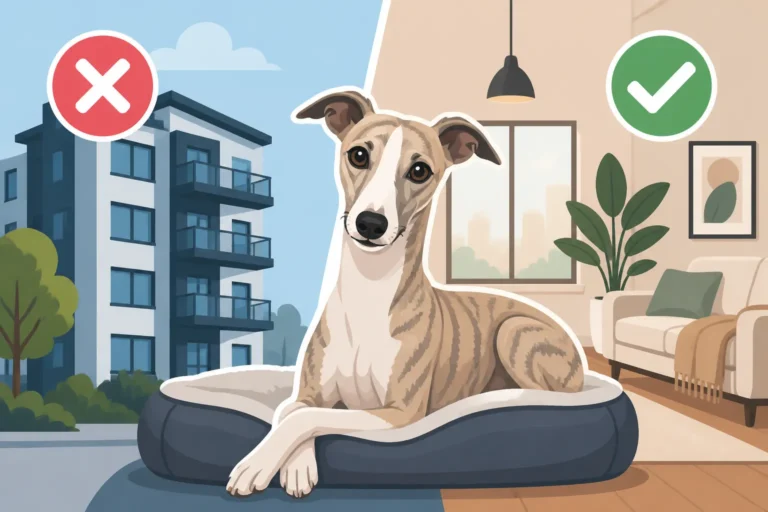
Don't let the image of a sprinting sighthound deter you from considering a Whippet if you live in an apartment. Whether a Whippet Suits an Apartment is a frequently asked question, and the answer is often a resounding yes! As mentioned, they are prolific nappers indoors. Their primary outdoor need is for those intense sprints, not endless marathons around your block.
If you have a small patio or balcony, it won't be enough for a full sprint, but it can be a nice place for them to sunbathe or observe the world. The real exercise will come from dedicated outings. This means seeking out securely fenced dog parks (after carefully vetting them for safety and appropriate playmates), enclosed tennis courts (during off-hours with permission), or even rented private dog fields. The important thing is to have a plan for getting them that full-throttle run a few times a week. A daily walk around the neighborhood is good for potty breaks and sniffing, but it won't satisfy that deep-seated need to run.
Creative Solutions for Restricted Yards
For homes with smaller yards, you might need to get creative. If your yard isn't long enough for a full sprint, can you still make it fun? Short bursts, figure-eights around obstacles (safely!), or even intensive play with a favorite squeaky toy can still be stimulating.
Think about designating a "zoomie zone" in your yard – clear it of anything that could cause injury, like sharp garden edges or low branches. You might not get a 75-foot straightaway, but a 30-foot dash with a quick turn can still provide a good workout. Interactive toys, like those found on Amazon that encourage rapid movement and quick changes of direction, can also help make a smaller space more dynamic. Even if it’s not full speed, engaging their chase drive with varied movement patterns is beneficial.
Remember, a tired Whippet is a good Whippet, and "tired" can be achieved through short, intense bursts of activity, not just endless miles.
Beyond the Backyard: Other Outlets for Whippet Energy
Relying solely on your backyard, no matter its size, might not be enough to fully satisfy your Whippet's athleticism and sighthound instincts. Incorporating other activities is key to their overall well-being.
Safe Off-Leash Running Opportunities
Finding safe, enclosed spaces for off-leash running is paramount. As we discussed, a Whippet's recall can be notoriously unreliable when prey drive kicks in, so Why a Whippet Cannot Be Let Off Leash in an Open Field is a crucial safety lesson.
- Secure Dog Parks: When selecting a dog park, look for those with double-gated entries, high fences, and a good track record of responsible owners. Observe the dogs already there – is it generally peaceful, or are there too many boisterous breeds that might overwhelm your sensitive Whippet? Avoid parks with too much pavement, as hard surfaces can be tough on their delicate joints during high-speed play.
- Rented Private Fields: Increasingly, owners can rent private, securely fenced fields by the hour. This is often the safest and most stress-free option, allowing your Whippet to truly let loose without the risks associated with public dog parks.
- Enclosed Sports Fields: During off-hours, school athletic fields or unused baseball diamonds can provide fantastic running spaces, but always ensure you have permission and that they are truly secure.
These types of spaces provide the freedom and expanse that a Whippet craves for its full-speed gallops.
Organized Sighthound Sports
For the Whippet, organized sports like lure coursing and Fast CAT (Coursing Ability Test) are not just fun; they're an essential outlet for their natural instincts. These events are specifically designed to channel a sighthound's prey drive in a safe, controlled environment.
- Lure Coursing: This involves chasing an artificial lure (typically plastic bags) across an open field, mimicking the chase of live prey. The courses are long and winding, allowing Whippets to hit top speeds and utilize their incredible agility. It's exhilarating to watch and even more so for the dogs participating. How Lure Coursing Channels a Whippet's Drive perfectly. These events are usually held by sighthound clubs and are designed with the safety of these athletic dogs in mind.
- Fast CAT: This sport is all about pure speed in a straight line. Dogs chase a lure over a 100-yard dash course, and their time is recorded. It's a fantastic way for a Whippet to experience maximum acceleration and feel the wind in their ears.
These activities are not only great physical exercise but also incredible mental enrichment. They tap into the very essence of what makes a Whippet a Whippet.
Long Line Adventures and Training
If secure off-leash areas are scarce, a long line can be a wonderful training tool and a way to provide more freedom on walks. A 30-foot or 50-foot long line (easily found on Amazon or at pet supply stores) allows your Whippet to explore further and get some stretch in their stride while still remaining under your control. This is especially useful in open, non-fenced areas where you absolutely cannot trust their recall.
Training with a long line can also build a stronger foundation for their recall, even if you never fully trust it off-leash. Companies like BAXTER & Bella offer online training programs that can help you establish a more reliable recall and teach impulse control, which is invaluable when dealing with a sighthound's powerful chase instinct. Even with perfect training, however, the inherent nature of a Whippet means caution is always advised in unfenced areas.
Giving a Whippet the space to "open up" isn't about having a grand estate; it's about understanding their unique blend of explosive speed and profound relaxation. Provide them with secure, safe opportunities for exhilarating sprints, whether in your backyard or at a dedicated facility, and a comfortable, warm spot to snooze, and your Whippet will be a happy, well-adjusted companion, regardless of your property size.
Disclaimer
This article is for general informational purposes only and does not constitute professional advice. Laws, prices and regulations vary by location and change over time. Consult a qualified professional for guidance on your specific situation.