Whether Twenty Minutes of Running Satisfies a Whippet
It’s a common scenario: you’ve taken your Whippet out for what feels like a good, brisk run—maybe twenty minutes of chasing a ball or zipping around a field—only to come home and find them still bouncing off the walls, zooming through the house, or worse, getting into mischief. You might think, "Didn't we just exercise?" It’s frustrating when you’re trying your best to meet their needs, yet they act like they haven't moved all day. This guide is here to unravel the truth about a Whippet's exercise requirements, explaining why a mere twenty-minute run often falls short of truly satisfying their unique physical and mental needs, and what you can do instead.
Understanding the Whippet's Unique Energy Profile
Whippets are often misunderstood when it comes to their energy levels. On the one hand, they're famous for their incredible speed and athletic prowess. On the other, they're equally renowned for their love of napping. This combination can be a bit of a puzzle for new owners trying to figure out how much exercise is really enough.
The "Forty Mile an Hour Couch Potato" Myth vs. Reality
You've probably heard the term "forty mile an hour couch potato" to describe a Whippet, and it’s surprisingly accurate. These dogs possess an astonishing ability to reach high speeds in short bursts, which is a hallmark of their sighthound heritage. They were bred to chase, to sprint after game, and to do it with incredible agility and acceleration. However, unlike some other breeds that require hours of sustained, high-impact exercise, a Whippet's athletic output is often concentrated into intense, shorter periods.
This often leads owners to believe that a quick, intense twenty-minute run is sufficient. While that twenty minutes might include a few impressive sprints, it rarely translates to a full, satisfying workout for their body and mind. It's like a human doing a few sprints but not a full gym session or a long walk; it feels good for a moment, but the underlying energy still needs to be spent. The myth creates a frustrating cycle where owners feel they've put in the effort, but their Whippet's underlying energy reserves and instinctual drives remain largely untapped. The Whippet Is a Forty Mile an Hour Couch Potato perfectly encapsulates this fascinating duality.
Beyond the Burst: What "Satisfied" Really Means for a Whippet
For a Whippet to be truly "satisfied," it's not just about physical exhaustion; it's about fulfilling their entire spectrum of needs. This includes physical exertion, yes, but also mental stimulation, the opportunity to use their keen senses, and to engage in species-appropriate behaviors. A twenty-minute run might get their heart rate up, but it often misses the mark on these other crucial components.
If a Whippet’s instinctual drives, like their powerful prey drive, aren't given a healthy outlet, that energy doesn't just disappear. Instead, it can manifest in less desirable ways. This might include excessive chewing on furniture, incessant barking, or a general inability to settle down indoors. Owners often feel a deep frustration, wondering why their dog is acting out when they believe they've provided enough exercise. The reality is, a quick run might tire their legs a little, but it doesn't always engage their brain or their deep-seated urge to chase.
The Limitations of a Twenty-Minute Run
While any exercise is better than none, relying solely on a brief twenty-minute run can set both you and your Whippet up for disappointment. It's crucial to understand why this amount of time often isn't enough to truly fulfill them.
Why a Short Sprint Isn't a Full Workout
When we talk about a "run" with a Whippet, it's important to define what that actually means. For many, it's a brisk walk with a few moments of accelerating after a tossed toy or running alongside a bicycle. However, for a Whippet, a true "sprint" is an all-out, full-throttle burst of speed over a short distance, and sustaining that for twenty minutes is almost impossible for any dog, let alone a human trying to keep up. Most of what happens in a twenty-minute "run" is likely trotting, sniffing, and perhaps a few short bursts.
This isn't to say these activities aren't beneficial, but they don't necessarily provide the deep physical and mental satisfaction a Whippet needs. Their unique physiology, designed for explosive speed, means they thrive on the opportunity to truly open up and run without inhibition. A twenty-minute session that is mostly leashed trotting or confined to a small area won't allow them to tap into this innate ability. You'll find they still have plenty of pent-up energy, manifesting as restlessness or even destructive behavior at home because they haven't truly stretched their magnificent muscles or engaged their prey drive. How Far a Whippet Can Sprint Before It Tires delves deeper into their endurance capabilities.
The Unmet Instinctual Drives
Whippets are sighthounds, and that means their primary hunting instinct is driven by sight and the thrill of the chase. A short, casual run, even with some vigorous moments, rarely provides a meaningful outlet for this powerful drive. They need to see something move quickly, to lock onto it, and to pursue it with purpose.
Imagine a highly intelligent person who loves solving puzzles, but you only ever give them basic arithmetic problems. They might do them quickly, but they'd still feel unfulfilled. Similarly, a Whippet’s brain is wired for the chase, and if they don't get to engage in activities that mimic this, their natural instincts go unfulfilled. This isn't just about physical tiredness; it's about mental and instinctual satisfaction. Activities like How Lure Coursing Channels a Whippet's Drive or Fast CAT are designed specifically to tap into these ancient instincts, providing an outlet that a simple walk or short park run simply cannot replicate. Without these outlets, a Whippet can become bored and develop problem behaviors, even if their physical body has moved for twenty minutes.
Strategies for Truly Satisfying a Whippet's Exercise Needs
Understanding that a quick twenty-minute run might not cut it is the first step. The next is figuring out what does satisfy them. It's about quality over quantity and diversifying their activities to engage both body and mind.
Incorporating Sprint Opportunities Safely
For a Whippet, the opportunity to stretch their legs at full speed is paramount. However, this comes with a crucial caveat: safety. Due to their intense prey drive and incredible speed, letting a Whippet off-leash in an unfenced or unsecured area is incredibly risky. They can cover vast distances in seconds, easily outrunning human recall, and can be gone before you even realize it. Why a Whippet Cannot Be Let Off Leash in an Open Field highlights these dangers.
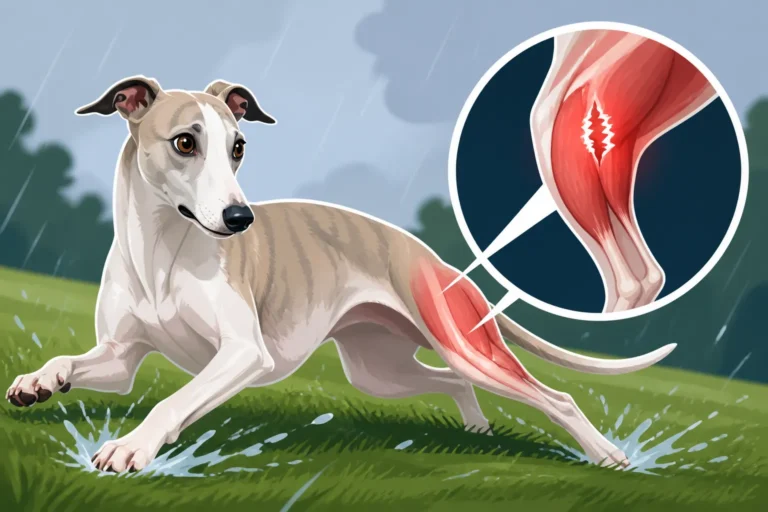
Instead, seek out securely fenced areas, such as private dog parks, large, enclosed sports fields, or even your own backyard if it's escape-proof with a fence that is high enough. Even better are organized sighthound-specific events like lure coursing or Fast CAT, which provide a controlled environment for them to chase a mechanical lure, fulfilling their prey drive without putting them in danger. If you don't have access to such events, a flirt pole can be a fantastic tool for controlled, backyard sprints, readily available on platforms like Amazon. Always remember to incorporate a proper warm-up before intense sprinting and a cool-down afterward to prevent injuries, which are common in such athletic dogs. Warming Up a Whippet Before It Runs and Cooling a Whippet Down After a Sprint are essential reads for this.
Balancing Physical and Mental Stimulation
Physical exercise alone is often not enough for a Whippet; their intelligent and sensitive nature also craves mental engagement. While a twenty-minute run might tire their body briefly, it often leaves their mind understimulated. Incorporating activities that challenge their brain can be just as important as letting them run.
Think about interactive puzzle toys, which can be found easily on Amazon, that make them work for their food or treats. Scent work, where they use their noses to find hidden treats or toys, can be incredibly enriching. Even simple training sessions, where you teach new tricks or reinforce commands, provide valuable mental stimulation. For those looking for more structured activities, dog sports like Whether a Whippet Can Do Agility or even competitive obedience, taught with positive reinforcement methods, can be incredibly satisfying. Online resources, like the comprehensive puppy training program from BAXTER & Bella, often emphasize positive training methods that work wonderfully with a Whippet's sensitive nature, building confidence and mental engagement. Don't forget the power of a good "sniffari" walk, where your Whippet is allowed to explore and sniff at their own pace, processing the world through their nose.
The Importance of Variety and Consistency
Just like humans, dogs thrive on a varied routine. Relying on the exact same twenty-minute run every single day, regardless of the weather or your Whippet's energy levels, can lead to boredom and even burnout. The key to a truly satisfied Whippet is a consistent yet varied approach to their daily and weekly activities.
This might mean one day is dedicated to a long, leisurely walk with plenty of sniffing and social interaction, while another day includes a trip to a secure, fenced park for some all-out sprints. You might intersperse these with indoor puzzle games, training sessions, or even quiet cuddle time, which is just as important for these affectionate dogs. The goal is to provide a rich tapestry of experiences that address all aspects of their well-being. A consistent schedule helps them feel secure and understand what to expect, while variety keeps them engaged and prevents routine from becoming monotonous. By mixing it up, you're more likely to hit all the right notes for a happy, well-adjusted Whippet.
Recognizing the Signs of an Unsatisfied Whippet
If your twenty-minute run isn't cutting it, your Whippet will likely let you know. Their communication might not be in words, but their behavior will speak volumes. Learning to interpret these signals is key to adjusting their routine and ensuring their happiness.
Destructive Behavior and Restlessness
One of the most common and frustrating signs of an under-exercised or under-stimulated Whippet is destructive behavior. You might come home to chewed furniture, torn bedding, or even new "landscaping" in your backyard in the form of freshly dug holes. This isn't out of spite; it's often a desperate attempt to burn off pent-up energy and mental frustration. A Whippet that hasn't had their physical and mental needs met will look for any outlet, and if you haven't provided an appropriate one, they'll create their own, often at the expense of your belongings.
Along with destruction, you might observe general restlessness. Pacing, an inability to settle in their bed even after a walk, or constantly nudging you for attention can all indicate that they still have energy to burn. It's a stark contrast to the truly "satisfied" Whippet, who, after a good workout, will happily curl up on the sofa or in their favorite dog bed for a long, luxurious nap. If your dog isn't reaching that relaxed state, it's a strong indicator that their exercise regimen needs a rethink.
Excessive Barking or Attention-Seeking
While Whippets aren't typically known as excessive barkers, an unsatisfied Whippet might start vocalizing more than usual. This can manifest as persistent whining, insistent barks directed at you, or even howling. Why a Whippet Howls often points to boredom or a desire for something, and in this context, it's often a cry for more engagement. They are trying to tell you, in the only way they know how, that their needs aren't being met.
Beyond barking, you might notice an increase in other attention-seeking behaviors. This could be pawing at you constantly, bringing you toys non-stop without truly engaging in play, or even trying to steal things to get you to chase them. These behaviors, while sometimes annoying, are usually a desperate plea for interaction and an outlet for their energy. They're telling you that the twenty-minute run, while a nice gesture, simply didn't hit the mark in terms of providing true fulfillment.
Difficulty Settling and Hyperactivity Indoors
Perhaps one of the clearest signs that a Whippet isn't satisfied with their exercise is their inability to settle down once indoors, coupled with bursts of seemingly random hyperactivity. We lovingly call these "zoomies," and while occasional zoomies are normal and fun, frequent or prolonged episodes, especially after what you thought was sufficient exercise, can indicate an underlying issue.
A truly well-exercised Whippet might have a burst of energy when they first come in, but they should quickly transition into their natural "couch potato" state. They should be able to relax, snooze, and simply enjoy being near you. If your Whippet is constantly on edge, bouncing from room to room, unable to find a comfortable spot to rest, or engaging in repetitive behaviors like nudging and pawing, it suggests that the twenty-minute run didn't quite cut through their energy. Their bodies might be moving, but their minds and instincts remain unengaged, leading to a state of internal restlessness that can be hard for them to shake off.
Here’s a quick comparison to help you visualize the difference:
| Aspect | 20-Minute "Run" (Often Insufficient) | Truly Satisfying Exercise for a Whippet |
|---|---|---|
| Physical Exertion | Light to moderate, mostly trotting/walking, few short bursts | Intense sprints, full-body engagement, proper warm-up/cool-down |
| Mental Stimulation | Minimal, relies on environmental sniffing | Lure coursing, puzzle toys, training, scent work, social play |
| Instinctual Fulfillment | Limited or non-existent prey drive outlet | Chasing lures, flirt poles, controlled "hunt" games |
| Behavior Afterwards | Restlessness, zoomies, destructive tendencies, seeking attention | Calm, relaxed, long naps, easy to settle, contented |
| Risk of Injury | Lower during casual activity, higher if sudden sprints on hard ground | Moderate during intense sprints, mitigated by proper protocols |
| Overall Well-being | Can lead to boredom, frustration, and behavioral issues | Promotes mental stability, physical health, and a happy disposition |
Disclaimer
This article is for general informational purposes only and does not constitute professional advice. Laws, prices and regulations vary by location and change over time. Consult a qualified professional for guidance on your specific situation.