Why a Whippet Makes a Poor Watchdog
Many dog owners dream of a canine companion who will stand guard, barking a fierce warning at any stranger approaching the door or property. While a Whippet is undeniably loyal and attentive, if your primary goal is a furry alarm system or a formidable deterrent for intruders, you might find yourself a little…underwhelmed. This guide will delve into the unique temperament and natural instincts of the Whippet, explaining why their gentle nature and specific vocalizations simply don't align with the traditional role of a watchdog, and what you can expect from your elegant sighthound instead.
Understanding the Whippet Temperament
The Whippet, with its sleek lines and incredible speed, often projects an image of alertness and capability. However, beneath that athletic exterior lies a soul that is generally far too gentle and peace-loving for guard dog duties. Their temperament is a key factor in understanding why they don't excel as watchdogs.
The Gentle, Sensitive Soul
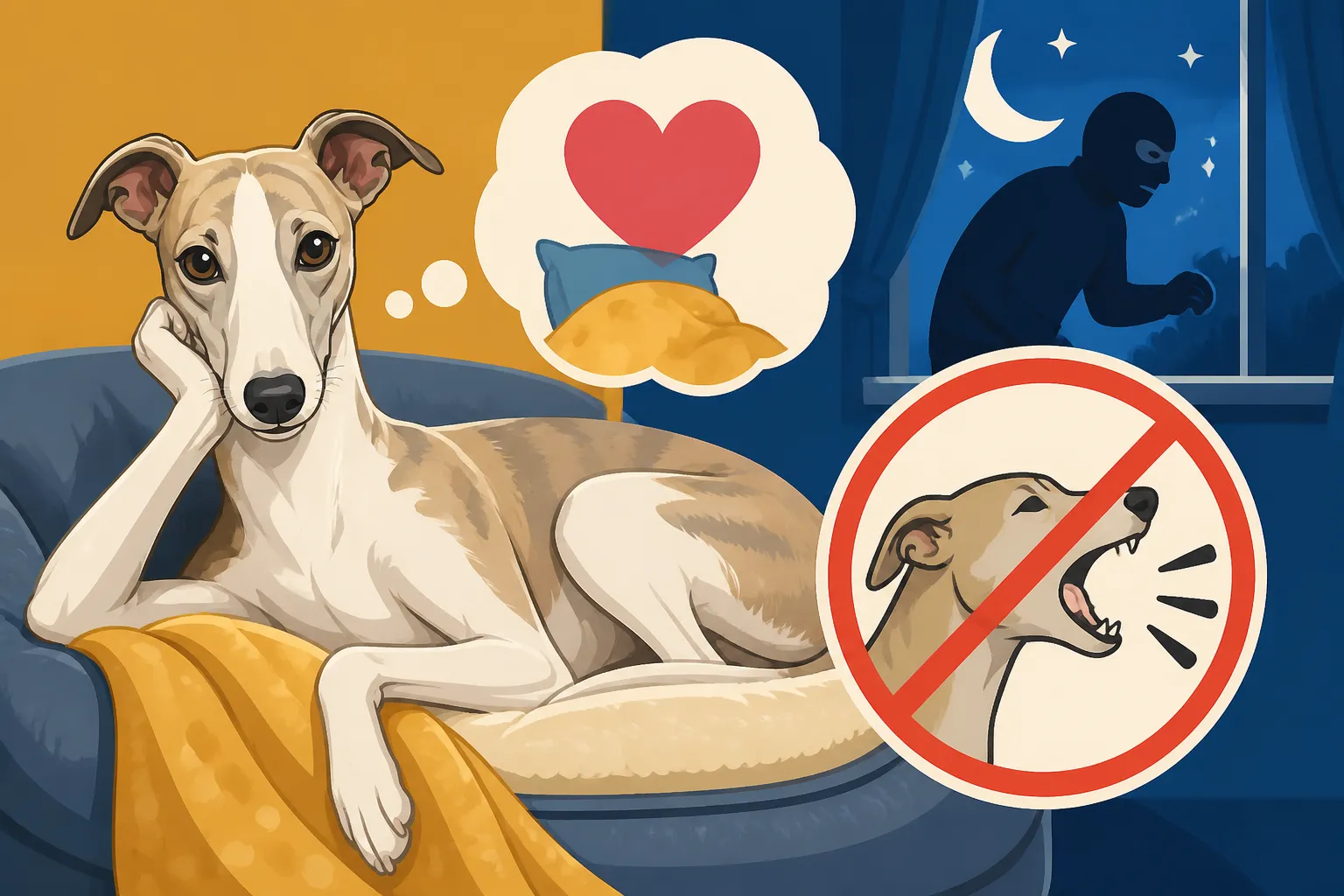
Whippets are, by and large, incredibly gentle dogs. They bond deeply with their families, often preferring to be physically close, curled up on the sofa or in bed. This strong bond manifests as loyalty, but not typically as a fierce protective instinct against perceived threats. When a new person comes to the door, a typical Whippet is more likely to offer a tentative sniff, perhaps a brief bark of curiosity, or even retreat to a safe distance, especially if they haven't been thoroughly socialized. They're not looking for a confrontation; they're looking for comfort and affirmation from their people.
They are known for their sensitivity, not just to loud noises or sudden movements, but also to human emotions and tone of voice. This means that a Whippet experiencing stress or fear is more prone to shutting down or trying to escape a situation rather than standing their ground and issuing a warning. They simply don't have the inherent aggression or territorial drive that underpins a truly effective watchdog. Their ideal environment is a calm, predictable home where they feel safe and loved, rather than one where they are expected to be constantly vigilant and confrontational.
The "Forty Mile an Hour Couch Potato"
It's a common saying among Whippet enthusiasts, and it's perfectly accurate: your Whippet is a "forty mile an hour couch potato." They are capable of incredible bursts of speed and athletic prowess, but these are typically reserved for chasing a lure or a squirrel in a safe, open field. The rest of the time, they are masters of relaxation. A Whippet's natural state indoors is often a deep, contented slumber, usually in the warmest, softest spot they can find.
This love for comfort and napping significantly impacts their potential as a watchdog. A dog that is perpetually in a state of deep relaxation isn't going to be on high alert for every unusual sound or shadow. They might stir if a really loud bang happens right outside the window, but a quiet, stealthy approach is more likely to go unnoticed by a Whippet nestled deep under a blanket. Their intrinsic desire for warmth and comfort often outweighs any latent instinct to patrol or stand guard. To learn more about this endearing trait, read The Whippet Is a Forty Mile an Hour Couch Potato.
Why Their Bark Isn't a Warning Bell
When we think of a watchdog, we often picture a dog with a robust, authoritative bark that makes potential intruders think twice. A Whippet's vocalizations, while present, are usually quite different in nature and impact.
Selective Barking Habits
Whippets do bark, but their barking is often selective and rarely sustained in a way that suggests a serious threat. You might hear a quick "woof" when a squirrel darts across the yard, or a series of excited barks during an energetic play session. Some Whippets might bark out of boredom or frustration if left alone for too long, a symptom of separation anxiety rather than guarding. However, the deep, resonant, and persistent bark of a dedicated guard dog is generally not in a Whippet's repertoire.
Their barks tend to be higher-pitched, almost yappy, and often accompanied by body language that communicates curiosity or excitement, rather than aggression or warning. If a strange person approaches your house, your Whippet might offer a couple of sharp barks, primarily to alert you to the anomaly, not necessarily to scare off the person. They are more like a notification system than a deterrent. For a deeper dive into their vocal habits, you might find Whether a Whippet Barks at Anything and How Much a Whippet Barks enlightening.
The Absence of Intimidation
Let's be realistic: a Whippet, while undeniably beautiful, is not built to intimidate. Their slender build, elegant neck, and gentle expression don't evoke fear in the way a Rottweiler or a German Shepherd might. An intruder looking for an easy target would likely see a Whippet and perceive it as little more than a mild inconvenience, if they even notice its alert. Their size and general demeanor just don't convey a sense of danger.
Furthermore, even when a Whippet does bark at a stranger, the sound itself is often not particularly fearsome. It's more of an enthusiastic announcement or a curious inquiry than a genuine threat. This isn't a failing on their part; it's simply a reflection of their breed's design and purpose, which historically revolved around speed and sight-hunting, not guarding property. They are bred for grace and speed, not for their ability to project a menacing presence.
The Whippet's True "Guard" Role: Alert, Not Deterrent
While a Whippet might not be a traditional watchdog, they certainly aren't oblivious to their surroundings. They have a role to play, albeit a nuanced one, in home security.
The "Alert System" – With Caveats
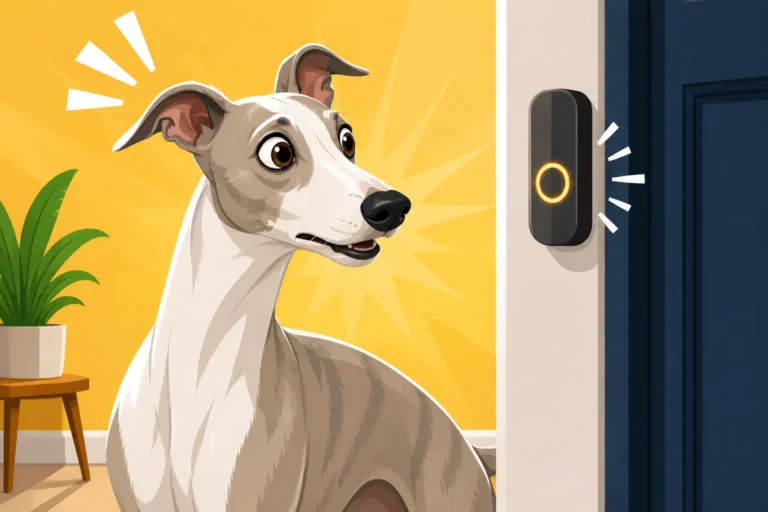
Think of your Whippet as a highly sensitive, albeit often quiet, alert system. They are incredibly observant of their immediate environment. If a new car pulls up, a leaf blows suspiciously across the window, or a delivery person approaches the door, your Whippet will absolutely notice. They might lift their head, perk their ears, or offer a soft growl or a couple of quick barks. This isn't a sustained alarm, but rather a subtle "heads up" to you, their human.
However, this "alert" comes with caveats. Their attention can be fleeting, easily diverted by a treat, a favorite toy, or even the promise of a cuddle. They also don't necessarily differentiate between a welcomed guest and an unwanted intruder. To them, it's just "something new or different." So, while they might let you know someone is at the door, they aren't going to stand between you and the perceived threat, growling fiercely. For more on how they react to visitors, check out How a Whippet Reacts to the Doorbell. It's more about curiosity and informing you than actively deterring.
Prey Drive vs. Protective Instinct
One instinct that is incredibly strong in Whippets is their prey drive. This is the drive to chase anything small and fast-moving – squirrels, rabbits, even a plastic bag blowing in the wind. Sometimes, an owner might mistake this intense focus and sudden burst of energy for a protective or guarding instinct. "Oh, he's so alert!" they might think, seeing their Whippet suddenly bolt towards the window.
The reality, however, is that this energy is directed towards hunting, not guarding. A Whippet's focus shifts entirely to the object of its prey drive, making them oblivious to other stimuli. This means that while they might be intensely focused on a rabbit in the yard, a human intruder could potentially approach from another direction completely unnoticed. Their drive to chase and capture is a powerful, almost primal force, but it does not translate into the protective vigilance required of a watchdog. Understanding this difference is crucial; their internal wiring is for the chase, not for confrontation with larger, less "prey-like" threats. This explains why their recall can be so challenging when a rabbit is in sight, as discussed in Why a Whippet's Chase Instinct Overrides Its Recall.
Training Challenges for Watchdog Behaviors
If you're still hoping to coax some watchdog behaviors out of your Whippet, it's important to understand the inherent challenges and how their unique learning style factors in.
Sensitivity to Harsh Training
Whippets are incredibly sensitive dogs, and this extends directly to their training. They thrive on positive reinforcement, gentle guidance, and consistency. Any harsh words, loud noises, or physical corrections can be deeply upsetting to them, causing them to shut down, become fearful, or even develop anxiety. This sensitivity makes them particularly ill-suited for any training methods that might traditionally be associated with "toughening up" a dog for watchdog duties.
Trying to force a Whippet to be aggressive or overly protective through harsh methods would not only be ineffective but also potentially damaging to their psychological well-being. Instead of creating a vigilant guardian, you'd likely end up with a fearful, anxious, or distrustful dog that is even less likely to bark or engage with strangers, possibly even retreating from familiar people. Their gentle nature means they learn best when they feel safe and understood. Consider reading Why Harsh Handling Ruins a Whippet or Why a Whippet Shuts Down When Corrected for a deeper understanding of their delicate disposition in training. This breed simply cannot handle heavy-handed techniques.
Lack of Drive for "Work"
Unlike many breeds selectively bred for working roles—such as herding, protection, or even sustained alerting—Whippets were primarily bred for speed and companionship. Their "work" was a short, intense burst of running, followed by extensive resting. This means they generally lack the intense "work ethic" or inherent drive to perform tasks for extended periods, especially tasks that go against their natural inclination for peace and comfort.
Attempting to train a Whippet to be a dedicated watchdog would be an uphill battle against their core nature. While they are intelligent and can learn quickly when motivated, as covered in How Quickly a Whippet Learns, sustained vigilance and territorial aggression are not behaviors that come naturally. You might be able to teach them a "speak" command, but instilling the instinct to guard and deter would require constant, intensive, and likely frustrating effort, with limited long-term success. Resources like BAXTER & Bella, which emphasize positive, relationship-based training, can be invaluable for understanding how to work with your Whippet's natural inclinations, rather than against them, to build a happy, well-adjusted companion, not a forced guardian.
Living with a Non-Watchdog Whippet
So, if your Whippet isn't going to be patrolling the perimeter, what can you expect from them, and how do you ensure your home is secure? It’s all about embracing their true strengths and implementing realistic strategies.
Embracing Their Actual Strengths
Instead of trying to fit a square peg into a round hole, celebrate your Whippet for what they truly are: a magnificent, loving, and surprisingly low-maintenance companion. They excel at snuggling, making you laugh with their goofy antics, and providing unconditional affection. They are excellent housemates, typically quiet, clean, and content to spend their days napping on soft surfaces. They offer immense emotional support and are always there to greet you with wiggles and enthusiastic tail wags.
Their keen senses make them excellent companions for observing the world around you, even if their observations don't always translate into a "danger alert." They'll enjoy a brisk walk or a supervised sprint in a secure area, then happily return to their role as a devoted indoor friend. They teach us patience, the joy of simple comforts, and the beauty of a quiet, gentle presence. Their value isn't in what they prevent, but in the sheer joy and comfort they provide. While they might be shy with strangers (Why a Whippet Is Shy With Strangers) initially, once they trust you, their loyalty is absolute.
Alternative Home Security
Given that your Whippet isn't going to be your primary line of defense, it's wise to invest in other practical home security measures. A good quality home security system with sensors on doors and windows can provide the reliable alerting and deterrence that your Whippet naturally lacks. Consider motion-activated lights, visible security cameras, and strong locks on all entry points. Joining a neighborhood watch program can also add an extra layer of human vigilance.
For any genuine alerts your Whippet does provide—like a brief bark at the doorbell—you can reinforce appropriate behavior. If you want them to stop barking after a couple of alerts, positive reinforcement with tasty treats (easily found on Amazon) can help redirect their attention to a calmer response. This way, you're not punishing their natural inclination to notice things, but rather shaping it into a more manageable and less disruptive behavior. After all, if a Whippet can't deter an intruder, then it's certainly good to know Whether a Whippet Deters an Intruder at all and how to handle their limited "watchdog" abilities.
Here’s a quick comparison of a Whippet versus a more traditional watchdog breed:
| Feature | Whippet | Traditional Watchdog (e.g., German Shepherd) |
|---|---|---|
| Temperament | Gentle, sensitive, affectionate, non-confrontational | Confident, protective, territorial, sometimes aloof |
| Barking Style | Infrequent, higher-pitched, curiosity/excitement-driven | Frequent, deep, authoritative, threat-driven |
| Physical Presence | Sleek, elegant, generally small to medium-sized | Large, muscular, imposing, often intimidating |
| Motivation for Action | Prey drive, play, comfort, informing owner | Territorial instinct, protective drive, strong work ethic |
| Response to Strangers | Curious, shy, may retreat or offer brief greeting | Wary, stand-offish, may confront or bark intensely |
| Training Response | Thrives on positive reinforcement, shuts down with harshness | Can handle more structured/firm training, still benefits from positive |
Disclaimer
This article is for general informational purposes only and does not constitute professional advice. Laws, prices and regulations vary by location and change over time. Consult a qualified professional for guidance on your specific situation.