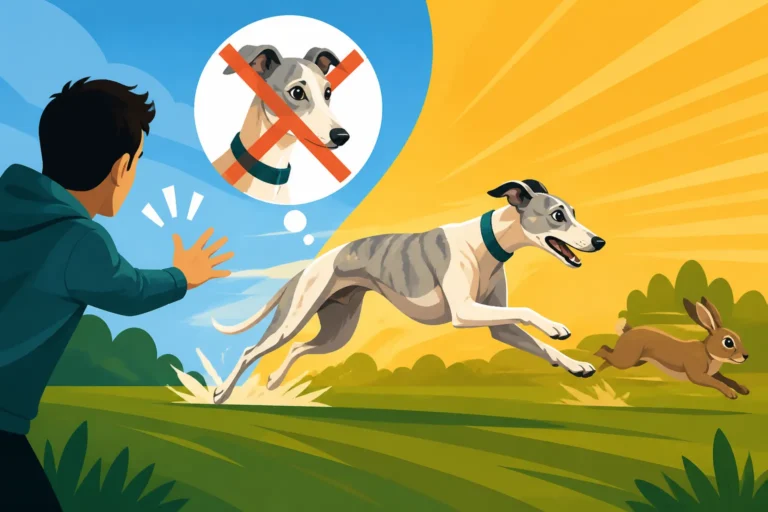
How High a Whippet Clears a Fence
One of the most common worries for us Whippet owners, especially if you're new to the breed, is how to keep these incredible athletes safely contained. You’ve probably seen your Whippet leap effortlessly over a fallen log or bound over a small ditch with shocking grace, leaving you to wonder: exactly how high can they jump, and is my fence actually enough? This guide will dive deep into the fascinating world of Whippet agility and help you understand how to create a secure environment for your beloved sighthound.
Understanding the Whippet's Incredible Athleticism
Whippets are truly masterpieces of canine engineering, designed for speed and agility. Their slender, muscular bodies, deep chests, and powerful hindquarters allow them to accelerate from a standstill to incredible speeds in mere seconds. This athletic prowess, while breathtaking to behold, also presents unique challenges when it comes to containing them safely within your yard. They aren't just fast; they're spring-loaded.
The Power of Their Sprint and Leap
When we talk about a Whippet's speed, we often focus on their straight-line velocity, but it's their ability to combine that speed with an explosive leap that really catches owners off guard. A Whippet can use its powerful hind legs to launch itself upwards with surprising force, especially if there's an incentive on the other side. This isn't just a casual hop; it's a calculated, muscular effort to clear an obstacle. Many a Whippet owner has watched in disbelief as their dog, seemingly too small to clear a particular fence, suddenly propels itself over with ease. It's often not about brute strength but about timing, lean body mass, and sheer spring.
They are inherently motivated by movement. A squirrel darting up a tree, a rabbit bolting across a field, or even a leaf blowing in the wind can trigger that prey drive. Once that switch flips, their focus narrows, and their physical capabilities are pushed to the max. Their minds are wired to chase, and their bodies are perfectly adapted to the task, including hurdling obstacles if it means continuing the pursuit.
The Role of Motivation and Prey Drive
It's crucial to understand that a Whippet's jumping ability isn't constant; it's heavily influenced by motivation. A bored Whippet might never attempt to clear a standard fence, but the same dog, when presented with a high-value chase object – be it a wild animal, another dog, or even a child's rolling ball – can become an entirely different animal. Their prey drive, a hallmark of the sighthound breeds, is incredibly powerful. Once they lock onto a target, little else matters. This instinct can override any previous training or perceived barrier.
This is why simply having a fence isn't always enough. You might have a perfectly secure yard for casual potty breaks, but if a deer wanders by or a cat strolls past the perimeter, your Whippet might find the motivation to test the fence's limits. It’s not about being disobedient; it’s about an ancient instinct taking over. Understanding this drive is the first step in creating a truly secure environment. For more on this, you might find Why a Whippet's Chase Instinct Overrides Its Recall insightful.
Factors Influencing a Whippet's Jumping Ability Over Fences
It's tempting to think there's a magic number for fence height – say, "a Whippet needs a six-foot fence." But the reality is far more nuanced. A variety of factors, both environmental and behavioral, play a significant role in how likely and how high your Whippet might jump.
Environmental Boosts and Escape Routes
Often, it's not the fence itself that's the problem, but what's around it. Think of anything near your fence line as a potential launchpad or stepping stone. A stack of firewood, a recycling bin, a dog house, a landscaping boulder, or even a snowdrift can give your Whippet just enough of a boost to clear a fence they otherwise couldn't. Trees with low branches close to the fence are also a huge concern, offering an easy climb-and-drop scenario. Similarly, uneven terrain, such as a raised flowerbed or a small hill sloping up to the fence, effectively reduces the fence height from your Whippet's perspective.
We also need to consider the type of fencing. A chain-link fence, for instance, offers toeholds that a smooth wood or vinyl fence does not, making it easier to scale. A loose panel or a gap where the fence meets the ground can also be exploited. These aren't always grand leaps, but often a combination of small efforts that lead to an escape. Regularly inspecting your fence line for these "environmental boosts" and weaknesses is crucial.
Individual Temperament and Energy Levels
Just like people, every Whippet has its own unique personality and energy level, which significantly impacts its likelihood to jump. A mellow, older Whippet who is perfectly content napping in the sun might never consider clearing a fence, even if a tempting squirrel trots by. However, a young, high-energy Whippet, especially one who isn't getting enough mental and physical stimulation, might become an escape artist purely out of boredom or pent-up energy.
Some Whippets are naturally more curious or adventurous, always looking for new sights and smells beyond their yard. Others might be driven by separation anxiety if left alone for long periods, leading them to try and escape to find their human companions. Separation Anxiety in a Whippet can manifest in many destructive ways, and fence jumping is certainly one of them. Knowing your individual dog – their drives, their fears, their energy requirements – is key to predicting and preventing escape attempts. A well-exercised, mentally stimulated Whippet is often a content and less adventurous one.
The Lure of the "Other Side"
Let's face it, the grass always seems greener on the other side, even for our dogs. Whether it's the intriguing scent of a neighbor's barbecue, the sight of another dog walking by, or the ultimate prize – a bounding rabbit – the allure of what lies beyond the fence is a powerful motivator. This external stimulus can turn even a seemingly complacent Whippet into a determined leaper. It's less about the fence itself and more about the perceived reward on the other side.
For sighthounds, their entire world is built around visual stimulation and the thrill of the chase. If they see something move, their instinct is to pursue it. This means that a fence that seems perfectly adequate for containing a dog for a casual potty break might become completely insufficient when that primal urge takes over. It's a frustrating reality for many Whippet owners, as you can never truly control every external trigger that might present itself.
Assessing Your Existing Fence for Whippet Containment
Before you panic and start ripping down your fence, let's take a practical look at what you have and how it measures up against the unique challenges of Whippet containment. It's not just about height; it's about the entire perimeter.
Minimum Recommended Heights and Real-World Scenarios
While there's no official "Whippet fence height standard," most experienced owners and breeders will tell you that a minimum of five to six feet is generally recommended for a Whippet. For many, a four-foot fence might seem high enough, especially for a breed that isn't particularly large. However, a motivated Whippet, with their powerful hindquarters and lean build, can easily clear four feet if they have enough impetus. Some especially athletic or determined individuals might even manage five feet.
Consider this scenario: your Whippet spots a rabbit on the neighbor's lawn. It gets a running start, hits the fence at an angle, and uses the momentum to propel itself over. In this situation, even a five-foot fence can be compromised. If your Whippet is younger, more energetic, or particularly driven by prey, aiming for the higher end of the recommendation, or even exceeding it, is a wise move. It's always better to overcompensate slightly when it comes to their safety.
Inspecting for Vulnerabilities and Gaps
Beyond the sheer height, a fence is only as strong as its weakest point. You need to get down on your hands and knees and inspect every inch of your perimeter. Are there any gaps under the fence where your Whippet could dig or squeeze through? Even a small gap can be widened with persistence. Check where the fence meets the ground – is it flush? Or are there uneven spots, especially after heavy rain or snow?
Next, examine the structural integrity. Are there any loose boards, weak panels, or areas where the fence is leaning? Could your Whippet push through a rickety spot? For chain-link fences, check for bent or damaged sections. Also, look at the gate: does it latch securely? Can it be easily nudged open? Is there a large gap underneath it? Many a Whippet escape has happened through a poorly secured gate. Remember, a Whippet’s nose and slender body can fit through surprisingly small openings.
Considering the "Climbability" Factor
It's not always about jumping; sometimes, it's about climbing. As mentioned, chain-link fences can act like ladders. If you have a chain-link fence, especially one under six feet, your Whippet might be able to scale it by getting a paw-hold and shimmying up. Even certain types of decorative fences with horizontal rails can offer a similar climbing opportunity.
If your fence is climbable, or if you have a very determined climber on your hands, you might need to consider adding "coyote rollers" or similar deterrents to the top of the fence. These are spinning bars that prevent the dog from getting a solid grip at the top, making it impossible to pull themselves over. While Whippets aren't typically known for elaborate climbing like some terrier breeds, their agility and desperation can lead to surprising attempts.
Strategies for Preventing Whippet Escapes Over Fences
So, you've assessed your fence, and maybe you've realized it's not quite the impenetrable fortress you imagined. Don't despair! There are many proactive steps you can take to prevent your clever Whippet from becoming an escape artist.
Increasing Fence Height and Adding Deterrents
If your fence is truly too low, the most direct solution is to increase its height. You can add extensions to existing fences, such as lattice toppers or wire mesh. For a smooth fence, a rolling bar or "coyote roller" attachment along the top can be incredibly effective by preventing them from getting purchase to pull themselves over. This makes it impossible for them to get a firm grip and hoist themselves up and over.
For those considering a completely new fence or a major overhaul, taller solid fences like wood or vinyl are often preferred as they offer no footholds and block the view of external triggers. If you opt for chain-link, aim for at least six feet and consider anti-climb measures. Also, make sure the fence is buried or has a footer to prevent digging. Sometimes, a simpler solution like adding a privacy screen to a chain-link fence can help reduce visual stimulation that tempts your Whippet to jump in the first place. You can find many options for fence extensions and deterrents on Amazon.
Managing the Environment Around the Fence
This is often an overlooked but critical step. Clear away anything near the fence that could serve as a boost. Move firewood stacks, garbage bins, large planters, outdoor furniture, and dog houses far away from the perimeter. Trim any tree branches that hang over or are close to the fence line. If you have sloping terrain, consider building up the ground on the outside of the fence or grading it away from the fence line.
Regularly check your yard for potential escape aids. What seems like a harmless garden gnome today could be the launchpad for a great escape tomorrow. This also includes keeping an eye on snowdrifts in winter, as they can significantly reduce the effective height of your fence. Proactive management of the immediate environment can often be as effective as adding extra height.
Supervised Yard Time and Training
Perhaps the most important strategy of all is supervision. No fence, no matter how tall or secure, is 100% foolproof when dealing with a determined sighthound. Always supervise your Whippet when they are in the yard, especially during peak "prey" times like dawn and dusk when small animals are most active. This allows you to intervene immediately if you see them showing interest in the fence line or a potential escape.
Beyond supervision, consider training. A solid "leave it" command can be incredibly useful if your Whippet spots something tempting near the fence. A strong recall, even if you never intend to let them off-leash outside a secure area, is always a good safety net. You can practice this on a long line in a secure area. Building a strong bond and a responsive relationship with your Whippet through positive reinforcement training can make them less likely to feel the need to escape in the first place. Resources like BAXTER & Bella offer fantastic online training programs that can help reinforce these crucial behaviors.
Training Your Whippet for Better Containment and Recall
While physical barriers are essential, don't underestimate the power of good training in keeping your Whippet safe and secure. A well-trained Whippet is a happier, more settled Whippet, less prone to testing boundaries.
Building a Bulletproof Recall (Even if You Never Use It Off-Leash)
"But wait," you might say, "I'd never let my Whippet off-leash in an open field, so why do I need a bulletproof recall?" And you'd be right! For most Whippets, a truly reliable off-leash recall outside of a securely fenced area or lure coursing field is a pipe dream because of their intense prey drive. Why a Whippet Cannot Be Let Off Leash in an Open Field highlights this challenge perfectly. However, a strong recall is still invaluable within your fenced yard. If your Whippet finds a weakness in the fence, a powerful recall command could be the difference between a quick return and a panicked chase down the street.
Practice recall games often, making them fun and rewarding. Use high-value treats and enthusiastic praise. Start in a low-distraction environment, like inside your home, and gradually move to the yard. Use a long line initially, even in the yard, to ensure success and prevent accidental escapes during training. The goal is to make coming to you the most exciting and rewarding thing your Whippet can do, even when faced with distractions.
Teaching "Leave It" and Impulse Control
Teaching your Whippet a strong "leave it" command can be a game-changer when it comes to fence security. If they spot a squirrel just outside the fence and begin to get fixated, a firm "leave it" can redirect their attention away from the temptation and back to you. This command requires consistent practice and patience, as you're asking them to override a powerful natural instinct.
Start with low-level distractions, like a treat on the floor that they're not allowed to touch until released. Gradually increase the difficulty, moving to toys, then to outdoor distractions, always rewarding heavily for compliance. Impulse control games, like waiting for their food bowl or not bolting out the door, also build the mental discipline that can prevent an opportunistic fence jump. The Whippet That Bolts Through an Open Door is a common problem that requires good impulse control training.
Crate Training and Managing Boredom
A well-adjusted Whippet who isn't bored or anxious is less likely to attempt escape. Crate training can be a valuable tool, providing a safe, comfortable den for your Whippet when you can't actively supervise them, such as when you leave the house or need to work in the garden without constant vigilance. It prevents them from practicing escape behaviors when you're not around.
Beyond the crate, address potential boredom. Whippets might be couch potatoes, but they still need mental and physical enrichment. Regular exercise, including sprints in a secure area, puzzle toys, chew toys, and even short training sessions throughout the day, can help burn off excess energy and provide mental stimulation. A tired Whippet is a good Whippet, and a stimulated Whippet is less likely to look for trouble. For ideas on enrichment, What a Whippet Needs Every Day provides excellent suggestions.
Considerations Beyond Fence Height: The Full Picture
Thinking about Whippet containment is a bit like building a multi-layered defense. Fence height is just one component; the full picture involves a holistic approach to their safety and well-being.
The Importance of Secure Off-Leash Areas
Even with the best fence, most Whippet owners rely on genuinely secure, off-leash parks or facilities for their dogs to really stretch their legs. A large, fully enclosed dog park with six-foot fences, or a rented private dog field, provides the opportunity for your Whippet to run at full tilt without the risk of escape. These environments allow them to fulfill their instinctual need to sprint, which can make them more content and less likely to test boundaries in your home yard.
Remember, even in a dog park, vigilance is key. Always be aware of other dogs, potential hazards, and the security of the gates. Never assume a shared space is perfectly proofed for a sighthound without checking it yourself. For understanding where they can safely run, read Where a Whippet Can Safely Run Off Leash.
Life Inside the Home: A Content Whippet is a Contained Whippet
A Whippet's life isn't just about what happens outdoors. Their home environment and daily routine play a massive role in their overall contentment and, by extension, their likelihood to attempt escapes. Whippets thrive on routine and comfort. They love their soft beds, their blankets, and being close to their people. A Whippet who feels secure, loved, and adequately exercised (both mentally and physically) is far less likely to develop destructive behaviors like fence jumping or attempting to bolt.
Ensure they have plenty of comfortable places to rest, good quality food, and consistent, positive interaction with you. The Household a Whippet Was Built For really emphasizes their need for indoor comfort and human companionship. A Whippet left alone for excessive periods without adequate stimulation might become bored, anxious, or both, leading to behaviors aimed at seeking engagement or relief, which could include trying to escape the yard.
| Fence Type | Pros for Whippets | Cons for Whippets | Minimum Height (Recommended) | Additional Considerations |
|---|---|---|---|---|
| Wood Privacy | No footholds, blocks visual triggers, generally sturdy | Can have gaps underneath, may require extensions for height | 5-6 feet | Ensure boards are tightly fitted, check for loose panels. |
| Vinyl Privacy | No footholds, blocks visual triggers, low maintenance | Can be more expensive, may crack, can have gaps underneath | 5-6 feet | Similar to wood, check integrity and ground contact. |
| Chain Link | Cost-effective, allows visibility (can be a con too) | Provides footholds for climbing, can be flimsy | 6 feet (or higher) | Requires anti-climb measures (e.g., coyote rollers), regularly check for damage. |
| Wrought Iron/Aluminum | Aesthetically pleasing, very sturdy if well-installed | Visual triggers visible, potentially climbable depending on design, very expensive | 5-6 feet | Check bar spacing to prevent squeezing through, consider extensions. |
| Invisible/Electric | No physical barrier, low cost (initially) | Does NOT prevent prey drive escapes, causes pain/stress, unreliable for sighthounds | N/A | Not recommended for Whippets. Their prey drive will override the deterrent. |
Disclaimer
This article is for general informational purposes only and does not constitute professional advice. Laws, prices and regulations vary by location and change over time. Consult a qualified professional for guidance on your specific situation.