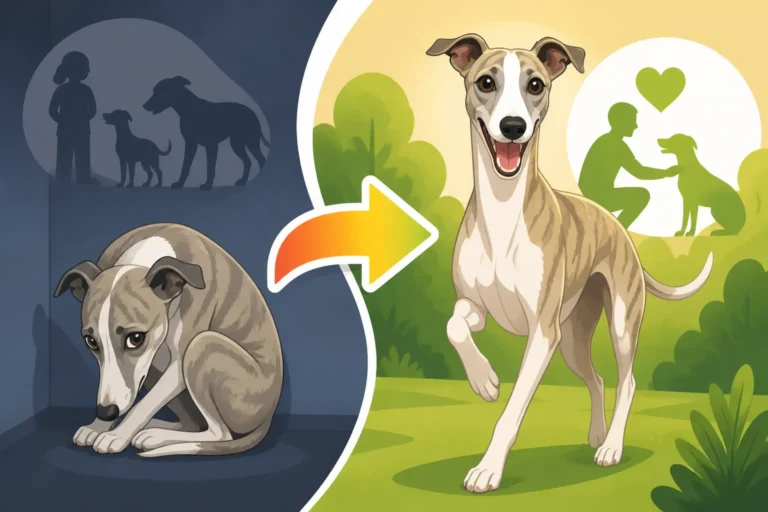
Whether a Whippet Barks at Anything
It’s a common misconception that Whippets are silent, demure creatures, gliding through life without a peep. Many people imagine bringing home an elegant sighthound, picturing peaceful evenings curled on the sofa with only the softest sighs. But if you’ve lived with a Whippet for more than a week, you’ve likely discovered that while they might not be the most vocal breed, they absolutely have opinions, demands, and warnings to share—and they'll use their voice to express them! This guide will delve into the reality of Whippet barking, helping you understand why your lean, leggy friend speaks up and how you can manage their vocalizations effectively.
Understanding the Whippet's Natural Vocal Tendencies
When you picture a Whippet, you probably conjure an image of quiet grace. They're often seen as the epitome of a calm house dog, known more for their lightning-fast sprints and epic naps than for loud pronouncements. This expectation of silence can lead to real frustration when your new companion turns out to be more vocal than anticipated.
The Stereotype of the "Silent Sighthound"
There's a widespread belief that sighthounds, including Whippets, are inherently quieter than other dog breeds. People often assume that because they were bred for hunting by sight and speed, rather than for barking warnings or flushing game by scent, they wouldn't have a strong inclination to use their voice. This stereotype is certainly appealing, especially to those seeking a more tranquil companion or living in close quarters like an apartment where noise can be a major concern. It paints a picture of a dog that communicates primarily through body language—a subtle flick of an ear, a deep sigh, or a nudge with a cold nose—rather than a full-throated bark.
This image isn't entirely unfounded; many Whippets are indeed less prone to incessant barking than, say, a terrier or a watchdog breed. They often have a naturally calm disposition indoors, contributing to the idea of their silence. However, this expectation can set owners up for disappointment if they haven't thoroughly researched the breed beyond generalized characteristics. The truth is, like all dogs, Whippets are individuals, and their vocal tendencies can vary significantly from one dog to another. Relying solely on the "silent sighthound" stereotype can leave you unprepared for the reality of living with a vocal Whippet, no matter how infrequent their barks might be compared to other breeds.
The Reality: Whippets Do Bark
Let's be clear: Whippets are dogs, and dogs bark. While they may not be the neighborhood's most persistent barkers, they absolutely will use their voices to communicate. Whether it's a sharp, single "woof!" to alert you to a leaf blowing past the window, a series of excited "yips" when you walk through the door after a long day, or a frustrated whine-bark when they can't reach a dropped treat, their vocal repertoire is quite varied. It's a mistake to think you're bringing home a completely mute companion. Their barking might be less frequent, perhaps, but it is certainly present.
Many Whippet owners, myself included, have been surprised by the sheer volume some of these seemingly quiet dogs can produce. Imagine your Whippet, typically curled in a tight donut on the sofa, suddenly launching into a startling crescendo of barks because a squirrel dared to venture onto the bird feeder. It can be jarring precisely because it's not constant. These barks aren't always aggressive or territorial; often, they're simply their way of engaging with their world or demanding your attention. Recognizing that barking is a normal, albeit sometimes infrequent, part of their behavior is the first step in effectively managing it. It allows you to approach the behavior with understanding rather than frustration, knowing that you're not dealing with an anomaly but a typical dog expressing itself.
Why They Might Bark Less Than Other Breeds
Despite the fact that Whippets do bark, there are indeed reasons why they might be less prone to excessive vocalization compared to many other breeds. A significant factor lies in their historical purpose and physical makeup. Whippets, like their larger Greyhound cousins, were bred for speed and sight-hunting, primarily chasing small game over short distances. This task didn't require them to bark to alert hunters or drive prey; rather, stealth and quiet focus were key. Their senses are acutely tuned to visual cues, meaning they might react to something they see far more readily than something they hear from a distance or smell.
Furthermore, a Whippet's energy expenditure is often cyclical. They are renowned for their incredible bursts of speed, capable of reaching impressive velocities over short distances, earning them the affectionate nickname "40 mph couch potatoes." After such explosive activity, they require significant rest. How Many Hours a Day a Whippet Sleeps is often surprising to new owners, as these dogs can log upwards of 18 hours of sleep in a 24-hour period. This means they simply spend less time actively observing and interacting with their environment in a way that might trigger barking. A deeply sleeping Whippet isn't usually a barking Whippet! They conserve their energy, both physical and vocal, for moments that truly warrant their attention or excitement, often leading to a quieter overall household environment compared to breeds bred for constant vigilance or sustained high energy.
Common Triggers for Whippet Barking
Understanding why your Whippet barks is half the battle in managing it. Their vocalizations aren't random; they're usually a direct response to a specific trigger in their environment or an internal state. Pinpointing these triggers is crucial for effective intervention.
Alarm Barking: The Doorbell and Passing Strangers
Ah, the classic "alarm" bark – this is perhaps the most common vocalization for many Whippets, and it can be incredibly startling precisely because it often comes from a seemingly dormant dog. The sudden jolt of the doorbell, an unexpected knock, or even the subtle sound of someone approaching your front door can transform your serene sighthound into a surprisingly vocal sentinel. Your Whippet isn't usually barking out of aggression or a desire to guard the house in the traditional sense; rather, they're often simply alerting you to an intrusion into their quiet domain. It's their way of saying, "Hey! Something's happening! Did you see that? Do something!" How a Whippet Reacts to the Doorbell is a prime example of this instinctive behavior.
Imagine your Whippet enjoying a sunbeam nap, utterly oblivious to the world, then DING DONG. Suddenly, they're on their feet, launching into a rapid-fire series of barks directed at the door. They might run to the window if they can see the source, or stand sentinel, ears perked, tail rigid, completely focused. This type of barking is a primal instinct, a genetic hangover from their wilder ancestors who needed to warn the pack of perceived threats. It’s not necessarily about being protective, but about being informative. They're telling you something is amiss, often with an intensity that belies their generally placid nature. The frustration for owners often comes from the sheer unpredictability and suddenness of these outbursts, disrupting peaceful moments and sometimes causing anxiety about disturbing neighbors.
Excitement Barking: Play, Food, and Arrivals
Whippets, despite their calm interior demeanor, can be bundles of exuberant energy when something truly excites them. And when that excitement hits, their barks can be an undeniable part of the symphony. This isn't the urgent, sharp alarm bark; instead, it's often a higher-pitched, faster, and more joyful series of barks or yips, sometimes accompanied by a full-body wiggle that makes them look like they're about to vibrate right off the ground. Think about the moment you walk through the door after being out for a few hours. The calm Whippet who was just napping transforms into a whirlwind of happy barks, tail wags, and enthusiastic bounces, expressing pure, unadulterated delight at your return.
Similarly, meal times or the prospect of a favorite treat can trigger these excited vocalizations. As you reach for their food bowl, you might hear a chorus of impatient yips and barks, escalating until the bowl is finally placed down. Playtime is another big one; pulling out their favorite squeaky toy or initiating a game of chase can quickly lead to a burst of happy barking, especially if they're trying to egg you on or express their sheer joy in the moment. These barks are rarely problematic unless they become excessively loud or prolonged, but they can be intense. It’s important to distinguish this joyous, often endearing, vocalization from more troublesome forms of barking, as the approach to managing it will be entirely different. It’s a sign of a happy, engaged dog, even if it can be a bit noisy!
Attention-Seeking and Frustration Barks
Beyond alerting and excitement, many Whippet barks stem from a desire for attention or sheer frustration. These vocalizations can be particularly trying for owners because they often develop into learned behaviors – the dog barks, the human reacts, and a pattern is set. An attention-seeking bark might be a soft, single "woof" escalating into a more insistent series of barks if ignored. Your Whippet might use this tactic if they want to go outside, get a belly rub, or if they’re just feeling a bit lonely and want to remind you of their presence. They learn quickly that noise gets a response, even if that response is a frustrated "Quiet!" from you.
Frustration barks, on the other hand, arise when your Whippet can't achieve something they desire. Imagine your Whippet watching you eat dinner, intensely focused on that delicious morsel you just dropped on the floor, but it’s just out of reach under the table. They might let out a series of short, choppy barks, sometimes accompanied by whining, expressing their annoyance at the barrier between them and their goal. Another common scenario is if they are crated or gated and want to join you in another room, or if a game of fetch abruptly ends. These barks are often accompanied by body language that communicates their internal turmoil—pacing, pawing, or intense staring. Understanding these motivations is critical. If you accidentally reward attention-seeking barks by giving in to demands or scolding them, you’re inadvertently reinforcing the very behavior you want to stop. It's a tricky balance, but recognizing the underlying plea or protest is the first step toward teaching them more appropriate ways to communicate.
The Different Types of Whippet Barks and What They Mean
Just like human speech, a dog's barks aren't monolithic. The sound, intensity, and context of a Whippet's vocalization can tell you a lot about what they're trying to convey. Learning to "read" your Whippet's barks is an invaluable skill for any owner, helping you respond appropriately and build a stronger bond.
The Sharp, Urgent Alert Bark
This is the bark that often makes you jump out of your skin. It’s typically a single, abrupt, and often deep "Woof!" or a short, sharp series of barks, delivered with conviction. When your Whippet emits this sound, their body language will usually be tense and focused. Their ears might be pricked forward, their tail held stiffly, perhaps even a slight hackle raise if they’re genuinely concerned, though this is less common for simple alerts. This bark isn't usually a sign of aggression, but rather an announcement: "Attention! Something is different! I have seen/heard something important!"
Common triggers for this alert bark include the doorbell ringing, a knock at the door, a sudden loud noise outside, or the sight of a stranger (human or animal) passing by your window or yard. For a sighthound like a Whippet, visual triggers are particularly powerful. A person walking past the house who catches their eye, or a delivery driver approaching, can instantly trigger this vocalization. The urgency implies they want you to acknowledge their discovery and potentially investigate. Often, once you investigate and reassure them, or the trigger passes, the barking will cease. If it persists, it might be escalating from a simple alert to frustration or perceived threat, indicating a need for a different response from you. It’s your Whippet's way of being your personal, very efficient, neighborhood watch.
The Whiny, Needy Bark
The whiny, needy bark is a distinctly different beast from the sharp alert. This vocalization is often softer, more drawn out, and carries an almost pleading tone. It's typically accompanied by body language that clearly communicates desire or discomfort: a paw lifted, a nose nudged into your hand, intense eye contact, or even a slow, deliberate tail wag that seems to say, "Please, notice me." It's not usually a bark of alarm or pure excitement, but rather a direct attempt to solicit a specific response from you.
Think about the times your Whippet might use this bark. It could be late morning, and they've decided it's time for breakfast (even if it's an hour early). They might stand by their food bowl, offering a series of low, whiny barks until you acknowledge their perceived need. Or perhaps they need to go outside for a potty break, particularly if it’s raining and they are reluctant to go out. The Whippet That Will Not Toilet in the Rain is a common scenario where you might hear this plaintive sound. They might also use this bark if they want to get on the sofa with you but aren't allowed, or if they want to play and you're currently engrossed in a book. This bark is a calculated communication strategy, often perfected by intelligent Whippets who've learned that a persistent, slightly pathetic vocalization often yields results from their soft-hearted humans. The challenge for owners is to differentiate genuine needs from learned attention-seeking.
The Playful, Enthusiastic Bark
This is the happiest bark your Whippet makes, and it's almost always a joy to hear. The playful, enthusiastic bark is generally high-pitched, often rapid-fire, and accompanied by a flurry of excited body language. Picture your Whippet in a full-body wiggle, tail blurring from side to side, ears flopping playfully, and often a wide, open-mouthed grin. This is the sound of pure, unadulterated canine delight and invitation.
You'll most often hear these barks during spirited play sessions, whether it's with you, another dog, or even a particularly stimulating toy. When your Whippet launches into a "zoomie" session around the yard, they might punctuate their incredible sprints with short, sharp, happy barks, almost like exclamations of joy. If they're engaging in a game of chase with another Whippet, or even a smaller, playful dog, these barks become part of the play dialogue, encouraging the other dog and expressing their own excitement. Similarly, when you pull out their favorite fetch toy, or initiate a game of tug, these barks signify their eagerness and readiness to engage. These barks are usually not a cause for concern, as they're a natural expression of a happy, well-adjusted dog enjoying themselves. The volume might be high in the moment, but the underlying emotion is entirely positive, and it's a wonderful indicator of their joyful personality.
Here's a quick guide to help you differentiate between common Whippet barks:
| Type of Bark | Likely Meaning | Common Trigger | Initial Owner Response |
|---|---|---|---|
| Sharp, Urgent "Woof!" | Alert, something new/perceived mild threat | Doorbell, sudden sound, person at window, delivery driver | Investigate calmly, acknowledge the trigger, then redirect attention |
| High-Pitched, Repetitive "Yap-yap-yap!" | Excitement, demand for attention, joy | Owner arrival, play initiation, ignored request, mealtime | Ignore if attention-seeking, engage if appropriate, reward quiet waiting |
| Low Growl/Rumble (with barks) | Warning, discomfort, fear (less common) | Unfamiliar dog too close, perceived threat too close | Create distance, reassure, remove from situation, avoid punishment |
| Whiny Bark | Request, protest, specific need (potty, food, comfort) | Wants food, needs to go out, seeking comfort, can't reach something | Assess genuine need, fulfill if reasonable, avoid rewarding persistent whining |
When Barking Becomes a Problem Behavior
While some barking is perfectly normal and even desirable (who doesn't want to be alerted to an unexpected visitor?), there's a point where it crosses the line from communication into problem behavior. This shift can be frustrating for owners and, more importantly, can indicate underlying issues for your Whippet.
Impact on Household Peace and Neighbors
For many Whippet owners, the biggest problem with barking isn't just the noise itself, but the disruption it causes. Imagine trying to work from home, conduct a Zoom call, or simply enjoy a quiet evening, only for your Whippet to erupt in a flurry of barks every time a leaf blows past the window or the neighbor's cat saunters across the fence. This constant interruption can be incredibly stressful, turning your home into a less peaceful environment than you'd hoped for. The peace and quiet you crave become elusive, replaced by a constant state of vigilance for the next vocal outburst.
Beyond your immediate household, excessive barking can quickly sour relationships with neighbors. Living in an apartment complex or a close-knit suburban area means sound travels, and continuous barking, even if intermittent, can be perceived as a significant nuisance. This leads to awkward conversations, complaints, and increased stress levels for everyone involved. For Whippets who truly thrive indoors, as discussed in Whether a Whippet Suits an Apartment, persistent barking can make apartment living particularly challenging, causing both the owner and the dog undue stress. The thought of an angry neighbor can make you anxious every time your Whippet lets out a peep, creating a negative feedback loop that often makes the problem worse. It’s a frustrating cycle that many dog owners experience, and it’s valid to feel overwhelmed by it.
The Link Between Excessive Barking and Stress
It’s easy to view excessive barking simply as an annoying habit, something your dog chooses to do to get on your nerves. However, it's crucial to understand that barking, particularly when it becomes incessant or seems difficult to control, is often a symptom of an underlying emotional state in your Whippet. More often than not, that state is stress, anxiety, boredom, or frustration. A Whippet who barks constantly at every little sound outside might not just be a vigilant guardian; they might be feeling overly anxious about their environment, struggling to feel secure. This isn't just about their happiness; it's about their overall well-being.
Consider a Whippet who barks uncontrollably when left alone. This isn't usually an act of defiance, but a manifestation of genuine distress, a symptom of separation anxiety. Barking when left alone (Whether a Whippet Barks When Left Alone) can stem from a deep-seated fear of abandonment. Similarly, a dog who barks incessantly when they can’t get access to something they desperately want (like a walk or interaction) could be experiencing high levels of frustration. When a dog is frequently in a state that triggers excessive barking, their cortisol levels can remain elevated, leading to chronic stress which negatively impacts their physical and mental health. This prolonged stress can manifest in other behavioral issues, a suppressed immune system, and a generally lower quality of life. Recognizing this link shifts the approach from punishment to understanding and addressing the root emotional cause, which is ultimately more compassionate and effective.
Identifying the Root Cause of Problem Barking
Before you can effectively address excessive barking, you absolutely must play detective and figure out why your Whippet is doing it. Trying to stop barking without understanding its root cause is like patching a leaky pipe without knowing where the hole is—it might work temporarily, but the underlying issue will likely resurface. Start by observing your Whippet with a critical eye, almost as if you’re a scientist conducting a study. Keep a journal for a few days or a week, noting down every instance of barking.
Ask yourself specific questions: What time of day does it happen? Where is your Whippet when they bark (inside, outside, crated, on the sofa)? What was happening just before the bark started (a person walked by, the doorbell rang, you left the room, they heard a noise, they were bored)? What kind of bark was it (sharp, whiny, excited)? And perhaps most importantly, what was your reaction, and what was the outcome? Did they get attention? Did the trigger go away? Did they get what they wanted? This detailed observation will start to reveal patterns. For example, if barking only occurs when you leave the house, it points towards separation anxiety. If it only happens when someone walks past the window, it’s alert barking. If it's frantic, high-pitched barking when you pick up the leash, it's likely excitement. Only by accurately identifying the trigger and the dog’s motivation can you choose the most appropriate and effective intervention strategy. Don't rush this step; it's the foundation of all successful behavioral modification.
Strategies for Managing and Reducing Excessive Barking
Once you've identified the "why" behind your Whippet's barking, you can start implementing targeted strategies. The goal isn't usually to eliminate barking entirely – that's unrealistic and unhealthy – but to manage it to an acceptable level and ensure your Whippet is barking for the right reasons.
Environmental Management: Reducing Triggers
One of the quickest and often most effective ways to reduce problematic barking is to simply remove or minimize the triggers in your Whippet’s environment. If your Whippet barks at every passerby outside the living room window, can you restrict their access to that window during peak times? Or perhaps use privacy film or opaque window coverings to block their view? You can find a wide variety of these solutions on Amazon, from decorative films to simple frosted options, that can make a huge difference. If the doorbell is a major trigger, consider putting a sign on your door asking visitors to knock instead, or even temporarily disabling the chime and relying on visual alerts from your camera or peephole.
For outdoor barking, if your Whippet rushes the fence to bark at neighborhood dogs, investigate options for visual barriers along the fence line. Dense shrubbery, lattice, or even specialized fence screening can help break the line of sight and reduce their perceived need to "alert" or react. Similarly, if external noises are the culprit, consider white noise machines or turning on the radio or TV to provide a steady background sound that can mask sudden, jarring noises. Managing the environment isn't about ignoring the problem; it's about setting your Whippet up for success by proactively reducing opportunities for them to practice the unwanted behavior. It’s often the easiest and least stressful starting point, creating a calmer space for both of you before you even begin formal training.
Training for Quiet: The "Speak" and "Quiet" Commands
It might sound counterintuitive, but teaching your Whippet to "speak" on command can actually be a powerful tool for teaching them to be "quiet." The rationale behind this is that it gives you control over the barking. Instead of just trying to suppress it when it happens, you're teaching it as a controlled behavior. Start by finding something that naturally makes your Whippet bark (e.g., knocking on the door, holding up a favorite toy). As they bark, clearly say "Speak!" (or whatever cue you choose), then praise and reward them instantly. Repeat this many times until they associate the cue with the action.
Once your Whippet reliably barks on command, you can introduce the "Quiet!" cue. Give your "Speak!" command, let them bark once or twice, then immediately present a high-value treat right to their nose. Most dogs will stop barking to sniff and take the treat. The moment they are quiet, say "Quiet!" (or your chosen cue), then immediately give them the treat. The timing here is crucial: you're rewarding the absence of barking, not the barking itself. Repeat this process, gradually increasing the duration of silence before the treat is given. This method works wonders because it empowers your Whippet to understand what you want them to do, rather than simply being corrected for a natural behavior. This positive reinforcement approach, rather than punishment, is especially effective for sensitive sighthounds like Whippets, who can shut down if handled too harshly. As mentioned in How a Whippet Learns When It Bruises From Pressure, their delicate nature means gentle, reward-based training is paramount for building trust and achieving lasting results.
Desensitization and Counter-Conditioning
For barking that stems from fear, anxiety, or over-arousal (like barking at strangers or other dogs on walks), desensitization and counter-conditioning are powerful, humane, and highly effective techniques. These methods work by changing your Whippet's emotional response to a trigger, rather than simply trying to suppress the outward behavior. Desensitization means gradually exposing your Whippet to the trigger at a very low intensity, so low that they don't react. Counter-conditioning means changing their emotional association with that trigger from negative (fear, anxiety, excitement leading to barking) to positive (happiness, calm, anticipation of a reward).
Let's take the example of barking at the doorbell. Instead of having someone ring the bell repeatedly at full volume, start with a recording of the doorbell sound played very softly, or have someone lightly tap on the door from a distance. The moment your Whippet hears the sound without reacting (no barking, no tension), immediately reward them with a super high-value treat. Repeat this many times, gradually increasing the intensity or proximity of the trigger. If your Whippet barks, you’ve gone too fast; back up to a less intense level. Simultaneously, you’re counter-conditioning by pairing the previously scary or exciting sound with something wonderful (the treat). Over time, your Whippet learns that the doorbell doesn't predict something alarming or exciting, but rather predicts delicious treats and positive experiences. This fundamentally changes their internal emotional response, leading to a much calmer, quieter reaction. This requires patience and consistency, but the long-term benefits for your Whippet's emotional well-being and your household peace are immeasurable.
Addressing Specific Barking Scenarios
While the general strategies above are broadly applicable, some barking scenarios are so common or specific to Whippets that they warrant their own detailed approaches.
Doorbell Barking: A Common Whippet Challenge
The doorbell is a notorious trigger for many dogs, and Whippets are no exception. The sudden, intrusive sound often sends them into a frenzy of alert barking. It's a deeply ingrained reaction, but it's absolutely manageable with consistent training. First, ensure your environmental management is in place: consider a sign asking visitors to knock or silence your chime if possible. Next, you need to teach your Whippet a calm alternative behavior. Pick a designated "place" command, such as a dog bed in another room or a specific mat near the door but out of the direct line of traffic.
Start by practicing "place" when there's no doorbell stimulus, rewarding heavily for staying on their spot. Once they're solid, incorporate a muted doorbell sound or a soft knock. Have a helper lightly tap the door while you direct your Whippet to their place with a high-value treat. As they settle, reward them. If they bark, the helper stops, you wait for quiet, then try again at a lower intensity. Gradually increase the realism of the doorbell/knock. When a real visitor arrives, give your Whippet a special long-lasting chew or puzzle toy on their "place" before you open the door. This redirects their attention, gives them an appropriate outlet for energy, and helps them associate visitors with calm, positive experiences. It takes time, but the goal is to shift their reaction from frantic barking to calm anticipation of their "job" when the doorbell rings.
Barking at Other Dogs or People on Walks
Walking a Whippet can be an absolute joy, but it can quickly turn stressful if your dog barks excessively at other dogs or people they encounter. This "leash reactivity" is often rooted in a combination of fear, frustration, or over-excitement, and it’s especially challenging because you're out in the unpredictable world. The key here is proactive management and changing your Whippet's emotional response. First, use a proper walking harness or a martingale collar. Why a Whippet Needs a Martingale is essential knowledge, as their slender necks and heads mean they can easily slip out of standard collars when startled or pulling.
When you're out, scan your environment constantly for potential triggers. The moment you spot another dog or person at a distance before your Whippet reacts, immediately start feeding your Whippet high-value treats (think cooked chicken or cheese). You want to create a positive association: "Other dog/person appears = delicious treats!" Keep feeding them until the trigger is out of sight. This is called "Look At That" (LAT) game. If your Whippet starts to bark, you've gone too far, too fast. Turn around, increase the distance, or even duck behind a car or tree to create more space, and restart the exercise at a lower intensity. Never scold or yank on the leash when they're reacting; this only adds to their stress and can make the behavior worse. Instead, focus on rewarding calm observation and offering space. Building a solid foundation with Socializing a Whippet Puppy can also help prevent these issues from developing in the first place, ensuring they have positive early experiences with the world around them.
Barking When Left Alone (Separation Anxiety)
This is one of the most heartbreaking and challenging barking issues, as it often signals genuine distress in your Whippet. Barking when left alone is a hallmark symptom of separation anxiety, a condition where dogs experience intense panic and stress when separated from their primary attachment figure. It's not about being naughty; it's about being terrified. And for owners, it's frustrating because you often only find out about the barking through neighbor complaints or recordings. Why a Whippet Barks When Left Alone is a crucial topic to understand, as it highlights the emotional toll this takes on your dog.
Addressing separation anxiety barking requires a multi-faceted approach, and it often needs professional guidance. First, ensure your Whippet is genuinely comfortable and secure in their "alone space" (crate, specific room). Start by making departures and arrivals completely uneventful. No big goodbyes or excited hellos. Practice very short absences – literally stepping out the door for 10 seconds, returning calmly before anxiety escalates, and slowly building duration. Provide engaging, safe enrichment toys (like a stuffed Kong frozen solid) that will keep them occupied for a short while, but be aware that for true separation anxiety, food puzzles alone won't solve the deep-seated panic. Avoid punishment, as it will only increase their anxiety. For more structured support and a comprehensive training plan, resources like BAXTER & Bella online puppy school offer modules that cover separation anxiety foundations, helping you build confidence in your Whippet from the ground up, even if you need to eventually seek a veterinary behaviorist for severe cases. This is a journey of patience, empathy, and consistent small steps.
Living with a Whippet's Bark: Expectations and Reality
Even with the best training and management, it's important to set realistic expectations. You're living with a dog, and dogs use their voices. The goal isn't necessarily absolute silence, but rather a manageable level of barking that indicates communication, not distress or nuisance.
Accepting a Certain Level of Vocalization
Let's face it: trying to achieve absolute silence from your Whippet is an unrealistic, and frankly, unhealthy goal. Barking is a natural dog behavior, a fundamental part of how they communicate, express joy, alert to changes, and sometimes just blow off a little steam. Expecting a dog to never bark is like expecting a child to never make noise – it’s simply not in their nature. What you should aim for is appropriate barking. A short "woof" when the postman delivers mail is perfectly acceptable; it’s your Whippet doing their job as your personal alert system. A series of happy yips during an exciting play session is a sign of a well-adjusted, joyful dog.
The real shift in mindset comes from differentiating between problematic barking and normal vocalization. Problematic barking is excessive, relentless, driven by anxiety or frustration, and disruptive. Normal vocalization is usually short-lived, situational, and clearly communicates something to you. Accepting that your Whippet will bark occasionally can significantly reduce your own stress and frustration. Instead of immediately reacting negatively to any sound, you can learn to assess the bark: what kind is it? What's the context? And what does my Whippet need right now? This acceptance fosters a more relaxed environment for both you and your Whippet, leading to a much more harmonious household. It's about finding that sweet spot where their voice is a part of your life, not a source of constant irritation.
Consistency is Key for Success
This cannot be stressed enough: consistency is the cornerstone of any successful behavioral training, especially when it comes to barking. Every person in your household must be on the same page regarding how to respond to your Whippet's barking. If one person ignores attention-seeking barks while another gives in, your Whippet will become confused and will likely continue to bark because it sometimes works. If one person practices the "Quiet!" command and another scolds the dog, the mixed signals will sabotage your efforts.
Think about it from your Whippet's perspective. If barking at the doorbell sometimes gets them a treat for being quiet, but other times gets them yelled at, they have no clear understanding of what's expected. This leads to frustration for them, and inconsistent behavior for you. Establish clear rules and responses, and ensure everyone in the family adheres to them, every single time. This includes guests, if possible. A good routine is also crucial for Whippets, as outlined in What a Whippet Needs Every Day. Predictable schedules for feeding, exercise, and potty breaks can reduce anxiety and boredom, which are often underlying causes of barking. Consistency builds trust and understanding between you and your Whippet, teaching them that there’s a clear and predictable way to interact with their world and get their needs met without resorting to excessive barking. It’s hard work, but it pays off in spades.
When to Seek Professional Help
Sometimes, despite your best efforts with environmental management, consistent training, and boundless patience, barking issues persist or even worsen. This is not a reflection of your failure as an owner, nor is it necessarily a sign that your Whippet is "stubborn" or untrainable. It's often an indication that the problem is more deeply rooted or complex than can be addressed with general advice, and it’s a clear signal that it's time to seek professional help. Don't hesitate or feel embarrassed to reach out to an expert.
A certified professional dog trainer or a veterinary behaviorist can offer invaluable insights and create a tailored plan for your specific situation. They can accurately assess the underlying cause of the barking, which might be medical (pain, hearing issues) or behavioral (severe anxiety, obsessive compulsive tendencies), and recommend appropriate interventions. For instance, if you suspect separation anxiety, a behaviorist might recommend medication in conjunction with behavior modification to help your Whippet cope with their panic. They can also observe your Whippet's body language and environmental triggers in ways you might miss, offering nuanced strategies. While resources like BAXTER & Bella provide excellent foundational training that can support many behavioral goals, for persistent or severe barking problems, especially those impacting your Whippet's quality of life or your relationship with your community, professional, in-person guidance is truly the best investment. It’s about getting your Whippet the precise help they need to be a calmer, happier member of your family.
Disclaimer
This article is for general informational purposes only and does not constitute professional advice. Laws, prices and regulations vary by location and change over time. Consult a qualified professional for guidance on your specific situation.