Why a Whippet’s Ears Sometimes Stand Up
A Whippet’s ears may look neatly folded one minute and stand upright the next, especially when the dog is alert or excited. That change can surprise owners who expect the breed’s familiar rose-shaped ears. This guide explains why ears prick up, what is normal variation, when an ear change deserves attention, and how to care for your Whippet’s ears without trying to reshape them.
What Whippet ears usually look like
The rose-shaped ear and its natural movement
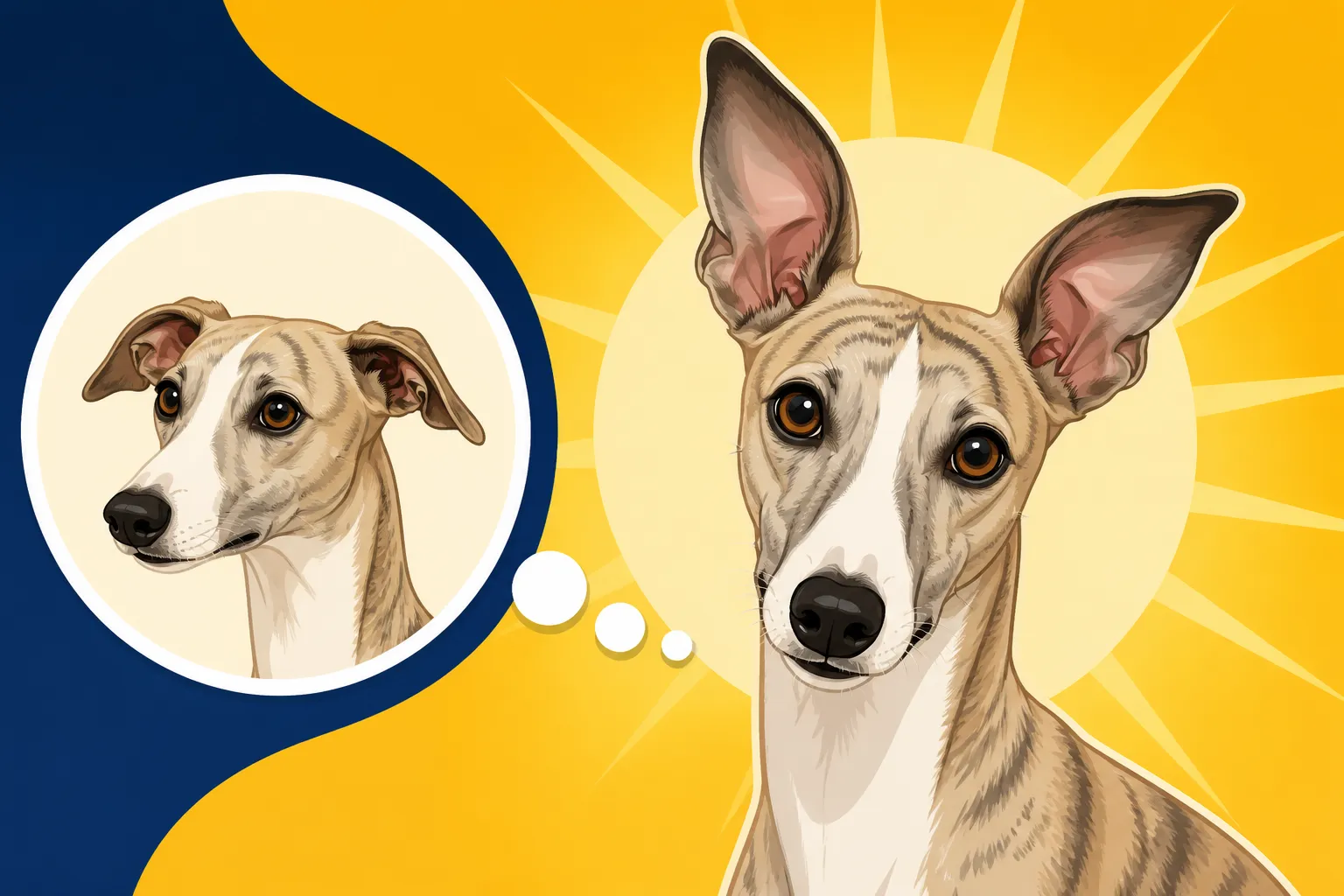
The Whippet’s characteristic ear is small, fine, and folded back in a shape commonly called a rose ear. When the dog is relaxed, the ears generally lie close to the head, with the inner fold partly visible. That’s the look many people picture when they think of the breed, but it doesn’t mean the ears are fixed in one position.
Ears are movable, expressive structures. A Whippet may bring them forward to listen, flatten them when feeling uncertain, or lift them when something catches their attention. A change in position can happen in seconds. If your dog hears a cupboard open or spots a squirrel beyond the fence, the ears may prick up while the rest of the body remains still.
The breed standard describes the expected ear type for show dogs, but individual Whippets can vary. One dog may have a classic fold, while another’s ears sit higher or rise more readily. If you are curious about the language used to describe the breed’s features, Why the Whippet Standard Cares So Much About the Topline offers a similar look at how breed standards describe physical traits.
Why a Whippet’s ears may stand up
Often, a Whippet’s ears stand because the dog is paying close attention. The ears may lift, rotate, or point toward a sound, much as a person turns their head to locate a noise. In this case, the posture usually changes with the situation: the ears may rise outdoors, then settle again once the dog is resting at home.
Some Whippets also have ears that naturally sit higher or fold less tightly than others. Ear shape and carriage vary between individuals, and a dog’s expression can make the ears look more upright in some moments than in others. A brief, symmetrical lift during an alert moment is not, by itself, a sign that anything is wrong.
Age can also make the change seem more noticeable. A puppy’s ears may look different as the head and ear cartilage develop, and the ears may shift position during growth. Owners sometimes connect ear changes with teething, but an ear’s appearance alone cannot confirm that teething is the cause. Look at the whole puppy—appetite, comfort, energy, and the condition of the ears—rather than treating a temporary change in shape as a diagnosis.
Normal variation versus a change to investigate
When upright ears are probably just expression
If both ears lift briefly when your Whippet is alert and then return to their usual position, that is generally ordinary ear movement. The dog should otherwise seem comfortable: no repeated head shaking, persistent scratching, swelling, discharge, or obvious tenderness. A relaxed dog may also hold the ears differently from an excited one, so compare your Whippet in similar situations instead of judging from one photograph.
Some ears do not return to a tightly folded position at all. If your Whippet has always had higher-set or more upright ears and they look healthy, that may simply be the dog’s natural shape. It may differ from the classic rose ear, but appearance alone does not establish a health problem. For a broader comparison of the features that distinguish this breed, see The Whippet Against the Greyhound and the Italian Greyhound.
A quick way to make sense of what you are seeing is to note whether the ear position is longstanding, temporary, or new:
| What you notice | What it may mean | Sensible next step |
|---|---|---|
| Both ears rise briefly when the dog hears something | Normal alert expression | Observe whether they settle when the dog relaxes |
| Ears have always sat high or folded loosely | Individual variation in ear carriage | Mention it at routine veterinary visits if you have concerns |
| One ear suddenly looks different and stays that way | Possible discomfort, injury, or another change | Arrange veterinary advice, especially if other signs appear |
| Head shaking, scratching, odor, redness, or discharge | Possible ear irritation or infection | Contact your veterinarian rather than treating by appearance alone |
This table is a guide to observation, not a way to diagnose an ear condition at home. A Whippet can have an ear problem without dramatic outward changes, and upright ears can occur without any problem at all.
Signs that deserve a closer look
A sudden change is more important than a familiar ear shape. If one ear begins to stand differently and remains that way, or your dog is holding the head at an unusual angle, check for other signs of discomfort. Persistent scratching, frequent head shaking, redness, a strong odor, discharge, swelling, or sensitivity when the ear is touched are all reasons to ask a veterinarian what to do.
Also pay attention to how the change started. A Whippet that has just run through brush, bumped an ear during play, or had a rough interaction with another dog may need an examination if the ear is painful, swollen, bleeding, or visibly injured. The breed’s fine skin can be vulnerable to cuts, so a small-looking wound may deserve more attention than you expect. The Thin Skin That Sends a Whippet to the Vet for Stitches explains why seemingly minor injuries can be worth checking promptly.
Seek veterinary advice sooner if your Whippet seems unsteady, has significant pain, cannot stop shaking its head, or appears unwell. Avoid placing drops or household products in the ear before a veterinary professional has advised you to do so. The right treatment depends on what is causing the signs, and the wrong product may irritate the ear or complicate an examination.
How to care for your Whippet’s ears
Keep care gentle and avoid trying to reshape them
Routine ear care does not mean pushing the ears into a particular position. Don’t tape, glue, tightly wrap, or repeatedly fold a Whippet’s ears to make them look more like a rose ear. These approaches can irritate delicate skin, cause discomfort, or hide a developing problem. They are unnecessary for a pet’s wellbeing, and they cannot change the underlying structure in a safe, reliable way.
Instead, make a simple visual check now and then. Look at the outer ear and the part you can see without forcing the ear open. Notice any redness, debris, swelling, or unusual odor. If the ears look clean and your dog is comfortable, there is usually no reason to clean them just because they are ears.
If your veterinarian recommends a particular ear cleaner, follow their instructions about how and when to use it. A clinic may supply the product, or you might find a recommended type through a retailer such as Chewy. Check that the item matches the veterinarian’s instructions rather than choosing a product based only on a general label or customer review. Never put cotton swabs deep into the ear canal.
Make the check comfortable for a sensitive dog
Some Whippets dislike having their ears handled, particularly if the ears are tender or the dog has had an uncomfortable experience. Choose a quiet moment when your dog is settled, and keep the check brief. Let your Whippet sniff your hand, touch the outer ear gently, and stop if the dog pulls away, stiffens, or becomes distressed. There is no need to turn an ordinary check into a wrestling match.
If you are using a cleaner recommended by your veterinarian, ask the clinic to show you how to apply it. For a dog that is nervous about ear handling, a professional can help you work out a calm, gradual approach. If you need supplies for a vet-approved routine, Chewy may be one place to look, but the product type and instructions should come from your veterinary team. Chewy’s product information can help you identify what you are considering; it should not replace advice tailored to your dog.
Keep notes if the appearance changes. A quick photo in ordinary lighting can help you compare the ears over time, especially if the change is intermittent. If you notice a persistent difference or new symptoms, share the timeline and any photos with your veterinarian. That information can be more useful than trying to remember whether the ear looked different last week.
Questions Whippet owners often ask
Are upright ears a problem for a Whippet?
Not necessarily. Ears that lift briefly when the dog is listening are a normal part of expression. Some Whippets also naturally carry their ears higher than the familiar folded look. If the shape is longstanding and the dog is comfortable, it is usually more useful to focus on the health of the ear than on whether it matches a particular picture of the breed.
A sudden or persistent change is different, especially when it comes with pain, discharge, odor, redness, swelling, head shaking, or scratching. In that case, let a veterinarian examine the ear rather than assuming the new position is simply a quirky expression. The distinction is not “upright means ill” versus “folded means healthy”; it is whether the change is unusual for your dog and whether there are signs of discomfort.
Should I worry if a Whippet puppy’s ears change during growth?
A puppy’s ears can look different as the puppy grows, and their position may shift from one stage to another. Take note of the overall pattern, but don’t use ear carriage alone to judge health or development. If your puppy is comfortable, eating normally, and behaving as usual, a temporary change in appearance is not automatically an emergency.
Ask your veterinarian if the ear change persists, seems one-sided, or appears alongside pain or irritation. The vet can check for a physical problem and advise you about what is normal for your puppy. If you are comparing your dog with breed descriptions, The Colors a Whippet Comes In is another example of how Whippets can vary in appearance while remaining members of the same breed.
Does upright ear carriage affect a Whippet’s health or breed status?
Ear position alone does not tell you whether a Whippet is healthy, and it does not determine the dog’s temperament or ability to be a companion. A different ear shape may be relevant in a show context, where judges assess dogs against the applicable breed standard. For a pet Whippet, comfort, soundness, and good everyday care matter far more than achieving a particular ear silhouette.
If you are choosing a puppy and want to understand how structure and breed descriptions fit together, speak with a knowledgeable breeder and your veterinarian. How a Whippet's Temperament Compares With a Greyhound's discusses another area where breed expectations can be useful background but should not be mistaken for a guarantee about an individual dog.
The most reassuring pattern is a Whippet whose ears move with attention, settle with relaxation, and show no signs of discomfort. Let the ears be expressive; check them gently, avoid trying to reshape them, and get veterinary guidance when a change is sudden, persistent, or accompanied by symptoms.
Disclaimer
This article is for general informational purposes only and does not constitute professional advice. Laws, prices and regulations vary by location and change over time. Consult a qualified professional for guidance on your specific situation.