Whether a Whippet’s Front Should Be Narrow
A Whippet’s front can look strikingly narrow, especially beside a broader, heavier dog, and that can leave owners wondering whether the chest is underdeveloped or the legs are set incorrectly. This guide explains what “narrow” means in Whippet structure, how to assess the front in motion as well as standing, and when an unusual appearance deserves professional attention.
What people mean by a narrow Whippet front
The front includes more than the chest
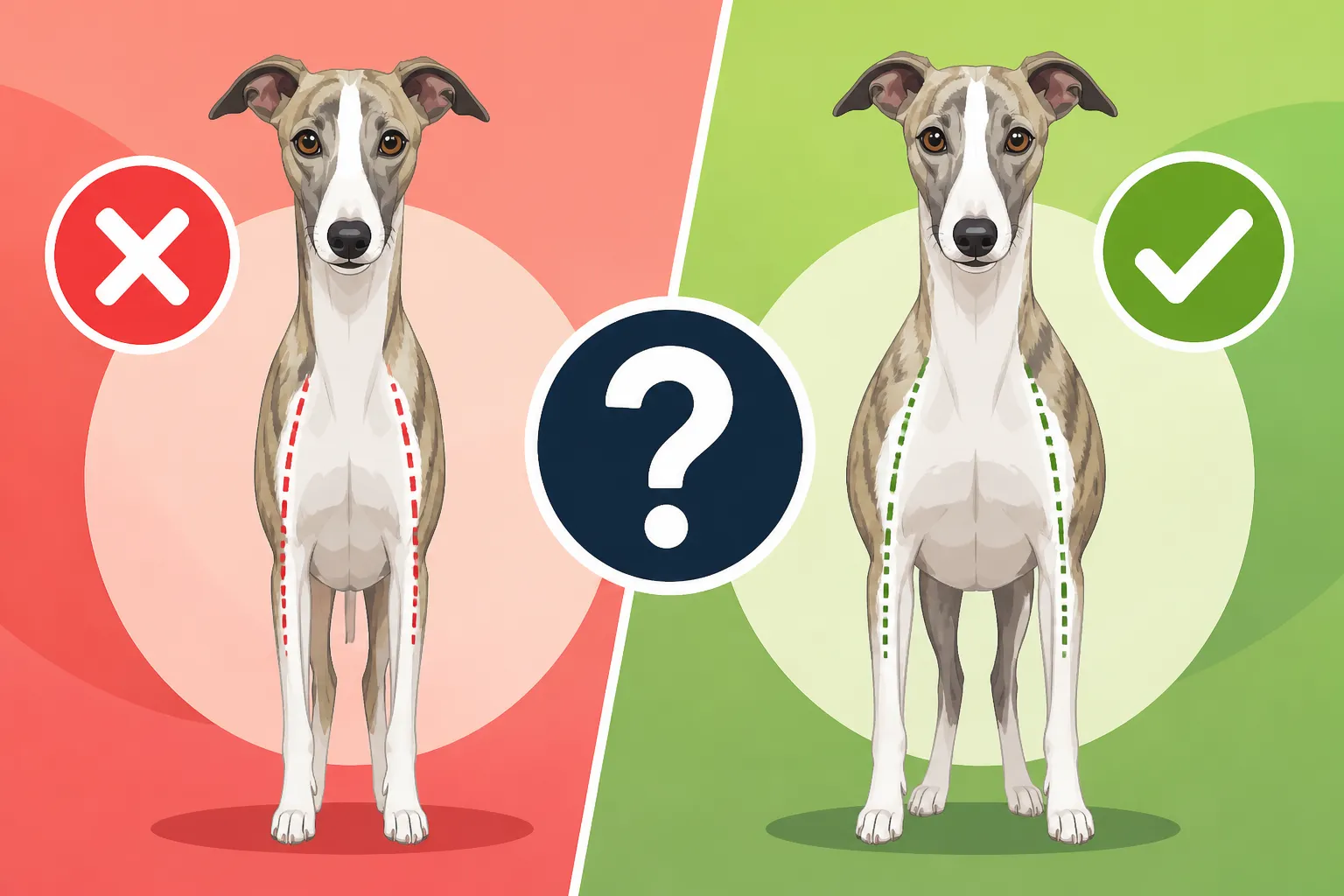
When people describe a dog as narrow in front, they may be talking about several different things: the width of the chest, the placement of the shoulder blades, the space between the forelegs, or the way the dog’s feet track while moving. Those features are related, but they are not interchangeable. A Whippet can have a deep chest and a lean outline while still having enough width and substance through the front to move comfortably.
The shoulder assembly also affects the shape you see. The shoulder blades and upper arms should work together to support reach and movement. If someone looks only at the space between the front legs, they may miss how the shoulder is placed or how the dog uses the limb. Likewise, a dog can look broad when standing squarely but appear much narrower when it shifts its weight or stretches forward.
The word “front” is often used loosely in everyday conversation. In a conformation discussion, it usually refers to the forequarters: shoulders, upper arms, chest, elbows, forelegs, pasterns, and feet. A narrow-looking outline alone does not tell you whether all those parts are correctly formed or functioning well. For more context on how individual features fit together, see Why the Whippet Standard Cares So Much About the Topline.
A streamlined outline is part of the breed’s overall look
Whippets are built for speed, with a lean outline and long limbs rather than the broad, heavy forequarters people may expect from a stockier dog. That can make a healthy, well-conditioned Whippet seem unusually narrow to someone used to Labrador Retrievers, bulldogs, or other more substantial breeds. Comparing the Whippet with related sighthounds can help put that silhouette in perspective; The Whippet Against the Greyhound and the Italian Greyhound explores those differences.
But “streamlined” does not mean that every narrow front is automatically correct. A Whippet still needs a balanced body and a functional forehand. The goal is not simply to make the dog look as thin as possible from the front. Chest depth, shoulder placement, elbow position, straightness of the forelegs, and the way the dog moves all matter.
Weight and conditioning can affect the impression, too. A lean dog may show a more delicate outline, while a dog carrying extra weight can look wider through the chest and shoulders without having a better-constructed front. Breed-specific body shape can be surprising to first-time owners, so What a Whippet Actually Weighs is useful background when the question of width is tied to a concern that the dog looks too slight.
What a balanced Whippet front should do
Look at width, depth, and support together
A chest is not judged by width alone. Depth matters because the ribcage extends down into the body, while the front assembly must support the dog’s weight and allow the forelegs to move freely. From the front, the chest should not look so cramped that the legs seem forced into an awkward position. From the side, the chest and shoulder should make sense as part of the dog’s overall outline, rather than appearing disconnected from the neck, back, and ribcage.
The forelegs should provide stable support beneath the body. A viewer may notice whether they look straight when the dog is standing naturally, whether the elbows sit comfortably against the body, and whether the feet point generally forward rather than turning markedly in or out. These are observations, not a diagnosis: a dog’s stance can change with the surface, attention, fatigue, or the way someone positions it.
The Whippet’s front should also be considered in proportion to the rest of the dog. A very narrow-looking chest may seem more pronounced when the dog has a long neck, a deep body, or a particularly lean build. Conversely, a wide-looking front might reflect posture, coat, muscle, or body condition rather than superior structure. No single view tells the whole story.
| What you notice | What it may mean | What to check next |
|---|---|---|
| A narrow outline while standing | Normal variation, posture, or a genuinely narrow chest | Recheck in a relaxed, natural stance |
| Forelegs close together | Could reflect body shape, stance, or limb placement | Watch the dog walk toward and away from you |
| Feet turning in or out | May be temporary positioning or a structural feature | Look for a consistent pattern during movement |
| Short or restricted-looking steps | Could have several causes, including discomfort | Ask a veterinarian if it persists |
| New change in stance or gait | May indicate pain or injury rather than conformation | Arrange veterinary advice, especially if sudden |
Movement helps distinguish appearance from function
A Whippet can look narrow while standing still and move freely when walking or trotting. Watch the dog travel at an easy pace on a level, nonslip surface. Ideally, the steps should look comfortable and coordinated, without an obvious repeated hitch, pronounced wobble, or consistent crossing of the forelegs. A front view and a side view can each reveal different things, so neither should be treated as the only useful angle.
It is important not to judge a dog’s movement after asking it to sprint, make sharp turns, or jump for the sake of an informal assessment. Those activities can hide a problem through excitement or put unnecessary strain on the dog. If you are concerned about a persistent uneven stride, reluctance to walk, or a change in how the dog bears weight, a veterinarian can assess the whole animal rather than relying on a visual impression of chest width.
For a calm check at home, let the dog stand naturally and then walk a short distance on a familiar surface. Avoid pulling the feet into position or repeatedly posing the dog until it looks different. A forced stance can make a normal dog appear awkward, and it can make a real concern harder to assess. A short video of ordinary movement may help you describe what you have noticed to your veterinarian or breeder.
How age, posture, and body condition change the picture
Puppies and adolescents are still developing
A young Whippet’s proportions can look unfinished as it grows. Legs may seem long before the chest has developed, or the puppy may go through stages when the body appears narrow, angular, or temporarily out of balance. Growth is not perfectly uniform, and a snapshot at one age does not necessarily predict the adult outline.
This does not mean every unusual puppy shape should be dismissed as a growth phase. If the puppy seems painful, consistently avoids using a limb, or has a clear difficulty walking, ask a veterinarian rather than waiting for it to “grow out of it.” For a puppy who is comfortable and active, keep observations practical: note changes over time, maintain suitable body condition, and avoid high-impact exercise beyond what is appropriate for the dog’s age.
Adult structure can also be difficult to judge when a dog is tense or distracted. A Whippet leaning toward a person, bracing on a slippery floor, or turning to watch a sound may place its legs differently from a relaxed dog. Before drawing conclusions, look again when the dog is calm and standing on a stable surface.
Leanness is not the same as poor condition
The Whippet’s shape can prompt well-meaning comments that the dog looks underfed. That concern is understandable, particularly when the ribs or waist are visible, but a narrow front by itself does not establish whether the dog is too thin. Body condition should be considered across the whole dog, including the ribs, waist, abdominal tuck, muscle, and changes in weight. The breed’s appearance differs from that of many heavier dogs; Whether the Whippet Is Just a Small Greyhound offers another way to understand why a Whippet’s outline can look unfamiliar.
Too much body fat can soften the outline and change how the front appears, but adding weight simply to make the chest look broader is not a good solution. It may place unnecessary strain on the dog and does not correct the underlying structure. If you are unsure whether your Whippet is appropriately conditioned, ask your veterinarian to assess body condition and muscle rather than relying on comparisons with other breeds or photographs online.
Muscle, too, can affect the look of the shoulders and front legs. A dog’s activity level, age, health, and individual build all influence its appearance. A Whippet that has recently reduced exercise may look less muscled, while a fit dog may have clearer definition. Neither observation, on its own, tells you whether the dog’s skeletal structure is sound.
When a narrow front deserves a closer look
Conformation concerns are not the same as health problems
In the show ring, people assess how a dog’s structure compares with the breed standard and whether its parts fit together as a balanced whole. An experienced judge or knowledgeable breeder may discuss whether a front is too narrow, too wide, or otherwise less than ideal. That is a conformation evaluation; it does not automatically mean the dog is unhealthy or uncomfortable.
For a pet owner, the more useful question is often whether the dog moves and lives comfortably. Can it walk normally? Does it put weight evenly on both front legs? Is it willing to rise, play, and go for ordinary walks? Has the shape or gait changed recently? These practical signs tell you more about day-to-day function than trying to decide from a single photograph whether a chest meets a show-ring ideal.
If you are choosing a puppy, ask the breeder how they evaluate structure and movement, and whether the puppy’s parents have been assessed in a meaningful way. You can also ask what the breeder observes about the litter’s development without expecting a very young puppy to have a finished adult outline. Helpful background on the breed’s overall outline is available in Whether a Flat Backed Whippet Is Faulted and Whether a Whippet's Back Should Be Roached, since front structure should be viewed in relation to the rest of the body rather than in isolation.
Signs to discuss with a veterinarian
A narrow appearance is usually a gradual, visual observation. A sudden change is different. If your Whippet develops lameness, swelling, repeated stumbling, reluctance to use a front leg, pain when moving, or an obvious change in posture, contact a veterinarian. These signs can have many possible causes, and an online description or conformation opinion cannot identify the reason.
Also seek veterinary guidance if the dog’s stride appears consistently uneven, if it tires unusually quickly on ordinary walks, or if you notice a change in willingness to climb steps or rise from rest. Do not try to correct a suspected structural issue with home exercises, supplements, or deliberate weight gain before getting appropriate advice. The right response depends on the dog’s age, history, examination, and overall health.
When you contact the clinic, describe what you see in plain terms: when it began, whether it affects one or both legs, what activities make it more noticeable, and whether the dog seems uncomfortable. If safe to do so, a short video of the dog walking naturally can be useful. Avoid making the dog repeat a movement that appears painful just to capture a better recording.
A Whippet’s front may look narrow because the breed is lean and lightly built, but the appearance needs context. Consider chest depth, shoulder and leg placement, body condition, age, and movement together. If the dog is comfortable and moving normally, width alone is not a reason to assume something is wrong; if its gait or comfort changes, a veterinarian is the right person to assess it.
Disclaimer
This article is for general informational purposes only and does not constitute professional advice. Laws, prices and regulations vary by location and change over time. Consult a qualified professional for guidance on your specific situation.