Whether a Whippet Can Fly in the Cabin
It's a common dream for us Whippet owners to take our beloved, often delicate, companions everywhere we go, especially when travel involves flying. The thought of them being tucked safely under the seat in front of us, rather than hidden away in cargo, brings immense peace of mind. But the reality is, airlines have incredibly strict policies, and our lean, lanky Whippets often find themselves dancing right on the edge of what's considered "small enough" for in-cabin travel, leading to a lot of frustration and uncertainty.
The Reality of Airline Cabin Pet Policies for Your Whippet
Many of us fantasize about globe-trotting with our graceful Whippets, picturing them curled up comfortably at our feet on a long flight. This vision is a powerful motivator, largely driven by the understandable desire to avoid the anxieties associated with cargo travel. However, the path to making this dream a reality is often paved with bureaucratic hurdles and strict regulations. Airlines are not just concerned with your dog's size; they have a comprehensive set of rules covering everything from the carrier's dimensions to the required health documentation. It's a system designed for safety, but one that can feel like an insurmountable obstacle for us doting Whippet parents.
Demystifying Size and Weight Restrictions
The most immediate and often disheartening challenge for Whippet owners is navigating the airline's size and weight restrictions for in-cabin pets. While our Whippets are undeniably sleek and often referred to as medium-sized, their characteristic length and elegant height can make them deceptively large in the context of under-seat carrier requirements. Airlines mandate specific maximum dimensions for pet carriers – typically quite compact – that must fit snugly beneath the seat in front of you. This isn't a flexible guideline; it's a hard and fast rule enforced by flight crew and ground staff alike.
The heartbreak often comes when you realize your Whippet might technically fall within the airline's combined pet and carrier weight limit, but they simply cannot physically stand up, turn around, and lie down naturally within a carrier that meets the dimension constraints. Imagine trying to gently coax a long-limbed Whippet into a carrier that seems more suited for a smaller, more compact breed like a Boston Terrier or a Cavalier King Charles Spaniel. It frequently feels like attempting to solve an impossible puzzle. You meticulously measure your Whippet from the tip of their nose to the base of their tail, then from paw to the very top of their skull, only to find those numbers consistently exceeding the typical maximum carrier height. Even if your Whippet is a master of the curl-up, airline regulations explicitly state they must have the ability to stand and turn around comfortably. For many adult Whippets, this is an undeniable physical impossibility within standard under-seat carrier sizes. This is often the point where the dream of in-cabin travel sadly gives way to reality.
It is absolutely paramount to consult your specific airline's pet policy directly. General online guides or even anecdotal experiences from other travelers might not apply. Policies are dynamic; they can vary significantly between carriers and may be updated without extensive public notice, leaving unprepared pet parents in a bind at the last minute. Never rely on information that isn't current and sourced directly from the airline's official website or confirmed via a call to their dedicated pet travel or special assistance line. While this process can be tedious and frustrating, it's a necessary due diligence to prevent the distressing scenario of being denied boarding with your beloved companion.
Selecting the Right In-Cabin Carrier
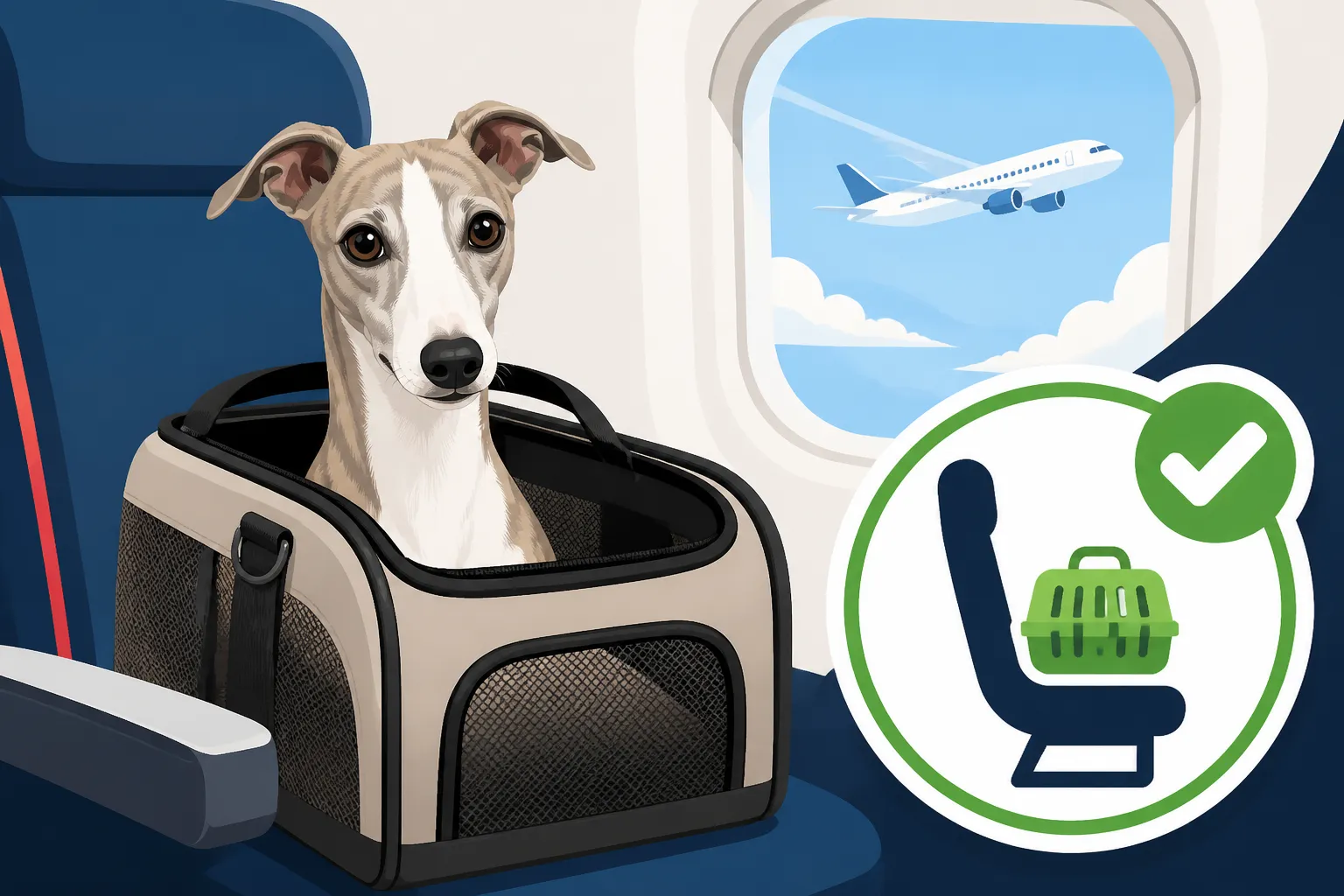
The choice of carrier is not merely a matter of preference; it's a make-or-break decision when flying with your Whippet in the cabin. The carrier must adhere to several fundamental requirements: it needs to be soft-sided to allow for some flexibility in tight spaces, offer ample ventilation on at least two sides for proper airflow, and feature a completely leak-proof bottom, ideally with an absorbent pad or bedding inside. However, beyond these basics, the truly critical factor is its capacity to conform to the precise dimensions of the under-seat area while still providing your Whippet with enough internal volume to be genuinely "comfortable" – as per airline definitions. For a breed characterized by its long body and delicate bone structure, finding a carrier that facilitates standing and turning while strictly adhering to height, width, and length limits is an enormous challenge.
I've heard countless stories from fellow owners who invested in what they believed was the perfect carrier, only to discover at the airport that it was either marginally too tall for the specific aircraft or too rigid to be sufficiently compressed into the confined space. Brands like Sherpa, SturdiBag, and Sleepypod are frequently recommended in pet travel forums due to their design flexibility, but even their largest "airline-approved" models often present a very tight squeeze for an average adult Whippet. You'll likely spend considerable time browsing online retailers like Amazon or Chewy for "airline approved pet carriers," only to feel a growing sense of despair as you review the consistently small dimensions. It's important to remember that "airline approved" often signifies suitability for a range of small pets, not a guarantee of comfort or compliance for every breed, especially a long-bodied sighthound like a Whippet.
A highly practical exercise is to measure the space under your own seat on a typical flight if you have the opportunity, or diligently research the specific under-seat dimensions for the aircraft type you'll be flying on. Then, accurately measure your Whippet both when they are standing naturally and when they are curled into their most compact sleeping position. This comparative analysis will quickly illuminate just how limited the available space truly is. Crucially, the carrier must unequivocally allow your Whippet to stand up and turn around without excessive struggle or discomfort. If your Whippet must crouch, contort, or laboriously shift their position, it not only violates airline regulations but, more importantly, subjects your cherished companion to an unacceptable level of discomfort and stress. Remember how important it is for a Whippet to feel secure and comfortable, much like in their familiar beds at home where Why a Whippet Needs Soft Bedding Everywhere.
Essential Health and Travel Documentation
Even if you successfully navigate the labyrinth of carrier dimensions and find one that just might pass muster, the administrative gauntlet of health and travel documentation remains. Airlines and, more significantly, destination countries enforce stringent health requirements for imported animals. This isn't merely a matter of showing proof of your Whippet's last annual check-up; it typically necessitates a comprehensive health certificate issued by a licensed veterinarian within an extremely narrow timeframe prior to your flight, often as little as 10 days. This certificate serves as official confirmation that your Whippet is in robust health, free from any signs of communicable diseases, and fit for travel.
Beyond the health certificate, you will invariably need proof of up-to-date vaccinations, with rabies vaccination being universally critical. Depending on your specific destination – whether interstate or international – you may encounter requirements for additional parasite treatments (e.g., for heartworm or specific ticks), specific laboratory tests, or even complex import permits. Some countries demand proof of microchipping compliant with international standards, or rabies antibody titers which can take several months to process after vaccination. Overlooking or mismanaging any single detail in this documentation cascade can result in your Whippet being denied boarding, or worse, facing mandatory quarantine upon arrival. It is a dense, bureaucratic system designed to safeguard public health and agriculture, but for us pet owners, it often feels like navigating a minefield.
Begin researching these requirements many months in advance, particularly for international travel. Official government agricultural websites, such as the USDA APHIS site for travelers departing from the U.S. or the equivalent national animal health agency for other countries, are indispensable resources, though they can be overwhelming in their detail. Your veterinarian will be an invaluable ally throughout this process; ensure they possess a thorough understanding of current interstate and international pet travel regulations. Do not make the assumption that your standard annual vet records will suffice. This is a distinct, specialized process demanding meticulous attention to detail and proactive planning.
Preparing Your Whippet for a Smooth Journey
Securing the correct paperwork and an airline-compliant carrier is a significant victory, but it's only half the battle. Equally, if not more, important is the task of mentally and physically preparing your sensitive Whippet for the utterly unique and potentially stressful experience of air travel in a confined space. Our sighthounds, renowned for their love of routine and comfort, often find the unpredictable environment of an airport and airplane profoundly unsettling.
Acclimating to the Travel Carrier
The travel carrier must transform from an unfamiliar, intimidating box into a positive, secure sanctuary for your Whippet. This transformation is not an overnight process; it requires weeks, ideally months, of consistent, positive reinforcement training leading up to your travel date. Begin by positioning the open carrier in a frequented, comfortable area of your home. Line it with soft, familiar bedding that carries your scent, or place a favorite chew toy inside. Encourage your Whippet to explore it voluntarily by tossing high-value treats inside, feeding them meals within its confines, and praising them for any calm interaction with it. The ultimate goal is for them to perceive the carrier as a cozy, safe den.
Once they are comfortable entering and resting in the open carrier, gradually introduce closing the door for very short periods, slowly increasing the duration over time. Practice lifting and carrying the carrier with your Whippet inside, simulating the motion they'll experience during travel. Take them on brief car rides while secured in the carrier. This systematic desensitization aims to forge a strong, positive association between the carrier and feelings of safety and relaxation, rather than anxiety or confinement. A familiar blanket or an old t-shirt infused with your scent can offer immense comfort within the carrier. Remember, Whippets instinctively love to burrow and seek enclosed, secure spaces, so cultivating the carrier as a personal, safe cave can be remarkably effective. It's similar to how they demand comfort in their daily lives; Why a Whippet Needs Soft Bedding Everywhere isn't just a preference, it's a core need for them.
Additionally, ensuring your Whippet is reliably house-trained and can relieve themselves on command, or at least predictably, is crucial for travel day. Airports provide designated pet relief areas, but timing can be tight, especially during layovers. If your Whippet exhibits a particular aversion to inclement weather, much like The Whippet That Will Not Toilet in the Rain, you'll need to strategize how to make a quick outdoor potty break appealing regardless of conditions, or identify accessible indoor pet relief options beforehand.
Managing Anxiety and Avoiding Sedation
The instinct to sedate an anxious Whippet for a flight is entirely understandable, driven by a desire to spare them distress. However, the overwhelming consensus among veterinarians and airlines is to strongly advise against it, particularly for sighthounds. Whippets, alongside other sighthound breeds, possess a unique physiology and metabolism that makes them exquisitely sensitive to many medications, especially sedatives. Their lean body composition and distinct liver enzyme systems mean they process drugs differently and often more slowly than other breeds. This sensitivity, combined with the physiological stressors of altitude and air travel, can lead to severe and potentially life-threatening respiratory or cardiovascular complications. The article Why a Whippet Needs a Sighthound Anesthesia Protocol delves into their general drug sensitivities, and these concerns are highly pertinent to travel sedation.
Instead of resorting to potentially dangerous sedatives, focus your efforts on natural calming strategies. Prioritize carrier desensitization, as previously discussed. Explore the use of vet-recommended calming supplements, synthetic pheromone diffusers or sprays (such as Adaptil), or pressure wraps like Thundershirts, which many Whippets find inherently comforting. A familiar blanket or cherished toy placed inside the carrier can provide a profound sense of security. Critically, ensure your Whippet receives a substantial, stimulating exercise session before heading to the airport. Burning off excess energy and satisfying their natural need to run can significantly reduce pre-travel jitters. A physically tired Whippet is far more likely to settle peacefully and sleep through the journey, much like it sleeps (Why a Whippet Sleeps More Than Most Breeds) on a typical relaxed day at home.
If your Whippet exhibits severe Separation Anxiety in a Whippet or extreme, unmanageable nervousness, it is essential to honestly assess whether air travel is truly in their best interest. Sometimes, the most compassionate decision we can make as owners is to acknowledge when a potential stressor outweighs any perceived benefit. A candid discussion with your veterinarian regarding your Whippet's individual temperament and anxiety levels is indispensable; they can offer tailored guidance on non-pharmacological anxiety management or help you determine if alternative travel methods are more appropriate.
Navigating Airport Logistics and In-Flight Care
Airport day is best approached as a marathon, not a sprint. Allocate generous amounts of extra time, particularly when traveling with a pet. This additional buffer will be invaluable for navigating check-in procedures, undergoing security screening, and providing multiple, unhurried potty breaks for your Whippet. At the check-in counter, airline staff will meticulously verify that your Whippet and their carrier meet all specified requirements. Be prepared for them to ask you to demonstrate that your Whippet can stand up and turn around comfortably within the carrier's confines.
The security screening process can be a particularly jarring experience. You will typically be required to remove your Whippet from their carrier and carry them through the metal detector, while the empty carrier proceeds through the X-ray machine. This moment can be highly stressful for both of you, so ensure your Whippet is wearing a secure leash and harness (a well-fitting martingale collar is an absolute must for a Whippet in a busy, unpredictable environment to prevent slips). Your calm demeanor will be crucial in reassuring your dog during this disorienting phase.
Once you are finally settled on board, carefully position the carrier under the seat in front of you. This space is often surprisingly tight, so be prepared to maneuver the carrier gently but firmly. Throughout the entire flight, your Whippet must remain inside their carrier. This is a non-negotiable rule enforced by flight attendants for safety and passenger comfort. Do not attempt to take them out, even for a brief peek or a comforting stroke. Offer small amounts of water through a water dispenser bottle if your Whippet is accustomed to it, but generally limit food to prevent potential stomach upset. Above all, maintain your own composure; your Whippet is exquisitely sensitive to your emotional state. Your quiet, reassuring presence, even from a slight distance, will serve as their greatest comfort throughout the journey.
The Trade-Off: Weighing the Pros and Cons of In-Cabin Travel
The decision to fly with your Whippet in the cabin is a deeply personal one, laden with both emotional attachment and practical considerations. It inherently involves a careful balancing act: your profound desire to keep your cherished companion close versus the inherent well-being of your Whippet and the unyielding constraints of air travel regulations.
Advantages of Keeping Your Whippet Close
The most profound advantage of in-cabin travel for your Whippet is, without a doubt, the immense peace of mind it offers you, the devoted owner. The knowledge that your beloved sighthound is right there, within your visual field and at least theoretical reach, rather than in the isolated and unpredictable environment of the cargo hold, alleviates a colossal amount of stress and anxiety. You retain the ability to visually confirm their status, observe for any subtle signs of distress, and offer quiet, reassuring words or gentle touches (if permissible and discreet). For a breed like the Whippet, which forms exceptionally strong and sensitive bonds with their human family members, this continuous proximity can be absolutely invaluable for their emotional well-being.
Furthermore, being in the cabin shields your Whippet from the potential extremes of temperature, the jarring noises, and the variable handling practices that can occasionally characterize cargo transport. While modern cargo areas are typically pressurized and temperature-controlled, they remain inherently noisy, isolated environments. For a sensitive dog, this experience can be profoundly terrifying. In the cabin, you exert a greater degree of control over their immediate environment – you can ensure their carrier is generously padded with familiar blankets, and your constant, calming presence acts as an anchor. This level of immediate security, direct oversight, and emotional intimacy is simply unattainable in cargo travel, making in-cabin the unequivocally preferred option for most Whippet owners, despite its inherent challenges.
Beyond comfort and emotional support, direct oversight in the cabin can be critically important if an unforeseen medical issue were to arise, although this is a scenario we all fervently hope to avoid. While you are certainly not equipped to provide extensive veterinary intervention during a flight, your immediate awareness of any struggling or discomfort allows you to promptly alert flight attendants, potentially leading to faster and more appropriate intervention upon landing. This direct connection and continuous ability to monitor their condition is precisely why so many of us go to extraordinary lengths to ensure our Whippets can accompany us in the cabin.
Disadvantages and Potential Stressors
However, it is equally crucial to acknowledge and honestly confront the substantial disadvantages and potential stressors associated with in-cabin travel for a Whippet. The primary and most pervasive drawback is the inescapable confinement. Even within the most generously sized, airline-compliant carrier, your Whippet will be undeniably cramped. They will be unable to stretch out fully, engage in any meaningful movement, or alleviate their boredom for the entire duration of the flight. This profound restriction of movement can be particularly difficult for a breed renowned for its explosive bursts of energy and its love for luxuriating in sprawling stretches and cozy naps, even if they are famously known as The Whippet Is a Forty Mile an Hour Couch Potato for much of their day.
The cabin environment itself represents a significant sensory overload for a dog. The persistent, low hum of the jet engines, the unfamiliar olfactory landscape, the subtle but perceptible changes in air pressure, and the ceaseless chatter of fellow passengers can all contribute to a deeply unsettling experience. While Whippets are generally a quiet breed, a distressed Whippet might resort to quiet whimpers or persistent panting, adding a layer of stress for both your dog and potentially, your immediate neighbors on the flight. Even if your Whippet remains silent, the internal physiological and psychological stress of being trapped in such an alien and inescapable situation can take a significant toll. While direct physical comfort might be limited during the flight, your mere presence can still be a profound comfort, especially for a dog prone to Separation Anxiety in a Whippet.
Temperature regulation can also pose an issue. While the cabin is calibrated for human comfort, localized drafts or minor fluctuations in temperature can still occur. A Whippet, with its minimal subcutaneous fat and notoriously thin coat, is inherently susceptible to feeling the cold A Whippet Has No Insulation and No Padding. While you can certainly layer blankets within their carrier, ensuring they remain consistently and perfectly comfortable throughout the journey can be a genuine challenge. Furthermore, there is always a non-zero risk of motion sickness or an upset stomach, which can be distressing and messy for everyone involved. For a dog that might even experience Car Sickness in a Whippet, the unique sensations of air travel could potentially amplify these feelings.
When Cabin Travel Isn't an Option: Other Considerations
Despite our most earnest desires and meticulous planning, there will be instances where in-cabin travel simply isn't a feasible option for our Whippets. Whether it's due to their specific size exceeding airline limits, their individual temperament making such confinement unduly stressful, or the airline's unyielding regulations, it becomes imperative to explore responsible alternatives rather than forcing a potentially detrimental situation.
Evaluating Cargo Travel (and Its Risks for Whippets)
For many Whippets, particularly those on the larger end of the breed standard, cargo travel often remains the only commercial airline option. However, it is an option that comes with a significantly heightened degree of inherent risk and emotional distress, particularly for sensitive sighthound owners. While airlines do implement protocols for live animal transport, the cargo hold is a fundamentally different and far more isolated environment than the passenger cabin. It is frequently colder, substantially louder, and devoid of the immediate human presence that provides comfort and reassurance. For a breed known for its innate sensitivity, thin skin, and delicate bone structure, the potential for fear, injury, or temperature-related health crises is a profound and justifiable concern.
Tragic fatalities, though statistically rare, have regrettably occurred during cargo travel. These incidents have often been attributed to heatstroke, hypothermia, or the exacerbation of pre-existing medical conditions under the intense stress of flight. This is precisely why a significant number of sighthound enthusiasts and experienced veterinarians vehemently advise against cargo travel for Whippets if any other viable alternative exists. The perceived risks, while statistically low, feel profoundly high and unacceptable when the well-being of your cherished companion is at stake. If cargo transport genuinely represents the only available option, it is absolutely essential to conduct exhaustive research into the airline's specific pet safety record, prioritize direct flights to minimize stressful handling and transfers, and consult extensively with your veterinarian to ensure your Whippet is medically cleared for the unique physiological and psychological stressors involved. However, for many of us, the risks associated with entrusting our delicate and sensitive Whippets to the cargo hold are simply not a gamble we are willing to take.
Exploring Road Trips and Other Ground Transportation
For the vast majority of domestic trips, and even for cross-border journeys, traveling by car or other forms of ground transportation often presents a far safer, less stressful, and ultimately more humane alternative for your Whippet. Road trips inherently offer unparalleled flexibility, allowing for frequent and well-timed potty breaks, opportunities for stretching and exercise at scenic rest stops, and complete control over the immediate environment (temperature, ambient noise, and comfort level). Your Whippet can be securely fastened in a crash-tested travel harness or a sturdy, appropriately sized crate, providing ample room to stretch and reposition themselves when the vehicle is stopped.
While a road trip might undoubtedly consume more travel time, the profound reduction in stress for your Whippet and the accompanying peace of mind for you, the owner, frequently render the extra hours entirely worthwhile. Imagine your Whippet comfortably curled up on their favorite bed in the back seat, occasionally peering out the window with curiosity, rather than enduring hours of confinement under an airline seat. The inherent nature of The Household a Whippet Was Built For often includes regular car rides to dog parks, lure coursing events, or simply enjoying local adventures, meaning many Whippets are already well-accustomed to vehicle travel. For exceptionally long distances, thoroughly investigate pet-friendly hotels or consider engaging the services of a professional, reputable pet transport company that specializes in safe, compassionate ground travel. Sometimes, embracing the journey itself becomes an integral and cherished part of the adventure, in a way that the restrictive nature of air travel simply cannot be for our beloved four-legged family members.
| Aspect | In-Cabin Travel | Cargo Travel | Road Trip / Ground Travel |
|---|---|---|---|
| Direct Supervision | Yes, direct and continuous | No, isolated in cargo hold | Yes, direct and continuous |
| Comfort/Space | Very limited, must fit under seat, minimal movement | Moderate to good (depending on crate size), but isolated and often noisy | Excellent, frequent breaks, more freedom within vehicle/crate |
| Temperature Control | Good, same as human cabin, but drafts possible | Regulated, but can fluctuate, especially during tarmac transfers | Fully controlled by owner |
| Anxiety Level | Moderate (confinement, new sounds/smells), but human presence helps | High (isolation, noise, handling), often very stressful for sensitive dogs | Low to moderate (familiar environment, frequent breaks), highly adaptable |
| Health Risks | Low (if healthy & no sedation), main risk is stress/confinement | Higher (stress, temperature extremes, less oversight, sedation risks) | Low (if appropriate safety restraints used) |
| Documentation | Strict, vet health certificate, vaccination proof | Very strict, specific crate requirements, extensive vet certificates | Varies by state/country, usually minimal for domestic travel |
| Cost | Pet fee per segment | Higher pet fee, often based on weight/size | Fuel, accommodation, vehicle wear, but no specific "pet fee" |
It's clear that while the heartfelt desire to have our Whippets beside us in the airplane cabin is profoundly strong, the practical realities and stringent limitations frequently render it an exceptionally challenging, if not outright impossible, endeavor for many of our beloved sighthounds. Always, without exception, prioritize your Whippet's comfort, safety, and overall well-being above all else, and meticulously research every single detail before committing to any travel plans.
Disclaimer
This article is for general informational purposes only and does not constitute professional advice. Laws, prices and regulations vary by location and change over time. Consult a qualified professional for guidance on your specific situation.