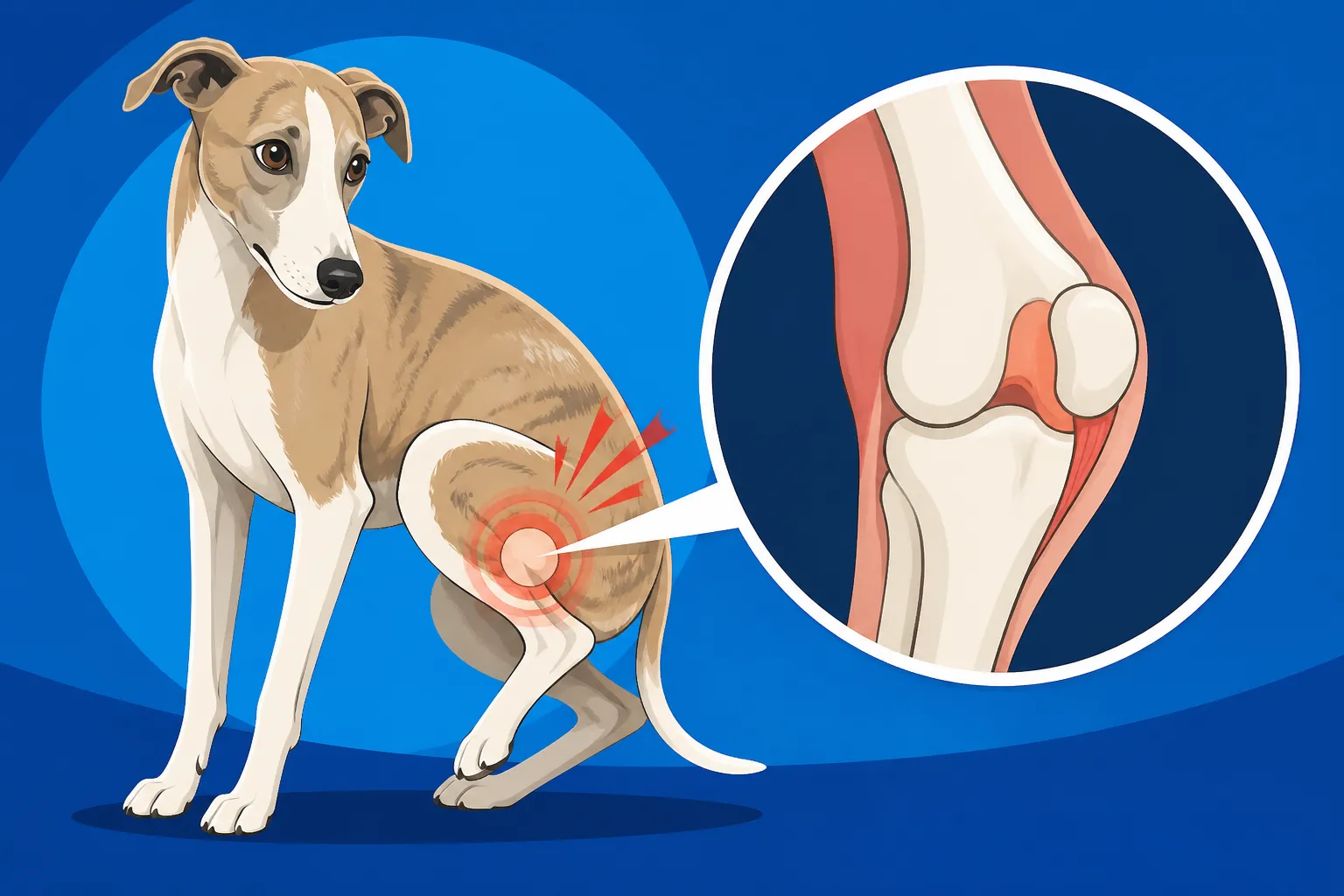
Patellar Luxation in a Whippet
It’s a heart-stopping moment for any Whippet owner: you’re watching your graceful companion romp and play, and suddenly, there’s a little skip, a momentary hitch in their stride. Or maybe they’re just standing there, looking a bit uncomfortable, hesitant to put weight on a back leg. That flicker of worry can quickly turn into a full-blown concern, and often, what you’re seeing might be related to a condition called patellar luxation. This guide is here to walk you through what patellar luxation is, why it might affect your beloved Whippet, how it’s diagnosed, and what your options are for treatment and long-term care, helping you understand this common orthopedic issue.
Understanding Patellar Luxation in Whippets
The sheer elegance and athleticism of a Whippet are undeniable, but their finely tuned bodies, while built for speed and agility, aren’t immune to orthopedic challenges. Patellar luxation, often simply called a "slipped kneecap," is one such condition that can affect these beautiful sighthounds, causing discomfort and impacting their joyful zoomies.
What Exactly Is Patellar Luxation?
Let’s break down the fancy medical term a bit. "Patella" is simply the medical name for the kneecap, and "luxation" means "out of place." So, patellar luxation literally means a kneecap that has slipped out of its normal position. To understand this, imagine your dog's knee joint. The patella is a small bone that sits in a groove at the end of the femur (thigh bone), called the trochlear groove. It's connected to the quadriceps muscle above and the tibia (shin bone) below, acting like a pulley to help extend the leg.
In a healthy knee, the patella glides smoothly up and down within this groove as your dog flexes and extends its leg. With patellar luxation, the kneecap periodically (or sometimes permanently) pops out of this groove. This can happen to the inside (medial luxation, which is more common, especially in smaller breeds) or the outside (lateral luxation) of the leg. It’s not just a momentary inconvenience; when the kneecap is out of place, the leg can’t extend properly, leading to that characteristic skip, hop, or even sudden lameness. While it can occur from trauma, it’s much more commonly a developmental or congenital issue, meaning the dog is born with anatomical predispositions that make it more likely to happen.
Why Whippets Can Be Prone to Patellar Luxation
While patellar luxation is often associated with toy breeds, it's not unheard of in Whippets, and there are several reasons why our lean, speedy companions might experience it. Whippets have a very specific build – a deep chest, a tucked-up abdomen, and long, elegant legs designed for powerful propulsion. Their musculature and bone structure are finely balanced for high-speed activity. However, even with this athletic design, subtle anatomical variations can predispose them to issues like patellar luxation.
Genetic factors play a significant role. The condition is often inherited, stemming from abnormalities in the shape of the femur, the depth of the trochlear groove, or the alignment of the tibia. A Whippet might inherit a trochlear groove that isn't deep enough to hold the patella securely, or the attachments of the muscles and ligaments might pull the patella out of alignment. Even their incredible athleticism can sometimes be a double-edged sword; the explosive power they generate and the twists and turns they execute at high speeds can put stress on a joint that's already anatomically predisposed to luxation. It’s not necessarily that Whippets are more prone than, say, a tiny Pomeranian, but when it does occur, their active lifestyle can exacerbate symptoms or even lead to injury if the kneecap repeatedly pops out during strenuous activity. It really underscores the importance of understanding The Health Tests Both Whippet Parents Should Have if you're considering a puppy, as responsible breeders aim to reduce the incidence of such inherited conditions.
Identifying the Signs and Symptoms
Recognizing patellar luxation early can make a big difference in managing the condition. The signs can range from subtle to quite obvious, depending on the severity and how often the kneecap slips out of place.
One of the most common early indicators is a "skipping" gait. You might see your Whippet suddenly pick up a back leg, hold it for a few steps, and then put it back down as if nothing happened. This happens when the patella slips out, the leg can't extend, and then it pops back into place. It can look like they're "bunny hopping" or have a temporary stiffness. Another sign is a reluctance to use the affected leg, especially after periods of rest or strenuous activity. They might be hesitant to jump on furniture, climb stairs, or even engage in their usual spirited play. Sometimes, you might even hear a faint "click" or "pop" when the kneecap moves.
Pain can also be a symptom, particularly if the luxation causes inflammation or if arthritis starts to develop over time. Your Whippet might yelp when you touch their knee or show signs of tenderness. The condition is often graded from I to IV:
| Grade | Description | Owner Observation |
|---|---|---|
| Grade I | The patella can be manually luxated but spontaneously returns to the groove. | Very subtle, occasional skips or hops, often goes unnoticed by owners, detected during routine vet exams. No consistent lameness. |
| Grade II | The patella spontaneously luxates and remains luxated until the leg is extended or manually manipulated to return. | More frequent skipping, holding the leg up for several steps. May occasionally feel stiff. Lameness is intermittent but noticeable. |
| Grade III | The patella is usually luxated but can be manually reduced. It reluxates immediately upon release. | Consistent lameness, noticeable "bow-legged" or "knock-kneed" appearance. Significant impact on activity and comfort. |
| Grade IV | The patella is permanently luxated and cannot be manually reduced. The trochlear groove is often absent or very shallow. | Severe, persistent lameness. Dog may walk with a crouched gait or use the affected leg minimally. Significant pain and often concurrent arthritis. |
In the initial stages, especially with Grade I or II, the symptoms can be intermittent and easily dismissed as just a clumsy moment. However, if you notice any consistent skipping, lameness, or changes in how your Whippet moves, it’s always best to get it checked out by your veterinarian. Early detection and management can make a significant difference in their long-term comfort and mobility.
Diagnosing Patellar Luxation
When you notice your Whippet showing those tell-tale signs, like an awkward hop or a reluctance to put weight on a leg, the next step is a trip to the vet. Diagnosing patellar luxation involves a combination of physical examination and, often, imaging techniques to get a full picture of what's happening inside that joint.
The Initial Vet Examination
Your veterinarian will start with a thorough physical examination, paying close attention to your Whippet's gait and hind limbs. They'll likely observe your dog walking, trotting, and even standing still to look for any abnormalities in how they bear weight or move. This is where those skips and intermittent lameness become crucial clues.
Next comes palpation, which means your vet will gently feel around the knee joint. They'll try to manipulate the patella, flexing and extending the leg to see if the kneecap can be moved out of its groove. They'll assess the stability of the joint and try to determine the grade of luxation based on how easily it slips and whether it returns to place on its own. They'll also check for any signs of pain, swelling, or muscle atrophy (wasting), which can indicate a more chronic problem. Given the unique physiology of sighthounds, it can be really beneficial to seek out a vet who has experience with the breed or is knowledgeable about sighthound-specific anatomy. This expertise can be invaluable in distinguishing between normal sighthound characteristics and genuine orthopedic concerns.
Imaging and Further Diagnostics
While a physical exam often provides a strong indication of patellar luxation, imaging is usually necessary to confirm the diagnosis, determine the underlying anatomical issues, and rule out other potential problems.
X-rays are the most common diagnostic imaging tool used. They allow your vet to visualize the bones of the knee joint – the femur, tibia, and patella – and assess their alignment. On an X-ray, the vet can look at the depth of the trochlear groove, the angle of the femur, and the position of the tibial tuberosity (the bony prominence on the shin bone where the patellar ligament attaches). X-rays are also crucial for checking for secondary changes, such as early signs of arthritis, which can develop over time due to the abnormal wear and tear on the joint from the slipping kneecap. Sometimes, these changes can be subtle, and a vet who knows Whether a Whippet's Heart Looks Enlarged on X Ray might have a keener eye for other sighthound anatomical nuances.
In more complex cases, or if your vet is considering surgical intervention, they might recommend more advanced imaging techniques like an MRI or CT scan. These provide even more detailed images of the soft tissues (ligaments, cartilage) and intricate bone structures, which can be helpful in planning surgery or identifying concurrent injuries that might be contributing to the lameness. Ultimately, for severe or persistent issues, a referral to a board-certified veterinary orthopedic specialist might be suggested. These specialists have extensive experience and advanced training in diagnosing and treating complex bone and joint conditions, offering the most comprehensive assessment and treatment plan.
Treatment Options for Whippets with Patellar Luxation
Once your Whippet has been diagnosed with patellar luxation, you'll naturally want to know what can be done to help them. The good news is that there are several approaches, ranging from conservative management to surgical intervention, depending on the severity of the condition and your Whippet's individual needs.
Conservative Management for Mild Cases
For Whippets with mild patellar luxation (typically Grade I or some Grade II cases) where pain is minimal and lameness is intermittent, conservative management is often the first line of defense. The goal here is to reduce discomfort, strengthen the surrounding muscles, and minimize the chances of the kneecap slipping out.
One of the most critical aspects for any dog, but especially for an athletic Whippet, is weight management. Keeping your Whippet at a healthy, lean weight (but not too thin, a common misconception for the breed) reduces the stress on their joints. Every extra pound increases the load on their knees, exacerbating the problem. Your vet can help you determine the ideal body condition score for your individual Whippet.
Controlled exercise is another cornerstone of conservative care. This doesn't mean stopping all activity, but rather modifying it. Avoid high-impact activities, sudden stops and starts, and vigorous twisting motions that can cause the kneecap to slip. Think structured leash walks on even surfaces instead of uncontrolled sprints in a park. Activities like swimming or underwater treadmill therapy can be excellent, as they build muscle without putting excessive strain on the joints. Your vet might even recommend specific physical therapy exercises, massage, or hydrotherapy sessions to strengthen the quadriceps muscles, which help to stabilize the patella. This ties into the broader topic of Raising a Whippet Puppy Without Wrecking Its Joints by fostering proper development and care from a young age.
Joint supplements can also play a supportive role. Ingredients like glucosamine, chondroitin, and omega-3 fatty acids are thought to support cartilage health and reduce inflammation. While not a cure, they can contribute to overall joint comfort. It’s worth discussing Whether a Whippet Needs Joint Supplements with your vet to see if they’re right for your dog. For managing pain during flare-ups, your vet might prescribe non-steroidal anti-inflammatory drugs (NSAIDs) to reduce discomfort and inflammation, helping your Whippet stay more comfortable and active.
Surgical Intervention for More Severe Cases
When conservative management isn't enough – typically for Grade III or IV luxations, or Grade II cases where pain is significant and persistent lameness affects quality of life – surgical correction is often recommended. The aim of surgery is to permanently realign the patella and ensure it stays within its trochlear groove, alleviating pain and preventing further joint damage and arthritis.
There are several surgical techniques an orthopedic specialist might employ, often in combination:
- Trochlear Groove Deepening (Trochleoplasty): This involves deepening the groove in the femur where the patella sits, creating a more secure channel.
- Tibial Tuberosity Transposition: The tibial tuberosity is the attachment point of the patellar ligament on the tibia. This procedure involves cutting and repositioning this bony prominence to align the patellar ligament correctly, then securing it with pins.
- Lateral Fabellar Suture: In some cases, a strong suture material can be used to pull the patella laterally (outwards) and keep it in the groove, mimicking the function of the lateral retinaculum.
The specific technique or combination of techniques chosen will depend on your Whippet's individual anatomy and the severity of their luxation. Recovery from patellar luxation surgery involves a period of strict rest, typically 6-8 weeks, followed by a gradual return to activity with a carefully managed physical therapy program. This is a critical phase, requiring dedication to ensure proper healing and muscle strengthening. Pain medication will be prescribed to keep your Whippet comfortable during recovery.
Of course, surgery comes with a significant cost. This is where pet insurance can be a real lifesaver. Companies like Healthy Paws offer plans that can cover a large percentage of unexpected veterinary costs, including specialist consultations, diagnostics, and surgical procedures for conditions like patellar luxation. While the thought of surgery for your beloved Whippet can be daunting, the success rates are generally very high, with most dogs regaining excellent function and living pain-free lives. Just like preparing for Emergency Stitches: the Whippet Bill Nobody Budgets For, it's wise to consider how you'd manage significant surgical expenses.
Living with a Whippet After a Patellar Luxation Diagnosis
A diagnosis of patellar luxation, whether managed conservatively or surgically, means a commitment to ongoing care for your Whippet. It’s about creating an environment and routine that supports their joint health and allows them to live their best, most comfortable life.
Adjusting Daily Routines
Even after successful surgery or with diligent conservative management, some adjustments to your Whippet's daily life are usually necessary. The goal is to protect their joints and minimize the risk of re-injury or the progression of arthritis.
- Modify Play and Exercise: While Whippets are renowned for their bursts of speed, uncontrolled, high-impact play should be limited, especially if your dog is prone to luxation. Instead of allowing them to sprint and slide on wet grass, which could lead to injuries like The Muscle a Whippet Tears Sliding on Wet Grass, focus on controlled, leash-based walks and activities that build muscle without excessive strain. Short bursts of running on safe, even surfaces might be okay, but intense games of fetch with abrupt stops and turns should be carefully managed. This doesn't mean your Whippet can't enjoy themselves; it just means channeling their energy more safely. For instance, structured lure coursing in a safe, enclosed area might be better than random romping. Remember, Why a Whippet Cannot Be Let Off Leash in an Open Field often relates to their strong prey drive, but also the risks to their delicate build.
- Prevent Slippery Surfaces: Hardwood or tile floors can be treacherous for dogs with any joint issues, including patellar luxation. Their slender, unpadded feet struggle for purchase, making slips and falls a real risk. Consider runners, area rugs, or anti-slip socks to provide better traction around your home.
- Supportive Bedding: Whippets, with their minimal body fat and thin skin, are prone to pressure sores if they lie on hard surfaces. For a dog recovering from surgery or managing chronic joint pain, supportive, orthopedic bedding is absolutely essential. Memory foam or gel beds can distribute weight evenly, reducing pressure points and providing maximum comfort for sore joints. This is part of the reason Why a Whippet Needs Soft Bedding Everywhere, not just for comfort but for their overall physical health.
- Stair Management and Ramps: Repeatedly jumping up and down stairs can put considerable stress on the knee joints. If you have stairs, consider using baby gates to block access or investing in ramps for easy access to elevated furniture or vehicles.
These adjustments might seem like a lot at first, but they quickly become part of your routine and are well worth it for your Whippet's long-term well-being.
Long-Term Outlook and Prevention
Living with a Whippet who has experienced patellar luxation means a lifelong commitment to monitoring and care. While surgery can be highly successful, it doesn't eliminate the underlying predisposition to arthritis that can develop over time due to the joint's history of instability. Regular veterinary check-ups are crucial to monitor joint health and address any emerging issues like When a Whippet Gets Arthritis promptly. Your vet might recommend annual X-rays or adjustments to your Whippet's pain management or supplement regimen as they age. This is particularly important as you begin Caring for an Old Whippet That Feels the Cold and other age-related changes set in.
From a prevention standpoint, especially if you are considering bringing a Whippet puppy into your home, responsible breeding practices are paramount. Breeders should screen their breeding stock for patellar luxation, as well as other common health issues. Ask about the health clearances of the parents, specifically mentioning orthopedic evaluations. Choosing a puppy from health-tested parents significantly reduces the risk of inheriting conditions like patellar luxation. This also extends to general health management throughout their lives; understanding What a Sighthound Vet Costs Over a Whippet's Life helps in budgeting for preventative and ongoing care.
Ultimately, open communication with your veterinarian is your best tool. They are your partner in managing your Whippet's health, offering advice tailored to your dog's specific needs. By understanding patellar luxation and implementing proactive care, you can help your Whippet live a full, happy, and comfortable life, continuing to enjoy their unique blend of explosive athleticism and unparalleled couch potato charm. Remember, pet insurance like Healthy Paws can provide peace of mind for those unforeseen medical expenses, allowing you to focus on your Whippet's recovery and long-term health without financial stress.
Disclaimer
The information provided in this article is for general informational purposes only and is not a substitute for professional veterinary advice. Always consult with a qualified veterinarian for any health concerns or before making any decisions related to your pet's health and treatment.