Frostbite on a Whippet’s Ears
The thought of our beloved Whippets suffering is enough to make any owner's heart ache, and when winter rolls around, one silent threat often lurks: frostbite, particularly on those delicate, expressive ears. It’s a terrifying prospect to think of your sighthound, who lives for a good sprint even in crisp air, facing such a painful injury. This guide will walk you through why Whippets are especially vulnerable, how to spot the early (and late) signs, what immediate steps you need to take, and most importantly, how to prevent this distressingly common cold-weather injury to ensure your Whippet stays happy and healthy through every season.
Understanding Why Whippets Are Susceptible to Frostbite
Whippets are undeniably built for speed and elegance, but their sleek physique, while beautiful, comes with certain vulnerabilities. Unlike many other breeds, they aren't equipped with a thick, insulating coat or a layer of protective body fat. This lack of natural insulation makes them incredibly susceptible to the cold, and specific body parts are even more at risk of frostbite. It’s not just about them feeling chilly; their bodies simply aren’t designed to withstand prolonged exposure to low temperatures in the same way a husky or a Newfoundland might. This is a frustration many Whippet owners face, as strangers often comment on how "thin" their dogs look, not understanding that this is the breed standard and a key factor in their temperature regulation challenges.
The Lack of Natural Insulation
Let's be real: your Whippet is practically naked compared to a Labrador. Their single, fine coat offers minimal protection against biting winds and freezing temperatures. They simply don't have the dense undercoat that many cold-weather breeds boast. This isn't a design flaw; it's just how they've evolved as sighthounds, built for short, explosive bursts of speed in temperate climates, not extended frolics in the snow.
Think about it this way: when you step outside in a light jacket on a truly cold day, you feel that chill right to your bones, right? Your Whippet feels that even more acutely, because their skin is so close to the surface, with very little fat to act as a buffer. This thinness means they lose body heat rapidly. The cold quickly penetrates their skin and underlying tissues, which is why A Whippet Has No Insulation and No Padding is a critical understanding for any owner. You'll notice them shivering quite quickly if they're not adequately dressed, and that shivering is their body's desperate attempt to generate heat. Without intervention, this can lead to hypothermia and, eventually, localized tissue damage like frostbite. It’s not about being delicate; it’s about their physiology.
Exposed Extremities: Ears and Tails
While the entire Whippet body is susceptible to cold, their ears and tails are particularly vulnerable when it comes to frostbite. Why these areas? Because they are largely devoid of insulating fat and fur, and they have a high surface area-to-volume ratio, meaning they lose heat much faster than, say, their torso. Blood vessels near the surface constrict in cold temperatures to preserve core body heat, which is a clever survival mechanism. However, this also means less blood flow, less warmth, and less oxygen reaching these extremities.
Imagine your own ears on a frigid day if you forget your hat – they turn red, then feel numb and painful. A Whippet's ears are even thinner and more exposed. Their beautiful rose-shaped ears, which often fold back, can still catch the wind, and when they are pricked up, they act almost like sails to the cold. The same goes for their long, tapering tails. These parts are at the frontline of cold exposure. If you’ve ever seen a Whippet curl up tightly, tucking their tail and ears, they’re instinctively trying to protect these sensitive areas. Any skin exposed to freezing temperatures, especially when combined with wind chill or dampness, is a prime candidate for frostbite.
Recognizing the Signs of Frostbite on Whippet Ears
Spotting frostbite early is absolutely crucial for minimizing damage. It’s not always obvious, and sometimes the signs can be subtle at first, especially if your Whippet is more stoic. As a Whippet owner, you become a master of observation, noticing every little change in their demeanor or physical appearance. This vigilance is key to identifying frostbite before it progresses from a minor issue to a severe one. Don’t dismiss any unusual behavior or skin changes after a cold outing.
Early Warning Signs: Pale or Waxy Skin
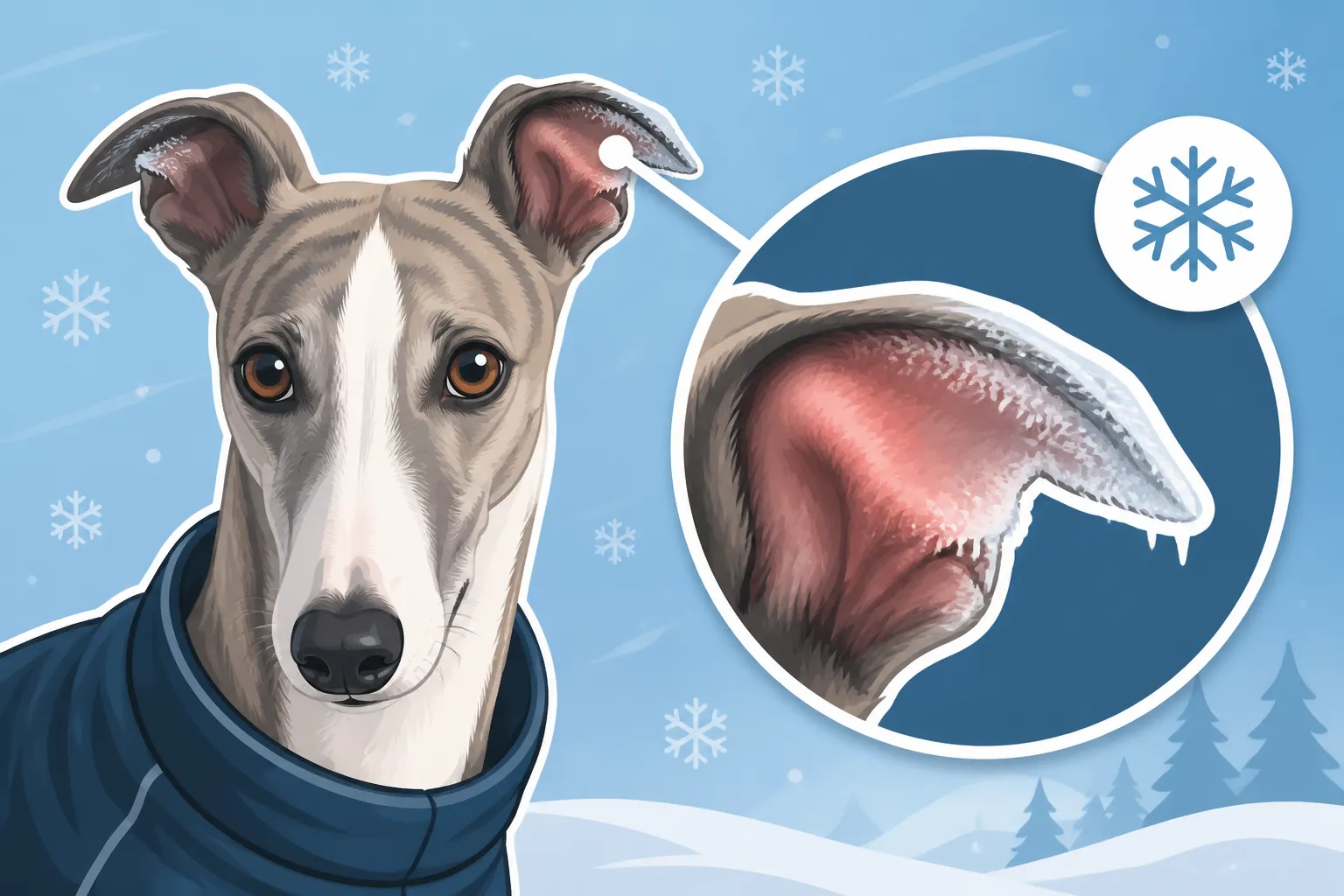
When frostbite begins to set in on a Whippet's ears, the first signs can often be easily missed if you're not specifically looking for them. The affected skin will typically appear pale, almost white or grayish. This isn't just a slight flush; it's a distinct loss of normal pinkness due to the constriction of blood vessels. It might even have a waxy or rubbery feel to the touch, rather than the supple warmth of healthy skin.
Your Whippet might show some discomfort, perhaps shaking their head more than usual, or gently pawing at their ears. They may also seem a bit withdrawn or quieter than usual after being outdoors. The ears themselves might feel unusually cold and stiff. What’s tricky is that in the early stages, the ears can actually feel numb, so your dog might not immediately react with pain. It's only later, as the tissue starts to warm up, that the pain receptors kick back in, and your Whippet may vocalize or become restless. If you notice these pale, waxy areas, especially on the tips or edges of the ears, it’s a clear signal that something is wrong and you need to act immediately.
Advanced Stages: Blisters and Discoloration
If early signs are missed or left untreated, frostbite can quickly progress to more severe stages. This is where the damage becomes much more visible and significantly more painful for your Whippet. In moderate frostbite, you might start to see swelling and redness as blood flow slowly returns to the damaged tissue. This can be followed by the appearance of blisters, much like severe burns on human skin. These blisters often contain clear or yellowish fluid. The skin itself may remain cold and hard, even as the surrounding areas warm up.
In the most severe cases of frostbite, the affected tissue will turn dark, often black or purple. This discoloration indicates deep tissue death, or necrosis. The skin will become dry and hard, almost leathery, and eventually, the dead tissue will slough off. This is incredibly painful and can lead to permanent damage, disfigurement, and serious infection. At this point, surgical intervention, potentially including amputation of the ear tips, might be necessary. It’s a truly heartbreaking outcome that we all want to avoid, emphasizing why diligent observation and prompt action are so critical for your Whippet's well-being.
Immediate First Aid and Veterinary Care for Frostbite
Discovering your Whippet has signs of frostbite is alarming, but knowing what to do immediately can make a significant difference in their recovery. Your primary goal is to gently warm the affected area and prevent further damage, but it's equally important to know when to put down the home remedies and head straight to the veterinary clinic. Panicking won’t help, but acting decisively and correctly will.
Gentle Warming Techniques
If you suspect frostbite, the very first step is to get your Whippet into a warm environment. Don't rub the affected areas, no matter how tempting it is to try and "warm them up" with friction. Rubbing can cause further tissue damage. Instead, focus on gentle, consistent warmth.
You can use warm (not hot!) water compresses. Soak a cloth in water that's comfortable to the touch for your own skin – think lukewarm bathwater, not scalding hot. Apply these compresses gently to the affected ears. You'll need to re-warm the cloths frequently as they cool down. Another method is to use your own body heat; holding your warm hands gently over their ears can provide a slow, steady increase in temperature. You might also wrap your Whippet in warm blankets, being careful not to put direct pressure on the ears. The key here is gradual rewarming. Rapid rewarming can actually cause more damage as blood rushes back to compromised tissue too quickly. Do not use direct dry heat, like a hairdryer or heating pad set on high, as this can easily burn the already sensitive skin. While you are doing this, make sure your Whippet is comfortable and calm. They might be a bit distressed, so speak to them soothingly.
When to Rush to the Vet
While gentle warming is good first aid, frostbite is a serious condition that almost always requires professional veterinary attention. You should contact your vet as soon as you notice any signs of frostbite. Don’t wait to see if it improves on its own.
Here’s when it’s absolutely critical to rush to the vet:
- Any sign of blistering or discoloration: If the ears are turning purple, black, or developing blisters, this indicates significant tissue damage, and your Whippet needs immediate medical care.
- Severe pain or tenderness: If your Whippet is clearly in pain, vocalizing, or flinching severely when their ears are gently touched, they need pain management and professional assessment.
- Signs of hypothermia: If your Whippet is shivering uncontrollably, lethargic, weak, or has a rectal temperature below 99°F (37.2°C), they might be hypothermic, which is a medical emergency.
- No improvement after gentle warming: If the pale, waxy areas don't improve with gentle warming within a reasonable timeframe (e.g., 20-30 minutes) or worsen, it's time for the vet.
Your veterinarian will assess the severity of the frostbite, potentially administer pain relief, antibiotics to prevent infection, and specialized wound care. They might also need to address any underlying hypothermia. They will guide you on the best course of action for recovery, which could involve long-term management of the damaged tissue. This is not a situation to take lightly, and a vet's expertise is invaluable.
Preventing Frostbite: Keeping Your Whippet Safe in Cold Weather
Prevention truly is the best medicine when it comes to frostbite in Whippets. Knowing their vulnerabilities allows us to take proactive steps to ensure they remain safe and warm, especially during those chilly months. It’s all about creating a protective bubble for them when the mercury drops, balancing their need for exercise with their physical limitations in the cold.
Appropriate Winter Attire
Given their lack of natural insulation, proper winter attire isn't a luxury for a Whippet; it's a necessity. This is perhaps the most significant way to protect them from the cold and reduce the risk of frostbite on their ears and other exposed areas.
You’ll want to invest in a good quality, well-fitting coat or sweater. For really cold or windy days, a coat that covers their chest and belly, and ideally has a high collar or even a snood, is paramount. Many brands specialize in sighthound-specific apparel that accounts for their deep chests and slender waists, ensuring a snug fit that doesn't restrict movement. Brands like Chilly Dogs, Voyagers K9 Apparel, or even options found on Amazon or Chewy, offer a range of insulated and waterproof coats designed to keep those delicate Whippet bodies warm. You might even find your Whippet enjoys wearing pajamas indoors on particularly chilly evenings, as discussed in Whether a Whippet Needs a Coat Indoors.
For protecting their ears, snoods are fantastic. These are essentially tube-shaped hats that cover the ears and neck, providing an extra layer of warmth where they need it most. You can find lightweight fleece snoods for milder cold or thicker, lined versions for severe winter weather. It's not just about looking cute; it's about vital protection. Remember that The Wardrobe a Whippet Needs Because It Has No Body Fat is extensive for a reason!
Limiting Exposure and Providing Shelter
Even with the best winter gear, there are limits to how long a Whippet should be exposed to cold, freezing temperatures. On truly frigid days, especially with wind chill, short, supervised potty breaks are preferable to long walks or play sessions.
Here are some practical tips for limiting exposure:
- Short and Sweet Outings: On days when the temperature is below freezing, or if there's significant wind or precipitation, keep outdoor excursions brief. A quick trot around the block to do their business is often enough. For more strenuous exercise, consider indoor alternatives.
- Check the Weather App: Always check the "feels like" temperature, which accounts for wind chill. A relatively mild temperature can feel much colder with wind, increasing the risk of frostbite.
- Provide Warm Shelter: Your Whippet should never be left outside unattended in cold weather. They need a warm, draft-free indoor environment. If they spend time in an outdoor kennel or run, even for short periods, ensure there's a heated, insulated shelter they can retreat to.
- Paw Protection: While not directly related to ears, extreme cold also affects paws. Paw balms or even boots can offer additional protection, and encourage your Whippet to get their business done quicker in the snow.
Understanding The Temperature at Which a Whippet Needs a Coat is a good starting point, but always factor in wind, dampness, and your individual dog's tolerance. Some Whippets are more resilient than others, but none are immune to the dangers of extreme cold. Ultimately, your Whippet relies on you to be their protector against the elements, and by taking these preventative measures, you can ensure they stay cozy, comfortable, and frostbite-free throughout the winter.
Disclaimer
This article is for general informational purposes only and does not constitute professional advice. Laws, prices and regulations vary by location and change over time. Consult a qualified professional for guidance on your specific situation.