Teaching a Whippet an Emergency Recall
There's nothing quite like the heart-stopping panic of seeing your beloved Whippet lock onto a squirrel or rabbit, then bolt, deaf to your frantic calls. Their incredible speed and powerful prey drive mean that a lapse in recall can turn into a terrifying chase through traffic or into unknown dangers in a split second. This guide is all about understanding why standard recall often fails with these magnificent sighthounds and, more importantly, how to implement and proof a bomb-proof emergency recall that could literally save your Whippet's life.
Understanding the Whippet's Instinctual Drive
Let's be real: your Whippet isn't ignoring you out of malice. They're doing what they were bred to do. Whippets are sighthounds, and their entire being is designed for spotting, chasing, and catching. When that prey drive kicks in, it's an overwhelming force, a primal urge that can override even the most diligently practiced "come" command. It's a fundamental part of their charm, yes, but also their biggest safety challenge.
The Power of Prey Drive
Imagine standing on the edge of an open field, your Whippet trotting happily beside you. Suddenly, a rabbit darts across the far end of the field. Before you can even register it, your Whippet is a blur, ears pinned back, nose to the wind, absolutely committed to the chase. In that moment, your voice, your treats, your years of training – they often mean nothing. The genetic imperative to pursue is simply too strong. This isn't a failure of your bond or your training; it's the raw, untamed essence of a sighthound at work. It's why we always say, for safety, Why a Whippet Cannot Be Let Off Leash in an Open Field unless it's truly secure.
You might feel frustrated, even embarrassed, when your Whippet seems to "forget" everything you've taught them. But it’s crucial to understand that this isn’t willful disobedience. It’s their powerful instincts taking over. Their eyes are exceptional for spotting movement, and their brains are wired to act on that movement with incredible speed. It's a cascade of hormones and adrenaline that makes them temporarily impervious to external stimuli, including your voice. This deep-seated instinct is Why a Whippet's Chase Instinct Overrides Its Recall.
Why a Standard Recall Isn't Enough
Many dog owners practice a general "come" command, and for many breeds, that's perfectly sufficient. You call, they come, usually with a treat and praise. But with a Whippet, especially when a high-value distraction like a deer or another dog in full flight is present, that standard recall often crumbles. It's like asking a human to stop mid-sneeze – the reflex is just too powerful.
A standard recall is often associated with routine, low-stakes situations. It might mean coming away from sniffing a interesting patch of grass or returning from a brief wander a few yards away. An emergency recall, however, needs to be a separate, distinct command that carries a different weight and urgency. It's the "break glass in case of emergency" button, reserved for when their life is genuinely at risk. It needs to be an instant, non-negotiable response, regardless of the distraction level.
Laying the Groundwork for a Bomb-Proof Recall
Building an effective emergency recall requires a foundation of trust, high-value motivation, and a unique cue. This isn't about repeating "come" louder; it's about creating an entirely new, incredibly strong association that stands above all other training.
Choosing Your Emergency Cue
The first rule of emergency recall: pick a word or sound you never use otherwise. Seriously, never. If your normal recall is "come," your emergency cue absolutely cannot be "come here," "hurry up," or "quickly come." It needs to be something completely distinct.
Popular choices include:
- A specific whistle tone (you can get good dog whistles on Amazon)
- "HERE!" (said with extreme enthusiasm)
- "FRONT!"
- "PARTY!"
- A unique sound like a kissy noise or a clap pattern.
The key is that this cue will only ever be used for this emergency recall. You don't want to dilute its power by using it for anything less than a full, immediate return. If you use it for mundane things, your Whippet will learn it's not always critical, and its emergency status will diminish.
The Power of High-Value Rewards
For an emergency recall, your standard kibble or even a decent biscuit won't cut it. You need something so incredibly tempting that your Whippet would drop a chase for it. Think about what makes your Whippet go absolutely wild. Is it:
- Real cooked chicken?
- Cheese?
- Hot dogs?
- Peanut butter from a spoon?
- A specific squeaky toy they adore?
Whatever it is, this is your emergency recall reward. And here's the kicker: it only ever appears when you use your emergency cue. This builds an incredibly strong, positive association that says, "When I hear that word, something amazing happens immediately." Remember that Whippets are sensitive souls, and How a Whippet Learns When It Bruises From Pressure, so positive reinforcement is always the way to go.
Training in Low-Distraction Environments
You wouldn't ask someone to run a marathon before they've walked a mile. The same applies to emergency recall. Start small, in a place where your Whippet is already comfortable and there are virtually no distractions. This means your living room, your securely fenced backyard, or a quiet, empty park during off-peak hours.
Step-by-Step Approach in a Quiet Space:
- Get Ready: Have your high-value treats ready, hidden so your Whippet doesn't see them yet.
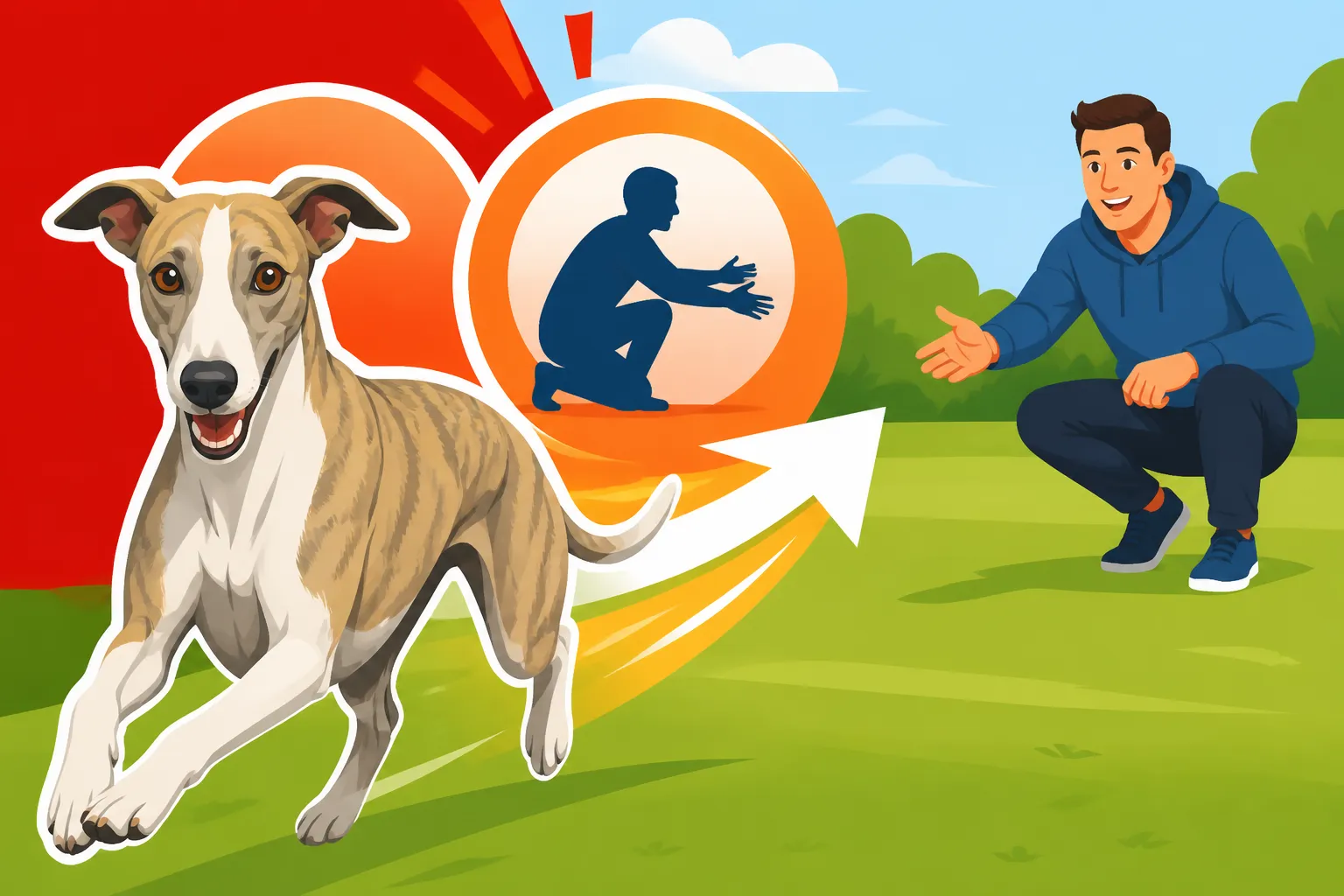
- Initial Call: Let your Whippet wander a few feet away, then use your emergency cue ONE TIME.
- Reward Instantly: The second your Whippet turns towards you, starts moving towards you, or makes eye contact, immediately start praising them ("YES! Good dog!") and produce the high-value treat.
- Jackpot!: When they reach you, give them several pieces of the amazing treat, or let them play with their favorite toy for a few seconds. Make it a celebration!
- Release: After the reward, give a release cue ("okay" or "go play") so they know they're free to wander again. This prevents them from feeling like coming to you ends their fun.
Repeat this many, many times over several days or weeks, keeping the environment distraction-free. The goal is to build an unshakeable connection between the cue, coming to you, and getting that incredible reward. Consider online training programs like those offered by BAXTER & Bella, which often provide structured guidance for building these foundational skills.
Implementing and Proofing the Emergency Recall
Once your Whippet is reliably responding to your emergency cue in a quiet setting, it's time to gradually introduce more challenge. This is where the real work begins, and it needs patience, consistency, and a strong focus on safety.
Increasing Distractions Safely
This is the phase where most recall training breaks down for sighthounds. The key is gradual and controlled exposure to distractions. Never set your Whippet up for failure by throwing them into a high-distraction environment too soon.
Stages of Distraction:
- Fenced Area with Minor Distractions: Move to a securely fenced area (like a tennis court or a friend's yard) with very mild distractions. Maybe a person walking in the distance, or a dog barking far away. Practice the emergency recall from varying distances.
- "Controlled" Distractions: Have a friend walk by with another dog on a leash, or toss a low-value toy a short distance away. Only use your emergency cue if you are confident your Whippet will succeed. If there's any doubt, don't use the cue. Instead, calmly walk over and retrieve your Whippet, then return to a lower distraction level.
- Public Parks (Leashed or Long Line Only): Never trust your Whippet off-leash in an unfenced public space until their emergency recall is 100% reliable in every scenario. Even then, exercise extreme caution. When in a public park, keep them on a long line. Whether a Long Line Suits a Whippet is a question many owners ponder, and the answer is usually a resounding yes for safety and training.
Always remember that every successful recall strengthens the behavior, and every ignored recall weakens it. Your goal is to stack the deck in your favor for success, especially during these crucial proofing stages.
The Role of a Long Line
A long line is your best friend during this phase of training. It allows you to simulate off-leash freedom while maintaining control and preventing your Whippet from practicing ignoring your recall. Look for durable, lightweight long lines on Amazon – often 20-30 feet is a good length to start.
Using a Long Line for Emergency Recall:
- Attachment: Attach the long line to a well-fitting, secure harness, not directly to their collar. Whippets have delicate necks, and a sudden jerk on a collar can cause injury or allow them to slip out. The Harness a Whippet Backs Out Of is a real concern, so invest in a quality escape-proof harness.
- Practice: Let your Whippet explore on the long line. When they get engrossed in sniffing or watching something, wait for them to be a moderate distance away, then use your emergency cue.
- Gentle Guidance: If they hesitate, give a gentle, consistent tug on the long line while continuing to praise them enthusiastically. The moment they turn, drop the pressure and continue praising.
- Reward Heavily: As always, jackpot them with those high-value treats when they reach you.
The long line is crucial for Proofing a Whippet's Recall Against Prey. It allows you to introduce tempting prey-like distractions (a remote-controlled toy, a friend running with a flag) while still being able to physically guide your Whippet back to you if their instincts kick in. This ensures they always experience success, reinforcing that the emergency cue always leads to a reward.
Maintaining and Troubleshooting Your Emergency Recall
An emergency recall isn't a "set it and forget it" command. It needs regular maintenance and careful troubleshooting when things go wrong. Life with a sighthound is a continuous learning process for both of you.
Consistency is Key
Even once your Whippet has a fantastic emergency recall, you can't stop practicing. Integrate short, fun emergency recall sessions into your regular routine. A few times a week, when you're in a safe, contained area, use your emergency cue, reward lavishly, and then immediately release them back to play. This keeps the skill sharp and the association strong.
Think of it like fire drill. You hope you never need it, but you practice it regularly so everyone knows exactly what to do when the alarm sounds. The same principle applies here. Keep those high-value treats tucked away, ready for that specific moment. Also, make sure everyone in the household uses the exact same cue and reward system. Inconsistency will only confuse your Whippet and dilute the command's power. What a Whippet Will Work For often varies, so make sure all family members are aware of what motivates your dog most effectively for this critical command.
When Things Go Wrong
Despite your best efforts, there might be a moment when your Whippet still ignores the emergency cue. It's disheartening, but it's important not to panic or get angry. Yelling or punishing them when they finally return will only teach them that coming back to you is a bad thing.
Troubleshooting Steps:
- Assess the Situation: What was the distraction? Was it exceptionally high? Were you too far away? Did you use the cue too many times? Why a Whippet's Recall Fails Mid Chase is often due to the overwhelming nature of the chase itself.
- Don't Repeat the Cue: If your Whippet doesn't respond to the first emergency cue, do NOT repeat it. Repeating it teaches them they don't have to respond immediately.
- Go Back to Basics: If a failure occurs, immediately take a step back in your training. Return to a lower-distraction environment, shorten the distance, and rebuild their confidence and association with the cue and reward.
- Re-evaluate Rewards: Are your rewards still high-value enough? Maybe they've gotten bored of the chicken. Time to switch it up!
- Seek Professional Help: If you're consistently struggling, a certified professional dog trainer with sighthound experience can offer invaluable guidance. They can observe your interactions and help you identify specific weak points in your training. Remember, How Quickly a Whippet Learns can be impressive, but they also get bored with repetition, so Whether Short Sessions Suit a Whippet is usually yes.
An emergency recall is an ongoing commitment, a safety net that every Whippet owner absolutely needs. It requires patience and an understanding of their unique breed characteristics, but the peace of mind it provides is priceless.
Disclaimer
This article is for general informational purposes only and does not constitute professional advice. Laws, prices and regulations vary by location and change over time. Consult a qualified professional for guidance on your specific situation.