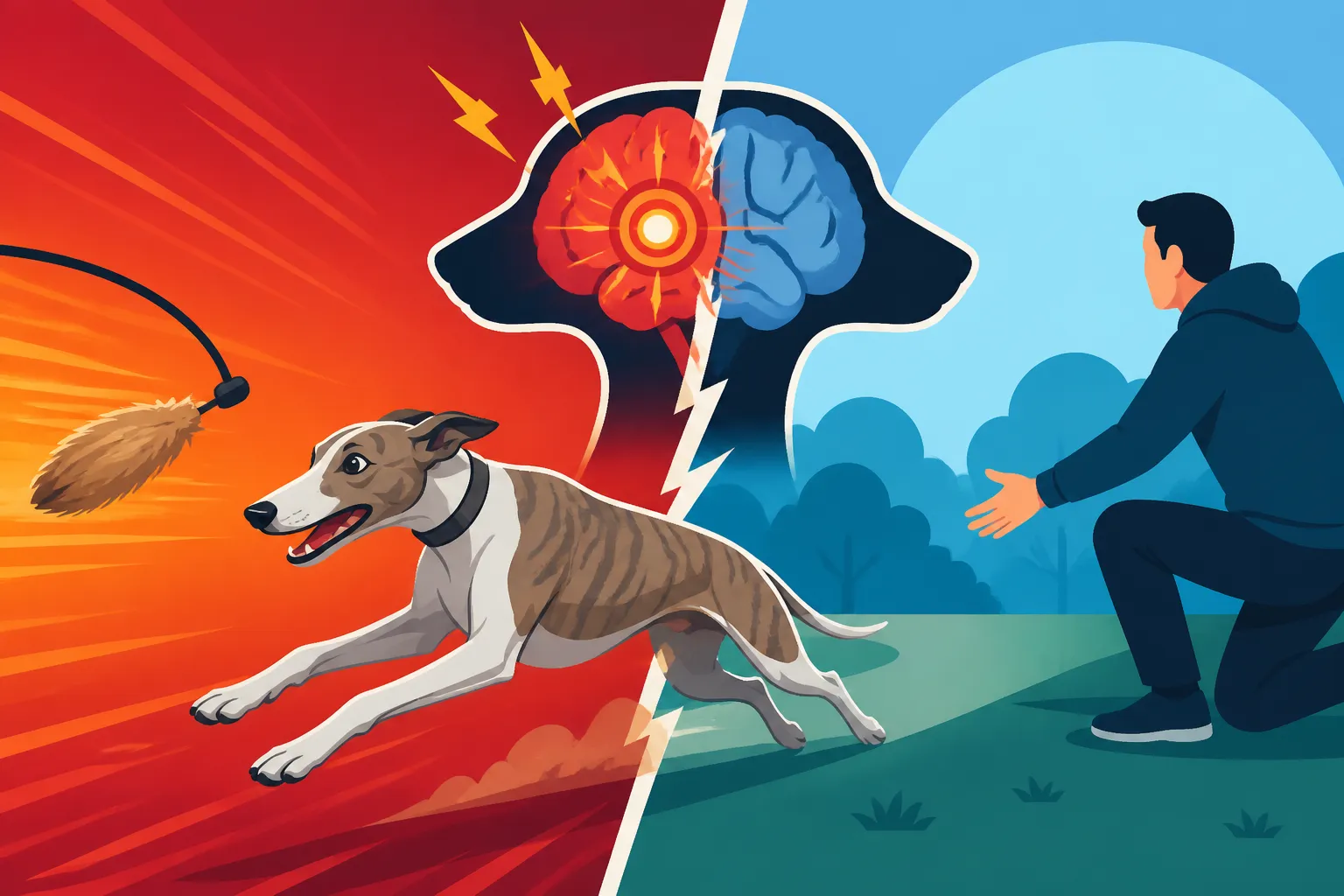
Why a Whippet’s Chase Instinct Overrides Its Recall
It’s a scenario many Whippet owners know all too well: you’re at the park, your beautiful Whippet is trotting happily beside you, and then – zoom! – a squirrel, a leaf, or a distant rabbit catches their eye, and suddenly, your carefully trained recall evaporates into thin air. You call, you plead, you whistle, but your Whippet is gone, a blur of motion driven by an instinct far older and more powerful than any treat or command. This guide is dedicated to helping you understand why your Whippet's chase instinct so profoundly overrides their recall, what's happening in their clever sighthound brain, and how you can manage this deeply ingrained behavior to keep them safe.
Understanding the Whippet's Hardwired Instincts
To truly grasp why your Whippet’s recall can disappear faster than a treat in an empty bowl, we need to go back to their roots. Whippets, like all sighthounds, were selectively bred for centuries with one primary purpose: to chase and capture small, fast-moving prey. This isn't just a quirky personality trait; it's a fundamental part of their genetic makeup, as ingrained as breathing.
The Sighthound Legacy: Built for Speed and Pursuit
Imagine a dog meticulously crafted over generations for a very specific job. For the Whippet, that job was often to course small game or participate in rag racing, where the fastest dog won. Every physical attribute, from their aerodynamic build and powerful hindquarters to their deep chest and flexible spine, screams "runner." But it's not just physical; their senses and neurological pathways are also optimized for the chase. They have an incredible field of vision, capable of spotting movement at impressive distances, and an innate understanding of how to anticipate and intercept prey.
When your Whippet sees something move quickly, it triggers this ancient, deeply rewarding sequence of behaviors: spot, chase, capture. It's a symphony of instinct, muscle, and sensory input that makes them truly magnificent to watch in action, but also incredibly challenging to manage in environments with tempting triggers. Understanding this historical context helps us approach their behavior with empathy rather than frustration. They aren't being disobedient; they are being a Whippet.
More Than Just "Bad Behavior": It's Instinct
Sometimes, owners feel like their Whippet is deliberately ignoring them, being stubborn, or just plain naughty when they take off after something. But it’s crucial to understand that this isn’t willful defiance. It’s an instinctual response, a drive that fires off almost involuntarily. Think of it like a human's fight-or-flight response – when faced with a sudden danger, logic often takes a backseat to primal survival instincts. For a Whippet, the sight of fast-moving prey is that primal trigger, engaging a part of their brain that bypasses the learned commands.
This isn't to say training is useless, but it does mean we're working against powerful forces. Their prey drive is a core component of who they are, and it brings them immense satisfaction. To them, chasing that squirrel isn't "bad behavior"; it's a deeply fulfilling expression of their natural self. Acknowledging this can shift your perspective from feeling frustrated to understanding and implementing more effective management strategies.
The Difference Between Whippet Prey Drive and Other Breeds
While many dog breeds have a prey drive, the way it manifests in a Whippet is distinctly sighthound. A terrier, for example, might have a strong prey drive, but it's often geared towards digging, scenting, and "dispatching" vermin. They might tunnel after a critter or shake it vigorously. Retrievers might be interested in a chase, but their drive is usually tied to bringing an object back to you. Scent hounds might follow a trail relentlessly, but their speed isn't the defining characteristic.
Whippets, on the other hand, are all about the visual chase and speed. They don't necessarily want to kill or retrieve; the pure joy is in the pursuit itself. Their visual acuity for movement is exceptional, allowing them to fixate on a target at distances that most other breeds would miss. Once that visual trigger is engaged, their speed and agility allow them to cover ground incredibly quickly, often outpacing anything you can do to intervene. This single-minded, visually driven, high-speed chase response is what makes their recall so unreliable in tempting situations. For more on this, you might find How Fast a Whippet Actually Runs insightful.
The Science Behind the Chase
Delving into the physiological and neurological aspects helps illuminate why the chase is such an irresistible force for a Whippet. It’s not just a casual desire; it's a deeply ingrained loop of sensation, chemical reward, and evolutionary programming.
The Adrenaline Rush: What Happens Internally
When a Whippet spots prey and the chase instinct ignites, their body undergoes a rapid cascade of physiological changes. Adrenaline, cortisol, and other stress hormones flood their system, preparing them for peak physical performance. Their heart rate skyrockets, pupils dilate to gather maximum visual input, blood is shunted to their muscles, and their senses become hyper-focused on the target. This "fight or flight" response, in this case, becomes "chase or chase."
In this heightened state, the part of their brain responsible for complex thought, learned behaviors, and responding to your commands effectively shuts down. They are operating on pure instinct, a primal program designed to maximize their chances of catching the fleeing object. Your voice, no matter how urgent, simply cannot penetrate this deeply absorbed state. It's like trying to have a calm conversation with someone who's just seen a ghost.
Vision-Based Hunting: A Whippet's Superpower
Whippets are visual hunters, plain and simple. Their eyes are designed like wide-angle lenses, positioned laterally on their head, giving them an almost 270-degree field of vision. This means they can spot subtle movements in their peripheral vision that you might never notice. Unlike many other breeds that rely heavily on scent, a Whippet identifies and tracks prey almost exclusively by sight.
Once they lock onto a moving object – be it a rabbit bolting across a field or a distant dog playing tag – that object becomes the absolute center of their universe. All other sensory input, including your voice, fades into the background. This intense visual focus is a biological superpower that makes them incredible at their traditional job but also makes them a significant flight risk in open, unsecured areas.
The Dopamine Hit: Why the Chase is So Rewarding
Beyond the immediate physiological changes, there's a powerful chemical reward system at play. When a Whippet engages in a successful chase, even if they don't "catch" anything, their brain releases dopamine. Dopamine is a neurotransmitter associated with pleasure, motivation, and reward. It's the "feel-good" chemical that reinforces behaviors, making them more likely to be repeated.
Every time your Whippet gets to indulge their chase instinct, they get a hit of dopamine. This powerfully reinforces the behavior, making the drive to chase even stronger. This is why it can feel like an addiction for them. No amount of training treats or enthusiastic praise from you can compete with the pure, unadulterated chemical rush of a full-speed chase. They are, in essence, self-rewarding, and that intrinsic reward is incredibly difficult to override with external motivators alone once the chase has begun. Why a Whippet's Chase Instinct Overrides Its Recall is a constant struggle between learned behavior and ancient reward.
Why Recall Fails: The "Red Mist" Phenomenon
You might have heard the term "red mist" used to describe a dog completely consumed by their prey drive. It's a perfect analogy for what happens when a Whippet's recall falls apart in the face of a tempting chase. Their ability to process your commands is temporarily, but thoroughly, compromised.
Selective Hearing: When the Brain Filters You Out
When a Whippet enters that high-drive, chase-focused state, their brain effectively develops "selective hearing." It's not that they can't hear you; it's that their brain prioritizes the input related to the chase. All other sounds, including your desperate shouts, are filtered out as irrelevant background noise. The urgency in your voice, the familiar sound of their name – none of it can compete with the visual and internal signals telling them "GO! CHASE! NOW!"
This isn't a deliberate snub; it's a neurological hijacking. The part of their brain involved in processing immediate threats and rewards (the limbic system) takes over, overriding the frontal cortex where learned commands are processed. Until the chase ends or the stimulus disappears, your voice is, for all intents and purposes, invisible to their intent. This is why How Far a Whippet's Recall Can Be Trusted is often not very far at all when the red mist descends.
The Speed Factor: Too Fast to Think
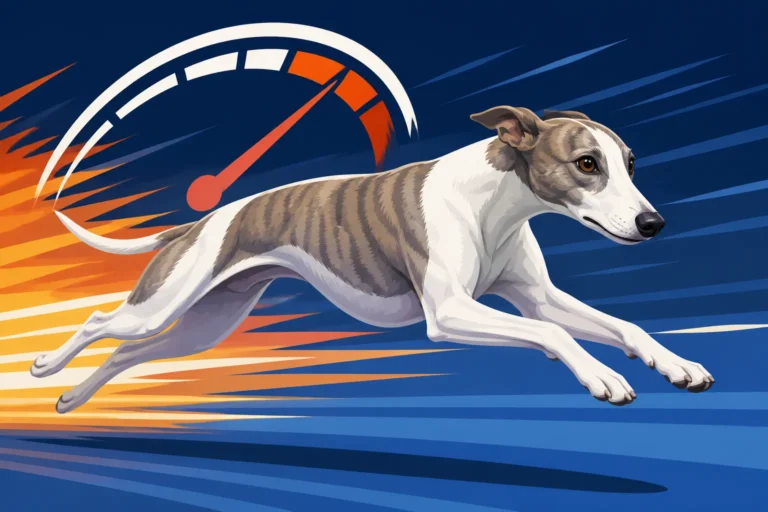
Whippets are built for blinding speed and incredible acceleration. They can go from a standstill to full sprint in a matter of seconds. By the time you even register that they've seen something and started to move, they can already be dozens of yards away. This sheer speed is a major contributing factor to why recall fails. There's simply no time for them to process a command, let alone execute it, before they're fully committed to the chase.
Imagine trying to stop a bullet once it's left the barrel. That's essentially what you're asking your Whippet to do when you call them mid-sprint after a rabbit. Their body is already in motion, their momentum is building, and their brain is solely focused on the target. The physical mechanics of their speed combined with the mental single-mindedness make it an almost impossible task for them to disengage and return to you.
Environmental Triggers: What Sets Them Off
While squirrels and rabbits are classic triggers, almost any fast-moving object can ignite a Whippet's chase instinct. This includes:
- Other dogs playing: Especially those running, tumbling, and darting.
- Children running and shrieking: The erratic movement and high-pitched sounds can mimic prey.
- Cyclists or joggers: Anything moving swiftly and predictably (or unpredictably).
- Blown leaves or plastic bags: Even inanimate objects caught by the wind can trigger the visual prey drive.
- Sudden flashes of light or shadows: Their keen sight is always on alert for movement.
Knowing these triggers is the first step in prevention. If you’re in an environment where these things are common, you need to be hyper-vigilant and prepared to act before your Whippet gets locked onto a target. Relying on recall in these high-stimulus environments is setting both you and your Whippet up for failure and potential danger. This is a critical point when considering Why a Loose Whippet Runs Into Traffic.
Mitigating the Risk: Training and Management Strategies
Given the deeply ingrained nature of a Whippet's chase instinct, the strategy isn't about eradicating it (which is impossible), but about effective management and building the strongest possible alternative behaviors.
Building a Rock-Solid Foundation Recall Before Distraction
A strong recall starts in a low-distraction environment. You need to make coming to you the most exciting, rewarding thing in your Whippet's world. This means:
- High-Value Rewards: Forget the kibble. Use tiny pieces of cooked chicken, cheese, or their absolute favorite treat.
- Make it a Game: Don't just call them when you want to leave. Call them, reward lavishly, and then immediately release them to play again. You want them to associate recall with good things and fun, not the end of fun.
- Practice Frequently: Short, positive recall sessions multiple times a day are more effective than long, infrequent ones.
- Proofing: Once strong in the house, gradually introduce controlled distractions. A slightly noisy room, then the backyard, then a quiet, fenced area. Never jump straight to a park full of squirrels.
Remember, a perfect recall in the living room doesn't translate to a perfect recall when a rabbit bolts. It’s about layers of practice and positive association, always staying one step ahead of the environment. If you want to dive deeper into this, check out Proofing a Whippet's Recall Against Prey.
The Power of the Long Line and Safe Spaces
For most Whippets, a long line is an indispensable tool for safe off-leash exercise. A long line (15-50 feet) allows them to run and explore while still being physically connected to you. This provides:
- Safety: You can prevent them from bolting into danger.
- Freedom: They get to stretch their legs and enjoy some "pseudo" off-leash time.
- Training Opportunity: You can practice recall with the safety net of being able to reel them in if they ignore you.
Always ensure the long line is attached to a well-fitting harness, not their collar, to prevent neck injury if they hit the end at speed. Look for durable long lines made of biothane or sturdy nylon, easily found on Amazon, which are less likely to tangle and easier to clean. When using a long line, focus on finding open, grassy areas free of obstacles where they can really stretch out. If you're wondering Whether a Long Line Suits a Whippet, the answer for most is a resounding yes!
Additionally, secure, fenced areas are paramount. This might be a private dog park rental, a friend's securely fenced yard, or a dedicated sighthound-friendly park if one exists in your area. Always check fence height and security, as a determined Whippet can be surprisingly agile.
Emergency Recall: A Different Kind of Cue
An "emergency recall" is a special, high-stakes command reserved only for life-or-death situations. It should be different from your regular "come" command and associated with the most incredibly high-value reward imaginable (e.g., a spoonful of peanut butter, a whole hot dog). The key is that it's never used casually, so it retains its power.
To train an emergency recall:
- Choose a unique word or sound: "CRITICAL!" or a specific whistle.
- Practice in extreme low-distraction: Stand five feet away, say the word, immediately give the super high-value treat.
- Gradual Increase: Slowly increase distance and controlled distractions, always ensuring success and massive rewards.
- Never abuse it: If you use it and your Whippet doesn't respond, you've used it in too high a distraction. Revert to an easier scenario.
The goal is to build an almost Pavlovian response where that specific sound or word means "DROP EVERYTHING, THIS IS AMAZING!" for your Whippet. It's a last resort, but a vital tool in your safety arsenal. To learn more about this vital skill, read Teaching a Whippet an Emergency Recall.
Living Safely with a High Prey Drive Whippet
Owning a Whippet with a strong chase instinct requires more than just training; it demands a lifestyle adjustment and a deep commitment to responsible management. It's about accepting who they are and structuring their world to allow them to thrive safely.
Secure Fencing and Leash Rules: Non-Negotiables
For most Whippets, secure containment is not optional. A physical fence should be at least 5-6 feet high, ideally solid or with no footholds, to prevent climbing. Whippets can jump surprisingly well when motivated. Never rely on invisible fences; these do not deter a Whippet determined to chase and offer no protection from external dangers. Furthermore, for many Whippets, an electric shock is simply not as powerful a motivator as the chase instinct.
When outside a securely fenced area, your Whippet should always be on a leash. This is the simplest, most effective way to prevent them from bolting. Invest in a good quality martingale collar or a properly fitted sighthound harness, as their narrow heads mean they can easily slip out of standard collars. Even if your Whippet has a seemingly perfect recall most of the time, the one time that elusive rabbit crosses their path could be the time they end up lost or injured. For more information on physical barriers, How Tall a Fence a Whippet Needs is a useful resource.
Channeling Instinct: Appropriate Outlets for Prey Drive
While you can't eliminate prey drive, you can provide safe, constructive outlets for it. This allows your Whippet to satisfy their natural urges in a controlled environment, which can actually make them more relaxed and less likely to be overwhelmed by triggers in daily life.
Consider activities like:
- Lure Coursing: This is hands-down the best activity for a Whippet. They chase a plastic lure on a string, mimicking the movement of prey, in a securely fenced field. It's safe, exhilarating, and taps directly into their instincts. Many Whippets absolutely adore it.
- Fast CAT: A timed 100-yard dash where your Whippet chases a lure. Another fantastic, safe outlet for their speed and chase drive.
- Flirt Poles: A pole with a lure attached to a rope, which you can use in your backyard to let them chase and "catch" in a controlled manner. It's a great way to bond and burn energy.
- Secure Fetch: Playing fetch with a fast-moving toy in a fenced yard, allowing them to sprint and chase.
These activities are incredibly important for their physical and mental well-being. They get to be a Whippet, safely and happily. To learn more about specific activities, How Lure Coursing Channels a Whippet's Drive or Whether Fast CAT Suits a Whippet would be excellent reads.
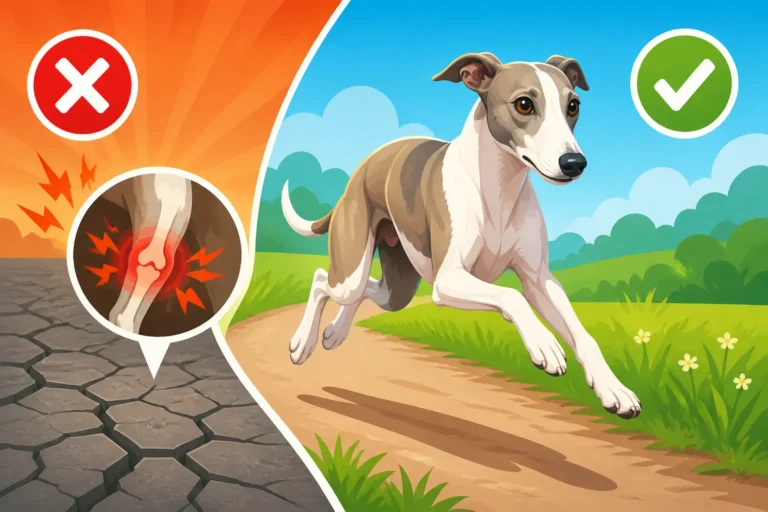
Here's a quick comparison of safe vs. unsafe off-leash environments for a Whippet:
| Feature | Safe Off-Leash Environment | Unsafe Off-Leash Environment |
|---|---|---|
| Fencing | Minimum 5-6 ft solid, no gaps/footholds | No fence, low fence, invisible fence, or easily breached fence |
| Visibility | Open, clear lines of sight, no dense brush | Thick woods, tall grass, blind corners, high traffic areas |
| Potential Triggers | Controlled (lure, specific toys), minimal wildlife | Abundant wildlife (rabbits, deer, squirrels), unpredictable movement |
| Traffic/Hazards | Zero vehicular traffic, no open water, no unknown dogs | Roads, bodies of water, construction, unfamiliar or reactive dogs |
| Owner Preparedness | Attentive owner, emergency recall practiced, long line on hand | Distracted owner, reliance on shaky recall, no backup safety measures |
Acceptance and Realistic Expectations
Ultimately, living with a Whippet means accepting their fundamental nature. You won't "train out" their prey drive, nor should you try. It's part of what makes them who they are – agile, fast, beautiful athletes with an intense focus. Your job as their guardian is to provide a safe, enriched life that respects these instincts.
This means:
- Always being vigilant: Scan your environment constantly for potential triggers.
- Prioritizing safety over freedom: If you're unsure about the security of an area, err on the side of caution and keep them leashed or on a long line.
- Celebrating their unique traits: Embrace their joy in chasing and find safe ways to let them express it.
- Continued education: Stay informed about sighthound-specific behaviors and training methods. Resources like
BAXTER & Bellaoffer online dog training programs that can provide structured guidance for specific challenges, though a trainer specializing in sighthounds might be even more beneficial for this particular drive.
By understanding the "why" behind your Whippet's chase instinct and committing to proactive management and appropriate outlets, you can ensure they live a happy, fulfilling, and most importantly, safe life by your side.
Disclaimer
This article is for general informational purposes only and does not constitute professional advice. Laws, prices and regulations vary by location and change over time. Consult a qualified professional for guidance on your specific situation.