Whether a Whippet’s Skin Tears From Running Through Brush
It’s a sight every Whippet owner knows and loves: your elegant companion, a blur of motion, streaking across an open field, ears flattened, eyes locked on some invisible prey. But then comes that familiar pang of anxiety when they suddenly dive headfirst into a patch of brush or disappear into tall, thorny undergrowth. The worry is real: will their incredibly delicate skin come away intact, or are you headed for another emergency vet visit to stitch up a nasty tear? This guide is here to walk you through why Whippets are so prone to these injuries, how to minimize the risks, and what to do when the inevitable happens.
The Unique Vulnerability of Whippet Skin
Let’s be honest, Whippets are built for speed, not for tanking through a briar patch. Their sleek, athletic form comes with some trade-offs, and one of the biggest is their incredibly thin, almost tissue-paper-like skin. It's a common frustration for us Whippet parents, seeing our otherwise robust dogs get injured so easily.
A Lack of Natural Padding and Protection
Unlike many other breeds that have a thick layer of subcutaneous fat, a dense double coat, or both, Whippets are practically naked beneath their fine, short fur. This means there’s very little cushioning between their delicate skin and the outside world. Think of it like a thin silk sheet covering a sharp framework – any snag is going to go right through. When a Whippet zips through dense brush, those branches, thorns, or sharp stalks aren't slowed down by fat or fur; they make direct contact with the skin.
This anatomical fact is why Whippet owners often worry about their dogs sleeping on hard surfaces, too, as it can lead to pressure sores. But outdoors, it means even a seemingly innocuous twig can cause a deep gouge or a full-blown laceration. It’s not a reflection of fragility in terms of bone structure or muscle – Whippets are tough little athletes – but purely a characteristic of their skin. This is also why you might find that The Thin Skin That Sends a Whippet to the Vet for Stitches is a frequent concern for new owners.
Speed as a Double-Edged Sword
A Whippet’s incredible speed, while magnificent to behold, significantly increases the risk of skin tears when encountering obstacles. Imagine moving at thirty-five miles an hour and suddenly hitting something. The force of impact, even against seemingly light brush, is amplified. It’s not just the sharp nature of the brush itself, but the sheer velocity at which your Whippet might run into it.
A Whippet can accelerate incredibly fast, going from a standstill to top speed in a flash. This means they often don't have time to react, dodge, or slow down when something unexpectedly appears in their path, especially if their attention is completely focused on the chase. A momentary lapse in judgment, a misstep, or an unexpected change in terrain can send them hurtling into hazards that another, slower breed might simply navigate around. We might think "just a little bush," but to a Whippet at full tilt, it's a potential injury waiting to happen.
Common Scenarios for Skin Tears in Brush
It’s not always a dramatic crash through a thorny hedge that causes these tears, though that certainly happens. Often, it’s the seemingly innocent run through fields or wooded areas that can result in surprisingly deep cuts. Understanding these common scenarios can help you be more vigilant.
The "Invisible" Hazards of Fields and Woodlands
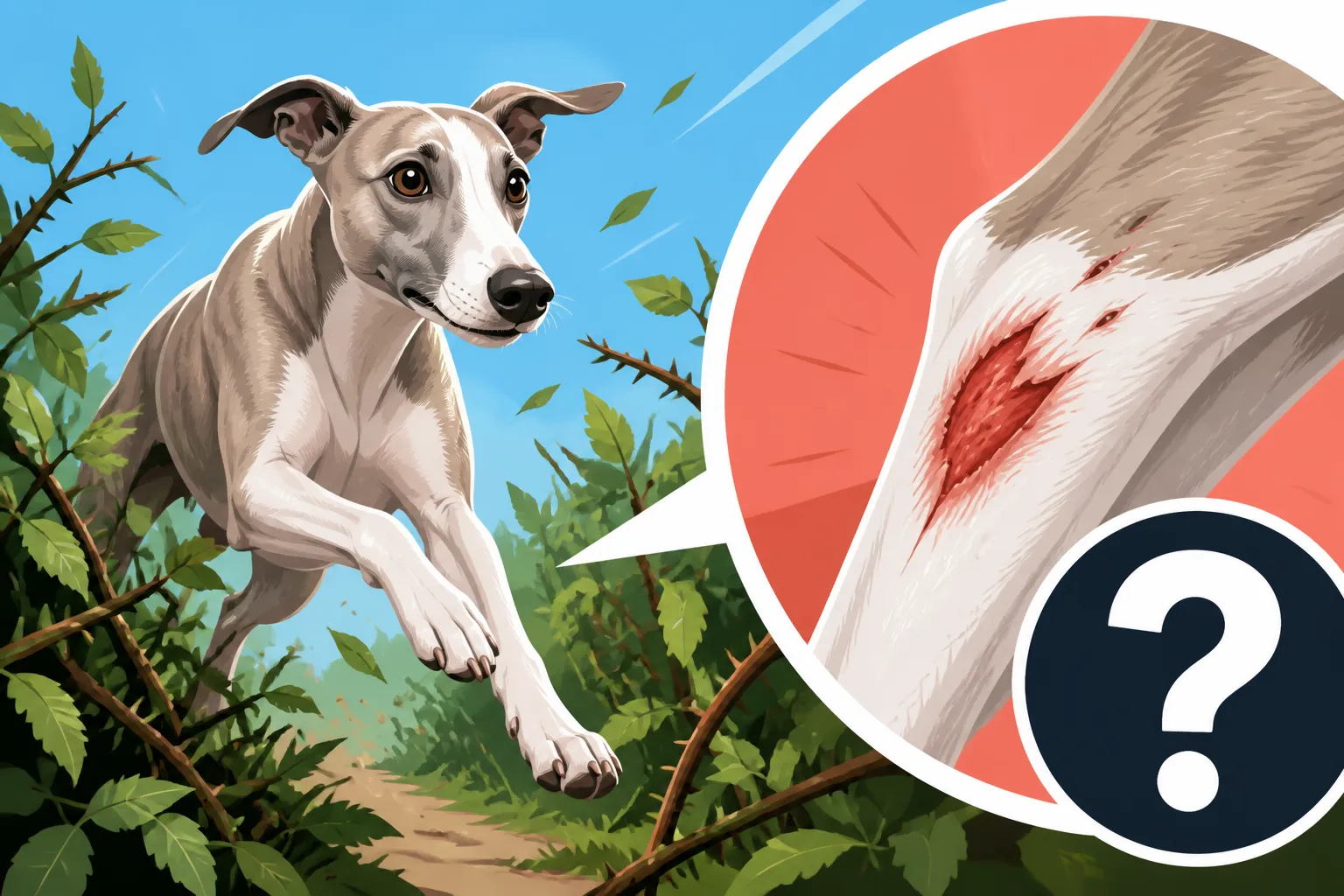
Many of us love to let our Whippets stretch their legs in open fields or on wooded trails. These environments often look safe, but they can be deceptive. A field of seemingly soft tall grasses might hide discarded branches, tough weeds with sharp stalks, or even barbed wire left by past farming activities. While your Whippet is enjoying the exhilarating freedom of a sprint, their delicate skin is brushing against these hidden dangers at high speed. A quick turn or an unexpected stumble can press their thinly covered limbs or flanks against a sharp object, leading to a tear.
Even in what appears to be a clear, mown area, small stumps, sharp rocks, or thorny ground cover like wild rose bushes can pose a significant threat. Consider specific types of brush, such as blackberry bushes or hawthorn hedges, which are notorious for their sharp, stiff thorns. When a Whippet, focused on chasing a squirrel or another dog, tears through these, their skin becomes an easy target. It's a frustrating reality that the very places our dogs love to run can sometimes be the most dangerous.
The Legs, Chest, and Flanks Are Prime Targets
While a Whippet can sustain a skin tear anywhere on their body, certain areas are particularly vulnerable due to their exposure and the way Whippets move. The legs, especially the front legs and inner thighs, are constantly exposed as they run through brush. These areas often lack even the minimal protective fur found on the back. A swift sweep past a branch can easily slice through the skin.
The chest and flanks are also common sites for injuries. When a Whippet dives into dense undergrowth, their chest takes the brunt of the impact, and their sides can be raked by branches. Sometimes, it's not even a direct impact, but a branch catching them as they twist and turn at speed. Because their skin is so taut and thin, these tears often aren't small nicks; they can be long, gaping lacerations that require immediate veterinary attention. This is why it's so important to be aware of Where a Whippet Tears Its Skin Most and check these areas thoroughly after outdoor adventures.
Proactive Measures and Safe Running Practices
Given how vulnerable Whippets are to skin tears, prevention is truly the best medicine. While you can't eliminate all risks, you can significantly reduce the chances of a nasty injury with a few strategic approaches.
Choosing Safe Running Environments
The single most impactful thing you can do is to choose your Whippet's running grounds wisely. Fenced, open fields with well-maintained grass are ideal. Dog parks can be good, but always inspect them first for potential hazards like broken fences, sharp edges, or overgrown areas. Avoid areas with dense, thorny bushes, thickets, or rocky, uneven terrain where hidden dangers might lurk. If you frequent walking trails, stick to wide, clear paths rather than letting your Whippet venture into the dense woods or undergrowth.
For areas where off-leash running is common, consider joining local sighthound groups or specific lure coursing events. These are often held in carefully vetted fields designed for high-speed running, minimizing risks. Remember that Thirty Five Miles an Hour and No Brakes on a Whippet's Recall means that even with the best training, their prey drive can override commands, sending them into dangerous situations if not contained. It's a tough balance between giving them joy and keeping them safe.
Here’s a quick guide to terrain and its associated risk:
| Terrain Type | Description | Risk Level (Skin Tears) | Notes |
|---|---|---|---|
| Mown Grass Field | Well-maintained, short grass, visible ground. | Low | Best option for off-leash sprints. Always check for hidden debris before use. |
| Tall Grass Field | Unmown fields, grasses often knee-high or taller. | Medium | Hides sharp sticks, small rocks, discarded items. Can conceal uneven ground. |
| Light Brush/Shrubs | Scattered small bushes, low-lying plants, some woody stems. | Medium-High | Risk increases with density and presence of thorns. Speed amplifies danger. |
| Dense Thickets/Forest | Heavy undergrowth, thorny bushes (e.g., blackberry), fallen branches, sharp twigs. | High | Extremely high risk. Avoid at all costs for off-leash running. Very difficult to see hazards. |
| Rocky/Uneven Ground | Exposed rocks, scree, broken terrain. | Medium-High | Risk of cuts and abrasions from sliding or stumbling onto sharp edges. Can also cause paw pad injuries. |
| Paved Paths/Trails | Asphalt or gravel paths. | Low-Medium | Low for skin tears, but hard surfaces can be tough on joints and paw pads during high-speed turns. |
Protective Gear for the Adventurous Whippet
While not every Whippet needs to wear a coat all the time, for those who love to explore areas with light brush or thorny ground cover, a protective vest or coat can be a game-changer. These aren't just for keeping warm; they can provide a crucial layer of defense against minor scrapes and tears. Look for coats made from durable, tear-resistant materials like Ripstop nylon or thick canvas. Brands like Hurtta or Ruffwear offer robust options that cover the chest, back, and often part of the flanks.
Consider a lightweight, form-fitting "snuggie" or close-fitting vest, especially if you know your Whippet is going to be running in an area with a slight risk of snags. While a coat won't prevent every injury, it can significantly reduce the severity and frequency of minor skin tears. It's an investment in their safety, and sometimes, a little extra fabric is all it takes to prevent an expensive trip to the emergency vet. You might find more ideas in The Wardrobe a Whippet Needs Because It Has No Body Fat.
First Aid and When to See the Vet for Skin Tears
Despite your best efforts, sometimes tears still happen. Knowing what to do in the immediate aftermath can make a big difference in your Whippet's comfort and recovery, and perhaps even save you a trip for Emergency Stitches: the Whippet Bill Nobody Budgets For.
Immediate Steps for Minor Tears
If you discover a small, shallow tear that isn't bleeding profusely, your first step is to gently clean the wound. Use warm water and a mild, pet-safe antiseptic solution like chlorhexidine or diluted povidone-iodine. Trim any hair around the wound if necessary to keep it clean, but be extremely careful not to cut the skin. Once clean, you can apply a thin layer of antibiotic ointment (like Neosporin, but ensure it's safe if ingested) and cover it with a non-stick sterile pad held in place with medical tape or vet wrap. Change the dressing daily and monitor for any signs of infection.
Even for what seems like a minor tear, it’s worth reviewing resources like Skin First Aid Every Whippet Owner Should Know to ensure you're well-prepared. Keep a well-stocked pet first aid kit readily available, especially if you regularly take your Whippet on outdoor adventures. Remember, Whippet skin can be slow to heal, and a small tear can sometimes become larger or infected if not cared for properly.
Recognizing When Veterinary Care is Essential
It's not always easy to tell if a tear warrants a vet visit, but when in doubt, it’s always better to err on the side of caution. Here are clear signs that your Whippet needs professional medical attention:
- Deep or Long Lacerations: If the tear is deep enough to expose underlying muscle or fat, or if it’s more than about an inch long, it almost certainly needs stitches. The edges of Whippet skin tears often pull apart significantly due to the skin's tautness, making self-healing difficult. Whether a Whippet's Cut Always Needs Stitches is a common question, and for deep or wide tears, the answer is usually yes.
- Excessive Bleeding: If the wound is bleeding heavily and you can't get it to stop with gentle pressure after a few minutes, head to the vet immediately.
- Contamination: If the tear is visibly dirty, embedded with debris from the brush, or occurred in an unsanitary environment, there's a higher risk of infection. A vet can thoroughly clean and irrigate the wound.
- Lameness or Pain: If your Whippet is limping, vocalizing in pain, or showing unusual discomfort beyond the immediate wound, it could indicate a more serious injury or infection developing.
- Signs of Infection: Redness, swelling, warmth around the wound, pus discharge, or a foul odor are all red flags that an infection has set in, requiring veterinary intervention and likely antibiotics.
Don't underestimate the potential for complications. Whippets have incredibly thin skin, and what might look like a minor scrape on another breed can be a significant laceration for them. A vet can properly assess the wound, clean it thoroughly, and, if needed, close it with sutures or staples. They can also prescribe antibiotics to prevent infection, which is crucial for a smooth recovery. Many Whippet owners find that having pet insurance, such as a plan from Healthy Paws, provides immense peace of mind for these unexpected vet bills, especially considering What a Whippet Laceration Repair Costs. A good pet insurance policy, like those offered by Healthy Paws, can cover a significant portion of emergency vet care, making the decision to seek help much easier without worrying about the financial strain.
Recovery and Long-Term Considerations
After a skin tear, the recovery process is just as important as the initial first aid and vet care. Whippets, with their lean build, can sometimes have a slower healing process, and minimizing re-injury is key.
Managing the Healing Process
Once a tear has been cleaned and, if necessary, stitched by a vet, the focus shifts to ensuring proper healing. This usually involves keeping the wound clean and dry, administering any prescribed medications (like antibiotics or pain relief), and preventing your Whippet from licking or chewing at the stitches. An Elizabethan collar (e-collar or "cone of shame") or a soft recovery suit will likely be necessary to protect the wound site. Remember that How Slowly a Whippet's Skin Heals can be a frustrating reality, so patience and diligence are paramount.
Strict leash walks are often recommended during recovery to limit movement that could pull stitches or reopen the wound. High-impact activities or off-leash running should be avoided until your vet gives the all-clear, which might be several weeks after the initial injury. Regular check-ups with your vet will help monitor the healing progress and ensure there are no complications. Investing in a robust pet insurance plan, such as those from Healthy Paws, can be incredibly helpful here, covering not just the initial stitches but also follow-up appointments and medication costs.
Preventing Future Tears and Scars
Once the wound has healed, you might notice some scarring. Whippet skin, being so fine, can sometimes scar quite visibly. While not usually painful, it can be a constant reminder of the mishap. To prevent future incidents, reinforce the safe running practices discussed earlier. This might mean adjusting your regular walking routes, investing in more protective apparel for adventurous outings, or committing to only letting your Whippet off-leash in securely fenced, well-inspected areas.
If your Whippet is particularly prone to tears, discuss strategies with your vet. They might have specific recommendations for skin care or supplements that could improve skin health, though it's important to remember that the inherent thinness of Whippet skin won't fundamentally change. For peace of mind, especially with a breed so prone to these sorts of injuries, considering a comprehensive pet insurance plan from providers like Healthy Paws is a smart move. It mitigates the financial stress of recurring vet visits, allowing you to focus on your Whippet's well-being and their joyous, if sometimes injury-prone, sprints.
Disclaimer
This article is intended for informational purposes only and is not a substitute for professional veterinary advice. Always consult with a qualified veterinarian for any health concerns or before making any decisions about your Whippet's care or treatment.