Whether a Whippet Suits a Cold Climate
A Whippet can live happily in a cold climate, but its short coat and lean build make winter care more than an occasional sweater. The challenge is balancing comfortable walks and outdoor activity with warmth, dry skin, and safe indoor temperatures. This guide explains what cold weather changes for a Whippet and how to adapt your home, clothing, and routine.
Why cold weather affects Whippets
A lean body offers little insulation
Whippets are naturally lean, with short coats and little body fat to help hold warmth. A Whippet that seems comfortably dressed for a brisk walk may feel chilled much sooner than a thick-coated dog would. Wind, damp fur, inactivity, and a dog’s age or health can all make a difference.
This does not mean every Whippet will shiver as soon as the temperature drops. Some cope well with short outings, especially when they are moving. But standing around at a bus stop, waiting outside a shop, or lingering after a walk can become uncomfortable quickly. A cold, wet day in Boston or Chicago can feel particularly harsh when wind cuts through a dog’s coat.
The practical takeaway is to watch your individual dog rather than rely on one temperature rule. Pay attention to how your Whippet behaves outdoors and how quickly they warm up once back inside. For more on why their build matters, see Why a Whippet Has So Little Body Fat.
Cold tolerance varies from dog to dog
There is no single temperature that determines when every Whippet needs a coat. A young, healthy dog moving briskly may be comfortable in conditions that leave an older Whippet, a puppy, or a dog recovering from illness eager to head home. Rain and wind can make the same temperature feel much colder, while a sunny, sheltered path may be more pleasant.
A Whippet’s own signals are useful clues. Shivering, hunching, lifting paws, slowing down, or repeatedly turning toward home can suggest discomfort. Some dogs simply stop enjoying the outing; others may seem restless or try to burrow into a blanket as soon as they come inside. If your dog is shivering indoors, do not automatically assume the house is too cold: discomfort, fear, pain, or illness can also cause shaking. Why a Whippet Shivers Indoors offers more context.
If your Whippet seems unusually weak, confused, uncoordinated, very sleepy, or difficult to rouse after cold exposure, bring them inside and contact a veterinarian promptly. Those signs are more concerning than ordinary “I’m cold” behavior and deserve professional attention.
Clothing and gear for winter
Choose a coat for the weather and the dog
A well-fitting coat can make winter walks more comfortable, but the right one depends on conditions. A fleece or insulated coat may suit dry, chilly weather; a water-resistant outer layer can help when rain or wet snow is part of the forecast. If you are choosing between styles, Whether a Whippet Needs a Raincoat and The Temperature at Which a Whippet Needs a Coat cover related decisions.
Fit matters as much as warmth. Whippets have a deep chest, narrow waist, and long body, so a coat made for a broader, squarer dog may bunch, slip, or leave the belly exposed. Look for coverage that stays in place without restricting the shoulders, chest, or stride. Check for rubbing at the armpits and around the neck, especially after a longer walk.
A coat should also be easy to put on and take off. If your dog is reluctant to go outside, a complicated dressing routine can turn the doorway into a daily struggle. Some owners compare options at pet retailers such as Chewy, while checking garment measurements against their own dog rather than relying on breed labels alone. If your Whippet overheats, pants heavily, or tries to wriggle out of a layer, remove it and reassess.
Protect paws and keep wet weather manageable
Snow, ice, slush, and salted sidewalks can irritate paws. After a walk, check between the toes and pads for packed snow, grit, redness, or small cuts. Rinse or wipe paws when needed, then dry them thoroughly. If your dog repeatedly lifts their feet or avoids icy ground, shorten the route and choose a clearer, safer surface.
Boots can help some dogs, but not every Whippet accepts them easily. Introduce them at home for a few minutes at a time, reward calm behavior, and check that they do not twist or rub. Paw balm may be another option for certain conditions, but ask your veterinarian what is appropriate if your Whippet has cracked or irritated pads. For more detail, see Whether a Whippet Needs Boots and Whether a Whippet Should Walk in Snow.
Bring a towel to the door, especially on rainy or slushy days. Drying the belly, legs, and paws keeps your Whippet more comfortable and helps prevent them from tracking moisture through the house. A quick post-walk check also gives you a chance to spot scrapes, lodged ice, or areas where clothing has rubbed.
Making your home comfortable in winter
Give your Whippet warm, padded resting places
Cold floors and draughty corners can make a Whippet uncomfortable even when the room feels fine to the people in it. Set up a padded bed away from exterior doors and cold windows, and make sure there is a warm resting place in the rooms where your dog spends the most time. Many Whippets are happiest with a blanket they can burrow under, provided they can move away from it whenever they want.
If your home has hardwood or tile, offer a bed or mat rather than expecting your dog to settle on the floor. Whippets can be sensitive to pressure as well as cold, so cushioning helps with both comfort and warmth. A heated pet bed is not automatically necessary; first try improving bedding, reducing drafts, and letting your dog choose a warmer location.
Watch how your Whippet uses the space. If they keep moving from the sofa to a sunny patch, or wedge themselves beside a radiator, they may be seeking warmth. Make sure they can retreat from direct heat and do not leave them pressed against a heater or heating appliance. The guide Why a Whippet Needs Soft Bedding Everywhere explains why comfortable resting places matter beyond winter.
Decide when a coat indoors is useful
Most Whippets do not need to wear a coat inside a comfortably heated home all day. Indoor clothing may be useful in a chilly house, during a brief transition outside, or for an older dog that struggles to stay warm. The key is to check regularly that the dog is not getting too hot and that the garment is not irritating the skin.
A coat that is damp from outside should come off indoors. Let the garment dry and check your dog’s skin, particularly around the chest and under the front legs. Leaving wet fabric on can make a dog colder and may cause rubbing. If your home has a cold room, a warm bed or blanket may be a simpler first step than keeping your Whippet dressed constantly.
A useful routine is to remove outdoor layers when you come in, towel your dog dry, and let them settle in a comfortable spot. If they still seem chilly, offer a dry indoor layer or extra blanket and see whether they relax. More guidance is available in Whether a Whippet Needs a Coat Indoors and Keeping a Whippet Warm Without Overheating It.
Adjusting winter walks and daily routines
Keep exercise regular but flexible
Cold weather does not mean a Whippet must stay indoors all winter. Most still benefit from walks, sniffing, play, and opportunities to move. The difference is that winter outings may need to be shorter, more purposeful, or scheduled for a warmer, calmer part of the day.
Let your dog’s comfort guide the pace. A brisk walk may keep them warmer than standing still, but do not push through signs of distress just to complete a planned route. On a bitter or icy day, a shorter walk followed by indoor games can be a better choice. If your Whippet enjoys running, choose a safe, enclosed area with good footing and end the session before they become chilled or tired.
| Winter situation | Practical adjustment | What to watch for |
|---|---|---|
| Dry, cool weather | Use a well-fitting layer if your dog seems uncomfortable | Shivering, hunching, or slowing down |
| Windy conditions | Choose a sheltered route and keep the outing moving | Turning back, seeking shelter, or reluctance |
| Rain or wet snow | Use suitable outerwear and dry your dog afterward | Damp fur, cold paws, or rubbing under the coat |
| Ice or salted sidewalks | Choose safer footing and check paws after the walk | Paw lifting, licking, redness, or packed ice |
| Very cold weather | Keep outdoor trips brief and add indoor activity | Weakness, confusion, poor coordination, or unusual sleepiness |
When walks need to be shorter, simple indoor activities can help fill the gap. Try a few minutes of reward-based training, a food puzzle, gentle tug, or a sniffing game using treats hidden around a room. Keep sessions appropriate for your dog’s age and physical condition. These activities are not a perfect substitute for every outdoor experience, but they can make a low-activity day less frustrating.
Make outdoor trips safer and easier
Cold-weather routines work best when getting outside does not become a race against discomfort. Keep the coat, leash, towel, and paw-cleaning supplies together near the door. This saves time on wet mornings and means you can get your Whippet dressed before they are already standing in a draughty entryway.
Plan routes with an easy way back to shelter. A familiar loop near home is often more practical than a long trail when weather is unpredictable. In snowy areas, check for ice and hidden hazards before letting your dog move quickly. Whippets are sprinters, and slick footing can make a sudden turn or burst of speed risky.
If your dog refuses to go out, avoid dragging or scolding them. Try a short trip to a sheltered patch, offer a coat if they tolerate one, and reward relaxed steps outside. A covered potty area may help some dogs, but persistent avoidance can also reflect discomfort, fear, or a medical problem. If this behavior is new or comes with other changes, discuss it with your veterinarian.
So, does a Whippet suit a cold climate?
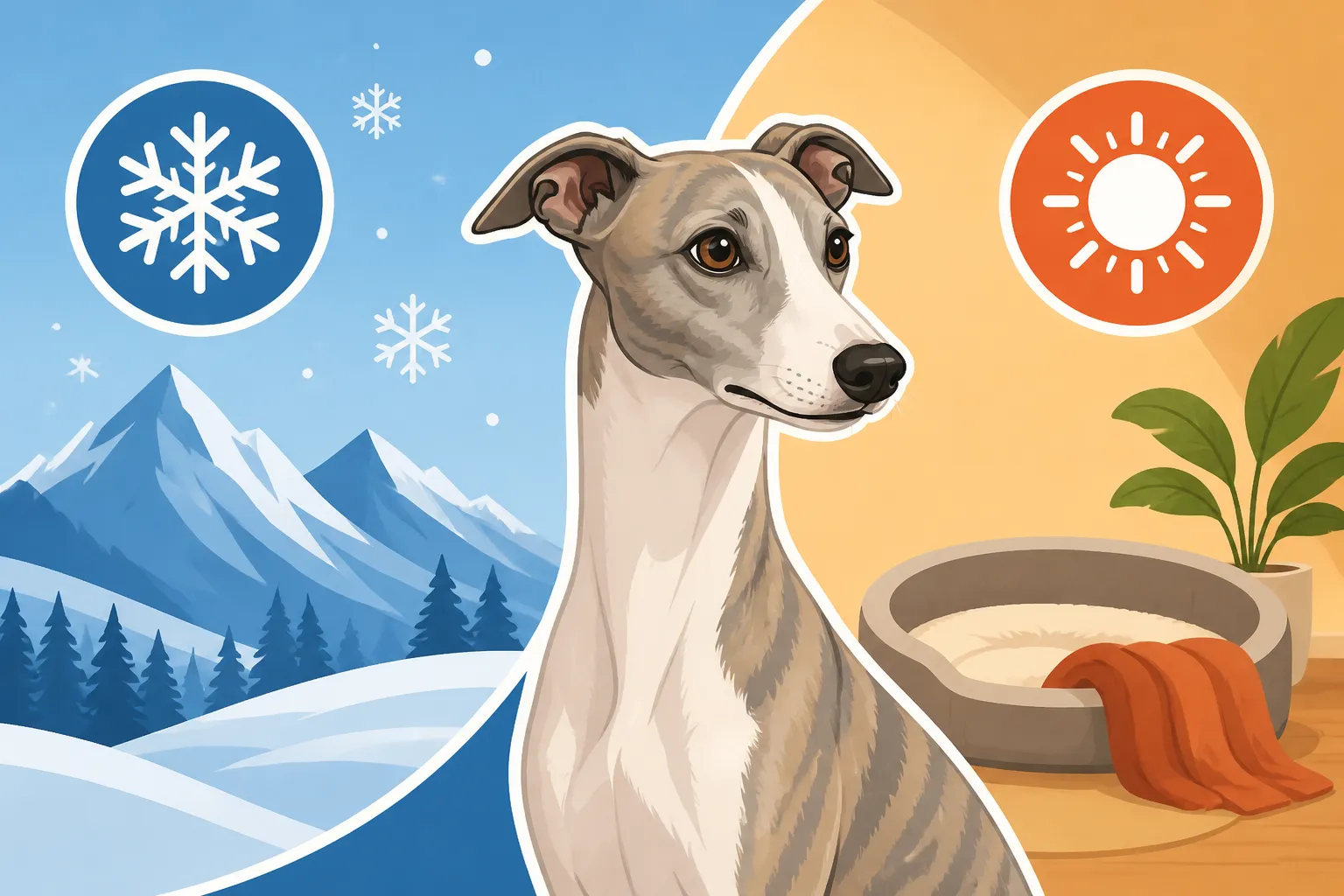
A Whippet can suit a cold climate if the household is prepared to manage winter differently from a household with a thick-coated breed. That usually means keeping the dog indoors, offering padded warm bedding, using suitable clothing for outdoor conditions, and changing walk length or timing when wind, rain, snow, or ice make outings unpleasant.
It may be a harder match if the dog would be expected to live outdoors, spend long periods waiting in the cold, or exercise without weather-appropriate gear. Whippets are companion dogs, and their short coat and lean frame make prolonged exposure a poor fit. They can still enjoy a snowy yard or a brisk winter walk; comfort depends on supervision, sensible clothing, dry bedding, and the dog’s own signals.
Before bringing a Whippet into a cold-climate home, think about the daily routine, not just the average winter temperature. Can you take shorter walks during severe weather? Is there a warm place for the dog to rest? Are you comfortable checking paws, drying wet fur, and managing coats? If so, winter can be entirely workable. The aim is not to wrap a Whippet in layers every minute, but to notice when they need help staying comfortable and respond before a cold outing becomes a miserable one.
Disclaimer
This article is for general informational purposes only and does not constitute professional advice. Laws, prices and regulations vary by location and change over time. Consult a qualified professional for guidance on your specific situation.